Recipe
Servings
Servings 1×
Ingredients
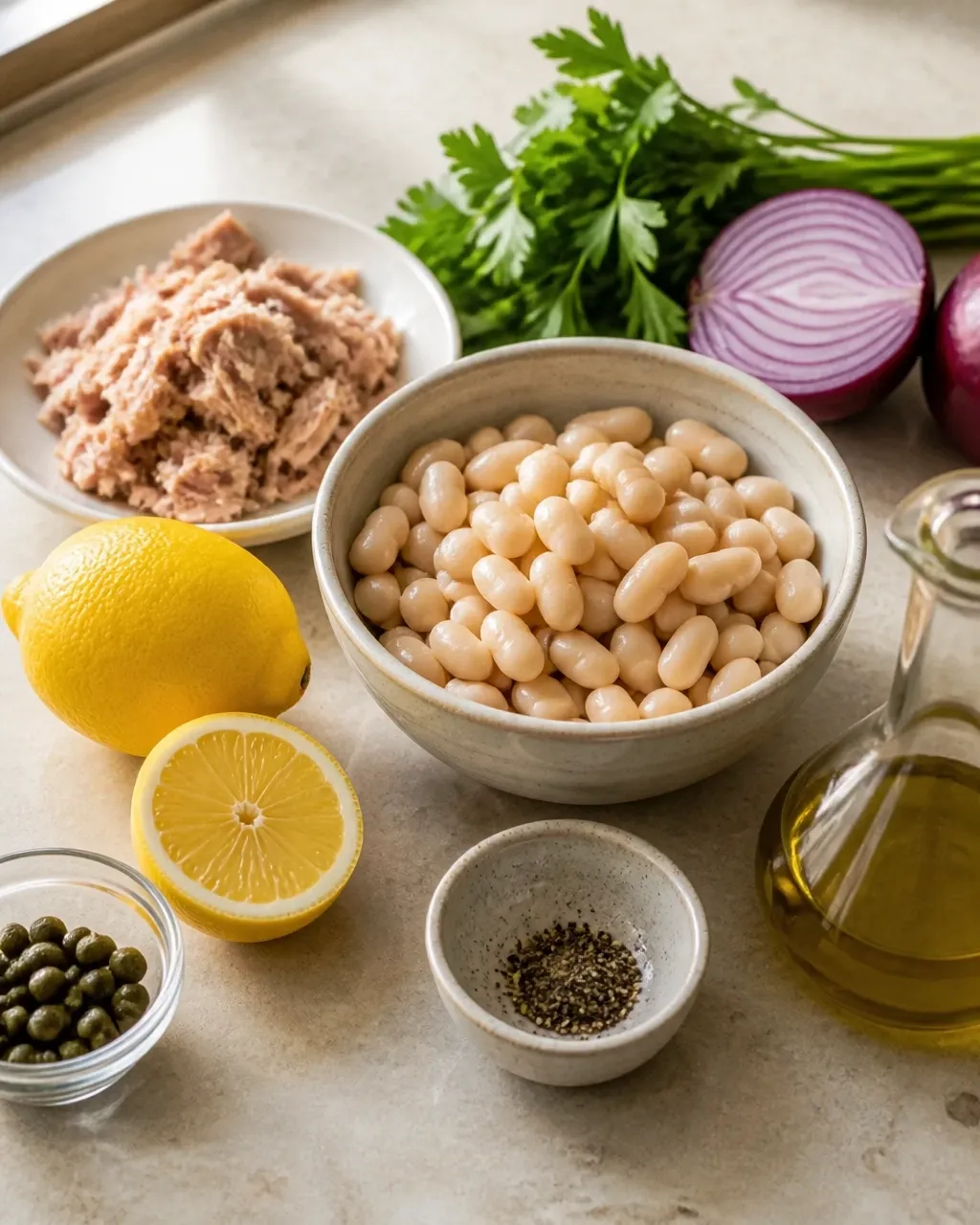
- White beans
- Beans
- Onion
- Lemon
- Mustard
- Cooking oil
- Salt
Method
- Start by treating canned beans like a useful ingredient, not a finished product.
- Rinse the beans under cool water until the water runs mostly clear, then let them drain well.
- Add the lemon gradually and taste as you go.
- Whisk or shake the dressing before adding it.
- Use a little mashed bean or a dab of mustard if you want the dressing to cling more firmly.
- Stir them too aggressively and they split, making the salad soft and starchy.
A Bright, Fast Dinner for Real Life
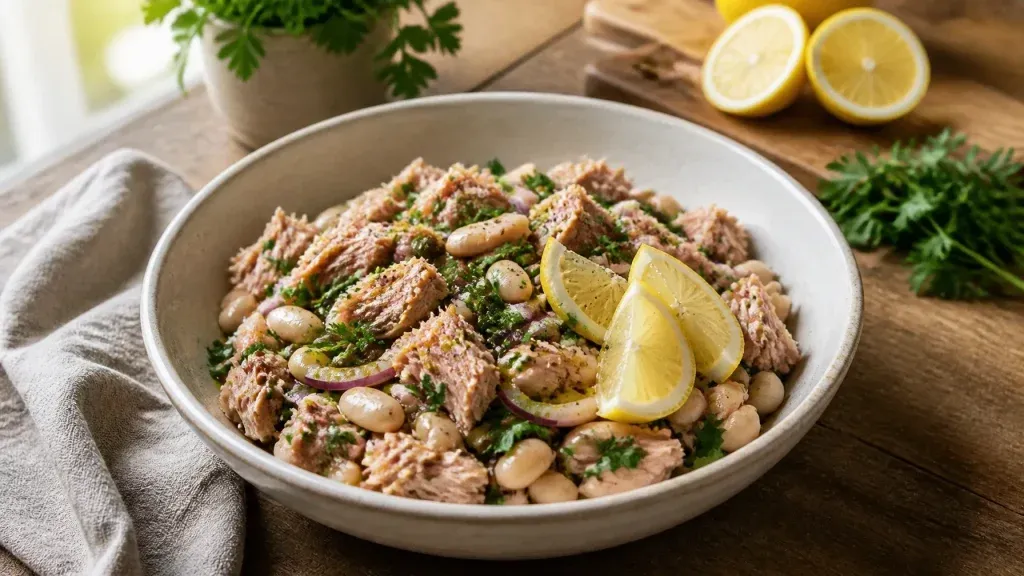
Some meals are designed for leisurely chopping, slow simmering, and a sink full of dishes. This is not one of them. Tuna white bean lemon salad is the kind of dinner I reach for when I want something fresh, filling, and ready before my patience runs out.
It brings together creamy beans, savory tuna, sharp lemon, and fresh herbs in one bowl. No elaborate cooking is required, but a few small technique choices make the difference between a lively salad and a watery pile of pantry odds and ends. Pay attention to those, and you have one of the easiest healthy dinner ideas for a busy night.
Tips & Technique: Make Every Texture Count
Rinse and dry the beans properly
Start by treating canned beans like a useful ingredient, not a finished product. The liquid in the can contains starch and salt, and both can muddy the flavor of a fresh salad. Rinse the beans under cool water until the water runs mostly clear, then let them drain well.
Drying matters just as much. Excess water clinging to the beans dilutes the lemon dressing and prevents it from coating the surface properly. Tip the beans onto a clean towel or leave them in a sieve for a few minutes. You do not need to polish each bean like a tiny pearl, but do give them a chance to shed their bathwater.
Use acid to sharpen, not bully
Lemon juice does more than make the salad taste “fresh.” Acidity changes how you perceive salt and fat. It makes the tuna taste cleaner, keeps olive oil from feeling heavy, and gives the mild beans a much-needed lift.
Add the lemon gradually and taste as you go. Too little acid leaves the salad flat; too much makes the tuna seem harsher and the beans taste chalky. The best dressing lands somewhere between bright and rounded, with enough oil to soften the edges.
Remember that lemon juice is not a food-safety force field. It may slow some bacterial growth, but it does not make a tuna salad safe at room temperature. Treat the finished dish as perishable food: refrigerate it promptly and do not leave it out for more than two hours, or one hour in very hot conditions.
Create a temporary emulsion
Oil and lemon juice naturally separate because they do not share the same molecular preferences. That is why a dressing can look blended in the bowl and then quickly divide into a shiny layer and a sharp puddle.
Whisk or shake the dressing before adding it. This breaks the oil into smaller droplets, distributing the lemon more evenly through the salad. The emulsion will eventually separate, but even a short-lived one gives you better coverage and more consistent flavor in every bite.
Use a little mashed bean or a dab of mustard if you want the dressing to cling more firmly. Both can help stabilize the mixture, while the bean adds body without turning the salad creamy in a heavy way.
Protect the beans from rough handling
White beans are creamy inside and delicate outside. Stir them too aggressively and they split, making the salad soft and starchy. Fold them gently with a wide spoon, especially after adding the tuna.
Break the tuna into generous flakes rather than shredding it into a paste. Larger pieces create contrast against the beans and help the salad feel like a proper meal. If the tuna is packed in oil, drain it well so the dressing does not become greasy. If it is packed in water, expect a slightly leaner texture and use the dressing to bring back moisture.
Season in layers
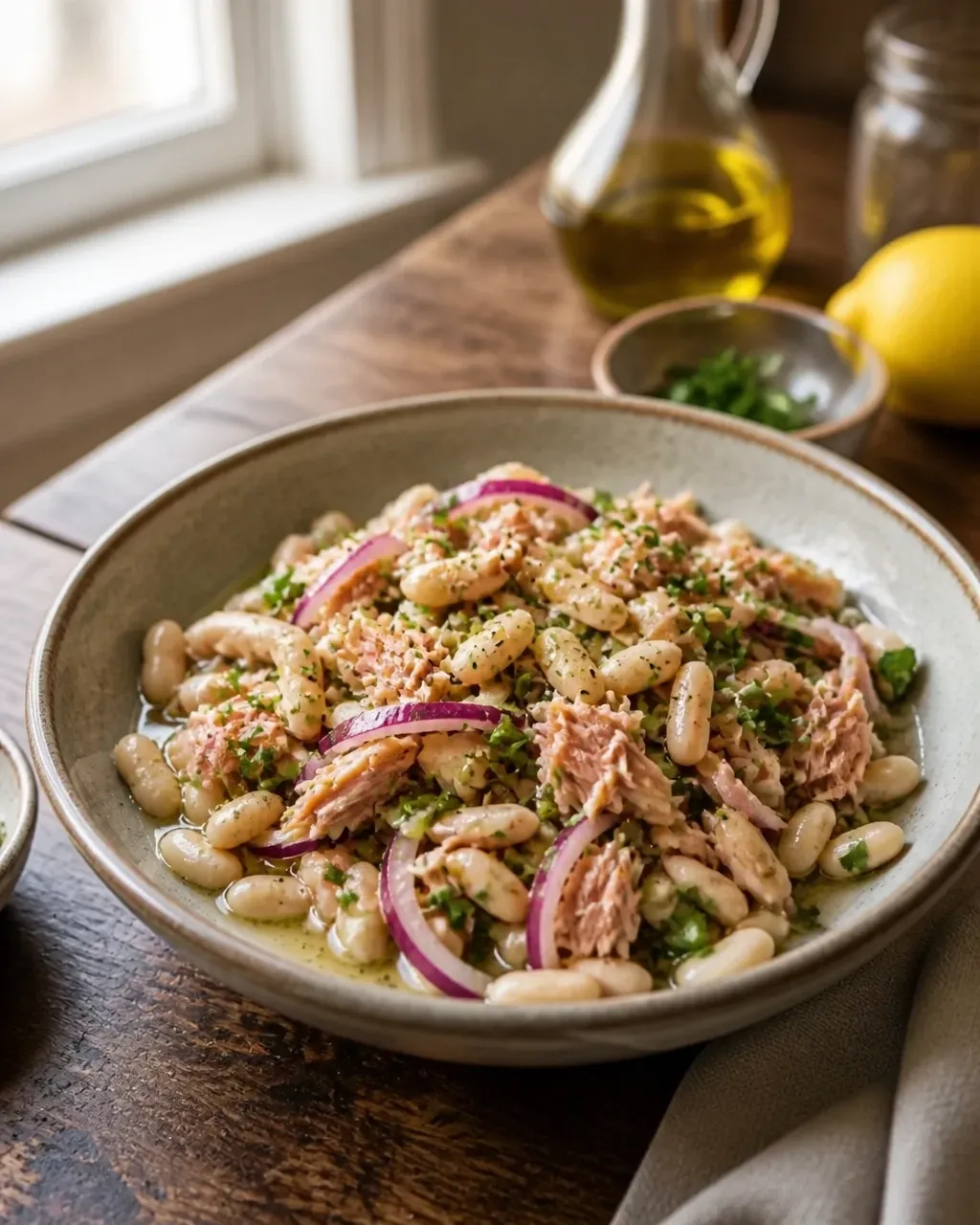
Do not wait until the very end to add all the seasoning. Beans are mild and absorbent, so they need time to take on flavor. Season the dressing first, then taste again after it meets the beans and tuna.
Rinse canned beans if you are watching sodium, and choose tuna according to your preference. Canned light tuna generally contains less mercury than albacore, but follow current local guidance if you are pregnant, nursing, feeding young children, or eating tuna frequently.
Add fresh herbs near serving time. Parsley, dill, or basil bring aromatic freshness, but their flavor fades when buried in dressing for too long. Keep a little back for the top, where it can do the most work.
Let it rest, but not forever
A short rest helps the flavors settle. Give the salad around ten minutes before serving if you have the time. The beans absorb some dressing, the onion softens slightly, and the tuna becomes part of the whole instead of sitting on top like an afterthought.
Avoid making it too far ahead if you want the best texture. Salt and acid draw moisture from beans and vegetables through osmosis, so liquid will collect at the bottom of the container over time. That is not a disaster; stir it back in or drain a little. For the freshest result, dress the salad close to serving.
Store leftovers in a covered container in the refrigerator and eat them within three to four days. Use a clean spoon each time, and discard the salad if it develops an off smell, slimy texture, or questionable storage history. When in doubt, be firm. No bowl of leftovers is worth negotiating with your stomach.
Variations: Keep the Balance, Change the Mood
Turn this salad in a Mediterranean direction with chopped olives, capers, parsley, and a little oregano. These ingredients bring salt and herbal depth, so reduce extra seasoning and let the lemon keep everything lively. Add crisp cucumber if you want more crunch, but dry it first to avoid watering down the dressing.
For a creamier version, mash a few beans into the lemon and oil mixture before folding in the rest. This creates a soft coating without needing mayonnaise. Add dill or finely chopped celery for a tuna-salad feel that is lighter and brighter.
Use cannellini beans for a delicate, creamy texture, or choose butter beans when you want larger bites and a richer mouthfeel. Chickpeas work when you prefer something firmer and nuttier. You can also replace the tuna with canned salmon for a softer, more substantial salad.
For extra heat, add crushed red pepper or sliced chili and balance it with additional lemon. For a mild family version, keep the dressing gentle and let people add chili, black pepper, or hot sauce at the table. That flexibility is why this belongs among reliable quick family meals.
Side Dish Pairings That Add Balance
Serve the salad with toasted whole-grain bread when you want something sturdy for scooping. The crisp edges and nutty flavor complement the creamy beans without competing with the lemon.
A simple green salad is another good partner, especially one dressed lightly. Choose tender leaves and a mild dressing so the plate does not become an acid competition. If you want a warmer side, serve roasted vegetables such as carrots, zucchini, or peppers. Their caramelized sweetness balances the tuna’s savory character.
For a more filling meal, spoon the salad over cooked grains or tuck it into a warm flatbread with greens. Keep the accompaniments simple. This is a minimalist dish, and it does not need a supporting cast of twelve side dishes auditioning for attention.
For more fast inspiration, browse Cookpedia’s 15-minute meals, healthy recipes, or quick dinner recipes.
FAQ
Can I make tuna white bean lemon salad ahead of time?
Yes, but separate the dressing if you want the freshest texture. The beans and tuna can be combined ahead, while the lemon and oil mixture can be added shortly before serving. If you dress the salad in advance, refrigerate it promptly and stir it well before eating.
A short rest improves flavor, but several hours can make the beans softer and draw liquid from the onion or other vegetables. Aim for “seasoned and settled,” not “marinated until mysterious.”
Why did my salad turn watery?
The most common causes are wet beans, juicy vegetables, or dressing that was added too early. Drain and dry the beans thoroughly, and remove excess moisture from chopped vegetables before mixing.
Salt and lemon naturally pull water from plant cells, so some liquid is normal after storage. Stir it back in if the flavor is still balanced, or drain a little if the salad has become loose. Avoid adding more beans without tasting first; that can throw off the seasoning.
Can I use tuna packed in oil?
Absolutely. Oil-packed tuna usually has a softer, richer texture, while tuna packed in water tastes lighter and leaner. Drain oil-packed tuna well and start with less olive oil in the dressing. Add more only if the salad needs it.
Choose the style based on the rest of the meal. Oil-packed tuna works nicely with beans and crusty bread, while water-packed tuna suits a lighter plate with greens and extra herbs.
What can I use instead of white beans?
Use chickpeas, butter beans, or another mild cooked bean. Chickpeas give you a firmer bite and a slightly nutty flavor. Butter beans are larger and creamier, so fold them gently to keep them intact.
If you use home-cooked beans, cool them completely before mixing. Warm beans can soften the tuna and make the dressing separate faster.
How can I make the salad less acidic?
Reduce the lemon slightly and add it in stages. A little extra olive oil can round out sharpness, while mashed beans provide gentle body. Avoid trying to fix an overly sour salad with lots of salt; salt may make the flavor seem louder without truly balancing the acidity.
A small amount of sweetness from finely chopped roasted pepper or sweet onion can also help, but keep the adjustment modest. The salad should still taste bright.
Is this salad safe to pack for lunch?
Pack it in an insulated lunch bag with a frozen cold pack, and keep it chilled until you are ready to eat. Lemon dressing does not make the salad shelf-stable. Follow the same food-safety habits you would use for any tuna or bean salad.
Do not leave it sitting in a warm car or on a sunny desk for hours. If you cannot keep it cold, choose a meal that does not contain perishable ingredients.
How do I make it more filling?
Serve it with whole-grain bread, spoon it over rice or another cooked grain, or add it to a large bed of greens. You can also increase the bean portion for more fiber and carbohydrates, while keeping enough tuna for savory flavor and protein.
Balance is the goal. Add bulk without drowning the salad in oil or turning it into a heavy bowl. A generous handful of greens can make the serving feel larger while keeping the lemony character intact.