Recipe
Serves
4 1×
Serves 4Prep 15 minCook 1HTotal 1H15 min
Ingredients
Method
- Heat the oven to 220°C, or 200°C fan . Pat the pork skin dry, taking care to dry between the scored lines. If you have time, leave the joint uncovered in the fridge for an hour first. Moisture on the surface is the usual reason pork skin does not crackle properly.
- Mix the olive oil and salt, then rub the mixture over the pork. Work the salt into the scored fat, not just over the surface. Mix the chopped sage and garlic into a rough paste and tuck it beneath the string around the joint. Keep the skin clear of the paste so it can crisp.
- Put the pork in a roasting tin with the skin facing upwards. Roast for 20 minutes at the high temperature. The surface should begin to blister and colour. If it is still pale, leave it at the high heat for a few more minutes before reducing the oven temperature.
- Reduce the oven to 180°C, or 160°C fan . Take the tin out briefly and arrange the apple wedges, red onions and sage leaves in the pan juices around and beneath the pork. Return the tin to the oven and roast for about 40 minutes.
- Check the thickest part of the pork with a clean food thermometer, inserting the probe into the meat rather than through the crackling. For UK home cooking, follow Food Standards Agency guidance: cook pork to 70°C for 2 minutes , or use an equivalent time and temperature combination. If the joint has not reached the required temperature, return it to the oven and check again after a short interval. The exact time can vary with the shape of the joint and the oven.
- Transfer the pork to a board and rest it under a loose covering of foil for 15 minutes. Resting helps the meat settle and the centre may rise a few degrees as it stands. Do not rely on that rise instead of checking that the pork has been cooked safely.
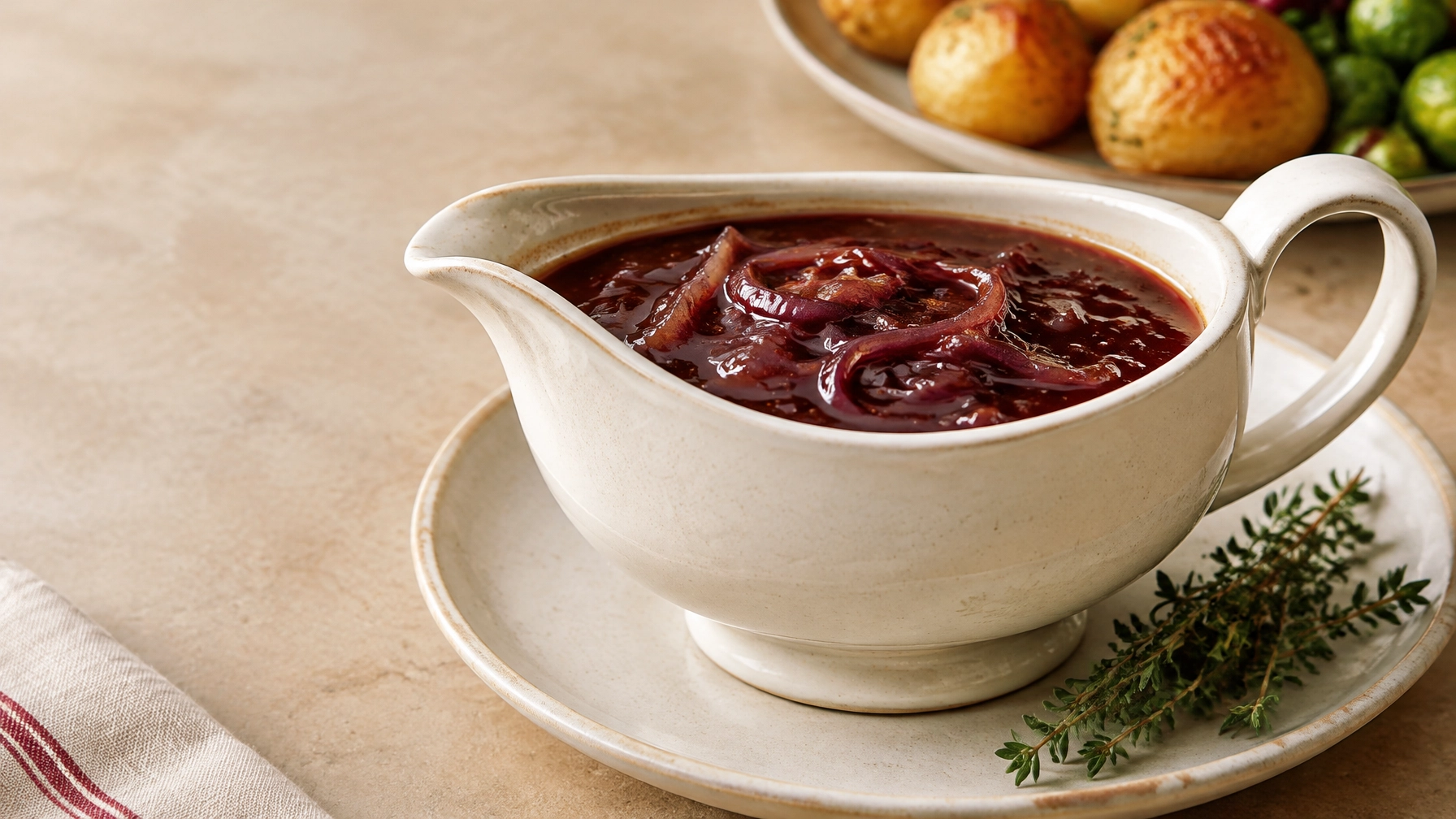
- While the pork rests, make the gravy. Spoon off excess fat from the roasting tin, leaving the browned juices, apples and onions in place. Put the tin over a medium heat, stir in the flour and cook for about 30 seconds. Pour in the cider gradually, scraping up the browned bits from the bottom of the tin. Simmer until the gravy lightly coats a spoon.
- Remove the string and carve the pork across the grain. Serve with the apples, onions and cider gravy.
Roast Pork Loin with Apple and Sage
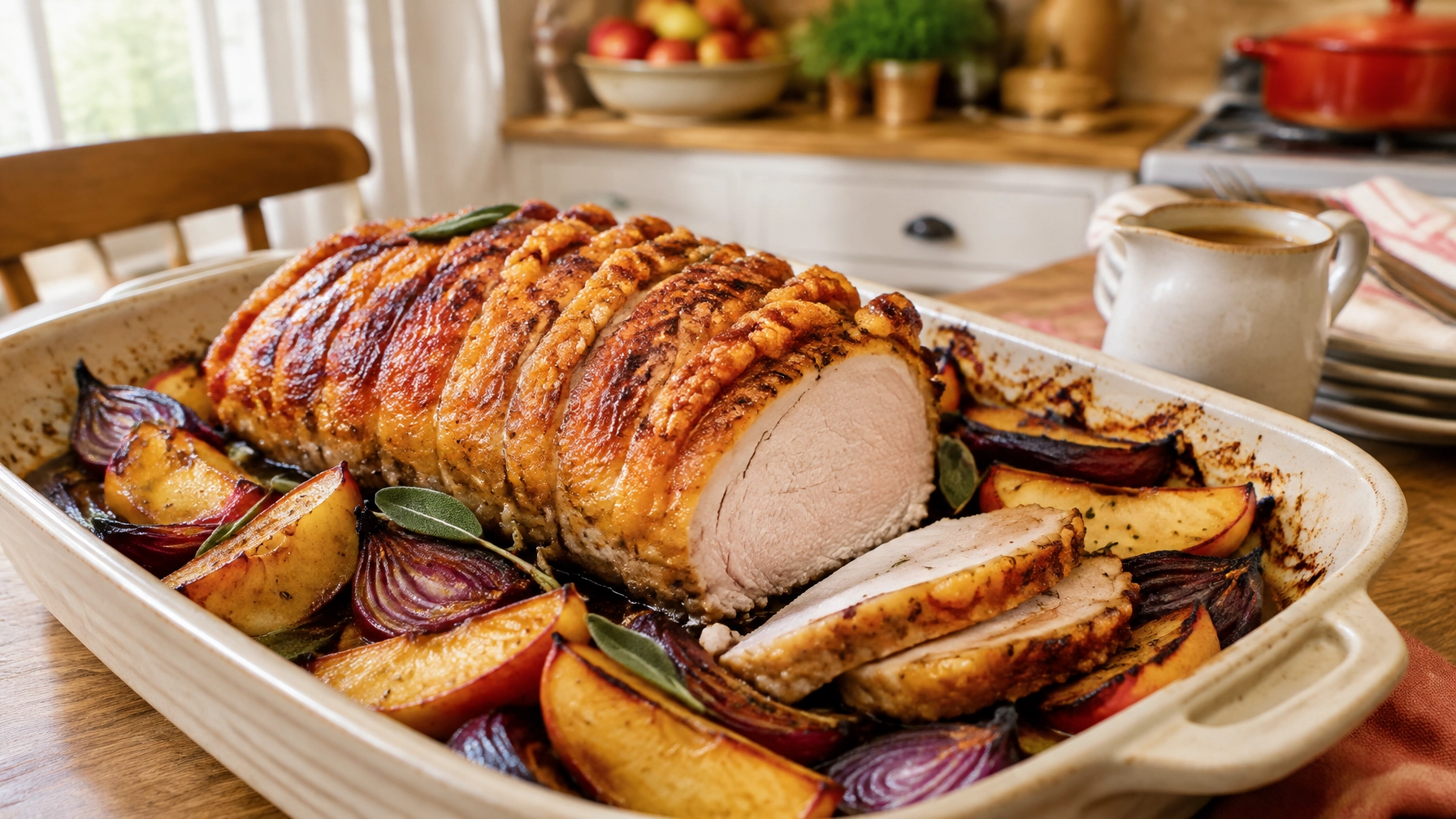
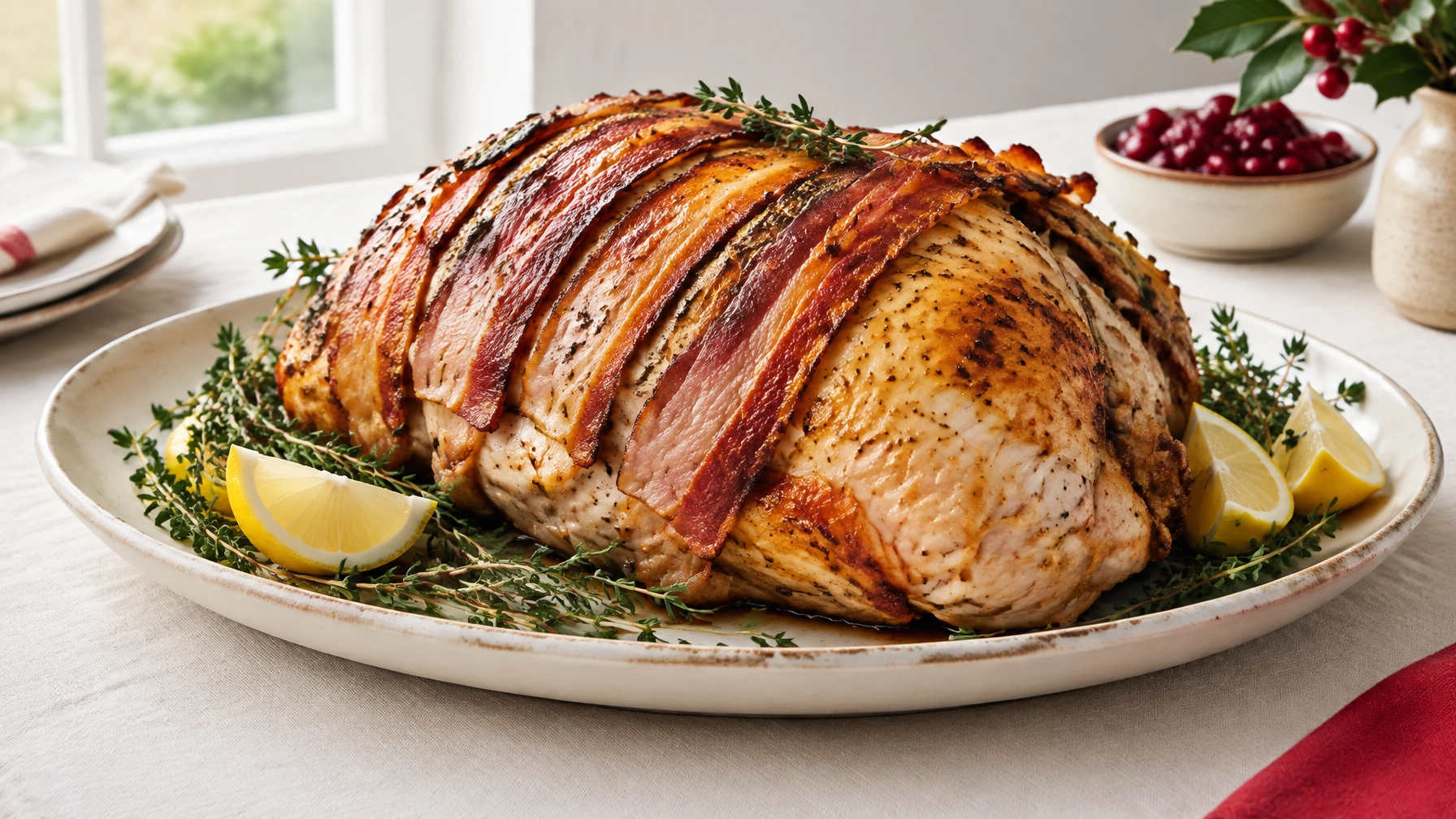
This roast pork loin has crisp crackling, soft apples and onions, and a simple cider gravy. Sage and garlic tucked beneath the string season the meat without getting in the way of the crackling.
The key to crisp skin is getting it thoroughly dry before it goes into the oven. A thermometer helps you check the centre of the joint, while resting gives you time to finish the gravy and lets the meat settle before carving.
Recipe
Serves: 4
Prep time: 15 minutes
Cook time: 60 minutes
Total time: 75 minutes
Tips
Dry skin makes the biggest difference to crackling. If you can plan ahead, leave the scored joint uncovered in the fridge for an hour before cooking. Pat it dry again before rubbing on the oil and salt. If the skin is wet when it enters the oven, it will steam before it can crisp.
Salt the skin early enough to draw out some surface moisture, but check that the skin is dry before the joint goes into the oven. Keep the roast uncovered and avoid pouring liquid over the crackling.
Use a thermometer in the thickest part of the loin, away from the roasting tin. Check more than one spot if the joint is uneven. Time is a guide: the centre temperature is the useful check for doneness. Clean the probe after use.
If the crackling is not crisp when the pork is cooked, lift it away from the meat and return it to a hot oven for a few minutes, watching closely. Rest the meat separately so the crackling does not soften under foil.
The apples and onions should go into the roasting tin when the oven temperature is lowered. This gives them time to soften and take on the pan juices without spending the full high-heat stage in the oven, where their edges could burn.
Variations
Use firm eating apples if you want wedges that hold their shape. A softer cooking apple will collapse more and mingle with the roasting juices, giving the gravy a sweeter, fruitier flavour.
For a stronger sage flavour, add a few extra whole leaves to the roasting tin with the apples and onions. Keep the chopped sage and garlic beneath the string rather than on the skin, where they could catch during the initial high heat.
If you do not have cider, use water to loosen the browned juices in the tin. The resulting gravy will be less fruity, but the roasted apple, onion and sage will still give it flavour.
FAQ
How do I get the crackling crisp? Start with completely dry skin, score through the rind and fat without cutting into the meat, and rub salt into the scored surface. The hot first stage helps the skin blister. Wet skin is the main reason crackling stays soft.
Can I prepare the pork ahead? Yes. Pat the skin dry, score it if needed, then leave the joint uncovered in the fridge for up to an hour before cooking. Keep raw pork separate from ready-to-eat food and wash your hands and work surfaces after handling it.
Can I make the gravy without cider? Yes. Use water to loosen the browned juices and scrape the roasting tin well. The gravy will be less sweet and aromatic, but it will still pick up flavour from the pork, apple, onion and sage.