Recipe
Ingredients
Method
- Heat the olive oil in a large lidded casserole dish over medium heat. Add the sausages and cook for 6 to 8 minutes, turning regularly, until browned on most sides. Remove them to a plate.
- Add the chopped onion to the same pan. Cook for 5 minutes, stirring occasionally, until softened. If the pan is dry, add a small amount of additional oil.
- Add the garlic, tomato purée, dried thyme and smoked paprika. Stir continuously for 1 to 2 minutes. The tomato purée should darken slightly and the garlic should become fragrant without browning.
- Pour in the chopped tomatoes and chicken stock. Stir to combine, scraping the base of the pan to release any browned pieces.
- Season with the salt and black pepper. Return the sausages to the pan and bring the liquid to a gentle simmer.
- Cover the pan and cook for 22 to 25 minutes. Turn the sausages once during cooking. The sauce should remain at a low simmer rather than a rapid boil.
- Remove the lid and add the drained butter beans. Stir carefully so the beans remain whole. Simmer uncovered for 7 to 10 minutes, or until the sauce has thickened and the beans are hot.
- Check that the sausages are fully cooked in the centre. Adjust the seasoning if required, then scatter over the chopped parsley.
- Serve immediately with crusty bread, mashed potatoes, rice or a green vegetable.
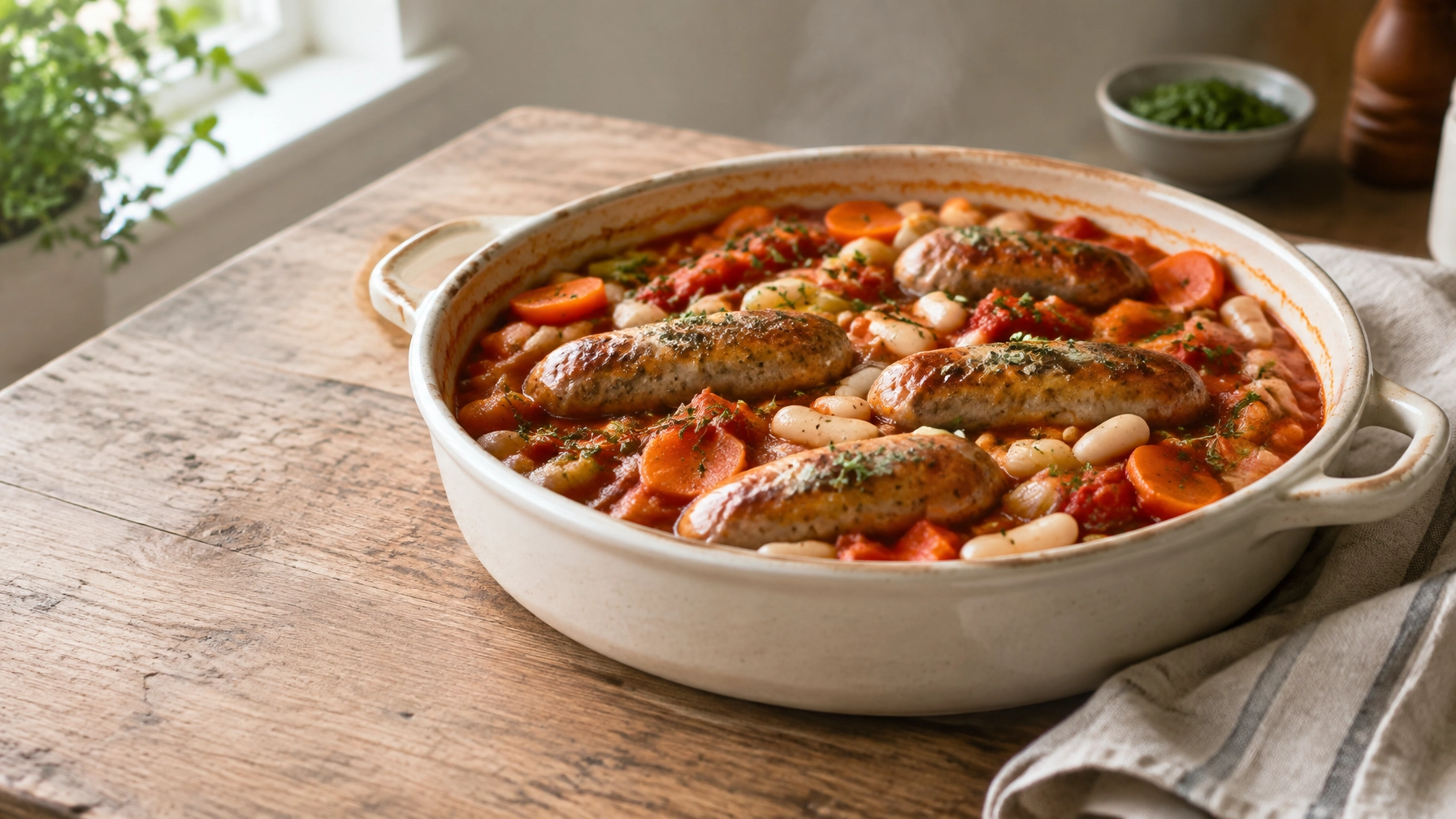
Sausage and Butter Bean Casserole (One-Pot)
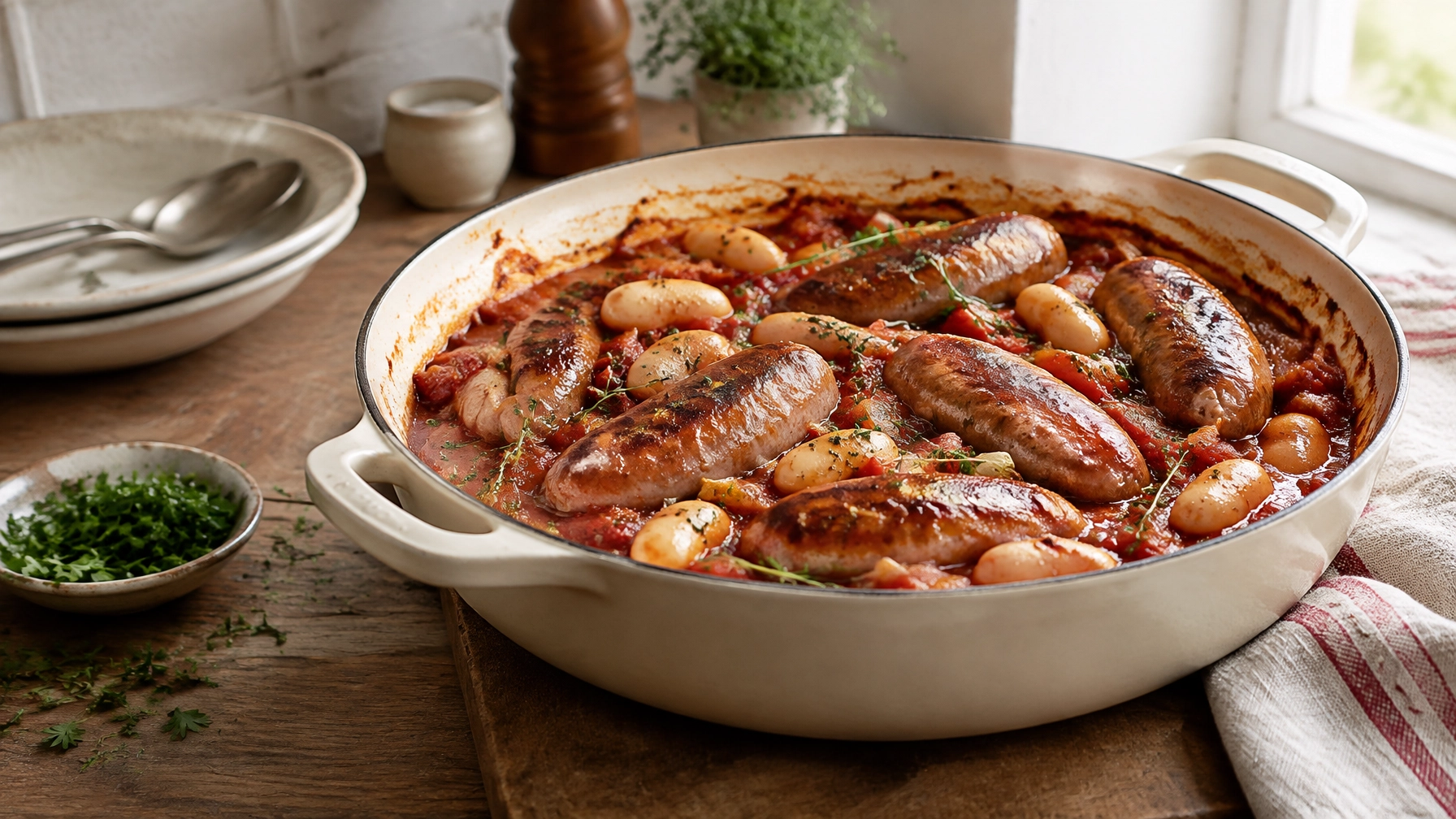
This sausage and butter bean casserole is a practical one-pot meal made with browned sausages, creamy butter beans, chopped tomatoes, onions, garlic and herbs. It requires one large pan and provides a complete, substantial dinner with limited washing up.
The casserole is suitable for a weeknight meal, a planned lunch or batch cooking. The sausages are browned first to establish flavour. The tomato sauce is then built in the same pan before the beans are added near the end. This method keeps the beans intact while allowing them to absorb the sauce.
Preparation
Use a wide, heavy-based casserole dish or large saucepan with a lid. A broad pan gives the sausages enough room to brown evenly and allows the sauce to reduce at a steady rate.
Drain and rinse the butter beans before cooking. This removes the liquid from the tin and helps keep the finished sauce clean-tasting. Chop the onion finely so it softens within the cooking time.
The sausages do not need to be fully cooked when they are first browned. They will finish cooking in the tomato sauce. Avoid piercing them during cooking, as this allows their juices to escape and can result in a drier texture.
Timing
The preparation time is approximately 15 minutes. The cooking time is approximately 40 minutes. The total time is approximately 55 minutes.
The casserole can be made slightly ahead of serving. If it becomes too thick while standing, add a small amount of stock or water and reheat gently until hot throughout.
Serving
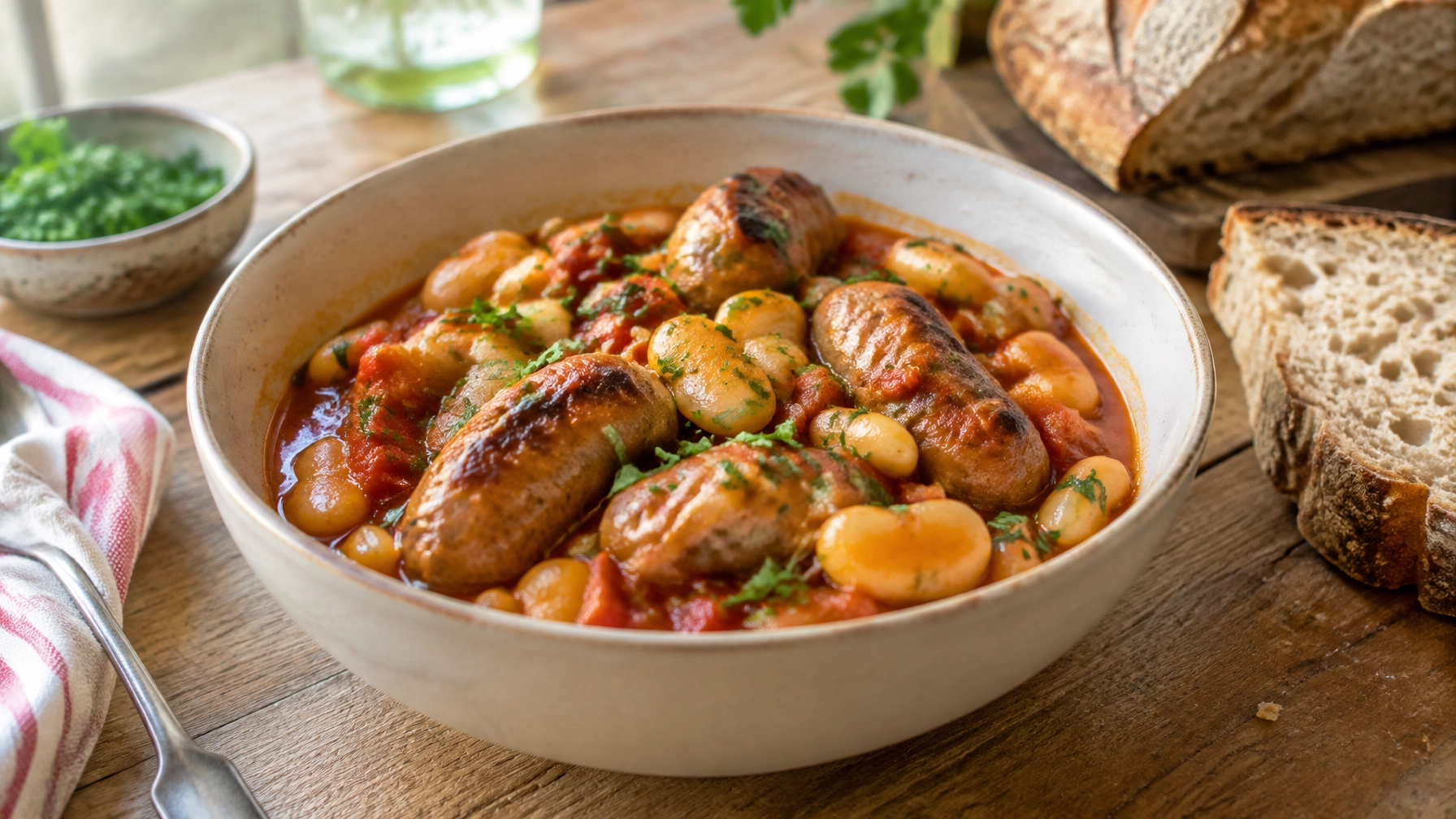
Serve the casserole directly from the cooking dish. The sauce is thick enough to coat bread, potatoes or rice, while the butter beans provide a soft, creamy element without requiring a separate side dish.
For a lighter plate, serve it with steamed cabbage, green beans or a simple dressed salad. For a more substantial meal, use mashed potatoes or toasted bread to absorb the tomato sauce.
Tips
- Use thick sausages rather than very thin sausages, as they remain tender during the simmering stage.
- Brown the sausages in batches if the pan is crowded. Crowding causes them to steam rather than brown.
- Do not add the butter beans at the beginning. Extended simmering can cause them to split and lose their shape.
- If the sauce is thin, simmer the casserole uncovered for a few additional minutes.
- If the sauce is too thick, add stock one tablespoon at a time until the required consistency is reached.
- Check the seasoning after adding the beans. Their mild flavour can soften the perceived saltiness of the sauce.
- Allow the casserole to rest for 5 minutes before serving. This gives the sauce time to settle.
Variations
For a spicier casserole, replace the smoked paprika with hot paprika or add a pinch of chilli flakes with the garlic. Use caution when adding salt if the sausages or stock are already highly seasoned.
Chicken sausages can replace pork sausages. The cooking time may vary according to their size, so confirm that they are fully cooked before serving.
For additional vegetables, add sliced red pepper with the onion. Courgette, carrots or chopped spinach can also be incorporated. Carrots should be added with the tomatoes so they have enough time to soften. Spinach should be stirred in during the final 2 minutes.
Cannellini beans can replace butter beans, although their smaller size gives the casserole a slightly different texture. Haricot beans are also suitable.
For a baked finish, transfer the cooked casserole to an ovenproof dish, cover with fresh breadcrumbs and bake at 200C for 10 to 15 minutes, until the topping is golden. This creates a firmer surface but adds an additional dish.
Storage
Cool leftovers promptly and transfer them to a covered container. Refrigerate for up to 3 days. Reheat in a saucepan over low to medium heat until piping hot throughout. Add a little stock or water if the sauce has thickened during storage.
The casserole can also be frozen for up to 3 months. Defrost it in the refrigerator before reheating. The butter beans may become slightly softer after freezing, but the flavour will remain suitable for a prepared meal.
FAQ
Can I use dried butter beans?
Yes, but they must be fully soaked and cooked before being added to the casserole. Tinned butter beans are more practical for this recipe because they reduce the preparation time and provide consistent results.
Can I make this casserole without stock?
Yes. Use water instead, although stock provides more savoury depth. A small amount of additional seasoning may be required when using water.
Can I cook the sausages entirely in the sauce?
Yes, but browning them first improves the flavour and appearance. If you place uncooked sausages directly into the sauce, allow enough time for them to cook fully before adding the beans.
Why is my sauce watery?
The pan may have been covered for too long, or the stock quantity may have been high. Simmer the casserole uncovered for several minutes to reduce the liquid. Stir occasionally to prevent the base from catching.
Can I prepare this one-pot meal in advance?
Yes. Cook the casserole, cool it promptly and refrigerate it in a covered container. Reheat gently until hot throughout. Add a small amount of liquid if necessary.
What can I serve with sausage casserole?
Crusty bread, mashed potatoes, rice, steamed greens and roasted vegetables are suitable options. The choice depends on whether a lighter or more substantial meal is required.