Recipe
Serves
6 1×
Serves 6Prep 25 minTotal 19H50 min
Ingredients
Method
- Combine the goat, curry powder, allspice, salt, black pepper, garlic, ginger, half the onion, half the spring onions and half the thyme in a large bowl.
- Add the Scotch bonnet. Cover and refrigerate for at least 2 hours, or overnight.
- Heat the oil in a frying pan. Brown the goat in batches over medium-high heat.
- Place the browned goat in the slow cooker. Add the remaining onion, spring onions, thyme, tomatoes and potatoes.
- Add the stock to the frying pan. Scrape up any browned pieces, then pour the liquid into the slow cooker.
- Cover and cook on LOW for 7 to 8 hours.
- Remove the Scotch bonnet and thyme stems. Skim excess fat. Mash a small amount of potato into the gravy if necessary.
- Stir in the lime juice. Taste and adjust the seasoning. Rest for 10 minutes, then serve.
Slow Cooker Goat Curry (Caribbean)
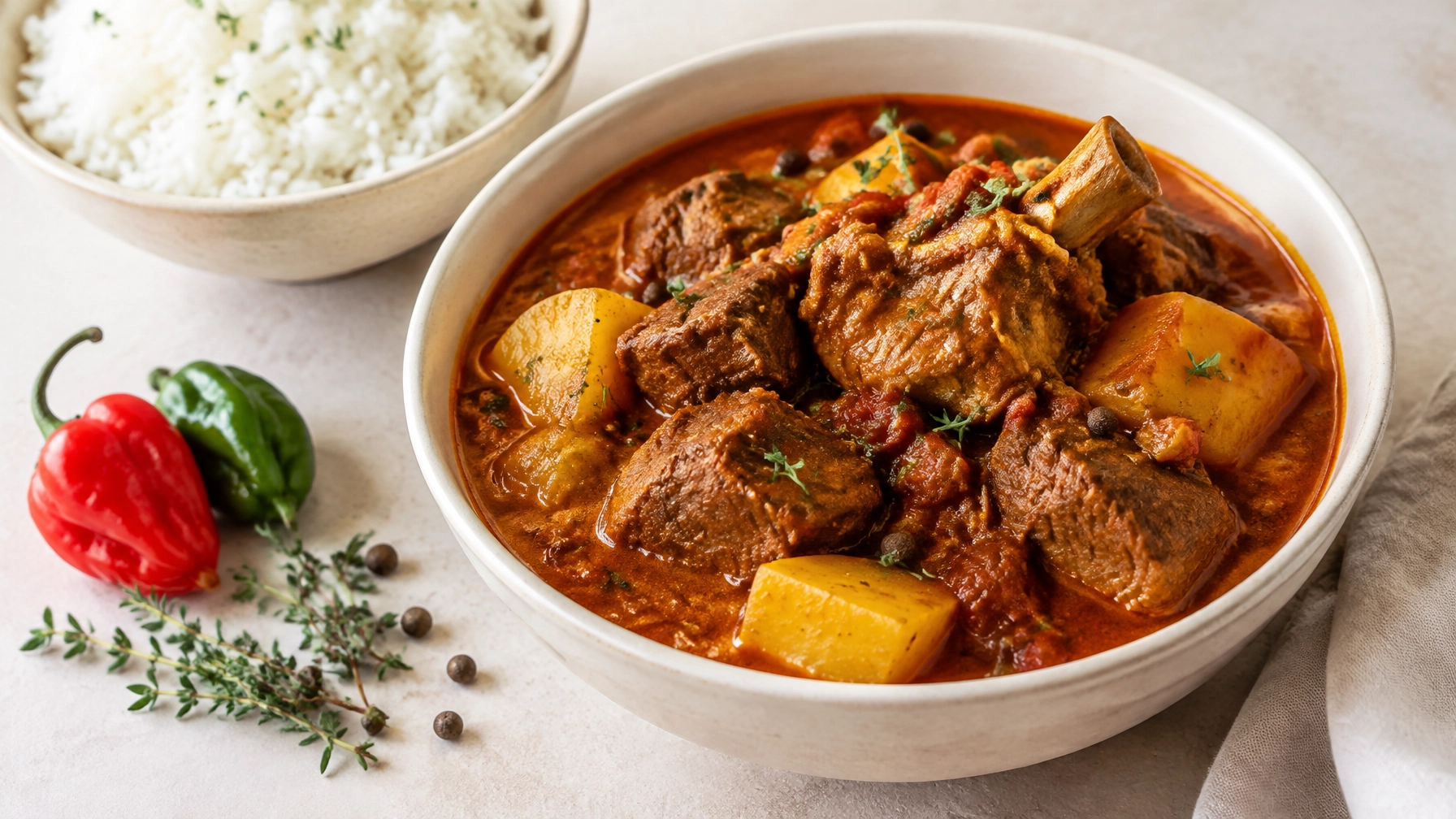
This slow cooker goat curry uses bone-in goat, Caribbean curry powder, allspice, Scotch bonnet, thyme and potato to produce tender meat and a thick, savoury gravy.
Context
Goat curry is a slow-cooked dish built around time, heat and controlled seasoning. Bone-in goat gives the sauce body while the connective tissue softens during cooking. Allspice supplies the characteristic pimento note. Thyme adds a herbal base. Scotch bonnet provides heat and fruitiness.
The method below uses a short browning stage before slow cooking. This step is optional. It creates a deeper curry flavour and gives the meat a more developed surface. The slow cooker then completes the cooking process with limited supervision.
Use thawed goat meat. Do not place frozen goat into a slow cooker. Keep the lid closed during cooking to maintain a stable temperature.
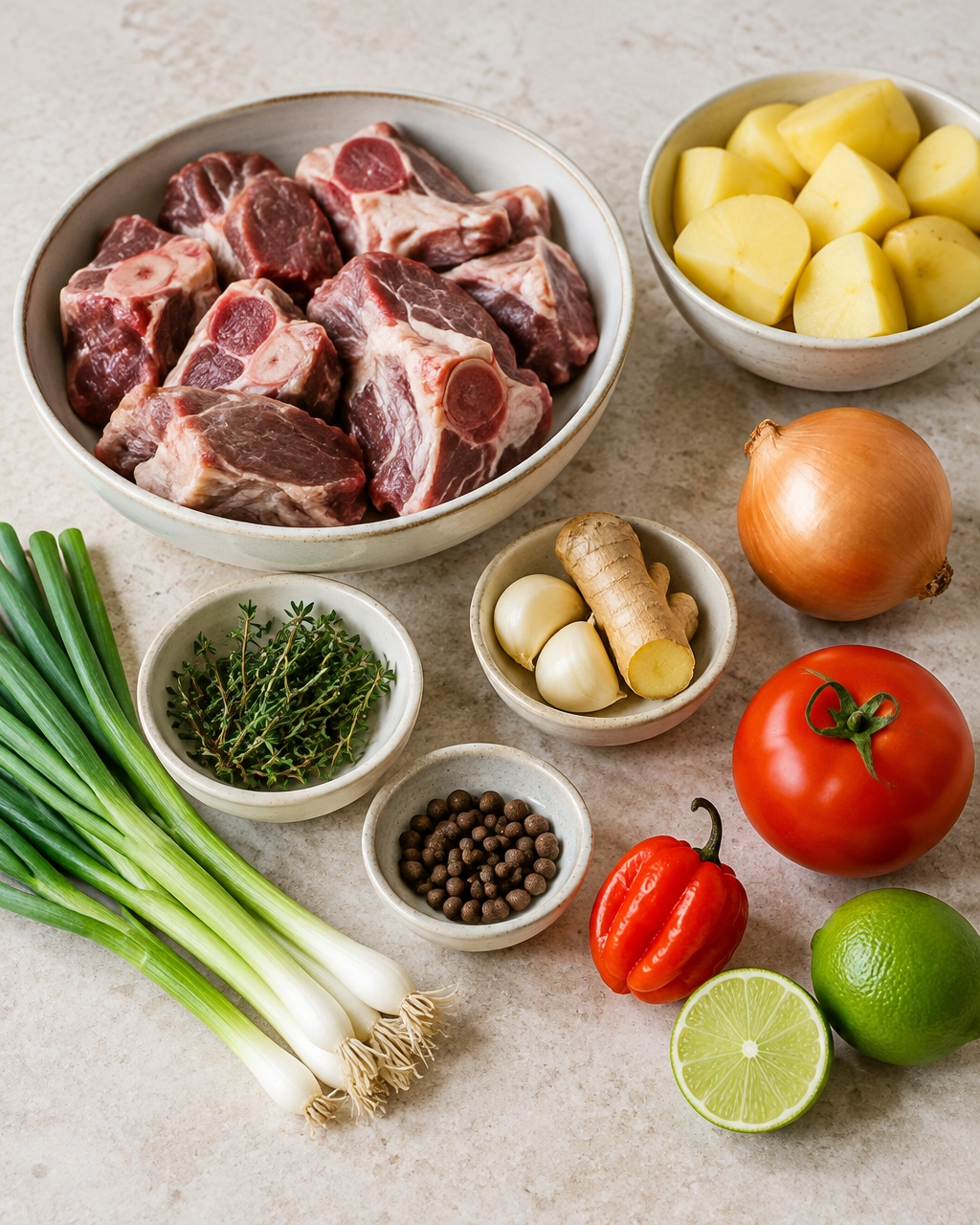
Preparation
Bone-in goat is usually sold in curry pieces. These may include shoulder, neck or mixed stew cuts. Ask the butcher for pieces of similar size where possible. Pieces that are too small may dry out before larger pieces are tender.
Trim excessive surface fat, but do not remove all connective tissue. It will soften and contribute to the sauce. Pat the goat dry before seasoning. Excess surface moisture can prevent proper browning.
The Scotch bonnet can be added whole, pierced once, or finely chopped. A whole pepper gives aroma with lower heat transfer. A pierced pepper gives more heat. Chopped pepper gives the most direct heat and distributes it throughout the gravy.
Potatoes may be added at the start for a softer texture and a thicker sauce. Add them later if distinct potato pieces are preferred.
Service
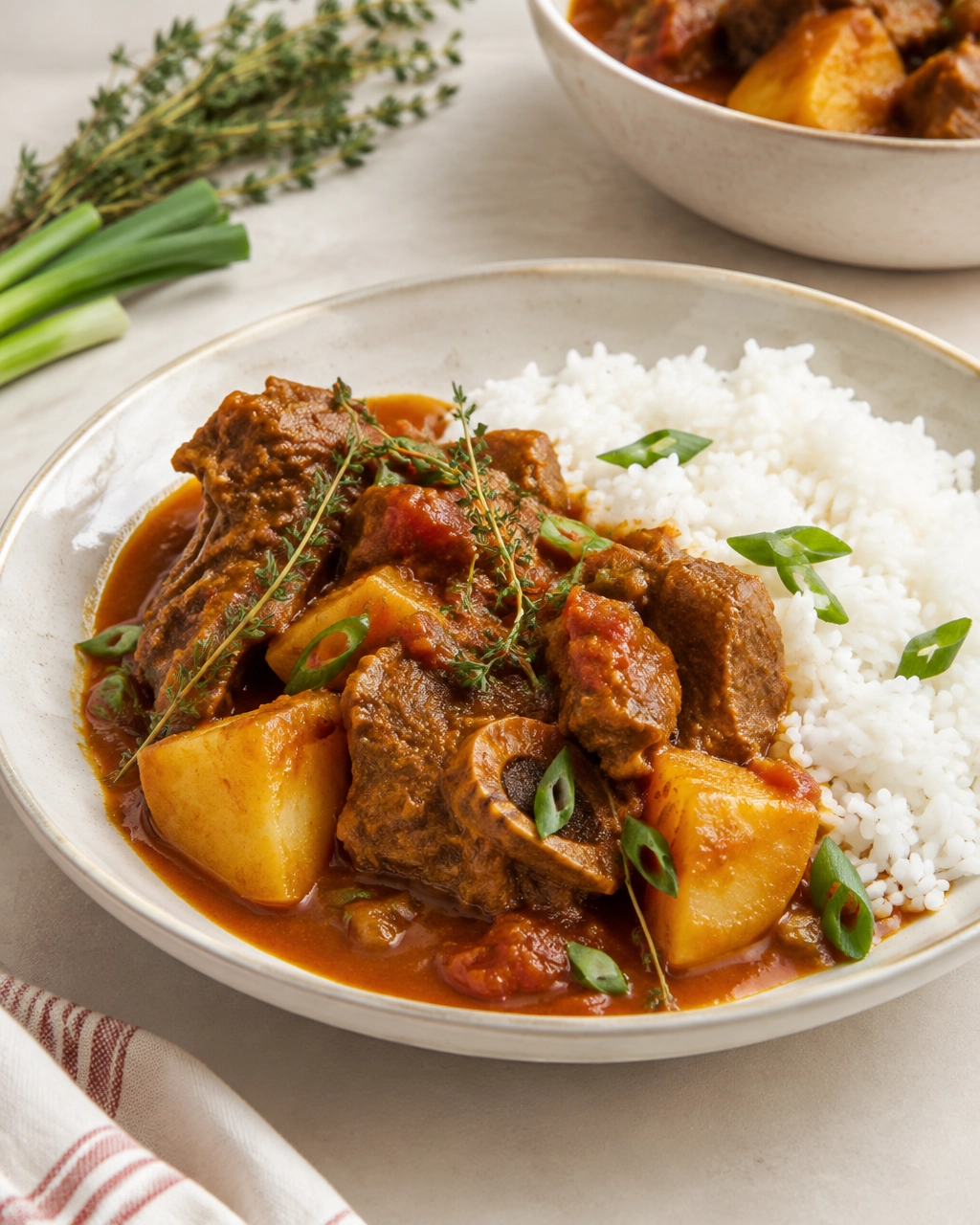
Serve the curry with plain rice, rice and peas, roti or boiled dumplings. The gravy should be thick enough to coat the goat and potatoes without becoming dry.
Fresh spring onion, thyme or a small amount of chopped coriander can be added at the point of service. Lime wedges may be provided separately. Do not add excessive garnish. The curry should remain the dominant component.
Allow the dish to cool promptly if it is not being served immediately. Refrigerate leftovers in a shallow container. Reheat until piping hot throughout. The FDA food safety guidance provides general information on safe preparation, storage and reheating.
Control
- Use bone-in meat: Bone-in pieces provide better texture and a fuller sauce than very lean, boneless pieces.
- Brown in batches: Crowding the pan causes the goat to steam instead of brown.
- Keep the lid closed: Repeated opening extends the cooking time and reduces heat.
- Add enough liquid: The stock should reach partway up the meat, not completely cover it.
- Check late in cooking: Slow cookers vary. Begin checking the goat at 7 hours.
- Manage the pepper: Remove the Scotch bonnet when the required heat level has been reached.
- Thicken with potato: Mashing potato is preferable to adding flour directly to the slow cooker.
- Check temperature: Whole cuts of goat should reach at least 63°C, followed by a short rest. Texture remains the main indicator for this braised preparation.
Variations
Lower heat: Add the Scotch bonnet whole and remove it after several hours. Alternatively, use half a pepper.
More heat: Pierce the pepper in several places or chop it before adding it. Handle it with care and wash hands thoroughly afterwards.
Firmer potatoes: Add the potatoes during the final 90 minutes of cooking. Confirm that they are tender before serving.
No browning: Add the seasoned goat directly to the slow cooker. The finished curry will still be effective, but the gravy will have less roasted depth.
Coconut version: Replace 100 ml of the stock with unsweetened coconut milk. Add it at the beginning and use a smaller quantity of stock to prevent a thin sauce.
Vegetable addition: Add sliced carrot or sweet potato during the final 2 hours. Avoid adding delicate vegetables at the start because they may lose their structure.
Questions
Can goat curry be made without marinating?
Yes. The goat can be added directly to the slow cooker after seasoning. Marinating improves flavour penetration but is not a requirement. If time is limited, season the goat immediately before browning.
Why is the goat still tough?
The cooking period may be incomplete. Goat shoulder and neck contain connective tissue that requires extended moist heat. Continue cooking on LOW until the meat separates easily from the bone. Do not increase the heat as a substitute for sufficient cooking time.
Can the curry cook overnight?
It can, provided the slow cooker is functioning correctly and the ingredients are thawed before cooking. Use LOW and ensure the cooker is not overfilled. Do not leave the finished curry at room temperature after cooking.
Can leftovers be frozen?
Yes. Cool the curry promptly, remove the bones if preferred, and freeze it in sealed portions. Defrost in the refrigerator. Reheat thoroughly on the hob or in a microwave rather than reheating from cold in the slow cooker.
What can replace Scotch bonnet?
Use another fresh chilli according to the required heat level. A mild red chilli will provide colour with less heat. The flavour will not be identical, but the cooking method remains unchanged.
Can lamb replace goat?
Yes. Use bone-in lamb shoulder or neck and begin checking for tenderness earlier because lamb may soften faster. The allspice, thyme and curry powder remain suitable.