Recipe
Serves
6 1×
Serves 6Prep 25 minCook 8H30 minTotal 8H55 min
Ingredients
Method
- Remove the chuck roast from its packaging and pat it dry with paper towels. Season all sides with the salt and black pepper. Leave it at room temperature for 15 to 20 minutes while preparing the vegetables.
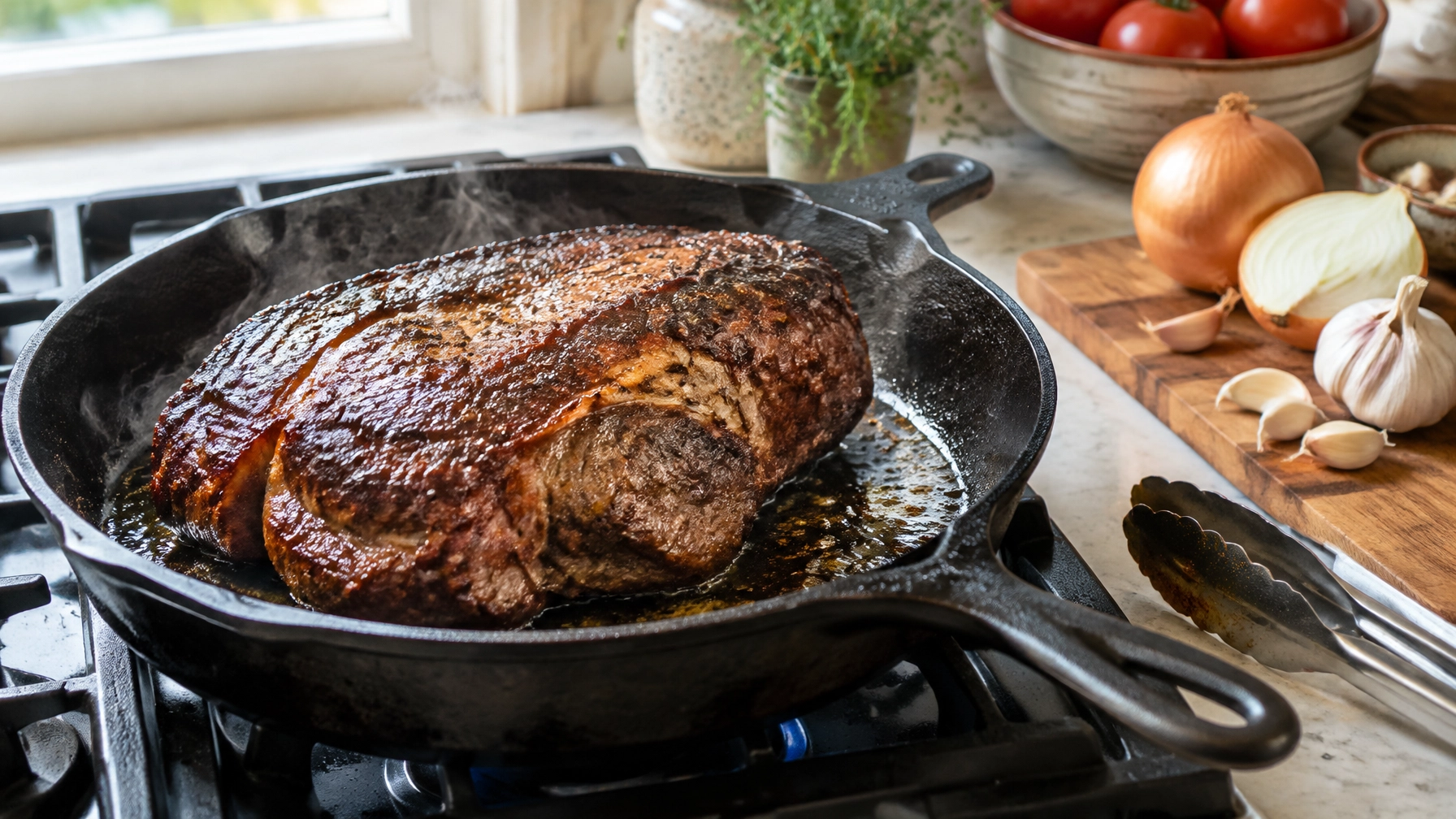
- Heat the olive oil in a large heavy skillet over medium-high heat. Add the roast and sear for 4 to 5 minutes on each side, including the edges, until a deep brown crust forms. Transfer the roast to the slow cooker.
- Reduce the heat to medium. Add the onion and celery to the same skillet. Cook for 3 to 4 minutes, stirring occasionally. Add the garlic and tomato paste. Cook for 1 minute.
- Pour the beef stock and Worcestershire sauce into the skillet. Scrape the browned pieces from the base of the pan. Bring the liquid to a brief simmer, then pour it over the roast.
- Arrange the carrots and potatoes around the beef. Add the rosemary, thyme, and bay leaf. The liquid should come partway up the sides of the roast. It should not completely cover the meat.
- Cover the slow cooker. Cook on LOW for 8 to 9 hours, or until the roast is fork-tender and separates easily. Cooking times vary between appliances and according to the size and shape of the roast. A HIGH setting can be used for approximately 4 1/2 to 6 hours, but LOW is preferred for the most consistent texture.
- Transfer the beef and vegetables to a serving platter. Cover the beef loosely with foil and rest it for 10 to 15 minutes.
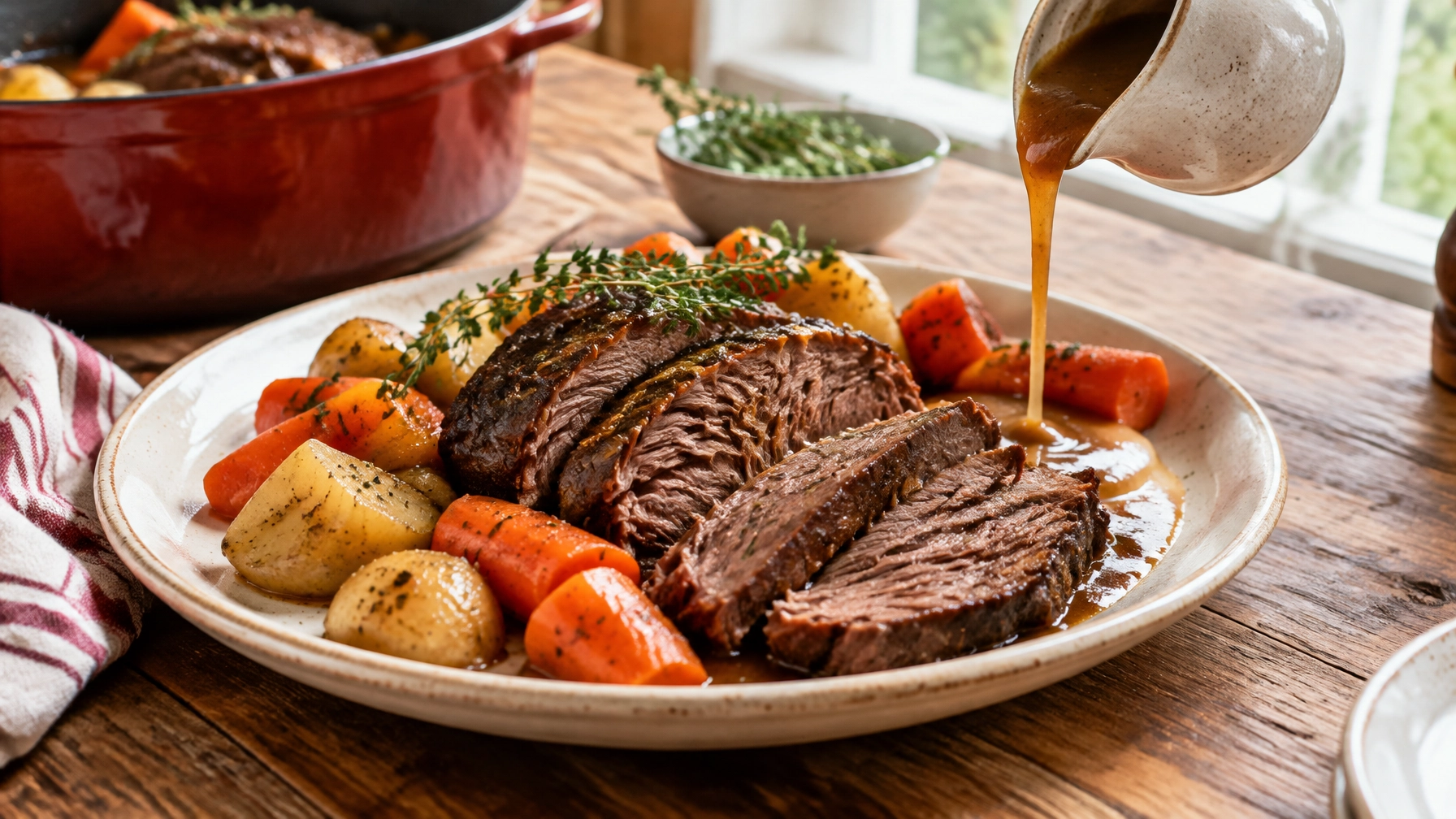
- To make the gravy, strain the cooking liquid into a saucepan and skim excess fat from the surface. Bring the liquid to a gentle simmer. Mix the cornstarch and cold water in a small bowl until smooth. Whisk the slurry into the simmering liquid and cook for 2 to 3 minutes, until thickened. Season as required.
- Slice the roast against the grain or pull it into large pieces. Serve with the vegetables and gravy.
Slow Cooker Pot Roast (Tender and Juicy)
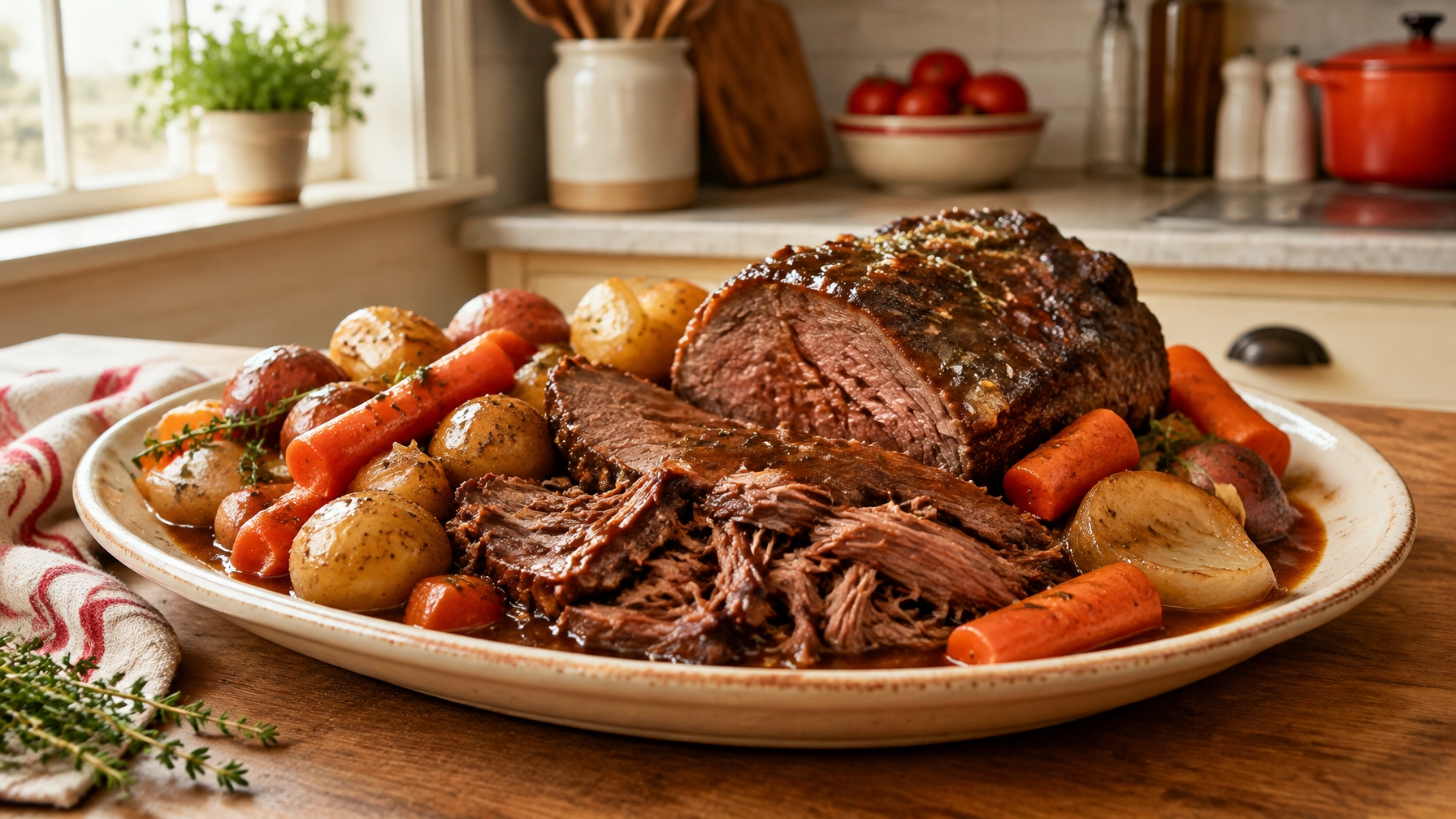
A reliable slow cooker pot roast requires three controls: the correct cut of beef, sufficient cooking time, and restrained liquid. Chuck roast is well suited to this method because its connective tissue gradually softens during prolonged, moist cooking.
Searing the beef before it enters the slow cooker adds a browned exterior and develops flavour in the cooking liquid. The roast should be cooked on LOW until it can be pierced and separated easily with a fork. A roast that remains firm or chewy requires additional cooking time.
This recipe produces tender beef, soft root vegetables, and enough concentrated cooking liquid to make a simple gravy.
Tips
Use chuck roast
Choose a boneless chuck roast with visible marbling. Leaner cuts can become dry before their connective tissue has fully softened. Brisket or shoulder roast can also work, but cooking times may vary.
Sear thoroughly
The roast should be dark brown rather than lightly coloured. This step does not seal in moisture. It creates browned flavour compounds that improve the finished dish and the gravy.
Do not add excessive liquid
A slow cooker retains moisture, and the vegetables release additional water as they cook. Two cups of stock is sufficient for a roast of this size. Too much liquid can dilute the gravy and produce a boiled flavour.
Keep the lid closed
Each time the lid is removed, heat escapes and cooking time increases. Check the roast only during the final hour unless the appliance instructions require otherwise.
Use the fork test
Temperature confirms that the beef is cooked, but tenderness determines whether pot roast is ready. Insert a fork into the thickest section and twist. The roast is ready when it gives little resistance and begins to separate.
For general beef safety information, refer to the United States Department of Agriculture beef handling guidance. Whole cuts of beef should reach at least 145°F with a rest period, but pot roast is generally cooked beyond that point to soften connective tissue.
Variations
Add red wine
Replace 1/2 cup of the beef stock with dry red wine. Simmer it briefly in the skillet after deglazing to reduce its sharpness before adding it to the slow cooker.
Use mushrooms
Add 8 ounces of sliced cremini mushrooms during the final 2 hours of cooking. Adding them later preserves more of their texture.
Make it dairy-free
This recipe is naturally dairy-free. Confirm that the beef stock and Worcestershire sauce are free from any ingredients that do not meet your dietary requirements.
Add firmer vegetables later
For vegetables with more structure, add the potatoes and carrots during the final 3 hours of cooking. Add them at the beginning if a very soft texture is preferred.
Make a thicker gravy
For a more substantial gravy, use 3 tablespoons of cornstarch with 4 tablespoons of cold water. Add the mixture gradually because the gravy continues to thicken as it cools.
FAQ
Why is my slow cooker pot roast tough?
The roast usually needs more time. Chuck roast can remain firm for several hours before its connective tissue breaks down. Continue cooking on LOW and check again after 30 to 60 minutes.
Can I put raw beef directly into the slow cooker?
Yes. However, searing the beef first creates a deeper flavour and a more developed finished sauce. It also gives the roast a more defined exterior.
Should the roast be completely covered with liquid?
No. The liquid should reach partway up the roast. The slow cooker traps steam, and the meat and vegetables release moisture while cooking.
Can I cook pot roast on HIGH?
Yes, but LOW is preferable when time permits. Cook on HIGH for approximately 4 1/2 to 6 hours, checking for fork tenderness rather than relying only on the clock.
When should I add potatoes?
Add potatoes at the beginning for a soft, braised texture. Add them during the final 2 to 3 hours if you prefer them to hold their shape.
Can I prepare this recipe in advance?
Yes. Cool the beef and gravy promptly, then refrigerate them in covered containers for up to 3 days. Reheat gently until hot throughout. Store vegetables separately if their texture is a priority.
Can I freeze slow cooker pot roast?
Yes. Freeze the cooled beef and gravy in airtight containers for up to 3 months. Thaw in the refrigerator before reheating. Potatoes may become softer after freezing, but the beef and gravy remain suitable for batch cooking.
How should leftovers be reheated?
Reheat the beef with a small amount of gravy in a covered saucepan over low heat. Add a splash of stock if the sauce has thickened excessively. Heat until the centre is hot, without boiling the meat.