Recipe
Serves
4 1×
Serves 4Prep 20 minCook 6H25 minTotal 6H45 min
Ingredients
Method
- Pat the pork belly dry and cut it into evenly sized pieces.
- Add the soy sauce, water, honey, rice vinegar, ginger, garlic and star anise to the slow cooker.
- Add the pork and turn it through the braising liquid.
- Cover and cook on LOW for 6 hours.
- Transfer the pork to a covered plate and strain the cooking liquid into a saucepan.
- Skim off excess fat, then boil the liquid over medium-high heat for 10 to 15 minutes until glossy and reduced.
- Return the pork to the saucepan and turn it through the glaze.
- Add sesame oil, if using, then serve with spring onions and sesame seeds.
Slow Cooker Sticky Pork Belly (Soy and Ginger)
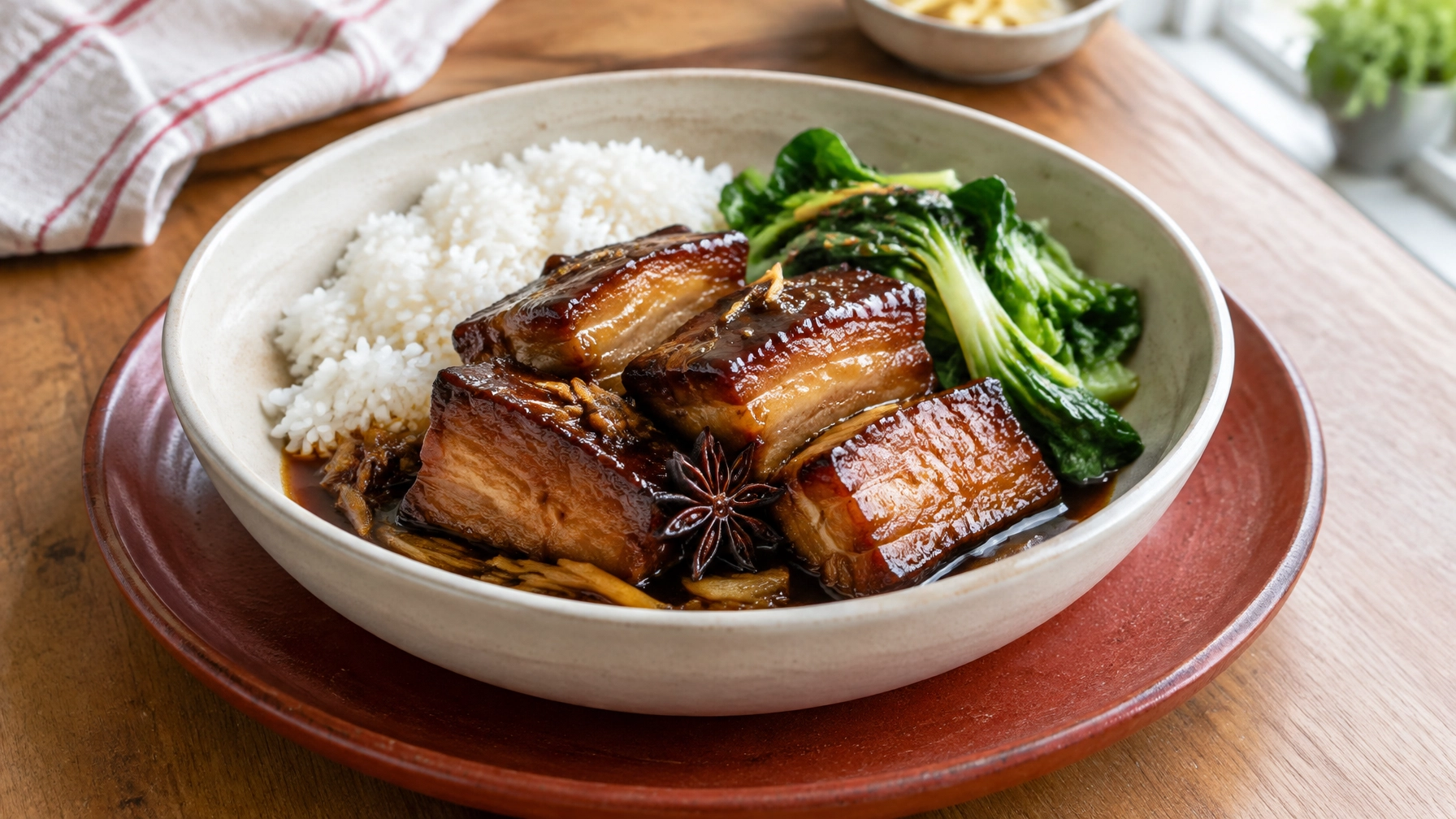
A slow cooker pork belly recipe using soy, rice vinegar, ginger, star anise and honey, finished by reducing the braising liquid into a glossy glaze.
Definition
Sticky (adjective): coated in a reduced sauce that clings to the surface of the food.
Braise (verb): cook food slowly in a covered vessel with a small quantity of liquid.
This is hands off Chinese pork in practical terms. The slow cooker performs the prolonged cooking required to soften pork belly. The final reduction is completed separately because the liquid will not become properly glossy while diluted inside the cooker.
The method is deliberately distinct from pulled pork, carnitas, BBQ ribs, gammon and pork stew. The pork remains in substantial pieces, the cooking liquid is soy-based rather than tomato-based, and the finishing stage is a saucepan reduction.
Reduction
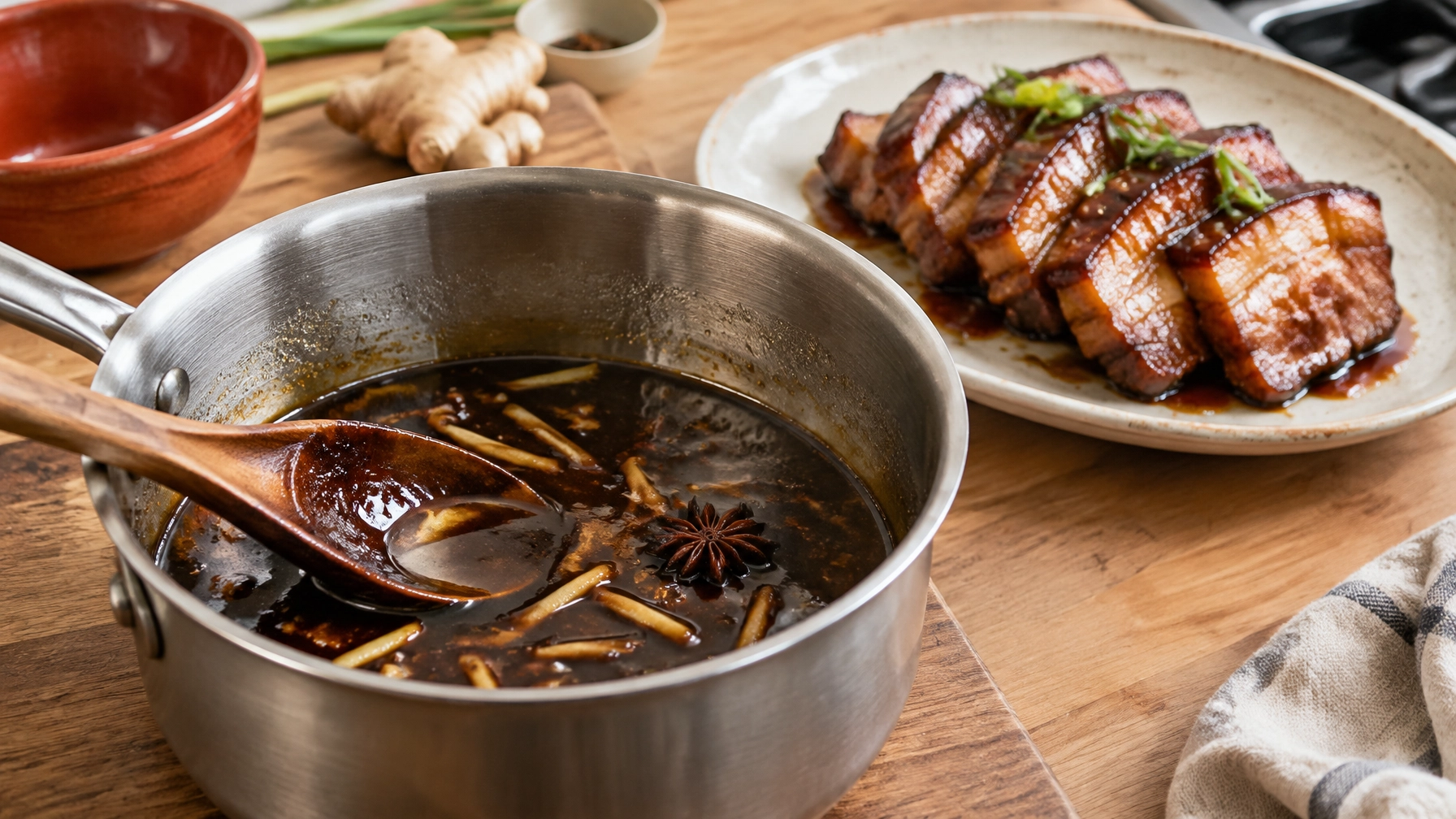
The reduction is the defining stage of this recipe. The slow cooker creates tender pork but cannot remove enough water to produce a concentrated coating. Reducing the liquid in a wide saucepan increases evaporation and gives the sauce a thicker consistency.
Do not reduce the sauce until it is completely stiff. It will thicken further as it cools and should remain fluid enough to coat the pork. If it becomes too thick, add one or two tablespoons of hot water and stir.
The finished sauce should be dark, glossy and balanced between salt, acidity, sweetness and warm spice. If it tastes too salty before the pork is added, dilute it with water. If it tastes flat, add a small splash of rice vinegar.
Serving
Serve the pork belly while the glaze is hot. Steamed rice absorbs the sauce without competing with it. Plain greens provide a useful contrast to the richness of the pork.
The pork can also be served in small portions as part of a larger meal. Keep the pieces substantial rather than shredding them. This preserves the difference between sticky pork belly and pulled pork.
Tips
- Use pork belly pieces of similar size for consistent cooking.
- Do not add extra salt. Soy sauce supplies sufficient seasoning.
- Keep the slow cooker between half full and two-thirds full where possible, following the appliance instructions.
- Do not start with frozen pork unless the appliance instructions specifically permit it. Thaw the pork safely first.
- Strain the braising liquid before reducing it. This removes loose spices and creates a smoother glaze.
- Skim fat before reduction if the sauce appears heavily oily.
- Reduce the liquid in a wide saucepan rather than a narrow pan. It will finish more quickly and evenly.
- If the sauce reduces too far, loosen it with hot water.
- Refrigerate leftovers promptly and use them within 48 hours, or freeze them. Reheat until steaming hot throughout and only reheat once.
Variations
Less sweet: Use 50 g honey instead of 80 g. The sauce will remain glossy but will have a sharper savoury profile.
More heat: Add one thinly sliced red chilli to the slow cooker. Remove it with the other aromatics before reducing the liquid.
Citrus version: Add two strips of orange peel to the braising liquid. Remove the peel before reduction.
Five-spice version: Add one-quarter teaspoon Chinese five-spice. Use a small quantity because star anise already provides a strong aniseed note.
Crisp finish: After glazing, place the pork on a lined tray and grill for one to two minutes. Watch it continuously because honey can burn quickly. This step is optional and changes the texture from soft and glossy to lightly caramelised.
FAQ
Can I cook pork belly on HIGH instead?
Yes, but LOW is the intended method. The six-hour LOW cook gives the fat and connective tissue time to soften without making the exterior contract too quickly. If changing the setting, follow the slow cooker manufacturer instructions and check the pork thoroughly before serving.
Why is my pork belly not sticky?
The slow cooker is designed to retain moisture, so the braising liquid will remain relatively thin. Transfer it to a saucepan and reduce it separately. The sauce is sticky only after sufficient water has evaporated.
Can I prepare the pork the day before?
Yes. Cook the pork, strain the liquid and refrigerate both separately in covered containers. Remove solidified fat from the liquid before reheating. Warm the pork gently, reduce the sauce, then coat the pork immediately before serving.
Can I use pork belly strips?
Yes. Cut long strips into shorter pieces if necessary so they fit comfortably in the cooker. Check them earlier if they are substantially smaller than the pieces specified here.
What can I use instead of rice vinegar?
Use cider vinegar or white wine vinegar in the same quantity. The flavour will change slightly, but the acidity is still required to balance the soy sauce and honey.
Can I make this without honey?
Use golden syrup as a direct substitute. Maple syrup can also be used, although it gives a milder, less rounded glaze.
How should leftovers be stored?
Cool the pork and sauce promptly, place them in separate covered containers and refrigerate. Use within 48 hours or freeze. Reheat until steaming hot throughout. Rice should be cooled and stored separately under the same food-safety controls.