Recipe
Serves
4 1×
Serves 4Prep 15 minCook 35 minTotal 50 min
Ingredients
Method
- Place the sliced potatoes and onion in a wide frying pan. Add the olive oil and half of the salt.
- Cook over medium-low heat for 20 to 30 minutes, stirring occasionally, until the potatoes are tender and the onion is soft and lightly golden.
- Drain the potato and onion through a sieve or colander. Reserve 1 tablespoon of the cooking oil.
- Beat the eggs with the remaining salt in a large bowl.
- Add the warm potato and onion mixture to the eggs. Fold gently, then leave to stand for 5 to 10 minutes.
- Heat a 20 to 24 cm non-stick frying pan over medium heat. Add the reserved oil.
- Pour in the mixture. Spread it evenly and shape the edge with a spatula.
- Cook for 3 to 5 minutes, or until the base is set and lightly golden.
- Place a heat-resistant plate over the pan. Hold it firmly and turn the tortilla onto the plate.
- Slide the tortilla back into the pan. Cook the second side for 3 to 5 minutes, or until the centre is fully set.
- Rest for 5 minutes before cutting into wedges and serving.
Spanish Tortilla (Potato and Onion Omelette)
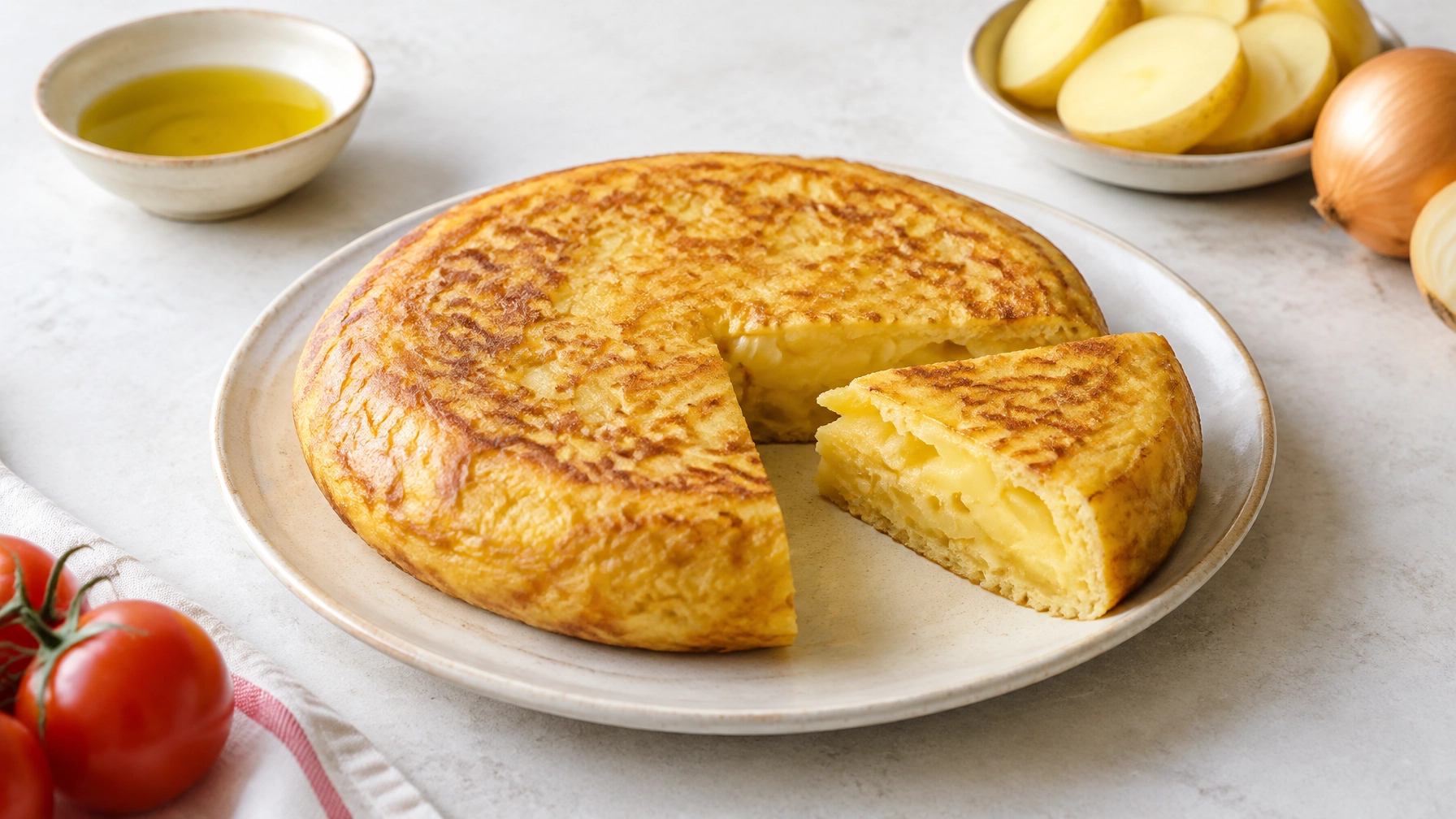
Spanish tortilla is a thick omelette made from potatoes, onion, eggs, olive oil and salt. The potatoes and onion are slowly poached in oil before being combined with beaten egg and set in a pan. The finished tortilla is cut into wedges and may be served warm, at room temperature or chilled.
Definition
tortilla (noun): A thick Spanish-style omelette in which softened potato and onion are bound with beaten egg.
This is not a frittata prepared by baking vegetables in a shallow layer of egg. The defining process is the slow poaching of the potatoes and onion in olive oil. The aim is a soft interior, lightly coloured edges and a cohesive shape.
The recipe uses a short ingredient list. Technique controls the result.
Control
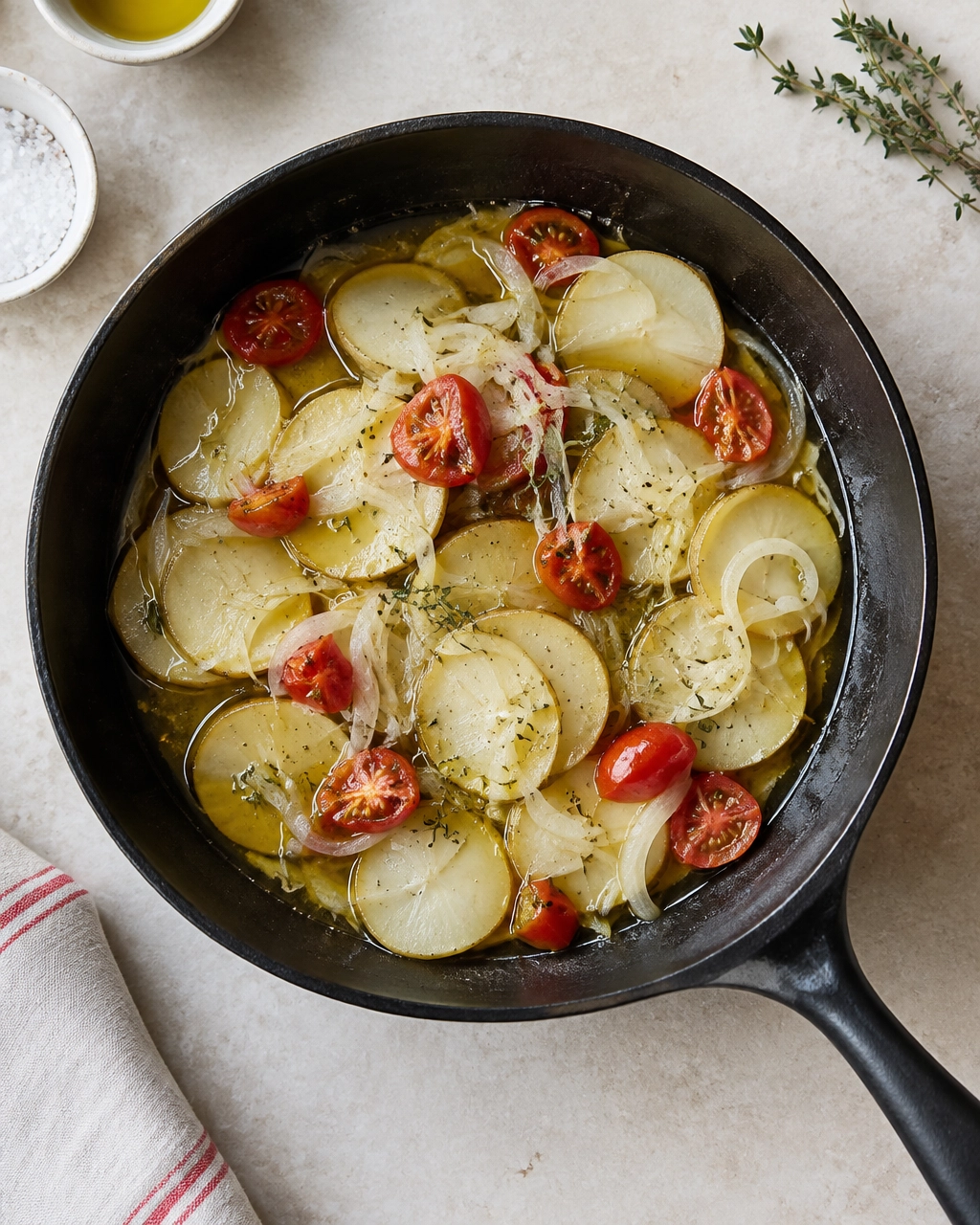
Cut the potatoes evenly
Use waxy or all-purpose potatoes. Peel them, rinse away loose starch and dry them thoroughly. Cut the potatoes into thin slices, approximately 3 to 5 mm thick.
Uniform slices cook at a similar rate. Thick pieces may remain firm while thinner pieces break down. The tortilla can contain some broken potato, but the mixture should not become a puree.
Poach rather than brown
Add the potato, onion and olive oil to a wide pan. Cook over medium-low heat until the potatoes are tender and the onion is soft. This generally takes 20 to 30 minutes.
The oil should gently surround the vegetables. It should not be so hot that the potatoes become crisp before the centres soften. Stir occasionally and turn the pieces carefully.
The correct visual indicators are:
- Potatoes that yield easily when pressed with a spatula
- Onion that is soft and lightly golden
- Little or no dark browning
- A moist mixture without excessive surface water
Drain the potato and onion through a sieve or colander. Reserve a small amount of the oil for setting the tortilla.
Combine with egg
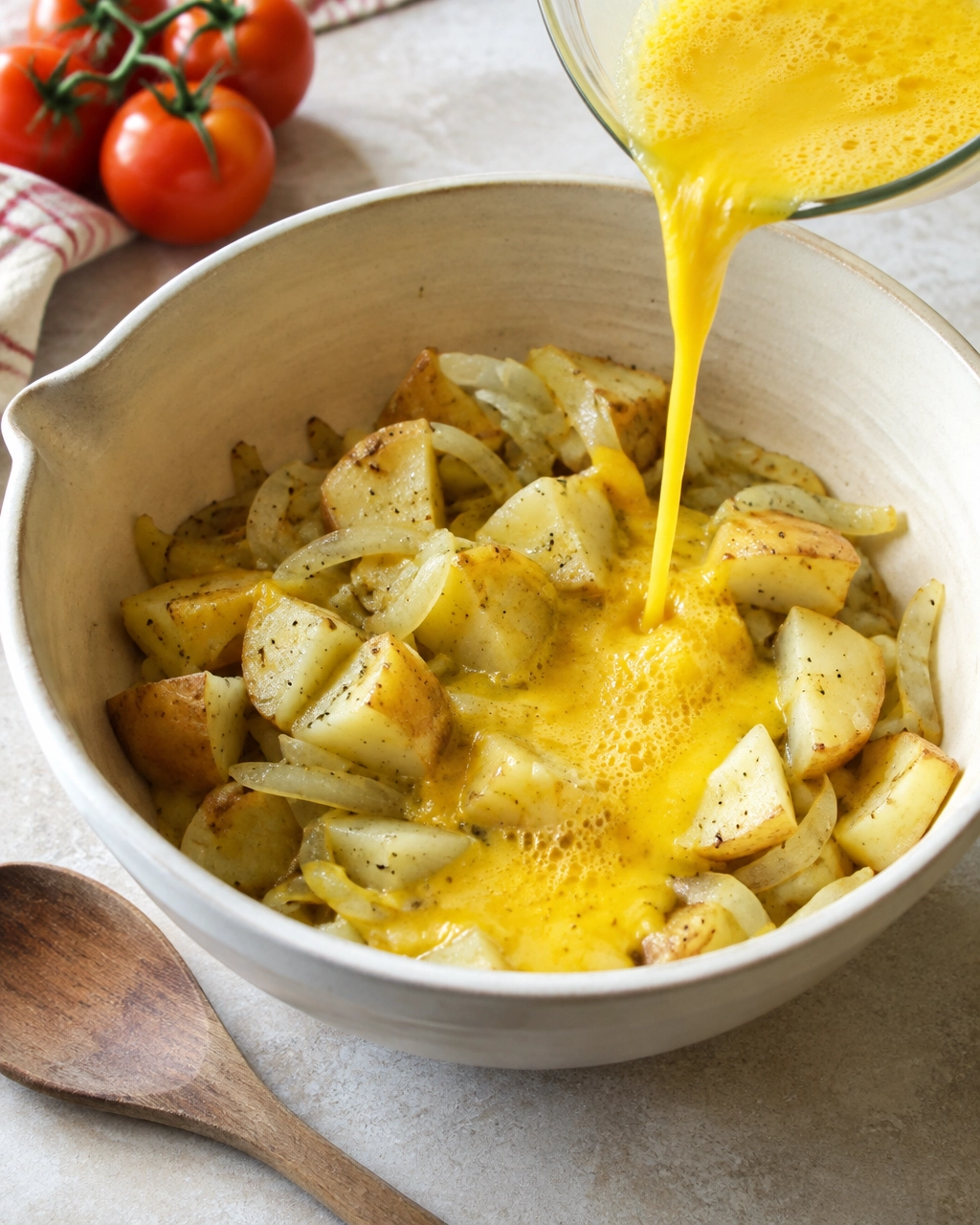
Beat the eggs with salt until the whites and yolks are combined. Do not whip in substantial air. Add the warm potatoes and onion and fold gently.
Allow the mixture to stand for 5 to 10 minutes. This gives the potatoes time to absorb some egg and allows the mixture to thicken.
Set in a smaller pan
Use a non-stick frying pan that is smaller than the pan used for poaching. A 20 to 24 cm pan produces a tortilla with useful thickness for four portions.
Heat a thin film of reserved oil over medium heat. Add the potato, onion and egg mixture. Spread it evenly and shape the edge with a spatula.
Cook until the base is set and lightly golden. The centre will still move slightly when the pan is shaken.
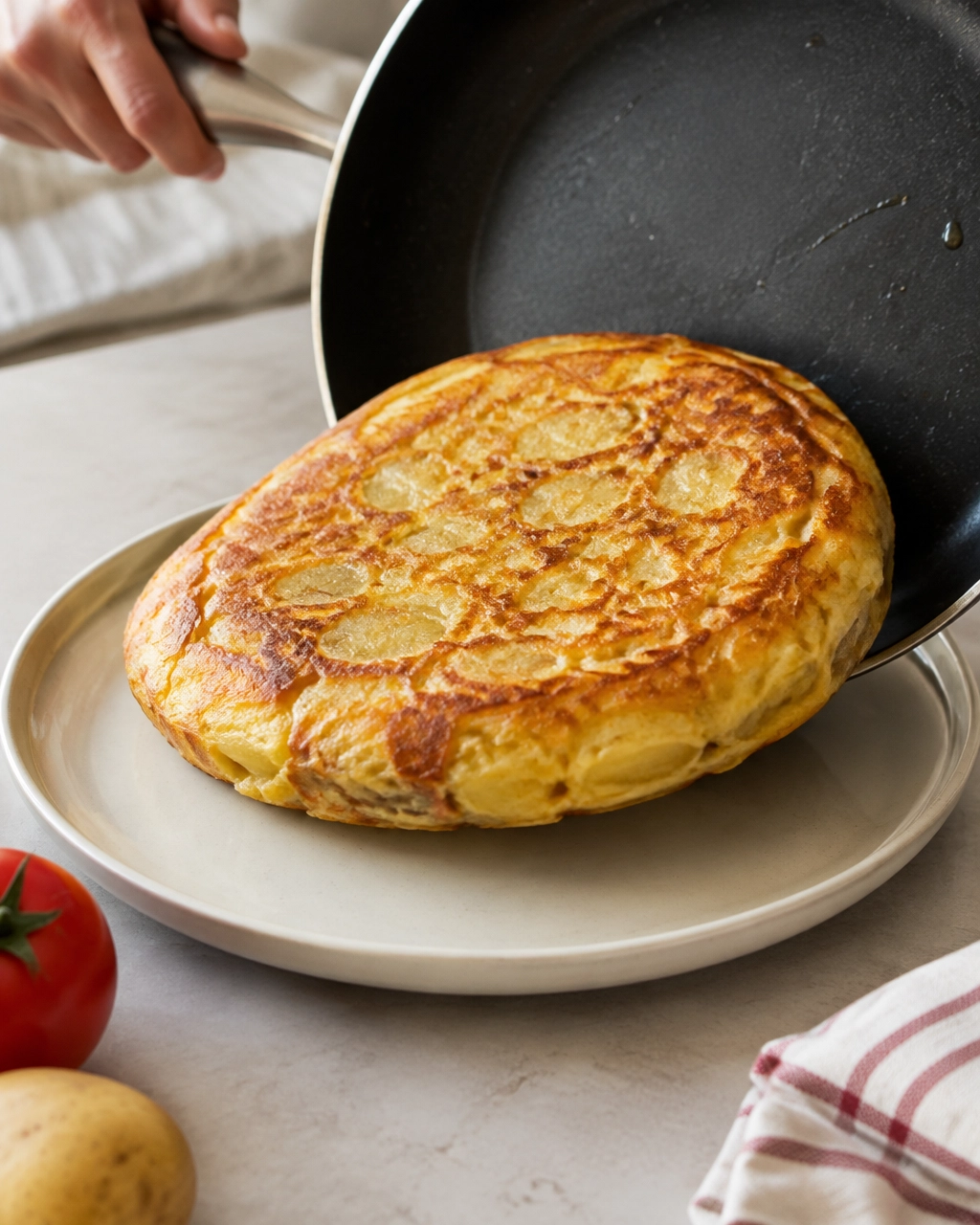
Turn once
Place a flat plate over the pan. Hold the plate and pan firmly. Turn the pan over in one controlled movement. Slide the tortilla back into the pan to cook the second side.
Use a plate larger than the pan. Keep hands away from the hot oil and use a dry cloth or heat-resistant glove when handling the pan.
Cook until the second side is set. For a fully firm centre, reduce the heat and cook for longer. For a softer centre, use a shorter cooking time. Food safety requirements take priority over texture preferences.
Serving
Rest the tortilla for 5 minutes before cutting. This allows the egg to finish setting and reduces the risk of the wedges collapsing.
Serve it in triangular wedges with a simple green salad, sliced tomatoes or bread. No additional sauce is required. The flavour should come from the olive oil, cooked onion, potato and egg.
A tortilla may be served warm or at room temperature. If it is prepared in advance, cool it promptly and refrigerate it in a covered container.
For general guidance on handling eggs and cooked leftovers, consult the Food Standards Agency, NHS and FDA food safety information.
Variations
Onion quantity
Use one medium onion for a balanced result. Increase the amount for a sweeter, softer tortilla. Reduce it when a firmer potato structure is required.
Potato texture
Thin slices produce a more integrated tortilla. Small cubes create more distinct pieces and may require additional cooking time.
Egg quantity
Six eggs produce a softer, more cohesive mixture for 700 g of potato. Five eggs create a denser tortilla. Use enough egg to coat the cooked vegetables without leaving a large amount of liquid in the bowl.
Herbs
Fresh parsley or chives may be added to the egg mixture. This is a variation rather than a requirement. Avoid adding wet ingredients that could prevent the centre from setting.
Reduced oil method
The traditional method uses enough olive oil to poach the potato and onion. A reduced-oil method is possible, but it changes the texture. The vegetables must be cooked slowly in a covered pan with careful stirring until completely tender.
Storage
Refrigerate leftover tortilla promptly in a covered container. Do not leave it at room temperature for extended periods. A thick tortilla should be cooled efficiently before refrigeration.
Reheat only the portion required. Heat it until the centre is fully hot. Do not repeatedly reheat the same portion.
For pregnant people, young children, older adults and people with weakened immune systems, serve the tortilla with a fully set centre unless current local guidance permits another preparation.
Questions
Can Spanish tortilla be made without onion?
Yes. A potato-only tortilla is a recognised variation. The cooking method remains the same, but the result will have less sweetness and a firmer potato profile.
Why is my tortilla falling apart?
The egg may not have fully set, the potatoes may have been cut too thickly, or the mixture may have been turned before the base formed a stable layer. Cook the first side until the edge is visibly set and the tortilla slides when the pan is shaken.
Why is the tortilla watery?
Excess moisture may come from wet potatoes, undercooked onion or an overly high egg ratio. Dry the potatoes thoroughly after rinsing and cook the onion until its liquid has evaporated.
Can the tortilla be frozen?
Freezing is not recommended for the best texture. The egg may become rubbery and the potatoes may release water when thawed. Refrigerated storage is preferable.
Can I use a plate to turn it?
Yes. Use a flat, heat-resistant plate larger than the pan. Hold the plate and pan firmly, then turn them together. Do not use a wet plate because contact with hot oil can cause splattering.
<a id="recipe"></a>