Recipe
Serves
4 1×
Serves 4
Ingredients
Method
- Salt the aubergine. Place the aubergine chunks in a colander and sprinkle with a generous pinch of salt. Leave for 10 minutes, then pat dry with kitchen paper. This step is optional for very fresh aubergines, but it helps control excess moisture.
- Sear the aubergine. Heat 2 tablespoons of olive oil in a large heavy-based casserole over medium-high heat. Add the aubergine in a single layer, working in batches if necessary. Cook for 5 to 7 minutes, turning occasionally, until lightly browned. Transfer to a plate.
- Soften the onion. Reduce the heat to medium. Add the remaining olive oil, followed by the onion and a pinch of salt. Cook for 6 to 8 minutes until soft and translucent. Do not rush this stage. The onion forms the base of the sauce.
- Bloom the spices. Stir in the garlic and ginger. Cook for 1 minute. Add the cumin, ground coriander, cinnamon, and smoked paprika. Stir continuously for 30 to 45 seconds until fragrant.
- Build the sauce. Add the harissa and stir to coat the aromatics. Pour in the chopped tomatoes and vegetable stock. Season with black pepper and a small amount of salt. Scrape the base of the pan to release any browned aubergine residue.
- Layer the main ingredients. Return the seared aubergine to the casserole. Add the chickpeas and chopped dried apricots. Stir carefully so the aubergine does not break apart. Bring the mixture to a gentle simmer.
- Simmer the tagine. Cover the casserole and cook over low heat for 25 minutes. Stir once or twice during cooking. The aubergine should become silky, the chickpeas should absorb the sauce, and the apricots should become plump.
- Reduce if required. Remove the lid and cook for a further 5 minutes if the sauce is thin. If the tagine is too thick, add a small splash of water or stock. The finished sauce should coat the ingredients rather than pool around them.
- Adjust the flavour. Add the juice of half a lemon, then taste. Add more lemon juice if required. If the tomatoes are sharp, add a small pinch of sugar. Adjust the salt, black pepper, and harissa.
- Toast the almonds. While the tagine finishes, place the flaked almonds in a dry frying pan over medium heat. Toast for 2 to 3 minutes, shaking the pan frequently, until golden. Remove immediately to prevent burning.
- Finish and serve. Stir half of the chopped coriander through the tagine. Spoon over couscous and finish with the remaining coriander and toasted almonds. Serve with the remaining lemon cut into wedges.
Vegan Aubergine and Chickpea Tagine (One-Pot)
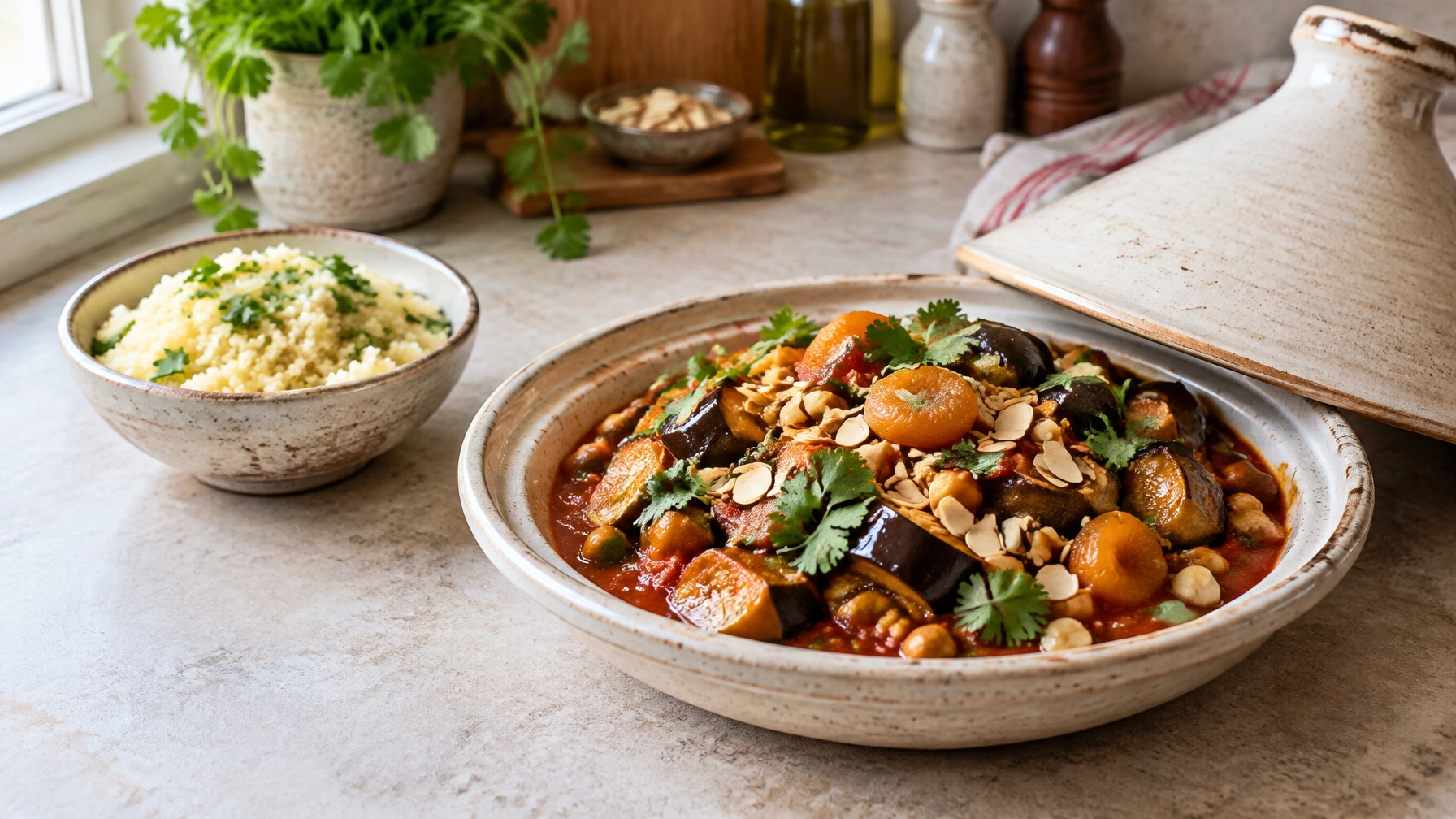
This vegan aubergine and chickpea tagine is a practical one-pot dinner with a rich tomato sauce, tender aubergine, creamy chickpeas, sweet dried apricots, and a controlled level of heat from harissa. It is fully vegan and contains no honey.
The cooking method is structured for texture. The aubergine is salted and seared before the sauce is built, the spices are bloomed in oil, and the finished tagine is adjusted with lemon at the end. Serve it with couscous, flatbread, or bulgur.
Overview
Tagine refers both to a North African style of slow-cooked dish and to the traditional earthenware vessel used to prepare it. A heavy casserole or deep frying pan is suitable for this version. The principle remains the same: build a concentrated base, use moderate liquid, and cook gently until the vegetables are tender.
Cumin, coriander, cinnamon, ginger, and smoked paprika provide the main spice profile. Dried apricots add sweetness, while lemon prevents the tomato sauce from tasting heavy. A small pinch of sugar is optional, but useful if the tomatoes are particularly acidic.
Texture
Aubergine can become watery or collapse into the sauce if it is added raw without preparation. Salting draws out some surface moisture, and searing creates browned edges before the aubergine enters the tomato base.
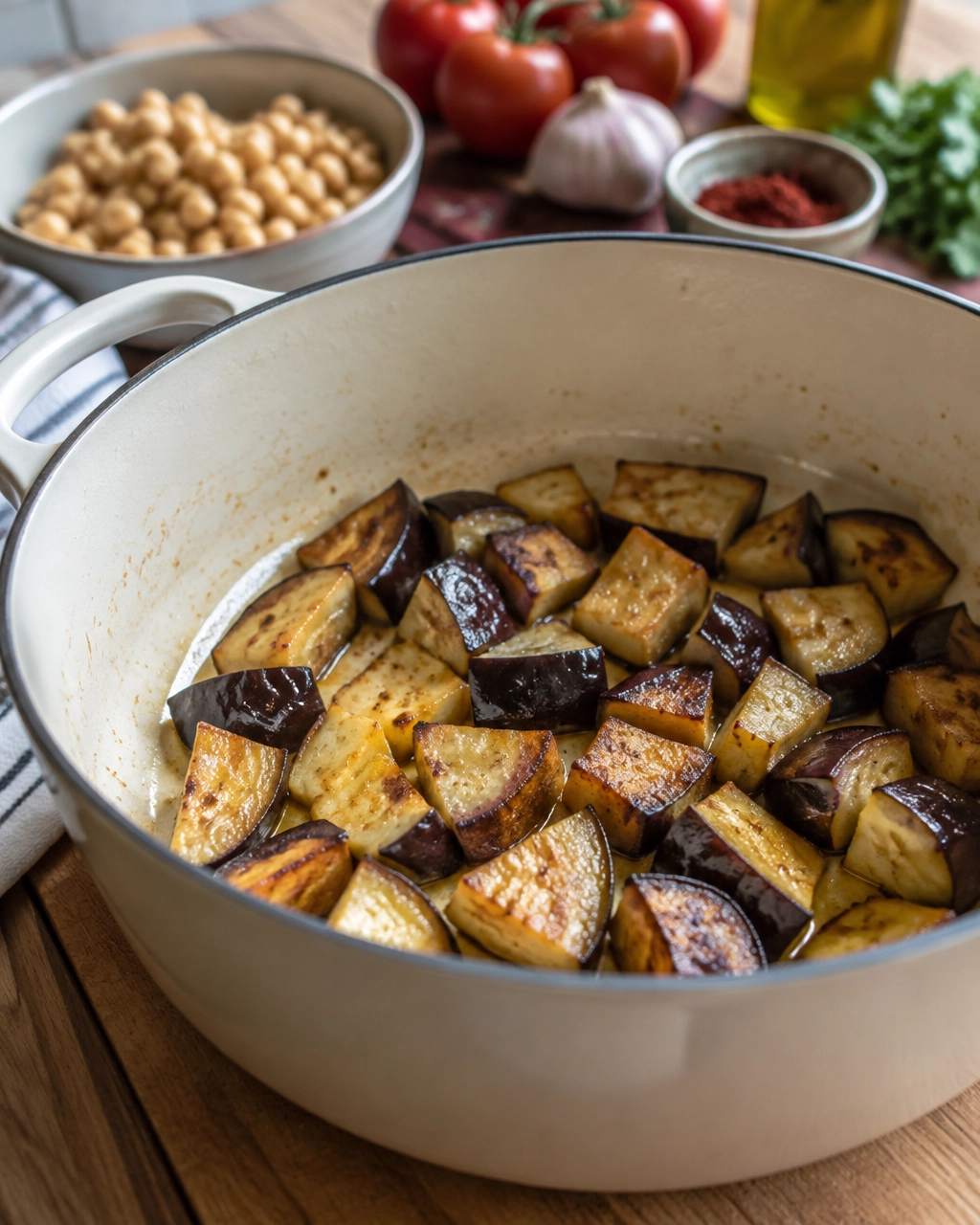
The aubergine will soften further during the simmer. Do not aim to cook it completely at the searing stage. The required result is colour on the outside and enough structure to remain visible in the finished dish.
Recipe
Tips
- Use a wide pan. A broad casserole gives the aubergine enough contact with the heat during searing and helps the sauce reduce evenly.
- Avoid overcrowding. If the aubergine sits in a thick layer, it will steam instead of brown. Sear it in two batches if needed.
- Control the heat. Harissa varies significantly between brands. Start with 1 tablespoon, then increase at the end.
- Check the stock. Use a vegetable stock labelled vegan if strict dietary control is required.
- Rest before serving. Leave the tagine for 5 minutes off the heat. This allows the sauce to settle and gives the chickpeas time to absorb more flavour.
- Prepare the couscous separately. It can be made while the tagine simmers, keeping the one-pot dish itself focused on the sauce and vegetables.
Variations
- Roasted butternut squash: Replace half of the aubergine with 400 g peeled butternut squash. Roast the squash at 200°C for approximately 25 minutes before adding it during the final 10 minutes of simmering.
- Sweet potato: Use peeled sweet potato in place of the aubergine. Cut it into small, even cubes so it cooks within the stated time.
- More heat: Add an extra tablespoon of harissa or a pinch of dried chilli flakes. Add heat gradually because it becomes more noticeable as the sauce reduces.
- Alternative grains: Serve with bulgur instead of couscous. Bulgur has a firmer texture and provides more contrast with the soft aubergine.
- Flatbread: Warm flatbread is suitable for collecting the sauce. This is useful when a grain-based side is not required.
- Preserved lemon: Finely chop a small amount of preserved lemon peel and add it with the dried apricots. Reduce the fresh lemon juice and check the salt carefully.
FAQ
Can I make this aubergine tagine ahead of time?
Yes. Cool the tagine promptly, cover, and refrigerate for up to 3 days. Reheat it gently in a saucepan with a splash of water or stock. Add the coriander, lemon, and almonds after reheating.
Do I need to peel the aubergines?
No. The skin helps the aubergine hold its shape and adds colour. Wash the aubergines, trim the ends, and cut them into even chunks.
Can I use dried chickpeas?
Yes, provided they have been fully cooked before use. Tinned chickpeas are used here for convenience and timing. Uncooked dried chickpeas will not soften adequately during the 40-minute cooking period.
Is this tagine gluten-free?
The tagine itself can be gluten-free. Serve it with rice, quinoa, or certified gluten-free couscous rather than standard couscous. Check the labels on the vegetable stock and harissa paste.
What can I use instead of coriander?
Use fresh parsley or a combination of parsley and mint. The flavour will change, but both provide a fresh finish against the tomato sauce and warm spices.