Recipe
Serves
4 1×
Serves 4Prep 10 minCook 25 minTotal 35 min
Ingredients
Method
- Prepare the vegetables before you start cooking. Cut the potatoes into even 2.5 cm cubes and break the cauliflower into florets around 3 cm across. Finely chop the onion, garlic and ginger. Keeping the vegetables close to these sizes helps them cook at a similar rate.
- Heat the oil in a large, lidded saucepan or casserole over a medium heat. Add the cumin seeds and turmeric. Stir for about 30 seconds, just until the cumin smells fragrant. Keep the spices moving so they do not catch on the base of the pan.
- Add the onion and cook for about 3 minutes, stirring occasionally, until it starts to soften. Stir in the garlic, ginger and tomato purée. Cook for another minute, until the garlic and ginger smell aromatic and the tomato purée has darkened slightly.
- Add the potato cubes, coconut milk and water. Season with salt and stir so the potatoes are coated in the liquid. Bring to a gentle simmer, then cover the pan and cook for 10 minutes. Keep the heat low enough for a steady simmer rather than a rolling boil.
- Add the cauliflower florets and stir gently to coat them in the sauce. Cover the pan again and cook for 12 to 15 minutes. Stir only twice during this stage, moving the vegetables gently so the florets do not break apart.
- Check the potatoes by sliding a small, sharp knife into a cube. It should meet no resistance, while the cauliflower should be tender but still hold its shape. If the potatoes need longer, cover the pan and cook for a few more minutes, checking again before serving.
- Turn off the heat. Stir in the garam masala and lemon juice, then taste the sauce and adjust the salt if needed. Finish with fresh coriander and serve hot.
Vegan Cauliflower and Potato Curry
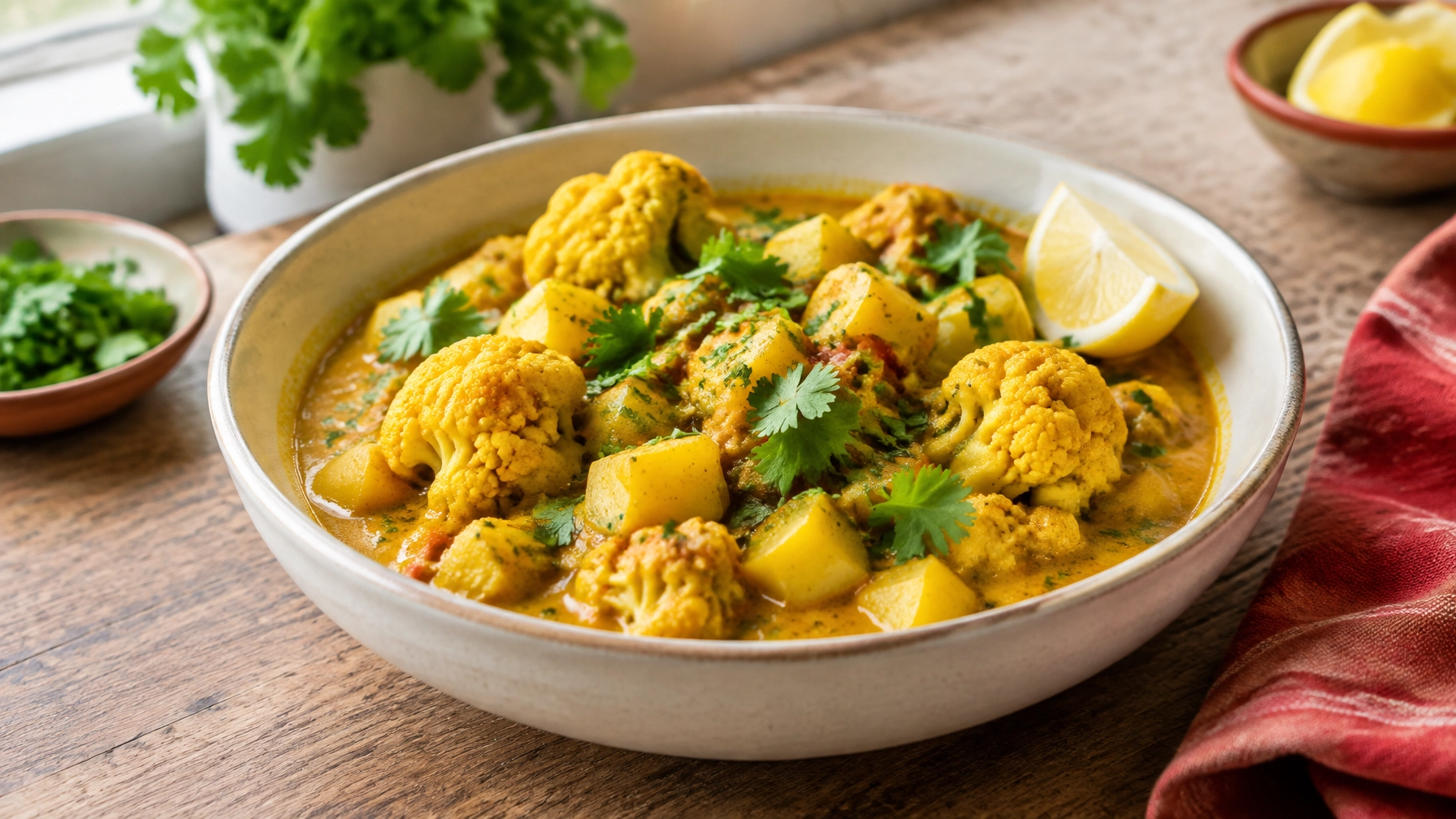
This warming curry pairs tender potatoes and cauliflower with a gently spiced coconut sauce. It is made in one pan, with everyday ingredients and a little attention to the order in which the vegetables go in.
The key is to give the potatoes a head start. Cauliflower cooks more quickly, so adding it later helps the florets keep their shape and colour instead of collapsing into the sauce.
Recipe
Serves: 4
Prep time: 10 minutes
Cook time: 25 minutes
Total time: 35 minutes
Tips
- Cut evenly. Potato cubes that are much larger than 2.5 cm may need longer to cook. Smaller pieces can soften before the cauliflower is ready.
- Use waxy potatoes. Charlotte potatoes keep their shape during simmering. Floury potatoes can break down more readily and thicken the sauce.
- Keep the simmer gentle. A hard boil can make the cauliflower crumble and may cause the coconut sauce to reduce too quickly. A few steady bubbles around the edge of the pan are enough.
- Let the potatoes lead. Do not add the cauliflower at the same time as the potatoes. It cooks faster, and a long simmer can make it turn to mush and leave the sauce grey.
- Stir sparingly. Two gentle stirs after adding the cauliflower are enough to distribute the sauce. Use a broad spoon and lift from underneath rather than pressing down on the florets.
- Check with a knife, not just the clock. The size of the vegetables and the heat of the hob can affect cooking time. A knife should slide easily into a potato cube, while the cauliflower remains intact.
- Add garam masala off the heat. Stirring it in at the end helps keep its warm fragrance noticeable. Adding it with the cumin at the start can make its flavour less distinct by serving time.
- Adjust the sauce simply. If it seems too thick before the potatoes are tender, add a small splash of water and cover the pan again. If it is thinner than you prefer, simmer uncovered briefly once the vegetables are cooked.
Variations
- Add greens: Fold in a couple of handfuls of spinach after turning off the heat. The warmth of the curry will wilt the leaves without requiring a longer cook.
- Make it hotter: Add chopped fresh chilli with the garlic and ginger, or serve with chilli on the side so each person can adjust their portion.
- Add peas: Stir frozen peas into the pan for the final few minutes. They add colour and cook quickly, so there is no need to thaw them first.
- Serve with grains: Spoon the curry over rice or serve it with flatbread. Keep any side dishes simple so the coconut sauce remains the main flavour.
- Finish with more citrus: If the sauce tastes rich, add a little extra lemon juice at the table. Add it gradually and taste as you go.
FAQ
Can I prepare the vegetables ahead of time?
Yes. Cut the onion, garlic and ginger in advance and keep them covered in the fridge. You can also cut the potatoes and cauliflower ahead, but store them separately. Keep the potatoes submerged in cold water to reduce browning, then drain and dry them before cooking.
How can I tell when the curry is ready?
Test a potato cube with a small knife. It is ready when the blade slides in without resistance. The cauliflower should be tender enough to eat but still keep its shape. If the potato is firm, continue simmering with the lid on and check again after a few minutes.
Why did my cauliflower break up?
It may have been added too early, stirred too often or cooked at too high a simmer. Add it after the potatoes have had their 10-minute head start, keep the pan covered and stir gently only twice. Stop cooking as soon as the potatoes are tender and the florets still hold together.