Recipe
Serves
4 1×
Serves 4Prep 10 minCook 20 minTotal 30 min
Ingredients
- Chickpeas: Use canned chickpeas for convenience. Drain and rinse them before cooking.
- Tomatoes: Canned diced tomatoes add acidity and body to the sauce.
- Coconut milk: Full-fat coconut milk gives the curry its creamy consistency.
- Aromatics: Onion, garlic, and fresh ginger create the main flavour base.
- Spices: Curry powder, cumin, turmeric, and optional cayenne add warmth and colour.
- Lime juice: A small amount at the end balances the richness of the coconut milk.
- Maple syrup: Optional, but useful if the tomatoes taste particularly sharp.
Method
- Heat the oil in a large, deep frying pan or saucepan over medium heat.
- Add the chopped onion and cook for 4–5 minutes, stirring occasionally, until softened and translucent.
- Add the garlic and ginger. Cook for 1–2 minutes, stirring constantly, until fragrant.
- Add the curry powder, cumin, turmeric, coriander, and cayenne or red pepper flakes. Stir and cook for 1 minute.
- Add the canned tomatoes and vegetable broth or water. Stir to combine and simmer for 3–5 minutes, until the tomatoes begin to soften.
- Add the drained chickpeas, salt, and maple syrup if using. Stir well and simmer for 5 minutes.
- Pour in the coconut milk. Stir, bring to a gentle simmer, and cook for 5–8 minutes, until the sauce has thickened.
- Add a splash of water or broth if the curry is too thick. Simmer for longer if the sauce needs to reduce.
- Stir in the lime juice. Taste and adjust the salt, spice, and acidity.
- Serve hot over rice or with flatbread. Garnish with fresh cilantro.
Vegan Chickpea Curry (Easy 30-Minute Meal)
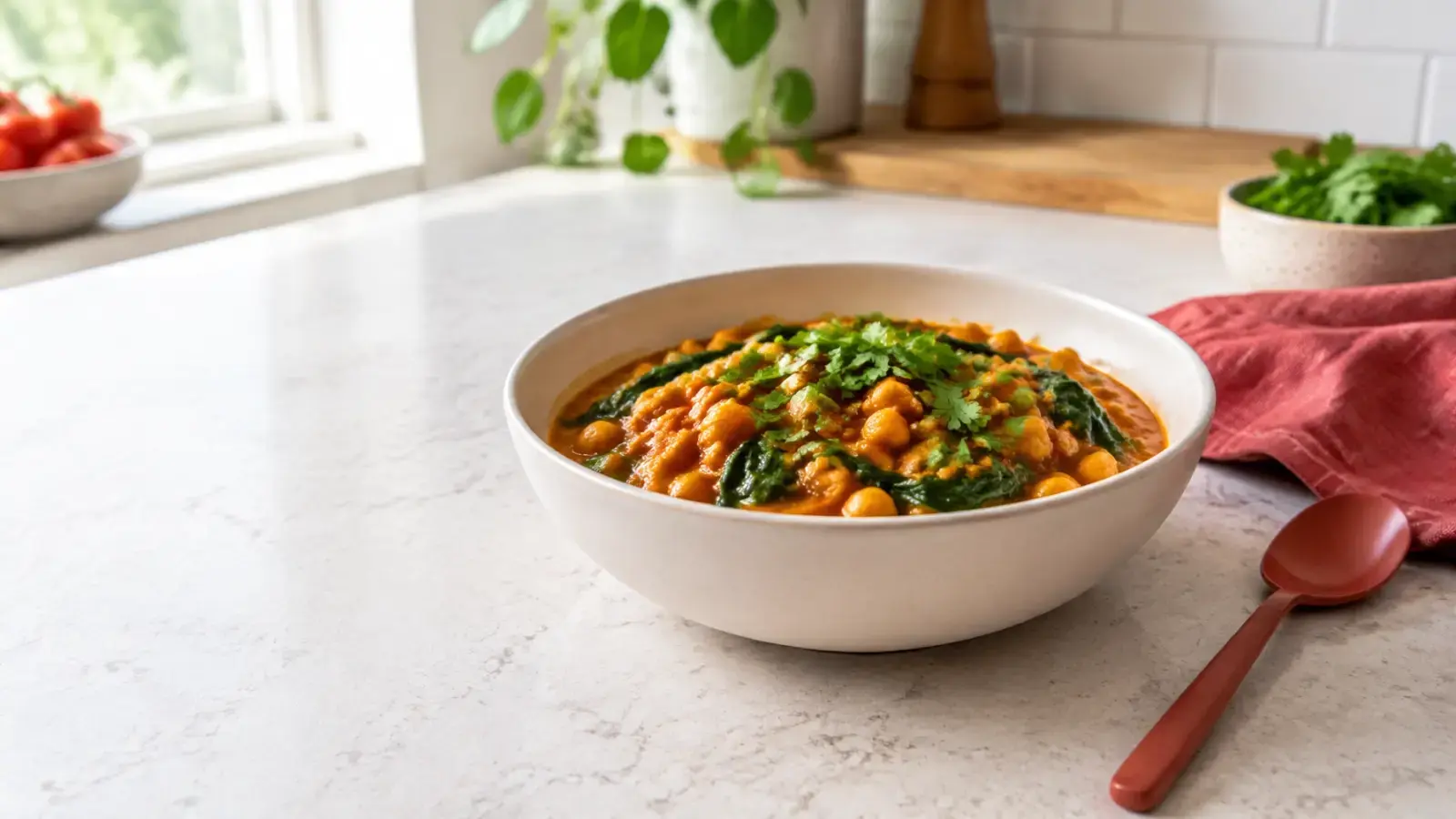
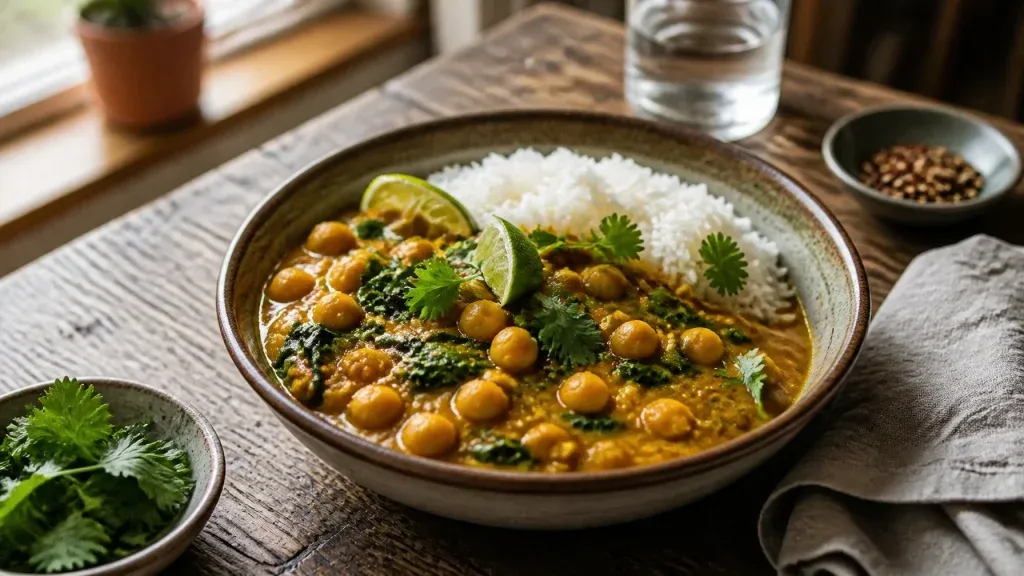
This vegan chickpea curry is a quick, satisfying meal made with pantry staples. Chickpeas simmer in a creamy tomato and coconut sauce with onion, garlic, ginger, curry powder, cumin, and turmeric.
The recipe is naturally vegan and can be served with basmati rice, cauliflower rice, or flatbread. It makes four portions and stores well, making it suitable for meal prep and next-day lunches.
Why You’ll Like This Curry
This curry uses one large pan and straightforward ingredients. The onion, garlic, and ginger build the base, while briefly cooking the spices in oil helps release their aroma before the tomatoes and coconut milk are added.
Canned chickpeas keep the preparation quick. There is no soaking or long simmering, so the dish can be ready in about 30 minutes.
For the best texture, use full-fat coconut milk. It creates a thicker, more stable sauce, while light coconut milk produces a thinner curry. Add spinach at the end if you want extra greens.
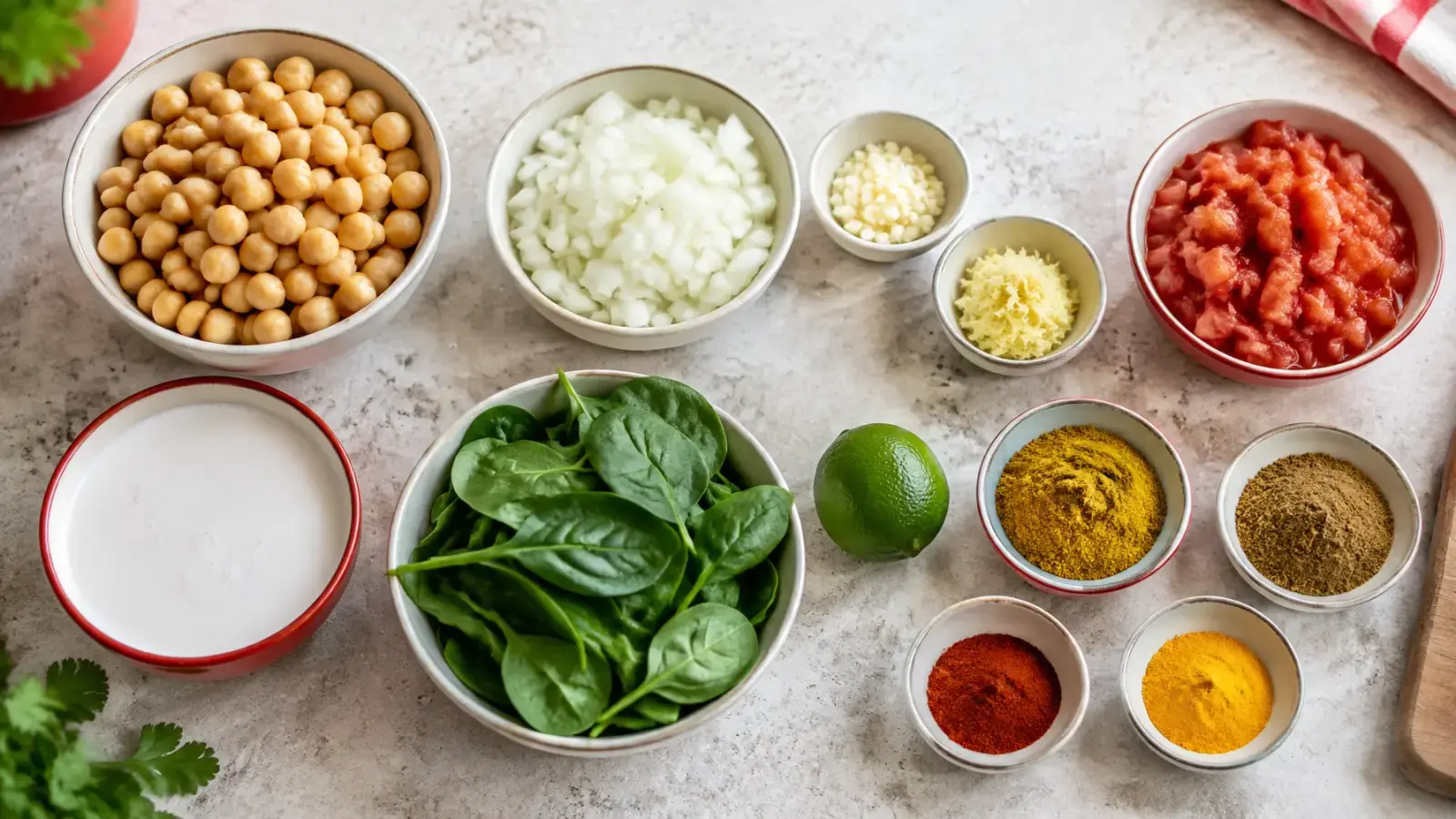
Ingredients at a Glance
- Chickpeas: Use canned chickpeas for convenience. Drain and rinse them before cooking.
- Tomatoes: Canned diced tomatoes add acidity and body to the sauce.
- Coconut milk: Full-fat coconut milk gives the curry its creamy consistency.
- Aromatics: Onion, garlic, and fresh ginger create the main flavour base.
- Spices: Curry powder, cumin, turmeric, and optional cayenne add warmth and colour.
- Lime juice: A small amount at the end balances the richness of the coconut milk.
- Maple syrup: Optional, but useful if the tomatoes taste particularly sharp.
The general technique of cooking aromatics and spices before adding the main ingredients is also used in recipes such as this BBC Food chickpea curry.
How to Make Vegan Chickpea Curry
Start by preparing all the ingredients before heating the pan. The curry comes together quickly once the onion has softened.
Heat the oil over medium heat, then cook the onion until translucent. Add the garlic and ginger and cook briefly. Avoid browning the garlic, as it can become bitter.
Add the curry powder, cumin, turmeric, coriander, and cayenne if using. Stir for about one minute. This short cooking stage coats the spices in oil and develops their flavour.
Add the tomatoes and vegetable broth or water. Let the mixture simmer for several minutes so the tomatoes begin to break down. Add the chickpeas, salt, and maple syrup, then simmer again.
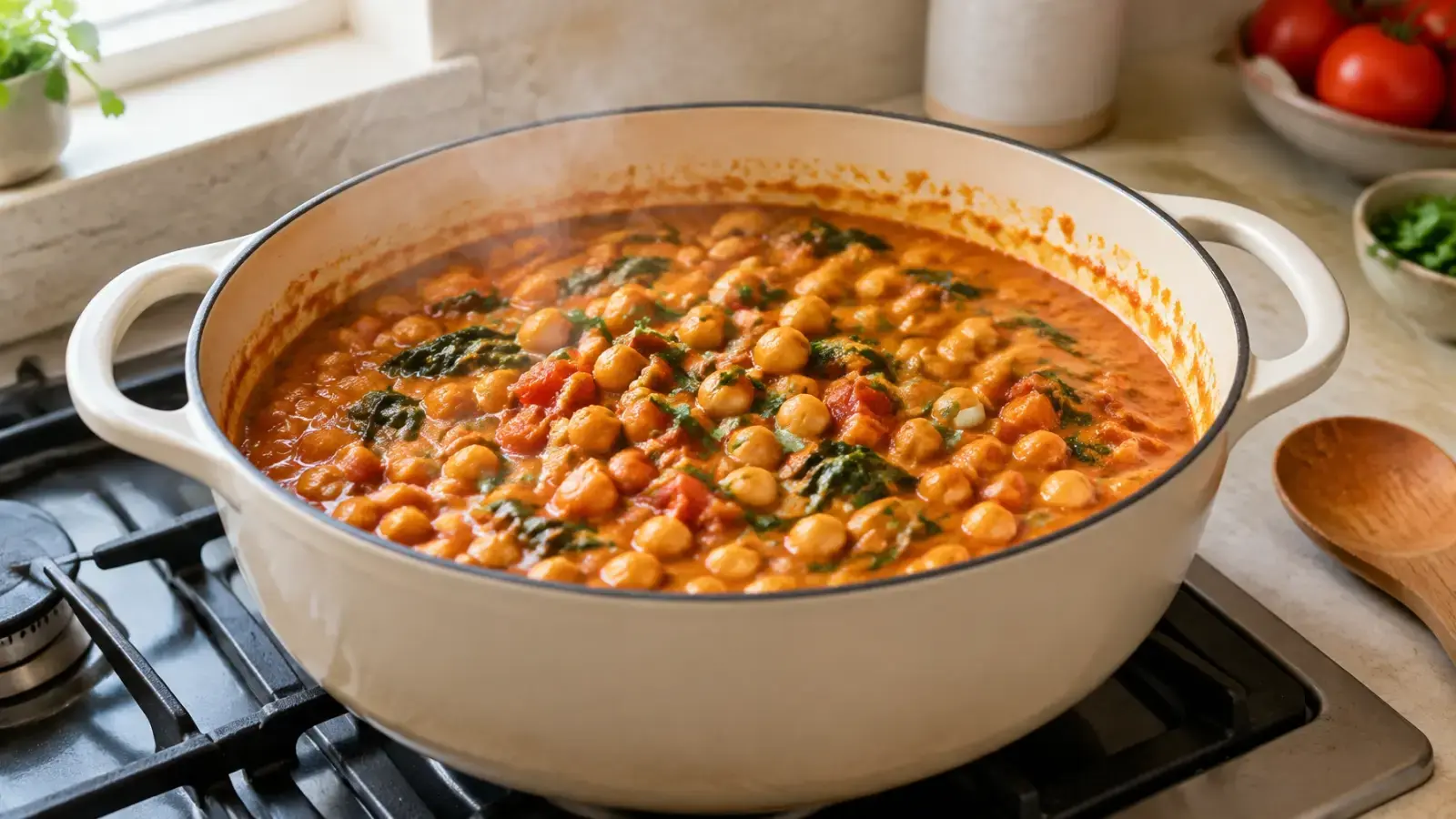
Pour in the coconut milk and bring the curry to a gentle simmer. Do not boil it aggressively, as high heat can cause the sauce to separate. Cook until the curry has thickened and the chickpeas are hot throughout.
Finish with lime juice and taste for seasoning. Add more salt, cayenne, or lime juice as needed. If the sauce is too thick, stir in a little water or vegetable broth.
Serve with rice, flatbread, or your preferred side.
Serving Suggestions
Serve the curry over steamed basmati rice for a traditional, filling meal. Brown rice works well if you prefer a firmer texture, while cauliflower rice keeps the meal lighter.
You can also serve it with flatbread or naan for scooping up the sauce. Add fresh cilantro, sliced green chilli, lime wedges, or a spoonful of dairy-free yoghurt before serving.
For a complete meal, pair the curry with a simple cucumber salad or steamed green vegetables.
Tips for the Best Curry
- Rinse the chickpeas: Rinsing removes excess liquid from the can and gives the curry a cleaner flavour.
- Cook the spices briefly: One minute is enough to release their flavour. Do not let them burn.
- Use full-fat coconut milk: It produces the creamiest result.
- Adjust the consistency: Add water or broth to loosen the sauce, or simmer uncovered to make it thicker.
- Balance the flavour: Lime adds acidity, while a small amount of maple syrup can soften sharp tomatoes.
- Rest before serving: Let the curry stand for 5 minutes after cooking. The sauce will continue to thicken.
Variations
Add Spinach
Stir in two large handfuls of baby spinach during the final 2 minutes of cooking. Cook until wilted.
Add Vegetables
Add diced sweet potato, cauliflower, bell pepper, or courgette. Firmer vegetables should be added with the tomatoes so they have time to cook.
Make It Spicier
Add extra cayenne, red pepper flakes, fresh chilli, or a teaspoon of chilli paste. Start with a small amount and adjust at the end.
Use Lentils
Replace one can of chickpeas with one cup of cooked brown or green lentils. The sauce may need a little extra broth.
Make It Nutty
Stir in one tablespoon of smooth peanut butter or almond butter with the coconut milk. Add extra lime juice to balance the richness.
Storage and Reheating
Cool leftovers promptly and store them in an airtight container in the refrigerator for up to 3 days. Reheat gently in a saucepan or microwave until piping hot.
The sauce thickens as it cools. Add a splash of water, broth, or coconut milk when reheating. The curry can also be frozen for up to 3 months. Defrost it in the refrigerator overnight before reheating.
Frequently Asked Questions
Is chickpea curry vegan?
Yes. This recipe uses chickpeas, vegetables, spices, coconut milk, and vegetable broth. Check the labels of packaged ingredients if you need to avoid unexpected dairy or other animal-derived additives.
Can I make this curry without coconut milk?
Yes. Replace the coconut milk with an equal amount of unsweetened dairy-free cream, blended silken tofu, or additional vegetable broth. The final curry will be less rich if you use broth.
Can I use dried chickpeas?
Yes, but cook them fully before adding them to the curry. Canned chickpeas are recommended here because they reduce the cooking time and make the recipe suitable for a 30-minute meal.
Why is my curry too thin?
Simmer it uncovered for a few extra minutes so some liquid can evaporate. You can also mash a few chickpeas against the side of the pan to naturally thicken the sauce.
Can I make this curry ahead of time?
Yes. The flavour often improves after resting. Prepare it up to 3 days ahead and refrigerate it in a sealed container. Reheat gently with a splash of liquid.
What can I serve with chickpea curry?
Serve it with basmati rice, brown rice, cauliflower rice, quinoa, flatbread, or naan. Fresh cilantro, lime wedges, and dairy-free yoghurt are suitable toppings.