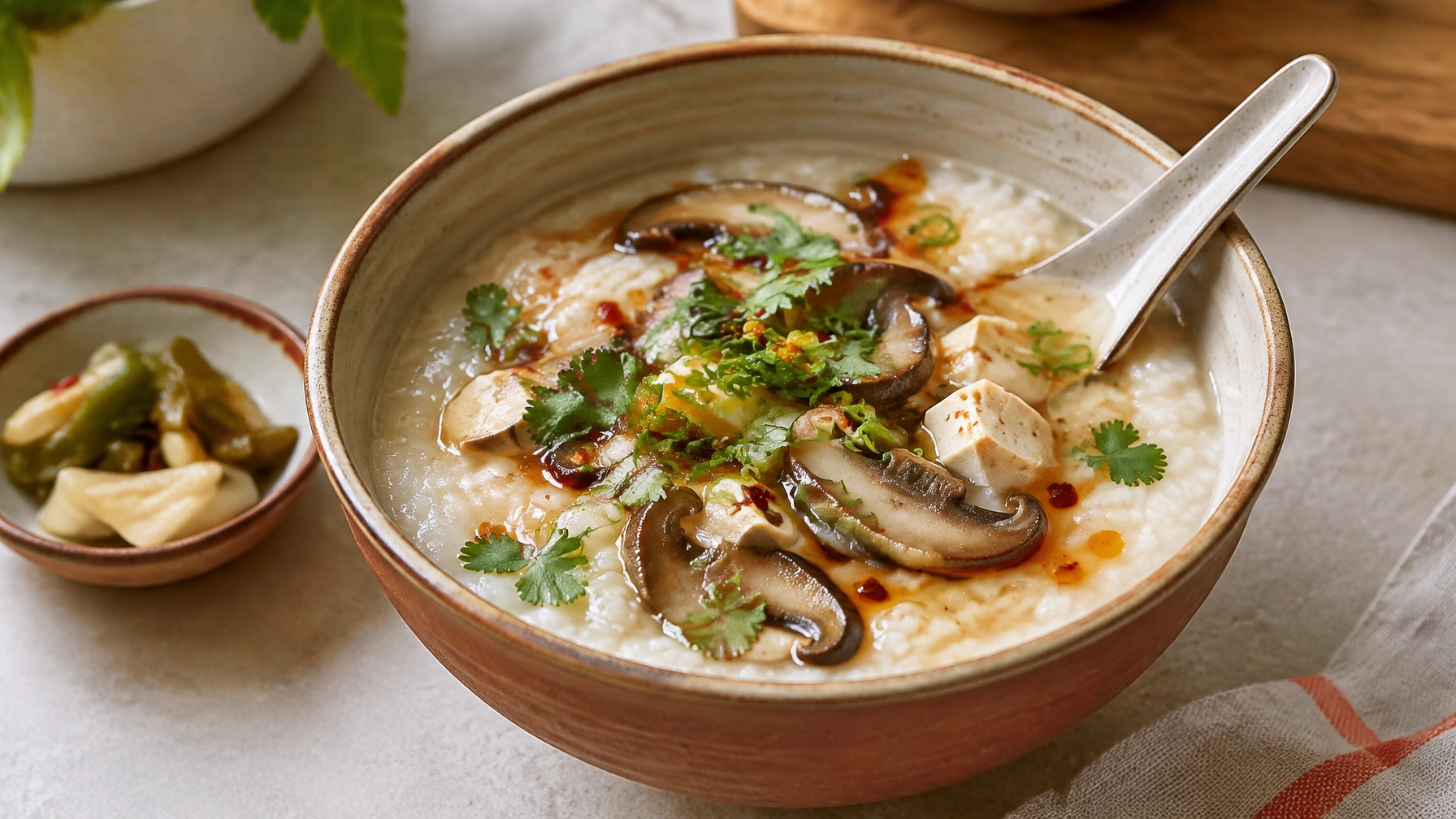
Recipe
Serves
4 1×
Serves 4Prep 45 minCook 1H10 minTotal 1H55 min
Ingredients
Method
- Put the dried shiitake mushrooms in a heatproof bowl. Pour over 500 ml just-boiled water and leave to soak for 40 minutes.
- Rinse the rice under cold running water until the water runs mostly clear. Drain well.
- Lift the mushrooms from their soaking liquid. Remove and discard the tough stems, then slice the caps.
- Strain 300 ml of the soaking liquid through a fine sieve into a large, heavy-based pan. Discard any sediment.
- Add the rice, sliced mushrooms, vegetable stock or water, ginger and garlic to the pan. Bring to a full boil.
- Reduce the heat to low. Simmer gently for 65 minutes, stirring occasionally at first and more often as the rice softens. Keep the pan partly covered and check that the liquid is bubbling gently.
- Add a little hot water if the congee becomes thicker than you prefer. Remove the ginger and garlic, if desired. Taste and season with salt.
- Ladle into bowls and finish with spring onions and coriander. Add sesame oil or soy sauce at the table, if using.
Vegan Congee with Shiitake
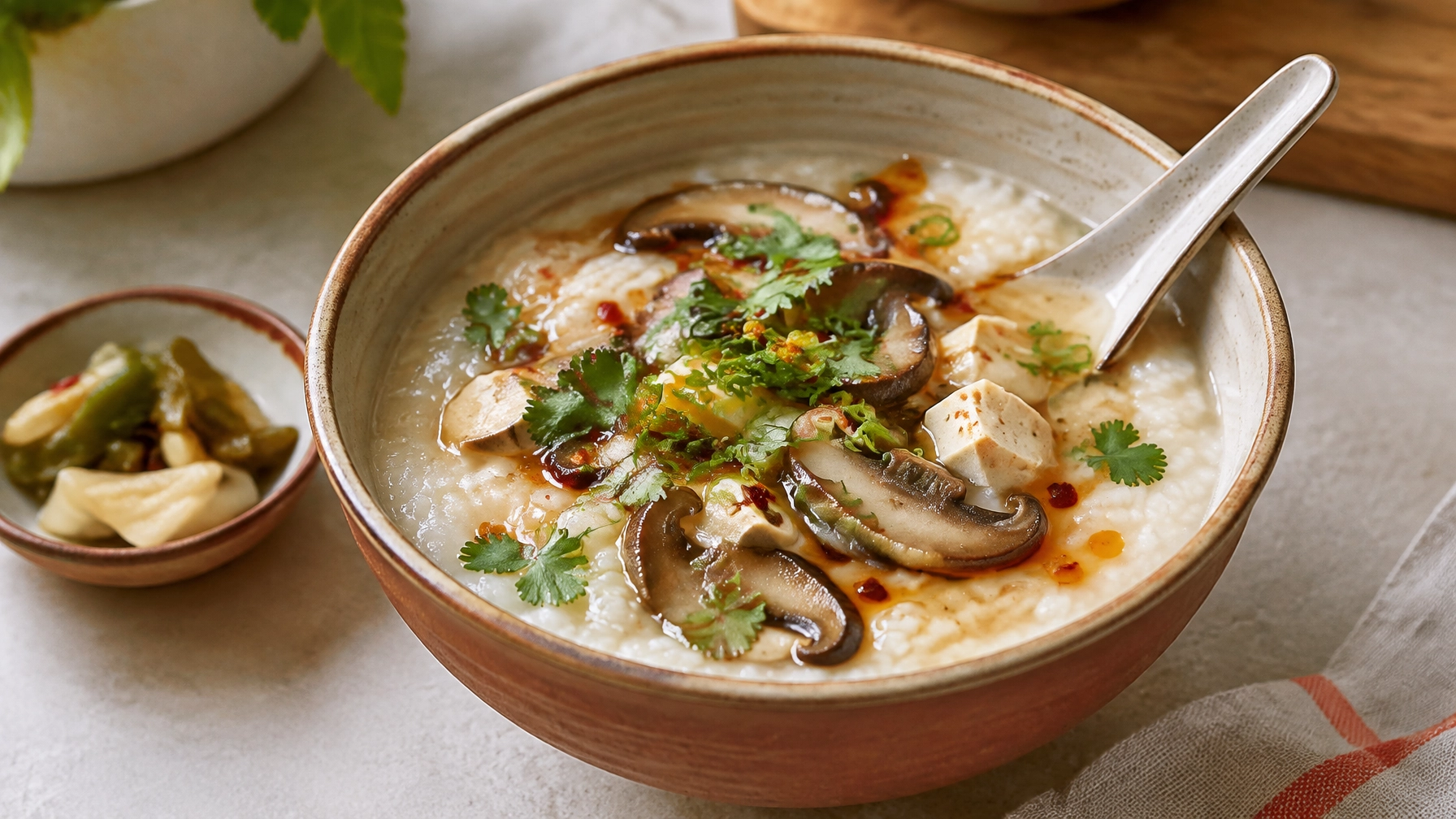
Congee is rice cooked slowly with plenty of liquid until the grains soften and the pot becomes creamy. This vegan version gets its savoury depth from dried shiitake mushrooms, their soaking liquid, fresh ginger and garlic. It is warming without being heavy, and you can adjust the consistency and toppings to suit the meal.
The recipe makes four servings. Allow time to soak the mushrooms before cooking. Once the rice is in the pan, stir it occasionally and add hot water if you prefer a looser bowl.
What makes this congee satisfying
Dried shiitake bring a concentrated, savoury flavour. Soaking softens them and releases flavour into the water. Strain that liquid before using it, since dried mushrooms can leave grit behind. The sliced mushrooms then cook with the rice, adding a tender, chewy contrast to the soft porridge.
Ginger and garlic give the base fragrance without taking over. Spring onions and coriander add freshness at the end. A little sesame oil or soy sauce is optional, but both can sharpen the flavour at the table.
Congee thickens as it stands. Aim for a loose, spoonable texture in the pan, then loosen individual servings with hot water if needed. If you like a smoother result, simmer the rice for a little longer and stir more frequently towards the end.
Ingredients and preparation
This recipe uses jasmine rice, but another white rice will work. Rinsing the rice removes some surface starch and helps you control the final texture. Use a large, heavy-based pan so the rice has room to bubble gently without catching on the bottom.
Choose a low-salt vegetable stock or water for the cooking liquid. The mushroom soaking liquid contributes savouriness, so season gradually and taste before adding more salt. If the stock is already salty, start with less and adjust at the end.
The mushroom stems can be tough. Remove them after soaking and use only the caps in the porridge. Keep the strained soaking liquid; it is part of the cooking liquid, not something to discard.
Cooking the rice slowly
Bring the rice, mushrooms, ginger, garlic and liquid to a full boil before lowering the heat. This gives the dried mushrooms a thorough cook as the congee simmers. Then keep the pan at a gentle bubble. A vigorous boil can make the liquid evaporate too quickly and may cause the rice to stick.
Stir now and then, scraping across the bottom of the pan. As the grains soften, stir more often. The rice will gradually break down and release starch, making the liquid creamy. Add hot water if it becomes thicker than you want.
When the congee is ready, remove the ginger and garlic if you prefer a milder finish. Taste and season, then add the toppings just before serving. Spring onions and coriander are a simple choice; chilli oil, sesame oil or tofu can make the bowl more substantial.
Serving and storing
Serve congee hot, with toppings arranged at the table so everyone can season their own bowl. Leftovers will thicken as they cool. Reheat them with a splash of water to bring back a softer consistency.
Cooked rice needs careful handling. Do not leave the pan to cool slowly at room temperature. Divide leftover congee into smaller, shallow portions and cool it quickly, then cover and refrigerate. UK food-safety advice is to keep cooked rice refrigerated and use it within 24 hours. Reheat only the portion you need, only once, until steaming hot throughout, and eat it straight away. See the Food Standards Agency guidance on cooking and handling food.
Recipe
Servings
4 servings
Prep time
45 minutes, including mushroom soaking
Cook time
70 minutes
Total time
1 hour 55 minutes
Tips
- Strain the mushroom soaking liquid carefully to keep grit out of the congee.
- Stir more frequently towards the end of cooking, when the softened rice is more likely to settle on the bottom of the pan.
- For a thinner consistency, stir in hot water a little at a time before serving.
- Congee thickens as it cools, so make it slightly looser than your preferred serving texture.
- Cool and refrigerate leftovers promptly. Reheat only once, until steaming hot throughout.
Variations
- Add cubed firm tofu during the final 10 minutes of cooking so it heats through.
- For a sharper finish, serve with a small drizzle of chilli oil or sesame oil.
- Add extra spring onions or coriander at the table for a fresher, more aromatic bowl.
- Use water instead of vegetable stock for a lighter flavour, then adjust the seasoning before serving.
FAQ
Can I use another type of rice?
Yes. Other white rice varieties work, although the texture may vary. Check the pan as it cooks and add hot water if the grains absorb liquid faster than expected.
Can I prepare the mushrooms in advance?
You can soak and slice them ahead of time. Keep them covered in the refrigerator and use them promptly. Strain and refrigerate the soaking liquid too.
How should I store leftover congee?
Cool it quickly in smaller, shallow portions, cover and refrigerate. Use within 24 hours. Reheat only once, until steaming hot throughout, and eat immediately.