Recipe
Serves
4 1×
Serves 4Prep 20 minCook 40 minTotal 1H
Ingredients
Method
- Heat the oven to 200°C, or 180°C fan. Line a roasting tray with baking paper if you wish.
- Peel the squash, halve it lengthways and remove the seeds. Cut the flesh into roughly 3 cm pieces.
- Peel and cut the onion into thick wedges. Put the squash, onion and unpeeled garlic cloves on the tray.
- Add the olive oil, chopped rosemary, salt and black pepper. Toss to coat, then spread the vegetables out in a single layer.
- Roast for 30 minutes, turning the squash and onion once, until tender and golden at the edges.
- Set aside a few chestnuts for the garnish. Roughly crumble the rest.
- Squeeze the roasted garlic from its skins. Add the garlic, roasted vegetables, crumbled chestnuts and 700 ml of the stock to a blender. Blend until smooth, working in batches if needed.
- Pour the soup into a saucepan. Add more stock to reach your preferred consistency, then warm over a medium-low heat for 5 minutes, stirring occasionally. Stir in the coconut cream and adjust the seasoning. Do not let the soup boil hard.
- Ladle into bowls and finish with the reserved chestnuts and a little rosemary. Serve hot.
Vegan Squash and Chestnut Soup
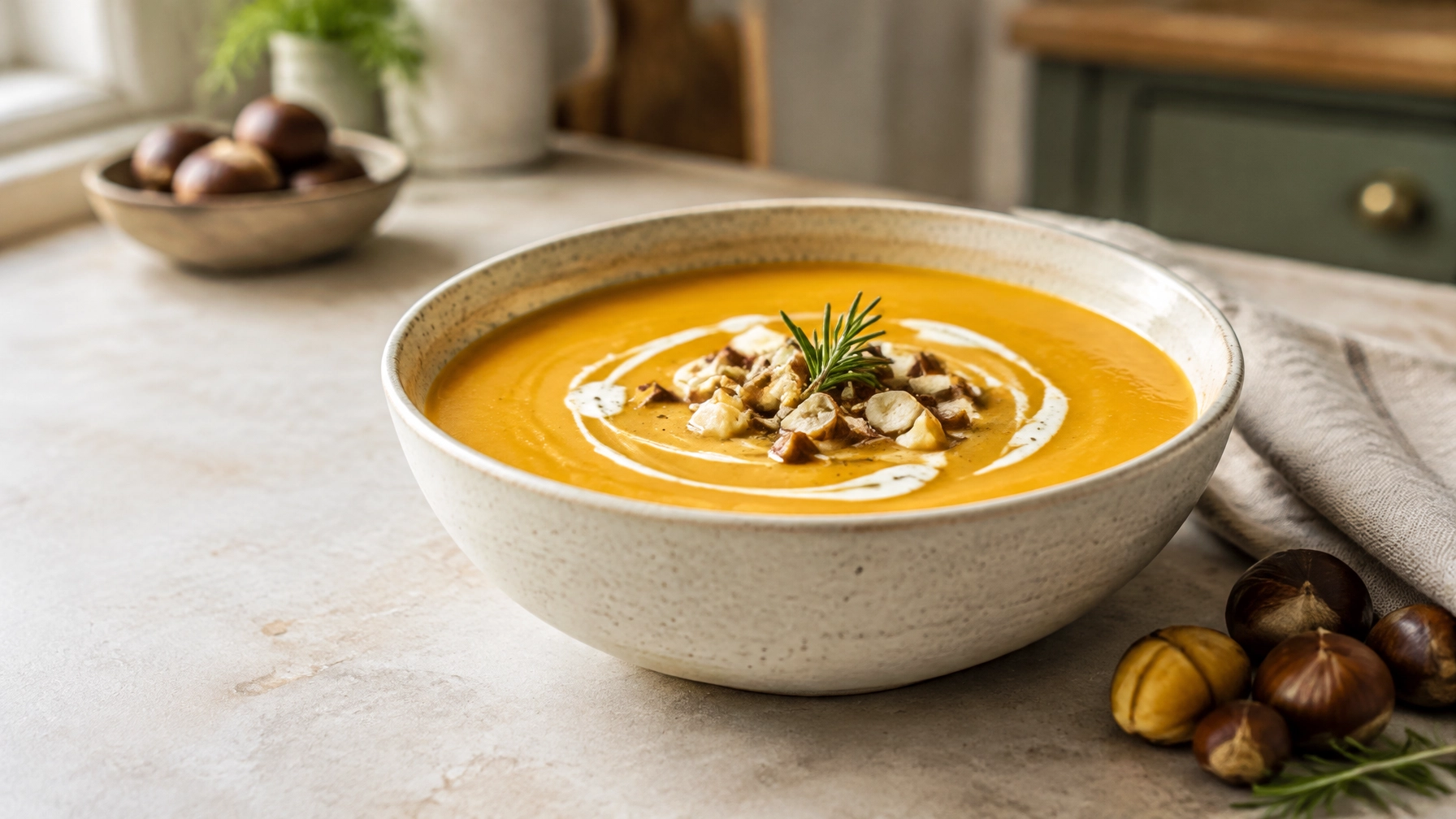
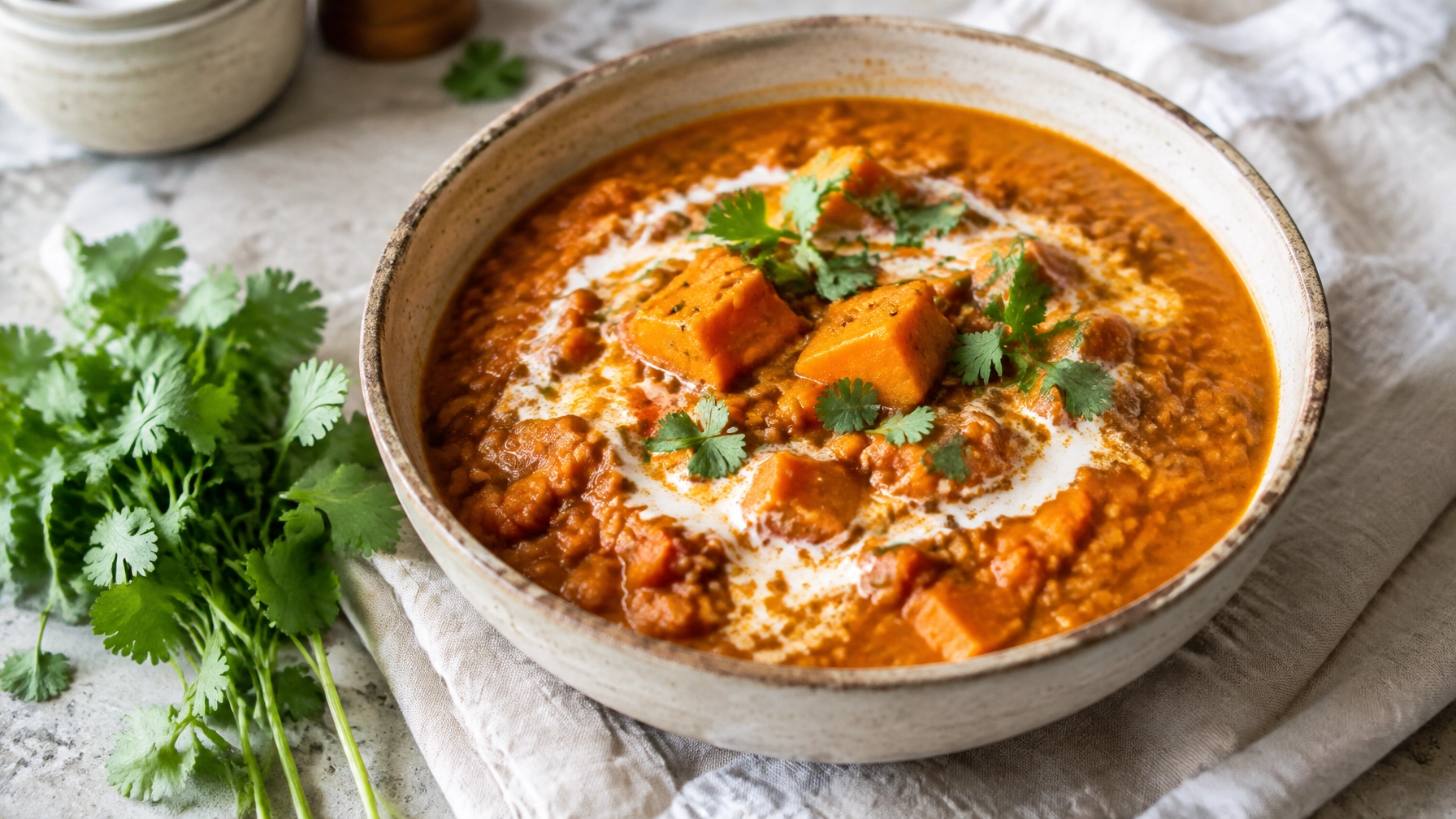
Roasted butternut squash and cooked chestnuts make a naturally thick, savoury soup, with rosemary for fragrance and a little coconut cream for a smooth finish. It is a straightforward vegan meal for a cool day, and most of the cooking happens in the oven.
Roasting the squash first gives it a deeper flavour than boiling it directly in stock. The edges turn golden while the centre softens, ready to blend with sweet onion, mellow garlic and chestnuts. The result is filling without needing flour, dairy or a long list of ingredients.
Roast
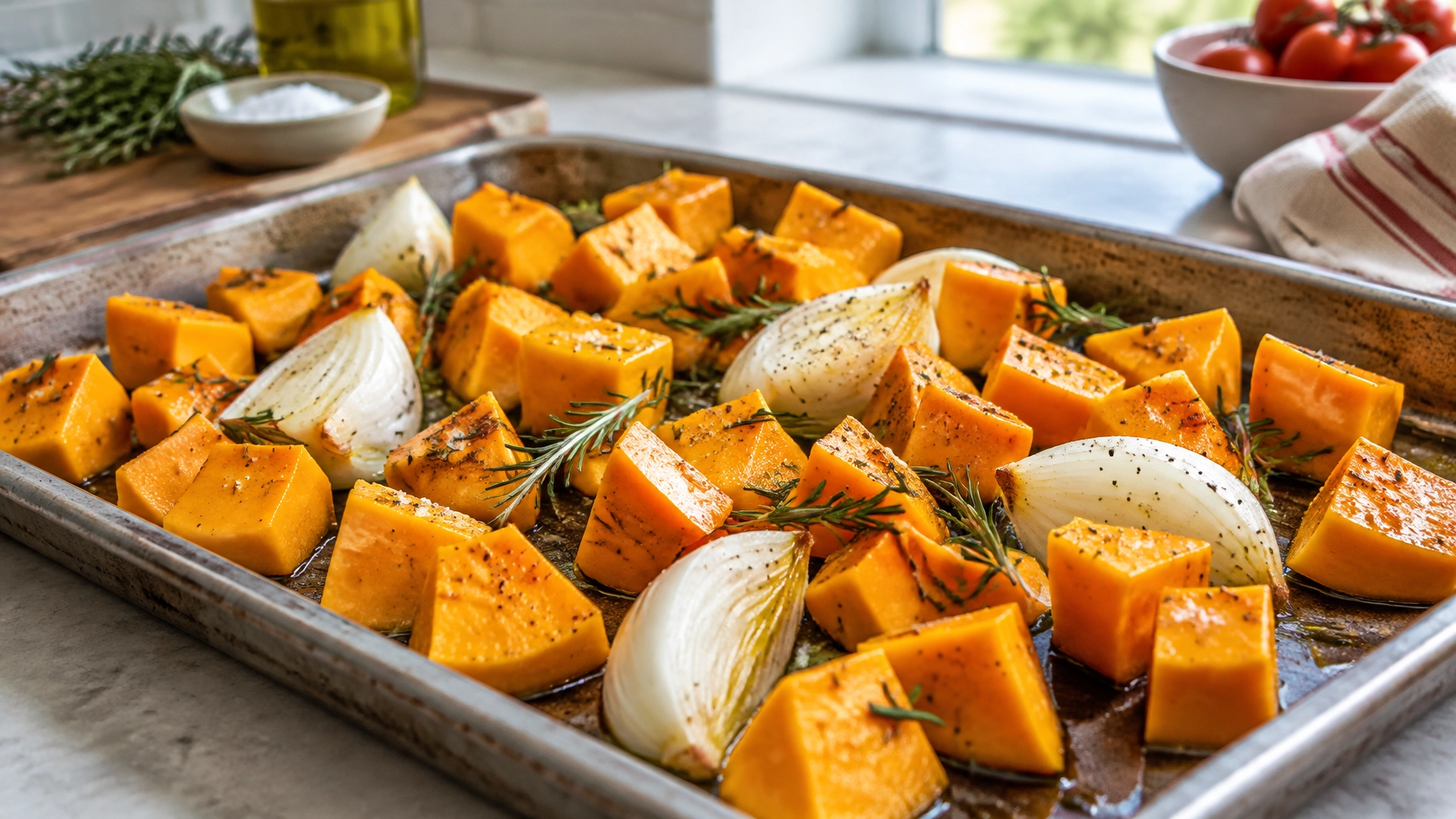
Use a ripe butternut squash that feels firm and heavy for its size. Peel it, scoop out the seeds and cut the flesh into even pieces so they soften at the same pace. A large onion adds sweetness, while garlic mellows as it roasts. Leaving the garlic cloves in their skins helps stop them from drying out.
Spread the vegetables in a single layer. If they are packed tightly together, they are more likely to steam than roast. Toss with olive oil, rosemary, salt and black pepper, then roast until tender and lightly browned. The exact time depends on the size of the pieces, so check them with a small knife: it should pass through the squash without resistance.
Blend
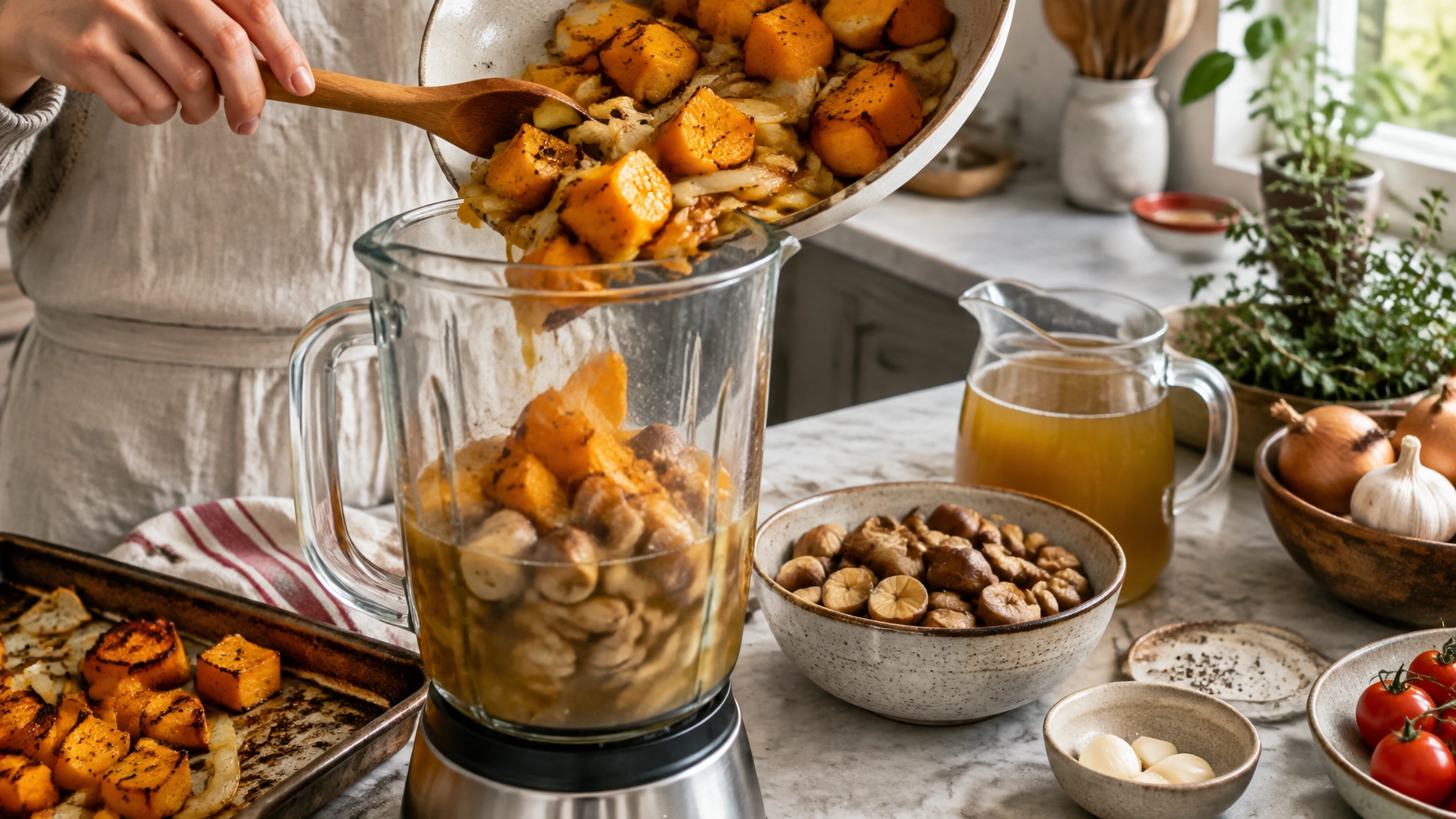
Use cooked chestnuts, sold vacuum-packed, tinned or in jars. Check that the pack contains plain cooked chestnuts rather than sweetened chestnut purée. Reserve a few for serving if you like a garnish with some texture; blend the rest into the soup.
Blend the hot vegetables with the chestnuts and some of the stock. Add the remaining stock gradually until the soup reaches the thickness you prefer. A jug blender usually gives a very smooth finish. If using a stick blender, choose a deep saucepan and keep the blades fully submerged to reduce splashing.
Purée (noun): food made smooth by blending or crushing. Here, blending the chestnuts with the squash helps create a thick, even texture without dairy.
Finish
Return the blended soup to a saucepan and warm it gently. Stir in the coconut cream once the soup is hot, then taste and adjust the seasoning. Coconut cream adds richness, but it can soften the other flavours, so a final pinch of salt and black pepper may be needed.
Keep the soup at a gentle simmer rather than boiling it hard after adding the coconut cream. If it seems too thick, add a splash of stock or hot water. If it is thinner than you would like, simmer it uncovered for a few minutes, stirring regularly.
This recipe is fully vegan when made with vegetable stock and plain cooked chestnuts. Check the ingredient labels, particularly on stock and chestnut products, if you are cooking for someone with specific dietary requirements.
Serve
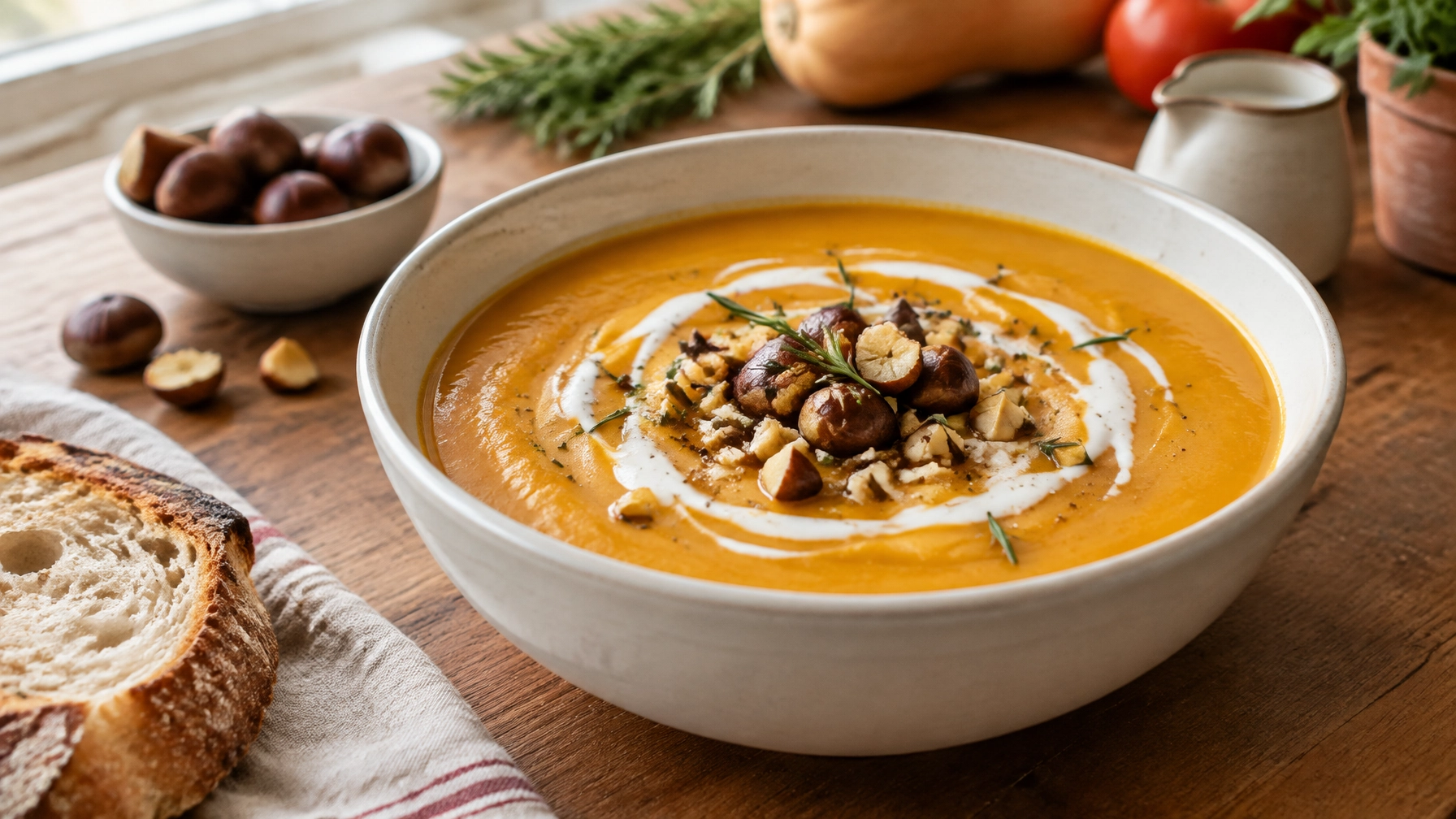
Serve the soup hot, with reserved chopped chestnuts, a small swirl of coconut cream and a few rosemary leaves. Crusty bread or toast makes a simple accompaniment. For a lighter meal, serve it on its own or with a green salad.
The soup is also useful for preparing ahead. Cool it promptly, transfer it to a covered container and refrigerate for up to three days. Reheat gently in a saucepan, stirring occasionally, until piping hot throughout. Add a little water or stock if it has thickened while chilled. For freezing, leave out any garnish, cool the soup and freeze in suitable portions. Defrost in the fridge before reheating.
Recipe
Servings: 4
Prep time: 20 minutes
Cook time: 40 minutes
Total time: 60 minutes
Tips
Cut the squash into similar-sized pieces for even roasting. There is no need to make the pieces perfectly uniform, but smaller pieces will cook sooner than large chunks.
For a smoother soup, blend for longer and add the stock gradually. For a more textured finish, blend the soup until smooth, then stir through a few roughly chopped chestnuts just before serving.
Use a blender that is suitable for hot liquids and follow its instructions. If transferring hot soup to a jug blender, avoid filling it too high and allow steam to escape as directed by the manufacturer.
Variations
For a stronger rosemary flavour, add another small sprig to the roasting tray, then remove it before blending. A small pinch of ground nutmeg can add warmth, or a pinch of smoked paprika can bring a gentle savoury note.
For a less rich soup, replace some of the coconut cream with extra vegetable stock. For a thicker result, use less stock at first and add more after blending as needed. Keep the core ingredients the same if you want the chestnut and squash flavours to remain at the centre of the dish.
FAQ
Can I use frozen squash?
Yes. Roast it from frozen if the packaging allows, following its guidance for cooking. The pieces may release more moisture and need extra time to brown. Check that they are tender before blending.
Can I make the soup ahead?
Yes. Make it up to three days ahead and keep it covered in the fridge. Reheat gently until piping hot, stirring regularly. Add a splash of stock or water if the soup has thickened.
Can I use chestnut purée instead of cooked chestnuts?
Plain unsweetened chestnut purée may work, but it can change the soup’s texture and flavour. Add it a little at a time while blending, and check the label to ensure it contains no sweeteners or other unwanted additions. If available, plain cooked chestnuts are the best match for this recipe.