Recipe
Serves
4 1×
Serves 4Prep 20 minCook 15 minTotal 35 min
Ingredients
Method
- Place the rice noodles in a large heatproof bowl. Cover them with boiling water and soak for 5 minutes, or according to the packet instructions, until pliable but still slightly firm. Drain thoroughly and set aside.
- Whisk the tamarind concentrate, soy sauce, brown sugar, lime juice, water and chilli-garlic sauce in a small bowl. Continue whisking until the sugar is mostly dissolved. Set the sauce aside.
- Heat 1 tablespoon of oil in a large wok or frying pan over medium-high heat. Add the tofu in a single layer. Cook for 6 to 8 minutes, turning regularly, until the cubes are golden on several sides. Transfer the tofu to a plate.
- Add the remaining tablespoon of oil to the pan. Add the garlic, sliced chilli, bell pepper and carrot. Stir-fry for 2 minutes, until the vegetables begin to soften but retain some firmness.
- Push the vegetables to one side of the pan. Crack the eggs into the clear space and scramble for 1 to 2 minutes, until just set. Break the egg into small pieces and mix it with the vegetables.
- Add the drained noodles and pour the sauce over them. Toss continuously for 2 to 3 minutes. The noodles should become tender and the sauce should coat them evenly. If the noodles appear dry, add 1 tablespoon of water and continue tossing.
- Return the browned tofu to the pan. Add the bean sprouts and three of the sliced spring onions. Toss for 1 minute, until the tofu is heated through and the sprouts remain slightly crisp.
- Divide the Pad Thai between 4 bowls. Add the chopped peanuts, coriander and remaining spring onion. Serve immediately with lime wedges.
Vegetarian Pad Thai (Egg and Tofu)
[JUMP TO RECIPE](#recipe)
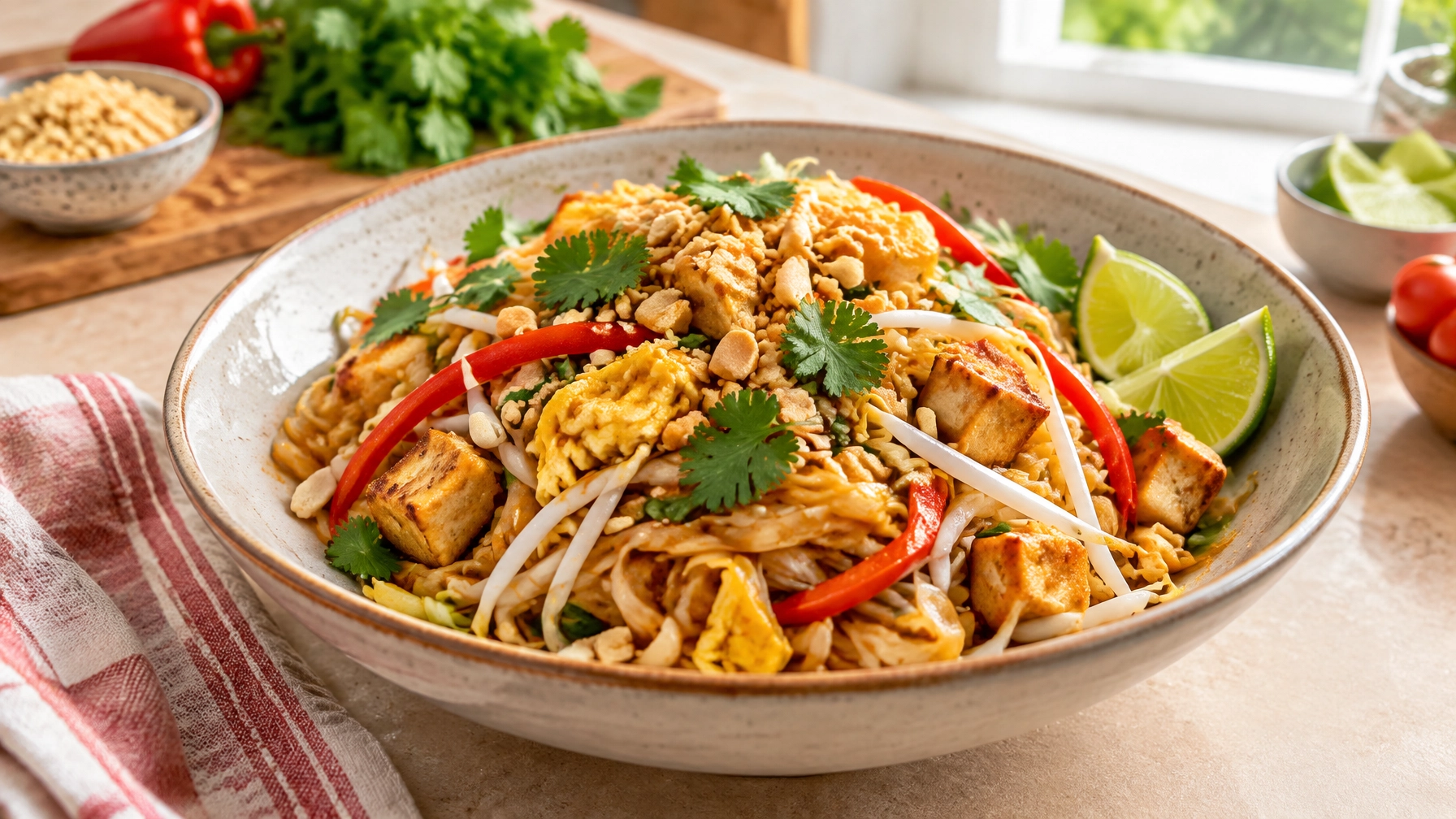
This vegetarian Pad Thai combines tender rice noodles, crisp tofu, scrambled egg, fresh vegetables and a tamarind-based sauce. It is prepared in one wok or large frying pan and is ready in approximately 35 minutes.
Pad Thai depends on balance. The sauce should be salty, sweet, sour and mildly spicy. Tamarind provides the characteristic sharpness, while soy sauce replaces the fish sauce used in many traditional preparations. Eggs and tofu provide substance, and bean sprouts and peanuts add contrasting texture.
The main preparation requirement is timing. Rice noodles should be softened but not fully cooked before they enter the pan. They finish cooking in the sauce, where they absorb flavour without becoming excessively soft.
Preparation
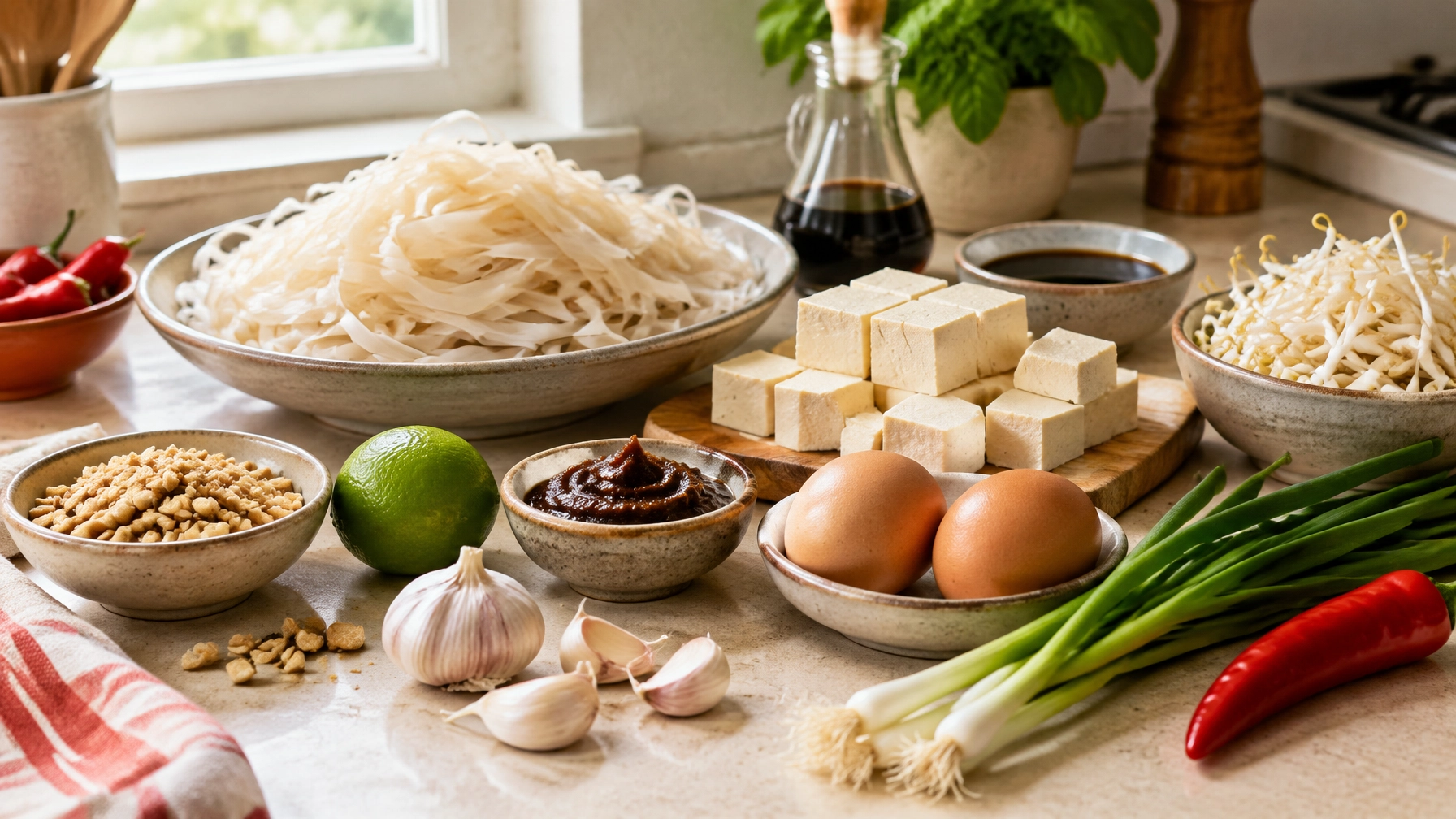
Use extra-firm tofu where possible. Pressing it for 10 to 15 minutes removes excess moisture and improves browning. Cut the tofu into evenly sized cubes so the pieces cook at the same rate.
The sauce can be mixed before cooking begins. This prevents the noodles from sitting in the pan while individual ingredients are measured. If tamarind concentrate is particularly strong, use the quantity stated in the recipe and adjust with lime juice only after tasting.
For additional background on vegetarian Pad Thai ingredients and preparation, see this vegetarian Pad Thai recipe and this tofu Pad Thai method.
Recipe
Servings: 4
Prep time: 20 minutes
Cook time: 15 minutes
Total time: 35 minutes
Tips
Prevent soft noodles
Do not fully cook the rice noodles during soaking. They should bend without breaking but remain firm in the centre. Over-soaked noodles can become soft and break apart during stir-frying.
Keep the tofu intact
Press the tofu before cutting it, then avoid moving it constantly during browning. Allow each side to contact the hot pan long enough to form a crust. Add the tofu back near the end rather than cooking it with the noodles from the beginning.
Control the sauce
Tamarind products vary in strength. If the finished dish is too sharp, add a small amount of sugar. If it tastes too sweet, add lime juice. If it lacks salt, add soy sauce 1 teaspoon at a time.
Cook in batches if necessary
A crowded pan steams the tofu and vegetables instead of browning them. Use a large wok or divide the tofu into two batches if the cooking surface is small.
Variations
Make it vegan
Replace the eggs with 150 g shelled edamame or an additional 150 g of tofu. Check the labels on the soy sauce, chilli-garlic sauce and noodles if strict vegan preparation is required.
Add more vegetables
Broccoli, pak choi, mushrooms, sugar snap peas and shredded cabbage can be used. Add dense vegetables with the carrot and softer vegetables during the final minute of cooking.
Make it gluten-free
Use certified gluten-free rice noodles and replace ordinary soy sauce with gluten-free tamari. Confirm that the tamarind concentrate and chilli-garlic sauce contain no wheat-based ingredients.
Reduce the heat
Omit the fresh chilli and use mild chilli-garlic sauce, or leave it out entirely. The tamarind, lime and soy sauce will still provide a complete flavour profile.
Use a peanut alternative
Replace the peanuts with chopped cashews or toasted sunflower seeds if required. The topping should remain unsalted or lightly salted so it does not overpower the sauce.
FAQ
Is Pad Thai vegetarian if it contains egg?
Yes. Eggs are vegetarian, although they are not vegan. This recipe contains egg and tofu but no meat, poultry, seafood or fish sauce.
Can I use tamarind paste instead of tamarind concentrate?
Yes, but the strength varies between products. Begin with the stated quantity, taste the mixed sauce and adjust before adding it to the pan. A weaker paste may require a larger amount.
Why are my rice noodles sticking together?
They may have been over-soaked, insufficiently drained or left standing for too long. Drain them immediately after soaking and toss them into the pan while the other ingredients are hot. A small amount of oil can be added if they remain heavily clumped.
Can I prepare the sauce in advance?
Yes. Mix the sauce up to 3 days in advance and store it in a sealed container in the refrigerator. Stir it before use because the sugar may settle.
Can I use pre-cooked tofu?
Yes. Add it during the final 2 minutes of cooking so it warms without becoming excessively soft. For the best texture, use tofu that has been baked or pan-fried until firm.
Can I make this without a wok?
Yes. Use the largest frying pan available and maintain medium-high heat. Cook the tofu separately if the pan is too small to hold all ingredients without crowding.
Storage
Cool leftovers promptly and transfer them to a sealed container. Refrigerate for up to 3 days. The noodles will firm up in storage, so reheat them in a frying pan over medium heat with 1 to 2 tablespoons of water.
Microwave reheating is possible, but the tofu will lose some of its crispness. Add fresh lime juice, bean sprouts or chopped peanuts after reheating to restore contrast.
Do not leave cooked Pad Thai at room temperature for more than 2 hours. Reheat only the portion required and do not repeatedly cool and reheat the full batch.