Recipe
Serves
8 1×
Serves 8 pitasPrep 30 minCook 15 minTotal 45 min
Ingredients
Method
- Put the wholemeal flour, white flour, yeast, salt and sugar in a large mixing bowl. Stir to distribute the yeast and salt through the flour. Add the warm water and olive oil.
- Mix until the ingredients form a rough dough. Tip it onto a clean work surface and knead for about 8 minutes. It should feel soft and only slightly tacky. If it sticks heavily to your hands, knead for a little longer before adding more flour; too much extra flour can make the finished pitas dry.
- Shape the dough into a ball and place it in a lightly oiled bowl. Cover and leave in a warm place for about 1 hour, until doubled in size. The dough should look fuller and spring back slowly when pressed lightly with a fingertip.
- While the dough proves, put a baking tray or baking stone in the oven and preheat to 240°C, or 220°C fan, or the oven’s highest setting if it does not reach that temperature. Let the tray or stone heat thoroughly. A cold tray is a common reason pitas stay flat.
- Turn the dough out and divide it into 8 equal pieces, about 85 g each. Shape each piece into a ball. Roll each ball into a disc about 5 mm thick, keeping the thickness even from edge to edge. Brush the top of each disc lightly with water and press about 1 tsp sesame seeds onto it.
- Cover the shaped pitas and leave them to rest for 15 minutes. This rest relaxes the dough, helping it stretch and puff in the oven rather than pulling back or tearing. Keep the discs covered so their surfaces do not dry out.
- Carefully place 4 or 5 pitas on the hot tray or stone, leaving space between them. Bake for 4 to 5 minutes, keeping the oven door shut for the first 3 minutes. Watch for the breads to balloon. Remove them when puffed and lightly coloured, then bake the remaining pitas in the same way.
- Wrap each batch immediately in a clean tea towel. The trapped warmth and steam help keep the pitas soft as they cool.
Wholemeal Pita with Sesame
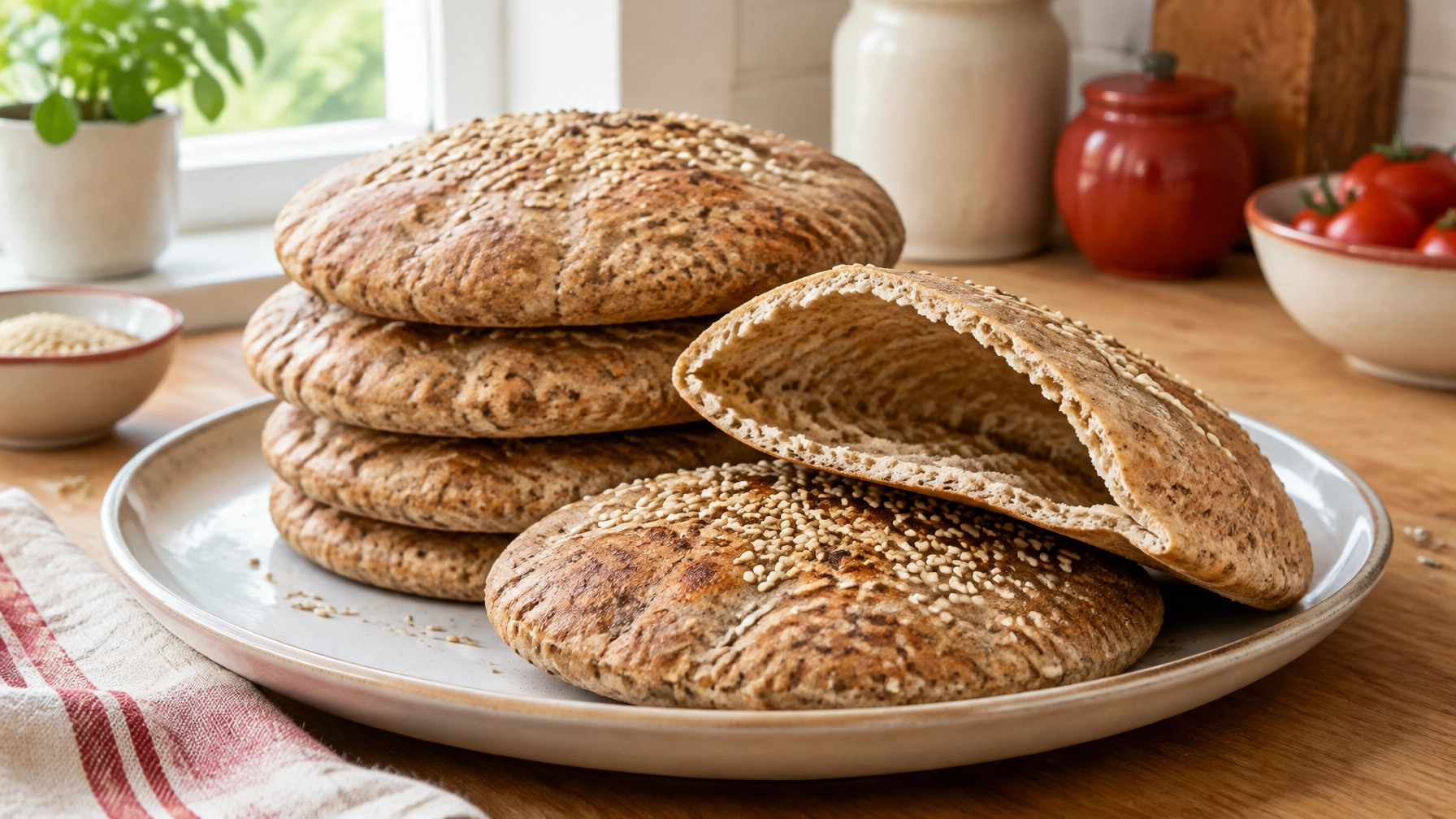
These wholemeal pitas are soft inside, lightly toasted outside and finished with sesame seeds for a gentle crunch. A little strong white flour helps keep the crumb pliable, while wholemeal flour gives the bread its fuller flavour.
The key to a pocket is heat. A thoroughly heated oven and baking tray help the dough puff quickly, and a short covered rest after shaping makes the discs easier to handle.
Recipe
Makes: 8 pitas
Prep time: 30 minutes
Cook time: 15 minutes
Total time: 45 minutes
Tips
Make the tray genuinely hot. Preheating the oven alone is not enough if the tray has only just gone in. Leave the tray or stone inside while the oven heats, then allow it to warm fully before baking. Use oven gloves and take care when transferring the dough.
Roll evenly. A disc that is thick in the middle and thin around the edges may puff unevenly or split. Turn the dough as you roll and check the thickness before adding the sesame seeds. If a disc keeps shrinking, cover it and give it a few more minutes to relax.
Do not skip the covered rest. The 15-minute rest after rolling gives the dough time to settle. This makes it easier for the bread to expand quickly when it meets the hot baking surface.
Keep the door shut at first. The first few minutes are when the pita needs consistent heat to form steam inside the dough. Opening the door too early can lower the oven temperature and interrupt the puff.
Expect some variation. Oven temperatures, tray materials and dough thickness all affect how quickly the pitas bake. Use the stated time as a guide and look for ballooning and light colour. A flat pita still tastes good; it simply will not have a pocket.
Variations
For a milder wholemeal flavour, use a little less wholemeal flour and a little more strong white flour, keeping the total flour weight at 400 g. Using only wholemeal flour can make the pitas dense and crumbly, so the blend in this recipe is intended to give a softer result.
For a more pronounced sesame finish, press the seeds gently into the damp surface so they stay in place during baking. Brush with only a thin film of water. Too much water can make the surface wet rather than tacky.
The pitas can be served warm alongside soups, dips or salads, or filled once cool. If a pita has puffed, let it cool slightly before opening the pocket. If it has stayed flat, use it as a soft flatbread or tear it into pieces for dipping.
FAQ
Why did my pitas stay flat?
The oven or baking tray may not have been hot enough, or the dough may have been rolled unevenly. Make sure the tray heats with the oven, leave the door shut for the first 3 minutes and roll each disc to an even thickness. A flat pita is still good to eat, but it will not form a pocket.
Can I make the dough ahead?
This method is designed around a 1-hour rise and a 15-minute rest after shaping. For the most reliable puff, follow those timings and bake the pitas as soon as the tray is fully hot and the discs have rested.
How do I keep the pitas soft after baking?
Wrap them in a clean tea towel immediately after they come out of the oven. Leave them wrapped while the next batch bakes. This holds in warmth and moisture, helping the breads stay pliable rather than drying out.