Recipe
Servings
Servings 1×
Ingredients
- Steak
- Tofu
- Beans
- Green beans
- Mushrooms
- Garlic
- Lemon
- Butter
- Chili seasoning
- Salt
- Black pepper
Method
- Use the recipe card for exact quantities, then follow these techniques to make every bite taste like you had much more time.
- Pat the sirloin thoroughly dry before it meets the skillet.
- Cut the steak into fairly even pieces so they finish cooking at roughly the same time.
- Heat a heavy skillet until the cooking fat shimmers.
- Add the steak in a single layer and leave space around each piece.
- Let the first side sit long enough to form a crust, then turn the pieces with tongs.
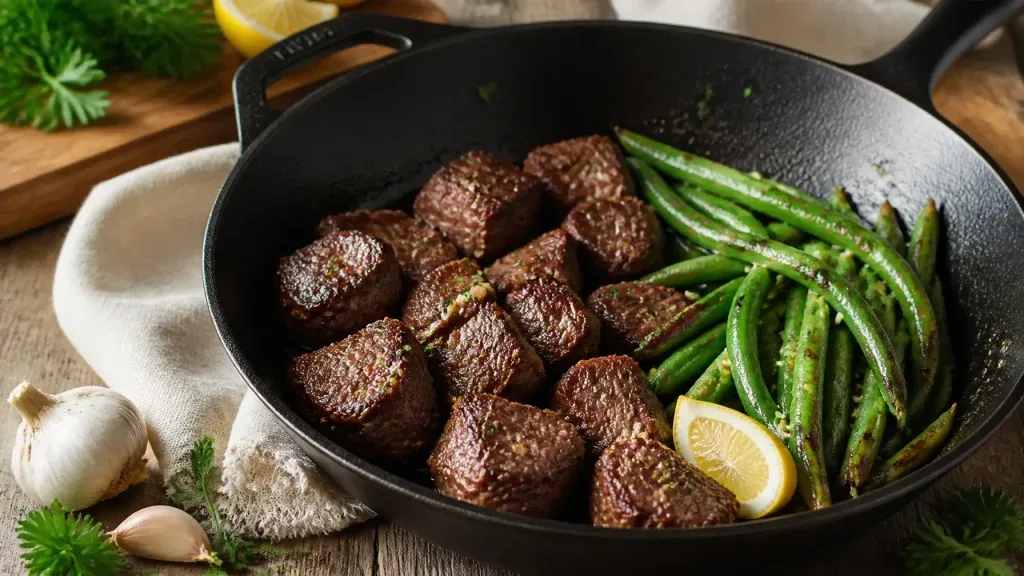
When dinner needs to happen quickly, steak bites are your best friend. These garlic butter sirloin steak bites with green beans deliver a proper sear, tender centers, and a buttery pan sauce in about 15 minutes. No complicated marinades, no parade of pans, and no sad desk dinner required. Use the recipe card for exact quantities, then follow these techniques to make every bite taste like you had much more time.
The Science of a Fast, Proper Sear
The non-negotiable is simple: dry steak and a hot pan create browning; wet steak and a crowded pan create steaming.
Pat the sirloin thoroughly dry before it meets the skillet. Surface moisture must evaporate before the meat can brown, and evaporation uses energy that could otherwise build a crust. A dry surface lets the Maillard reaction get to work. That reaction is the flavor engine behind the deep brown color and savory, roasted taste you want.
Cut the steak into fairly even pieces so they finish cooking at roughly the same time. Aim for bite-size cubes rather than tiny scraps. Small pieces cook quickly, but pieces that are too small have very little margin between juicy and overdone.
Heat a heavy skillet until the cooking fat shimmers. Cast iron works particularly well because it holds heat when the steak hits the pan. Stainless steel is also excellent, provided you preheat it properly. Add the steak in a single layer and leave space around each piece.
Do not keep stirring. Let the first side sit long enough to form a crust, then turn the pieces with tongs. Constant movement may feel productive, but it mostly rubs away the developing sear. Give the meat contact with the pan, and let the pan do its job.
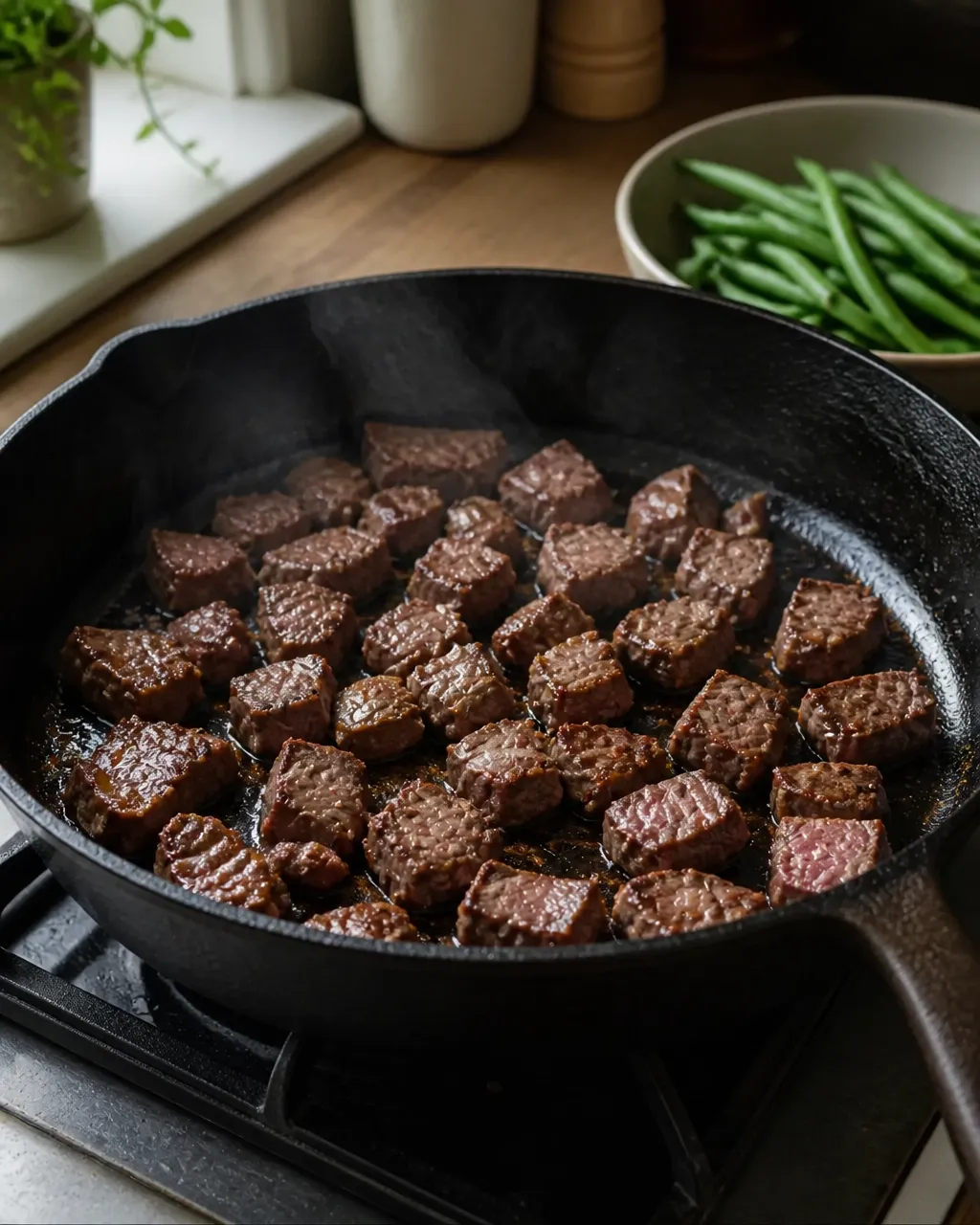
Why Crowding Ruins the Party
Crowding is the most common mistake with steak bites. When too many pieces share one pan, they release moisture faster than the heat can remove it. The temperature drops, steam gathers, and browning slows down. You end up with gray steak instead of beautifully caramelized edges.
Use a skillet large enough to keep the cubes separated. If your pan is small, cook in batches. It may add a minute or two, but that is a much better trade than sacrificing the crust.
Keep the green beans out of the skillet while the steak sears. They contain moisture, and adding them too soon can cool the cooking surface. Cook the steak first, transfer it briefly to a plate, and use the same pan for the vegetables. This creates a useful chain reaction: the steak leaves behind browned bits, the green beans pick up flavor, and the garlic butter loosens everything into one quick sauce.
Add Garlic at the Right Moment
Garlic is powerful but impatient. Add it to a pan that is still ripping hot, and it can burn before the butter has finished melting. Burnt garlic tastes bitter and will overpower the steak.
Reduce the heat before adding the butter and garlic. Let the butter foam gently, then cook the garlic just until fragrant. Thirty seconds can be enough. Add herbs or chili flakes at this stage if you want extra character, but do not bury the sauce under too many competing flavors.
Return the steak to the pan only at the end. The final toss should be brief: just long enough to coat the meat and warm it through. Remember that small steak pieces continue cooking after they leave the heat. This carryover cooking is why pulling them slightly before your final target helps protect tenderness.
For doneness, use an instant-read thermometer rather than guessing from color alone. For medium-rare, many cooks aim for a finished temperature around 130–135°F. For medium, aim closer to 140–145°F. Check several pieces because a cube near the edge of the skillet may cook differently from one in the center. For more conservative food-safety guidance, especially when serving vulnerable diners, choose medium and verify the temperature carefully.
Build Your Own Version Without Losing Balance
Keep the core method intact, then change the flavor direction. The steak, green beans, browned pan bits, and short garlic-butter finish are the foundation. Small adjustments can make the meal feel completely different.
For a bright version, finish with lemon juice and fresh parsley. Acidity cuts through butter and makes the beef taste less heavy. Add it after turning off the heat so the fresh flavor stays lively.
For a smoky version, season the steak with smoked paprika and add a pinch of crushed red pepper. Keep the heat controlled once the butter enters the pan; smoky flavors should support the crust, not turn the garlic bitter.
For a richer, steakhouse-style finish, let the butter foam slightly longer before adding the garlic. Stop before it becomes dark brown. A splash of Worcestershire sauce can deepen the savory notes, but use it sparingly because its acidity and salt can quickly dominate.
Need a lower-carb meal? Serve the steak and green beans as they are, with the buttery sauce spooned over the top. Looking for a plant-forward variation? Keep the same skillet logic and swap the steak for thick-cut mushrooms or pressed tofu, adjusting the cooking time because their moisture behaves differently.
You can also turn this into one of your favorite air fryer recipes dinner options. Air-fry the steak pieces in a single layer, then toss them with separately cooked green beans and garlic butter. The air fryer provides fast circulating heat, but you will miss some of the browned skillet fond, so add a splash of lemon or Worcestershire for extra depth.
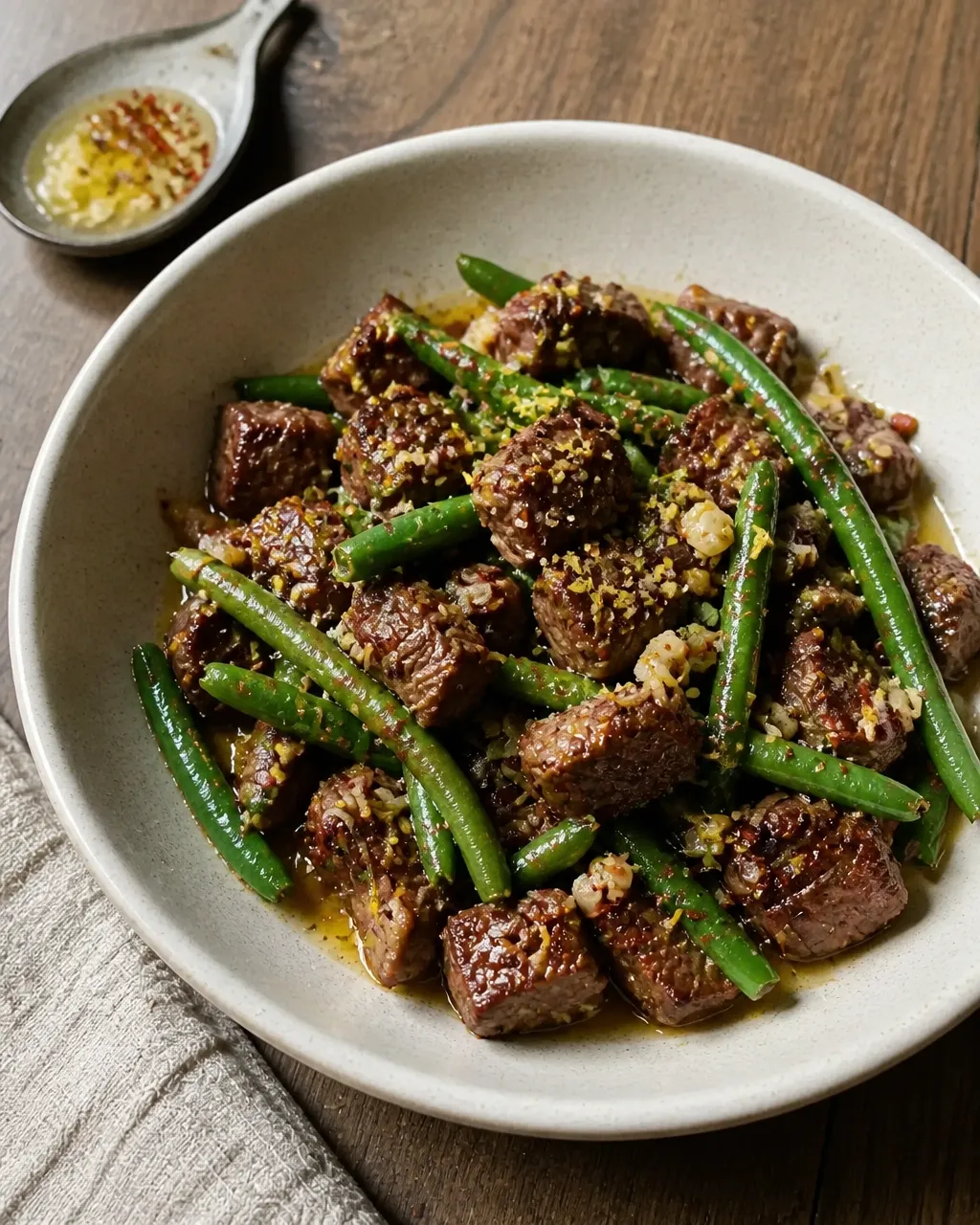
Side Dishes That Keep the Plate Balanced
This skillet dinner already brings protein, vegetables, fat, and plenty of savory flavor. Choose sides that add contrast rather than more richness.
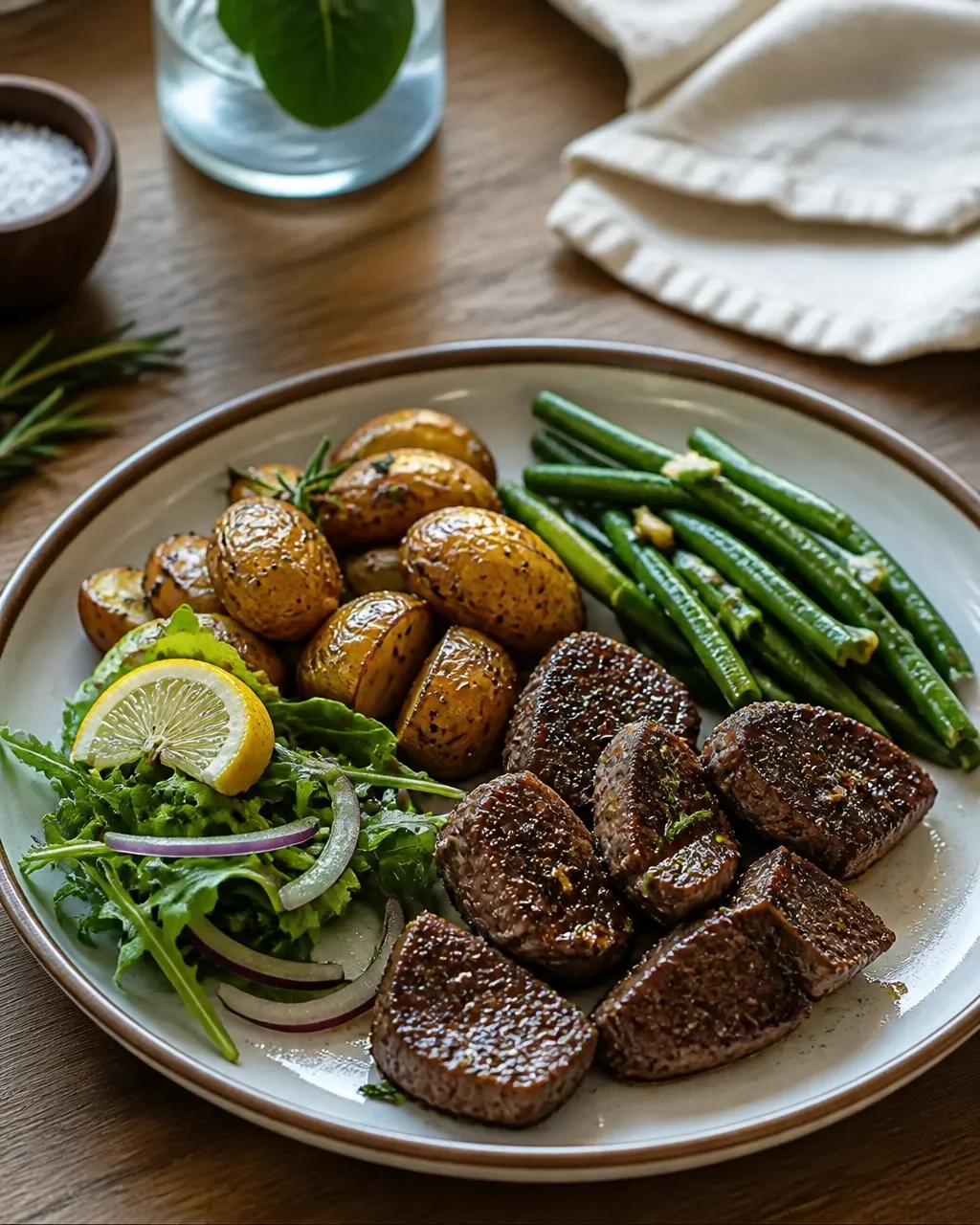
Serve it with roasted baby potatoes when you want a hearty dinner. Their crisp edges and fluffy centers make a good partner for garlic butter, while their mild flavor lets the steak stay in charge.
For a lighter plate, add a simple salad with a sharp lemon or vinegar dressing. The acidity refreshes your palate between bites and keeps the butter from feeling too rich. A crunchy cabbage slaw works for the same reason.
Rice is useful when you want to stretch the meal for hungry eaters. Keep it simply seasoned and let the pan sauce do the talking. For more healthy dinner ideas, pair the steak with cauliflower rice or another vegetable-based side, but make sure it has enough salt and acidity to avoid tasting flat.
If you are feeding the whole family, warm bread can mop up the remaining sauce. That is not a flaw. That is efficient plate management.
Frequently Asked Questions
Can I use another cut of beef?
Yes. Choose a tender cut that cooks quickly, such as strip steak, ribeye, or tenderloin. Sirloin is a practical choice because it offers good flavor without the price of premium cuts. Avoid very tough cuts unless you plan to marinate and cook them differently. Cubing a tough cut does not magically make it tender; it simply gives you more small pieces of tough beef.
Why are my steak bites releasing liquid?
The meat may not have been dry enough, the pan may not have been hot enough, or the skillet may have been overcrowded. Moisture has to escape before browning can happen. Pat the steak dry, preheat the pan properly, and cook in batches if needed. Also avoid adding the green beans until after the steak has been seared.
How do I stop the garlic butter from burning?
Lower the heat before adding the butter and garlic. Butter contains milk solids that can brown quickly, while minced garlic has a large surface area and burns faster than whole cloves. Cook the garlic only until fragrant, then immediately add the green beans or remove the pan from the heat. If the butter or garlic smells bitter, start the sauce again rather than trying to hide it.
Can I make this with frozen green beans?
You can, but thaw and drain them first when possible. Frozen green beans carry extra water, which can make the pan sputter and dilute the sauce. They may also need a little longer to become hot and crisp-tender. Cook them separately until most excess moisture is gone, then toss them with the garlic butter at the end.
How do I keep the steak tender?
Do not overcook it, and do not cut the pieces too small. Use a thermometer and remember that the steak will continue cooking during the final toss and resting period. Let the cubes sear before turning them, then remove them from the pan while they are just below your desired finished temperature. Finally, serve them promptly. Steak bites are at their best when hot and freshly coated.
Can I prepare this as one of my quick family meals?
Absolutely. Organize the short cooking window before turning on the heat. Trim the beans, cut and dry the steak, and set out the butter and garlic first. Once the pan is hot, the recipe moves quickly. For busy evenings, serve it with rice, potatoes, or bread so everyone can build a filling plate without requiring a second main dish.
Is this suitable for meal prep?
It is best fresh, but you can refrigerate leftovers in a sealed container for up to a few days. Reheat gently in a skillet or microwave until hot. Avoid blasting the steak at high heat for too long, because reheating drives out moisture and can turn the bites firm. Store the green beans with the steak, but add fresh lemon or parsley after reheating to wake up the flavors.
For more fast inspiration, browse Cookpedia’s 15-minute meals, explore the wider quick meals collection, or find more ideas in the dinner recipes section. The goal is not fancy cooking. It is making real food quickly: and making it worth sitting down for.