Recipe
Servings
Servings 1×
Ingredients
- Tofu
- Broccoli
- Onion
- Garlic
- Lime
- Peanut butter
- Butter
- Cooking oil
- Soy sauce or tamari
- Chili seasoning
- Salt
Method
- Keep this one in your rotation of Cookpedia’s 15-minute meals .
- Pat the tofu thoroughly before cooking.
- Press it briefly if you have time, but do not turn a 15-minute dinner into a tofu spa appointment.
- Give the tofu room in the pan.
- Arrange it in a single layer and let it sit long enough to develop color before tossing.
- Heat your wok or largest skillet before adding the cooking oil.
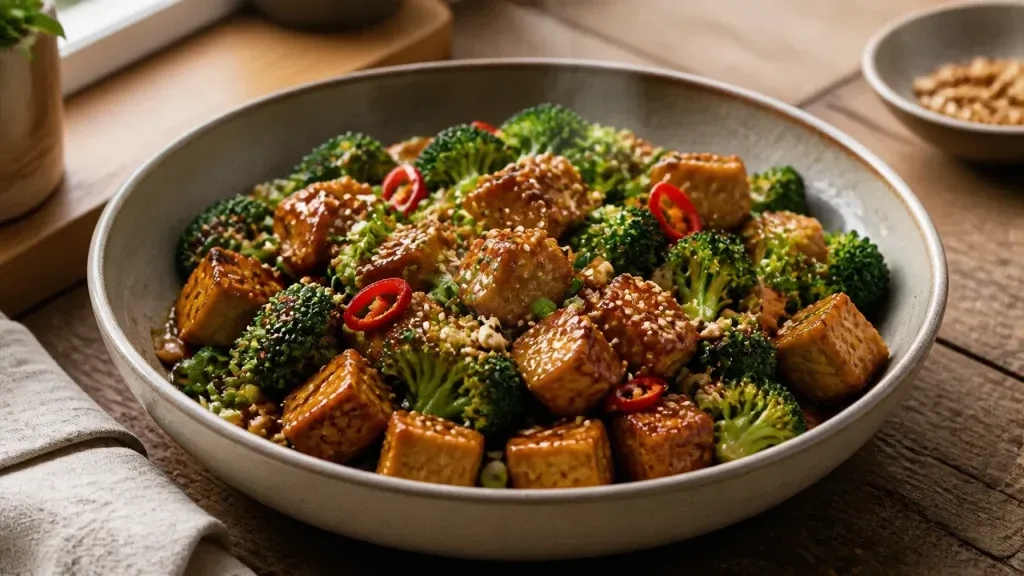
When dinner needs to happen quickly, reach for a hot pan, firm tofu, and a sauce with plenty of personality. This spicy peanut tofu and broccoli stir-fry delivers crisp-edged tofu, bright green vegetables, and a creamy, punchy glaze in about 15 minutes. It is fast enough for a Tuesday, satisfying enough for seconds, and much more exciting than eating crackers over the sink. Keep this one in your rotation of Cookpedia’s 15-minute meals.
Tips & Technique: Make the Pan Do the Work
Dry tofu browns; wet tofu steams
Treat moisture as your first cooking decision. Tofu holds a surprising amount of water, and a wet surface cannot brown efficiently. The pan must heat and evaporate that moisture before the tofu’s surface temperature rises enough for proper browning.
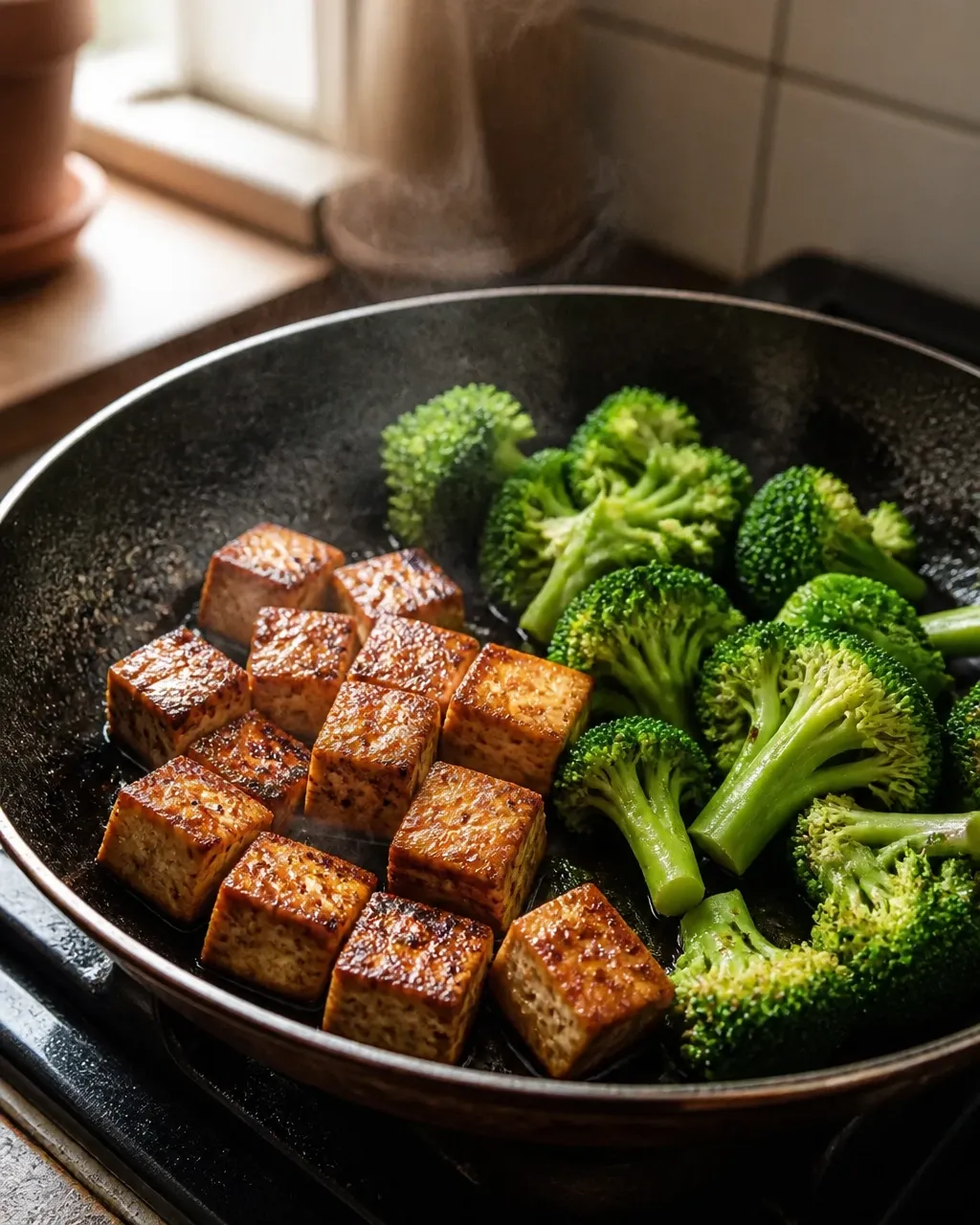
Pat the tofu thoroughly before cooking. Press it briefly if you have time, but do not turn a 15-minute dinner into a tofu spa appointment. A good towel pat makes a noticeable difference.
Give the tofu room in the pan. Arrange it in a single layer and let it sit long enough to develop color before tossing. Constant stirring prevents steady contact with the hot surface, while crowding traps steam. You want the tofu to sear, not attend a tiny sauna session.
The golden crust comes from the Maillard reaction, a group of reactions between amino acids and sugars that creates deep savory aromas and browned flavor. Tofu does not contain the same amount of protein as meat, but its surface can still develop a wonderfully nutty crust when it is dry, hot, and left alone. That contrast between a firmer exterior and tender center is what makes the finished dish feel substantial.
Use high heat, but not reckless heat
Heat your wok or largest skillet before adding the cooking oil. A properly heated pan helps the tofu brown quickly and lets the broccoli cook before it loses its fresh texture.
Avoid using a small pan. A wide surface gives every piece better contact with the heat and leaves space for moisture to escape. If the pan looks crowded, remove the tofu before cooking the broccoli. That small separation improves both ingredients.
Keep the heat at medium-high to high, depending on your stovetop. Lower the heat if the garlic begins to darken too quickly, but do not reduce it so much that the vegetables start simmering in their own liquid. Stir-frying works because heat arrives quickly and moisture leaves quickly. Keep that exchange moving.
Let broccoli stay green and slightly crisp
Cook broccoli until it turns vivid green and is just tender enough to bite through. The color comes from chlorophyll, the pigment responsible for its fresh green appearance. Long, wet cooking can dull that color and soften the vegetable past the point of usefulness.
Cut large florets into similar sizes so they finish together. Keep the stems, too. Peel any tough outer layer and slice the tender center thinly. The stems bring a pleasant crunch and help stretch the meal without adding extra work.
If the pan becomes dry before the broccoli softens, add a small splash of water and cover it briefly. This creates steam, which softens the broccoli’s cell walls faster than dry heat alone. Remove the lid quickly and return to uncovered cooking so excess water can evaporate. Steam is useful here; a puddle is not.
Whisk the peanut sauce before it meets the pan
Peanut butter is a fat-rich paste, so it needs help becoming a smooth sauce. Whisk it with hot water first, then add the salty, acidic, sweet, and spicy elements. The warm water loosens the peanut butter and helps distribute the seasonings evenly.
Think of the sauce as a balance rather than a fixed personality. Peanut butter brings richness and roasted depth. Soy sauce or tamari supplies salt and umami. Lime juice or vinegar cuts through the fat. A little sweetener rounds the sharp edges, while chili brings heat.
Do not pour the sauce into the pan while the tofu is still trying to brown. The water in the sauce will cool the surface and shift the cooking from frying toward braising. Add it only after the tofu and broccoli have developed their own texture.
Finish with a quick glaze
Return the tofu to the pan, pour in the sauce, and toss just until everything is coated. The heat will evaporate a little water and allow the peanut solids to thicken the mixture. If you use a small amount of cornstarch in the recipe card, it will gelatinize as it heats and make the sauce cling even more firmly.
Stop cooking when the sauce looks glossy and coats the tofu rather than pooling heavily at the bottom. Peanut sauces can thicken quickly, so do not wander off to answer one message. That message is how dinner becomes peanut cement.
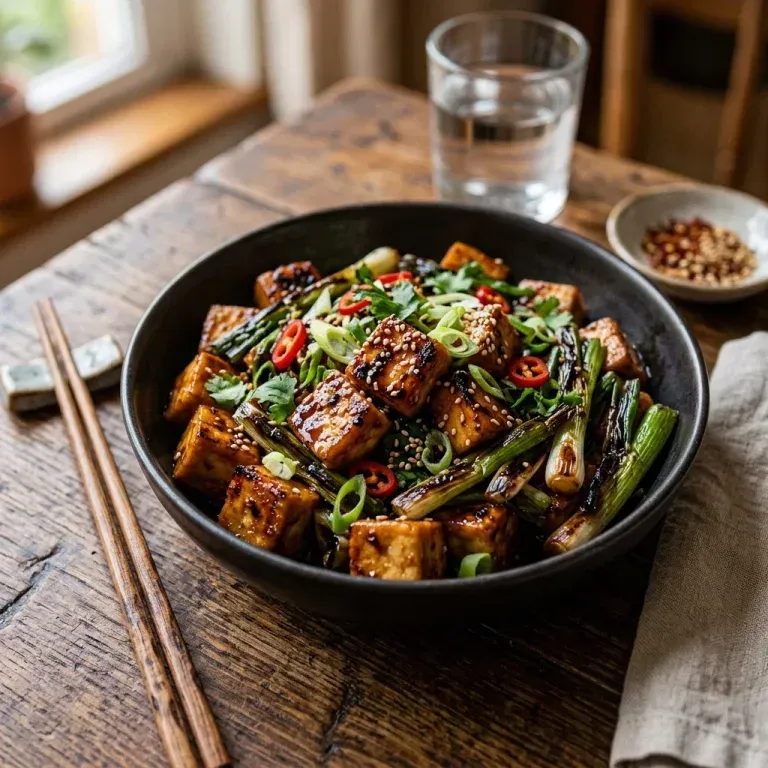
For more tofu inspiration, compare this method with Cookpedia’s Teriyaki Tofu with Charred Spring Onions. The techniques are related: dry tofu, high heat, and a sauce added late create far better texture than soaking everything from the beginning.
Variations: Change the Balance, Keep the Technique
Use the same cooking order while changing the flavor profile. For a milder family version, reduce the chili and add a little extra lime at the table. Acidity makes the peanut sauce taste lighter without removing its creamy character.
Swap broccoli for broccolini, snow peas, green beans, or thinly sliced bell pepper. Choose vegetables that cook quickly and cut dense pieces small enough to soften in the pan. Add leafy greens at the very end so they wilt without turning watery.
Make it gluten-free with tamari instead of standard soy sauce, and check the labels on your peanut butter and chili sauce. For a nut-free option, use sunflower seed butter. The sauce will taste slightly earthier, but the same fat-acid-salt balance still works.
Add noodles for a saucier bowl, or serve the stir-fry over rice for a more traditional weeknight plate. If you want more crunch, finish with toasted sesame seeds, chopped peanuts, or crisp cucumber. Use toppings sparingly; the goal is contrast, not a pantry avalanche.
This recipe also fits nicely beside other healthy dinner ideas because it puts vegetables and plant-based protein at the center without relying on a complicated ingredient list.
Side Dish Pairings: Add Contrast, Not Competition
Serve the stir-fry with steamed jasmine rice, brown rice, or another grain that can absorb the peanut sauce. Rice provides a gentle, neutral base and keeps the spicy glaze from feeling too intense.
Choose a crisp, fresh side if you want balance. Cucumber ribbons with lime, a simple cabbage slaw, or lightly dressed greens bring coolness and acidity to the plate. That matters because peanut butter is rich, and rich foods taste more complete when something bright cuts through them.
Add plain rice noodles when you want a more comforting bowl. Keep the noodles simply dressed so they do not compete with the sauce.
For a lighter dinner, skip the extra starch and serve the tofu and broccoli with a crunchy salad. For a bigger family table, put rice, toppings, and extra lime on the side so everyone can adjust the heat and richness.
FAQ: Troubleshooting a Fast Stir-Fry
Why is my tofu soft instead of crisp?
Start with moisture. Pat the tofu dry and avoid adding sauce until after it has browned. Check your pan size, too. A crowded skillet traps steam and lowers the temperature, which makes the tofu soften instead of sear. Cook in batches if necessary.
Do I have to press tofu for this recipe?
No, not always. Extra-firm tofu usually needs only a thorough pat with a clean towel for a quick meal. Press it longer if it feels especially wet or fragile. The non-negotiable part is removing surface moisture before it enters the hot pan.
Why did my peanut sauce turn thick and lumpy?
Peanut butter tightens when it meets cold liquid. Start with hot water and whisk gradually. If the sauce still thickens too much, loosen it with another small splash of warm water. Add liquid slowly so you do not accidentally create soup.
Can I make the sauce less spicy?
Absolutely. Reduce the chili at the beginning and add more at the table if needed. This is especially useful when serving children or anyone sensitive to heat. Keep the acidity and salt balanced so the sauce remains lively even without a lot of chili.
Why did my broccoli turn dull?
It probably cooked too long or in too much water. Use high heat, keep the cooking brief, and remove the lid as soon as the broccoli becomes tender. Bright green broccoli should still have some resistance when you bite it.
Can I use frozen broccoli?
Yes, but expect a softer texture. Frozen broccoli contains extra water and may release it into the pan. Add it while still frozen, use a wide skillet, and cook uncovered long enough for the moisture to evaporate. Do not thaw it in a bowl of water first.
Can I prepare this ahead of time?
Prepare the sauce and cut the vegetables ahead, but cook the tofu close to serving. The crust softens as it sits in the sauce. If you have leftovers, reheat them in a hot skillet rather than the microwave when possible. That helps evaporate excess moisture and restores some texture.
Is this suitable for meal prep?
Yes, with one adjustment: store rice separately from the stir-fry. Reheat the tofu and broccoli in a skillet with a splash of water, then add a little fresh lime before serving. The broccoli will be softer on day two, but the peanut sauce will remain flavorful.
What should I serve if I need more food?
Add rice, noodles, or a quick cucumber salad. You can also increase the broccoli and include another fast-cooking vegetable. Keep the pan wide and avoid doubling everything in a cramped skillet. Bigger portions still need enough room to brown.
If you enjoy practical, flavor-forward dinners like this, browse Cookpedia’s quick meals collection. You will find plenty of quick family meals built around the same useful idea: use simple ingredients, control the heat, and let one bold sauce carry the plate.
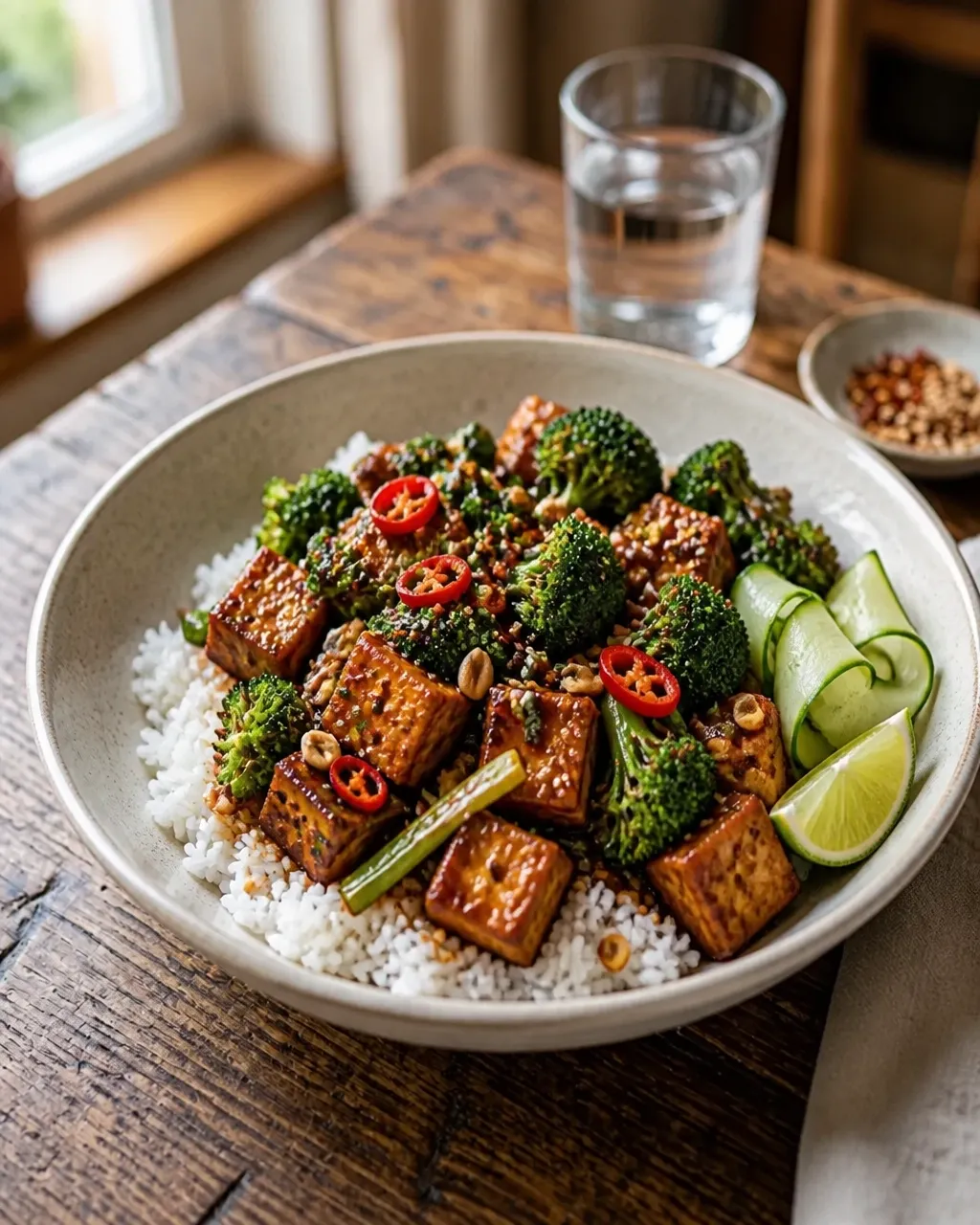
This is one of those air fryer recipes dinner fans may appreciate too, but the skillet earns its place here. It browns the tofu, flashes the broccoli, and finishes the sauce in one fast sequence. Keep the pan hot, keep the sauce balanced, and serve immediately. That is the whole trick: fifteen minutes, very little drama, and a dinner that tastes like you planned ahead.