Recipe
Serves
2 1×
Serves 2Prep 5 minCook 15 minTotal 20 min
Ingredients
Method
- Prepare the chicken. Place each chicken breast between two sheets of baking paper or plastic wrap. Pound with a meat mallet or rolling pin until the cutlets are approximately 1/2 inch thick. Aim for an even thickness from edge to edge.
- Season. Season both sides of the chicken with salt and black pepper. Allow the seasoned chicken to stand while the breading station is prepared.
- Set up the coating. Place the flour in one shallow dish. Beat the egg in a second dish. Place the panko in a third dish. Add the neutral oil to the panko and rub it through with clean fingers until the crumbs are lightly coated. This helps the crumbs brown in the air fryer.
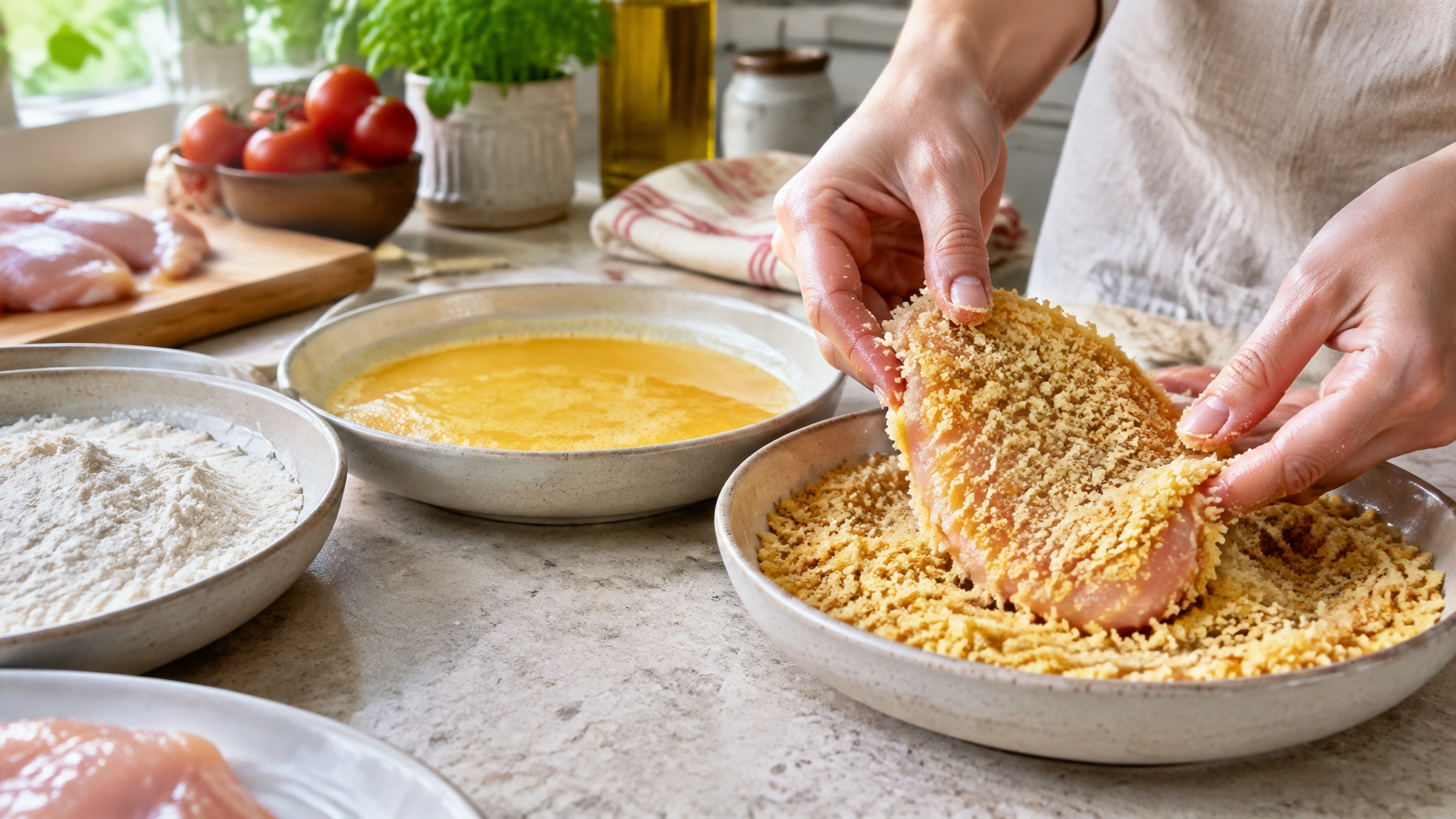
- Bread the chicken. Coat one cutlet in flour and shake off the excess. Dip it into the beaten egg. Press it firmly into the panko, turning to cover every surface. Repeat with the second cutlet.
- Preheat the air fryer. Preheat to 375°F (190°C) for approximately 3 minutes. Lightly oil the basket if the manufacturer permits it.
- Arrange the cutlets. Place the breaded chicken in the basket in a single layer. Do not overlap the pieces. If the basket is too small, cook in batches.
- Air fry. Cook at 375°F for 10 minutes. Turn the cutlets carefully. Spray or brush a small amount of oil over any dry patches.
- Complete the cooking. Cook for a further 5 minutes, or until the coating is deep golden brown and the thickest part of each cutlet reaches 165°F (74°C). If the chicken is not at temperature, continue in 2-minute intervals.
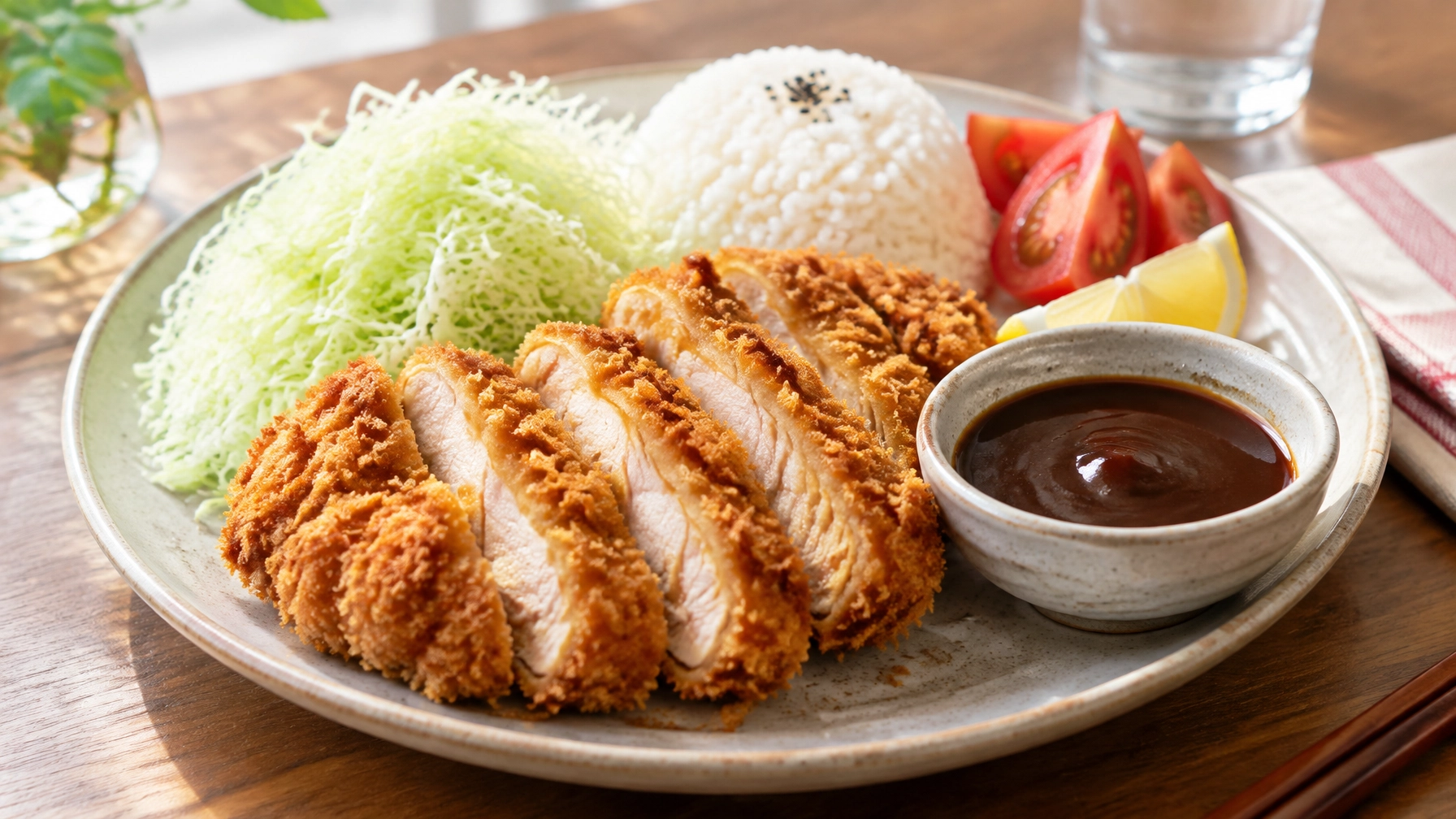
- Rest and serve. Transfer the chicken to a wire rack or plate and rest for 2 minutes. Slice into strips and serve with tonkatsu sauce, shredded cabbage, lemon, or rice.
Air Fryer Chicken Katsu (Crispy Panko, 20 Min)
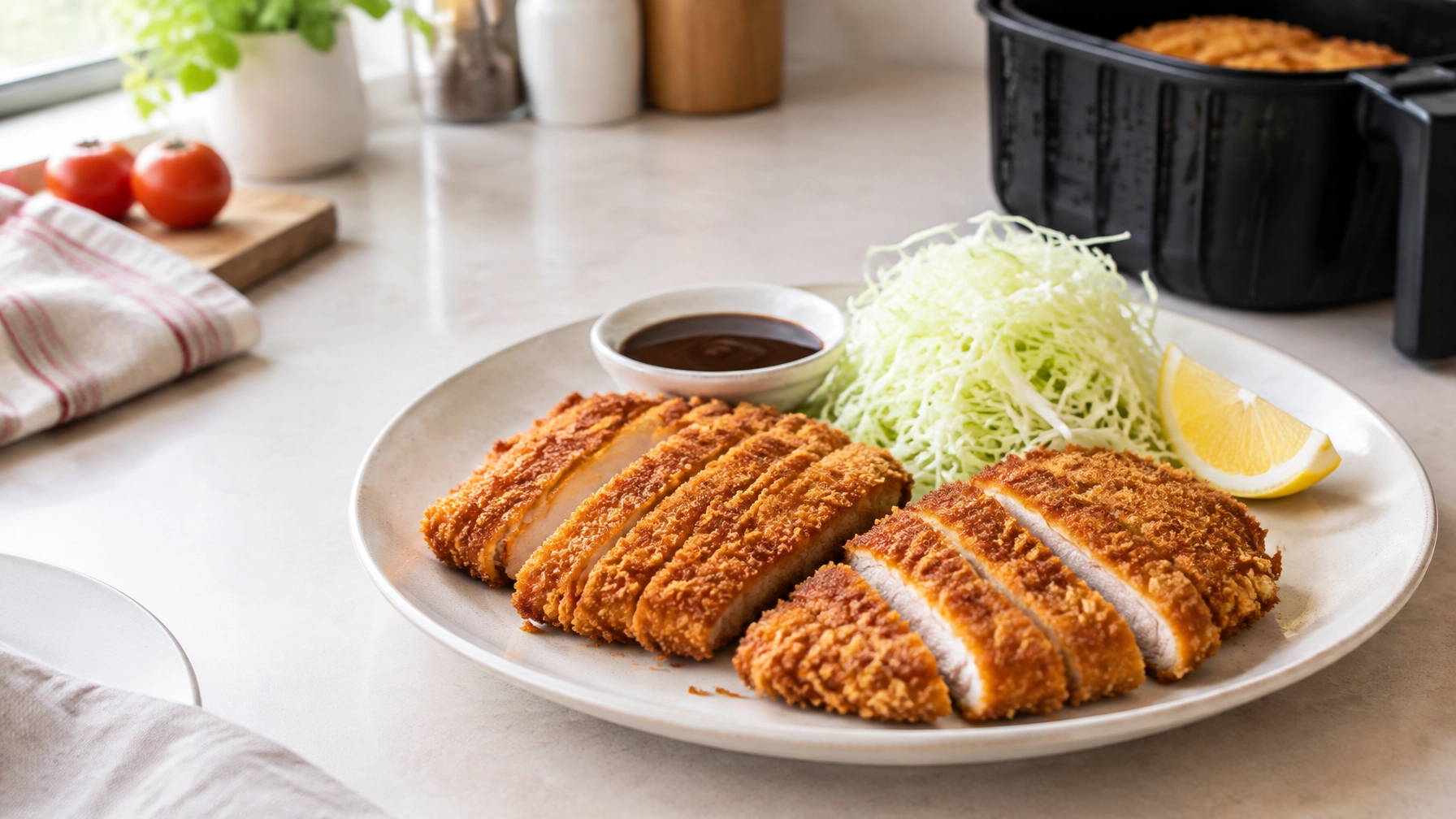
Air fryer chicken katsu uses thin chicken cutlets, seasoned flour, beaten egg, and panko breadcrumbs to produce a crisp coating without deep-frying. The cutlets cook in approximately 20 minutes and should reach an internal temperature of 165°F (74°C) before serving.
[ JUMP TO RECIPE ](#recipe)
Katsu
Chicken katsu (noun) is a Japanese-style breaded chicken cutlet. The defining components are a thin piece of chicken, a panko coating, and a crisp exterior. Traditional versions are fried in oil. This version uses circulating hot air with a light coating of oil.
The process is controlled and limited. Pound the chicken evenly. Keep the breading dry. Preheat the appliance. Cook the cutlets in a single layer. These conditions determine whether the coating becomes crisp or remains pale and soft.
The recipe serves two people. It uses boneless chicken breasts, but boneless chicken thighs can be substituted. Timing will vary according to thickness, appliance power, and basket size. The thermometer is the final authority.
Control
The chicken must be thin before cooking begins. A thick cutlet may brown on the outside before the center reaches a safe temperature. An uneven cutlet may produce dry edges and an undercooked center.
Panko should be pressed onto the chicken rather than loosely scattered over it. Bare areas will remain pale. Excess flour should be shaken off before the egg stage because loose flour can create a heavy coating.
Do not crowd the air fryer basket. Hot air must circulate around each cutlet. Overlapping chicken creates steam and interferes with browning.
A small quantity of oil is necessary for colour and texture. It should coat the breadcrumbs lightly. Excess oil can smoke, pool beneath the chicken, or produce a greasy coating.
Use an instant-read thermometer in the thickest part of the chicken. The United States Department of Agriculture identifies 165°F (74°C) as the safe minimum internal temperature for poultry. Review the USDA poultry safety guidance.
Tips
- Pound evenly: Use the flat side of a meat mallet to avoid tearing the chicken.
- Toast the panko: For darker colour, toast the breadcrumbs in a dry skillet with the oil for 3 to 4 minutes before cooling them and using them.
- Preheat correctly: A cold basket can delay browning and extend the cooking time.
- Use a rack: Resting the katsu on a wire rack helps preserve the crisp underside.
- Sauce after cooking: Pour tonkatsu sauce over the sliced chicken immediately before eating. Sauce applied too early softens the coating.
- Cook in batches: A single layer is more important than completing both portions at the same time.
- Check the appliance: Air fryer temperatures differ. The stated time is a starting point, not a substitute for checking internal temperature.
Variations
Chicken thighs: Replace the chicken breasts with boneless, skinless thighs. Pound the thickest sections to an even thickness. Thighs may require several additional minutes.
Spicy katsu: Add 1/2 teaspoon of cayenne pepper or Japanese seven-spice seasoning to the panko.
Garlic katsu: Add 1/2 teaspoon of garlic powder to the flour. Do not use fresh garlic in the coating because it can burn before the chicken is cooked.
Gluten-free katsu: Use gluten-free flour and gluten-free panko. Confirm that the tonkatsu sauce is also gluten-free.
Katsu sandwiches: Place sliced chicken between soft bread with shredded cabbage and tonkatsu sauce. Add the sauce immediately before serving.
Rice bowls: Serve the sliced chicken over steamed rice with cabbage, cucumber, and a controlled amount of sauce.
Storage
Cool leftover chicken promptly and refrigerate it in a sealed container for up to 3 days. Store the sauce separately where possible.
Reheat in an air fryer at 350°F (175°C) for 4 to 6 minutes. The coating will not be identical to freshly cooked katsu, but dry circulating heat will preserve more crispness than a microwave. Confirm that the center is hot before serving.
For freezing, cool the cooked cutlets completely and separate them with baking paper. Freeze in a sealed container for up to 1 month. Reheat from frozen at 350°F until hot throughout, then check the internal temperature.
FAQ
Can chicken katsu be made without oil?
Yes. The chicken will cook safely without added oil, but the panko will be paler and less crisp. A light spray or brush of neutral oil improves browning.
Why is my panko coating not crisp?
The usual causes are a cold air fryer, excess moisture, overcrowding, or insufficient oil. Preheat the appliance, press the panko firmly into the egg coating, use a single layer, and apply a light oil coating.
Can I use regular breadcrumbs?
Yes, but regular breadcrumbs create a finer, denser crust. Panko has larger flakes and produces a lighter texture.
Can I prepare the chicken ahead of time?
Bread the chicken up to 3 hours in advance and refrigerate it uncovered on a wire rack or lightly covered tray. Bring it out while the air fryer preheats. Do not leave raw chicken at room temperature for an extended period.
How do I prevent the coating from falling off?
Remove excess flour, allow excess egg to drip away, and press the panko onto the chicken. Rest the breaded cutlets for 3 to 5 minutes before cooking. Turn them carefully with tongs or a thin spatula.
What sauce is served with chicken katsu?
Tonkatsu sauce is the standard choice. It is a thick, sweet, savoury sauce designed for breaded cutlets. Katsu can also be served with curry sauce, mayonnaise mixed with lemon, or a simple soy-based dipping sauce.
Is chicken katsu safe if it looks golden?
Colour is not a sufficient safety test. Insert an instant-read thermometer into the thickest section. The chicken is ready when it reaches 165°F (74°C).