Recipe
Serves
2 1×
Serves 2Prep 3 minCook 12 minTotal 15 min
Ingredients
Method
- Pat the salmon fillets dry with paper towels. Rub the flesh with the oil, then season with salt and black pepper.
- In a small bowl, stir together the sweet chilli sauce, soy sauce, lime juice, garlic and ginger.
- Preheat the air fryer to 200°C. Lightly oil the basket if necessary.
- Brush half of the glaze over the top and sides of the salmon. Place the fillets in the basket skin side down, leaving space between them.
- Air fry for 9 to 10 minutes. The exact time depends on the thickness of the fillets and the power of the appliance.
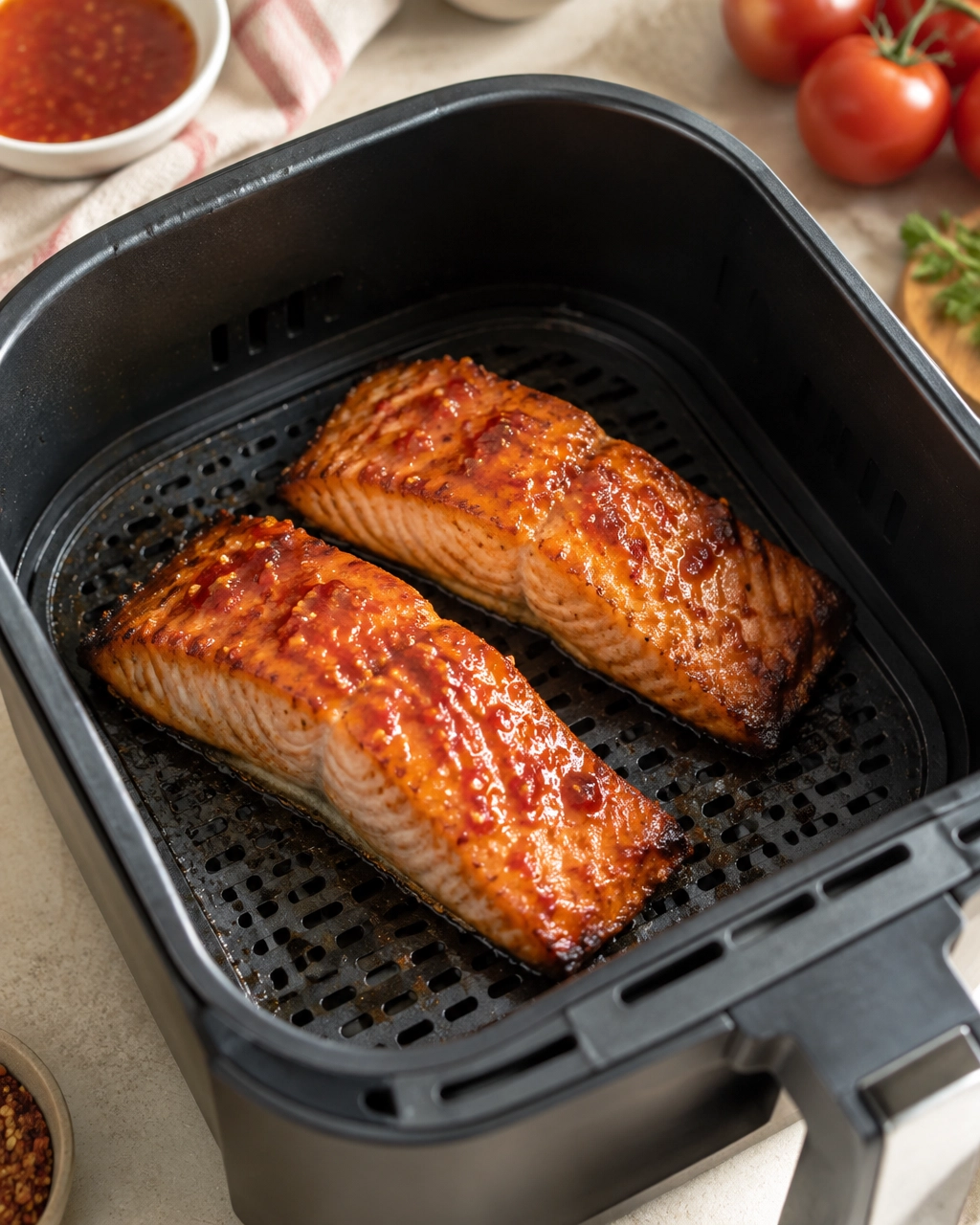
- Brush the remaining glaze over the salmon. Air fry for a further 2 to 3 minutes, until the glaze is glossy and the salmon flakes easily.
- Check that the thickest part reaches 63°C or 145°F. Rest for 1 minute, then serve with spring onion, sesame seeds and lime wedges.
Air Fryer Salmon with Sweet Chilli Glaze (12 Min)
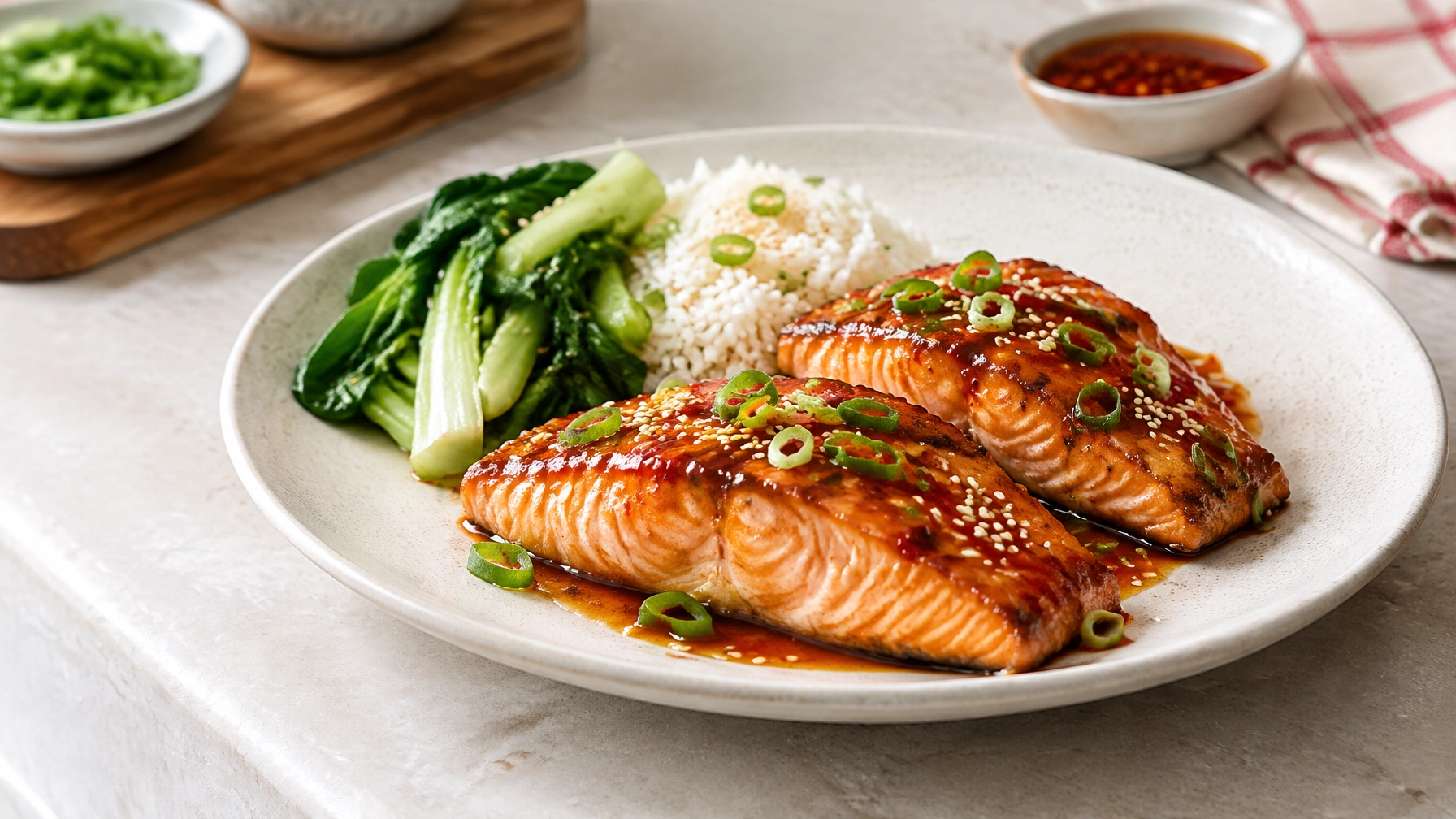
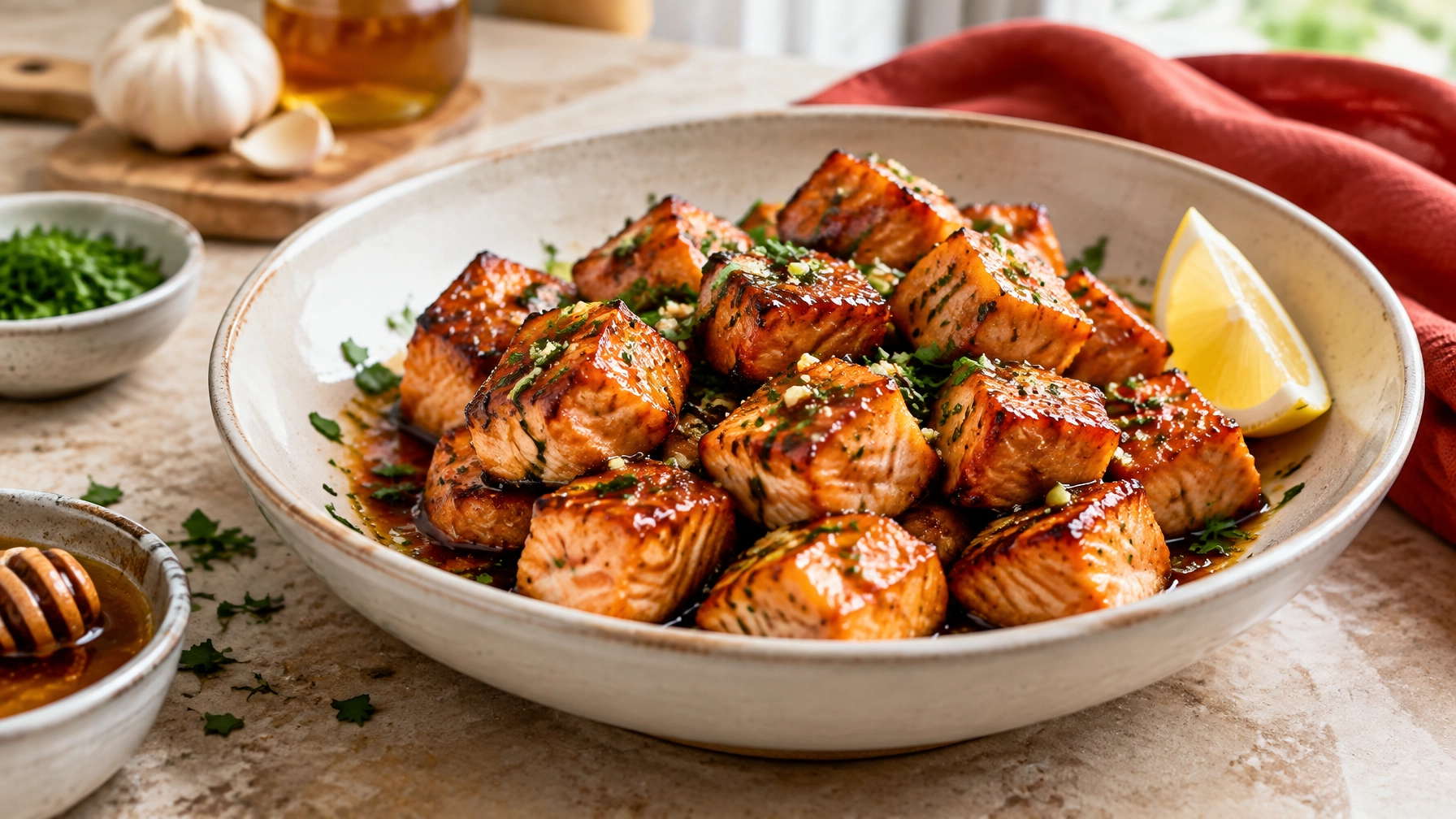
This air fryer salmon is coated with a sticky sweet chilli glaze and ready in about 12 minutes of cooking time. The salmon remains moist inside while the glaze becomes glossy and lightly caramelised around the edges.
Result
Salmon is well suited to air frying because the circulating heat cooks the fillets quickly and evenly. A short cooking time also reduces the risk of the fish drying out.
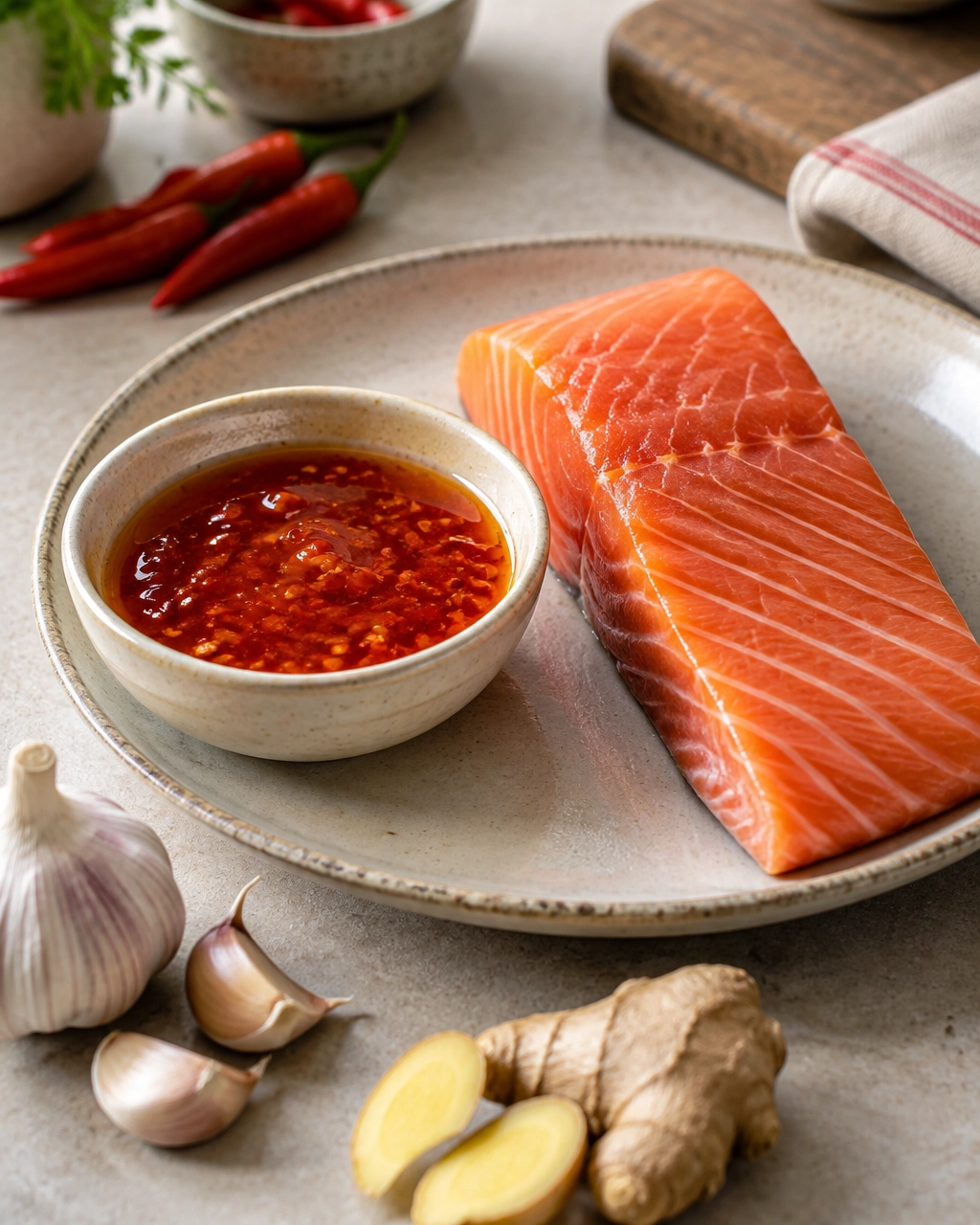
The glaze combines sweet chilli sauce with soy sauce, lime, garlic and ginger. The result is sweet, salty, lightly sharp and moderately spicy. It works with skin-on or skinless fillets.
Use salmon fillets that are similar in thickness so they finish at the same time. Fillets approximately 2.5 cm thick are suitable for the stated cooking time. Thinner pieces may need less time. Thicker pieces may need longer.
Preparation
Pat the salmon dry before seasoning. Excess moisture can prevent the surface from browning and may cause the glaze to slide off.
The glaze can be mixed while the air fryer preheats. There is no requirement to marinate the salmon. Applying the glaze in two stages gives better control. The first layer seasons the fish during cooking. The second layer is added near the end so it remains glossy rather than becoming too dark.
If your air fryer does not require preheating, place the salmon in the basket as soon as it is ready. Cooking times can vary between models, so use the thickest part of the fillet as the reference point.
Cooking
Preheat the air fryer to 200°C. Lightly oil the basket if required by your model.
Place the salmon skin side down, leaving space between each fillet. Air must be able to circulate around the fish. Do not stack or overlap the pieces.
Cook for 9 to 10 minutes, then brush the remaining glaze over the surface. Return the basket for 2 to 3 minutes, or until the salmon is opaque and flakes easily.
The thickest part should reach 63°C or 145°F for food-safe doneness. Insert the thermometer from the side so the probe reaches the centre without passing through the fillet.
Serving
Serve the salmon immediately with steamed rice, quinoa or noodles. Tender greens, cucumber, edamame, roasted broccoli or shredded cabbage provide a fresh contrast to the glaze.
A squeeze of lime helps balance the sweetness. Sliced spring onion, sesame seeds or fresh coriander can be added at the table. These additions are optional and do not affect the cooking method.
Keep any glaze that has touched raw salmon separate from the glaze used for serving. If you want additional sauce, prepare a fresh portion.
Tips
Dry the surface. Patting the salmon dry improves contact with the heat and helps the glaze adhere.
Do not use too much oil. The glaze already contains moisture and sugar. A light coating of oil is sufficient.
Add the second glaze layer late. Sweet chilli sauce can darken quickly at high heat. Brushing it on during the final minutes protects the surface from burning.
Leave space in the basket. Crowding reduces air circulation and can produce uneven cooking.
Check early. Air fryers vary. Begin checking thinner fillets after 8 minutes and thicker fillets after 10 minutes.
Use a thermometer where possible. Flaking is a useful visual check, but temperature provides a more reliable indication of doneness.
Variations
Less heat: Use a mild sweet chilli sauce and omit the black pepper.
More heat: Add a small amount of chilli flakes or finely sliced fresh chilli to the glaze.
Citrus version: Replace the lime juice with lemon juice and add a little finely grated lemon zest.
Sesame version: Add 1 teaspoon of toasted sesame oil to the glaze. Use a small quantity because its flavour is concentrated.
Skinless fillets: Cook the salmon directly on lightly oiled parchment designed for air fryers. Check the fish a few minutes earlier because skinless fillets can cook faster.
Vegetable pairing: Add cooked broccoli, sugar snap peas or shredded cabbage after the salmon is finished. Do not overcrowd the basket while the fish cooks.
Storage
Refrigerate cooled salmon in a sealed container for up to 2 days. Reheat in the air fryer at 160°C for 3 to 5 minutes, checking frequently to prevent the fish from drying out.
Store rice and salmon separately. Reheat rice according to standard food-safety guidance and serve it only when thoroughly hot.
The glaze can be mixed in advance and refrigerated in a sealed container for up to 3 days, provided it has not touched raw fish.
FAQ
Can I use frozen salmon?
Yes. Frozen salmon can be cooked in an air fryer, but it will usually require additional time. Remove any excess ice, season the surface and check the centre with a thermometer. Add the glaze once the surface has softened enough for it to adhere.
Should I put the salmon skin side up or down?
Place the salmon skin side down. This protects the flesh from direct heat and helps the fillet remain intact. The skin can be removed after cooking if preferred.
Can I make this recipe without soy sauce?
Yes. Replace the soy sauce with a small pinch of salt and 1 teaspoon of coconut aminos. The flavour will be slightly different, but the glaze will still work.
Why did the glaze burn?
The most common causes are excessive glaze, an air fryer temperature above 200°C or applying all the glaze at the beginning. Use a thin first layer and add the remaining glaze during the final 2 to 3 minutes.
How do I know when salmon is cooked?
The centre should be opaque, the flesh should separate easily with a fork and the thickest part should reach 63°C or 145°F. Begin checking before the stated time if the fillets are thin.
Can I prepare the salmon ahead of time?
You can mix the glaze and season the salmon several hours in advance. Keep both refrigerated in separate covered containers. Allow the salmon to sit at room temperature for a short period while the air fryer preheats, then cook immediately.