Recipe
Serves
4 1×
Serves 4Prep 15 minCook 20 minTotal 35 min
Ingredients
Method
- Whisk the flour, sugar, baking powder, baking soda and salt together in a large bowl.
- In a separate bowl, whisk the eggs, buttermilk, melted butter and vanilla until combined.
- Pour the wet mixture into the dry ingredients. Fold gently until just combined. Leave small lumps in the batter; do not whisk it smooth.
- Heat a griddle or heavy frying pan over medium heat. Lightly grease the surface. Wipe away any excess fat so it does not burn.
- Spoon about 60 ml of batter onto the pan for each pancake. Leave space between portions and do not spread them out.
- Cook for about 2 to 3 minutes, until bubbles appear across the surface and the edges look set. Adjust the heat if the underside is browning too quickly.
- Flip each pancake once. Cook the other side for about 1 minute, until golden and cooked through.
- Transfer cooked pancakes to a warm plate while you finish the batter. Serve in stacks with butter and maple syrup.
American Style Pancake Stack (Thick and Fluffy)
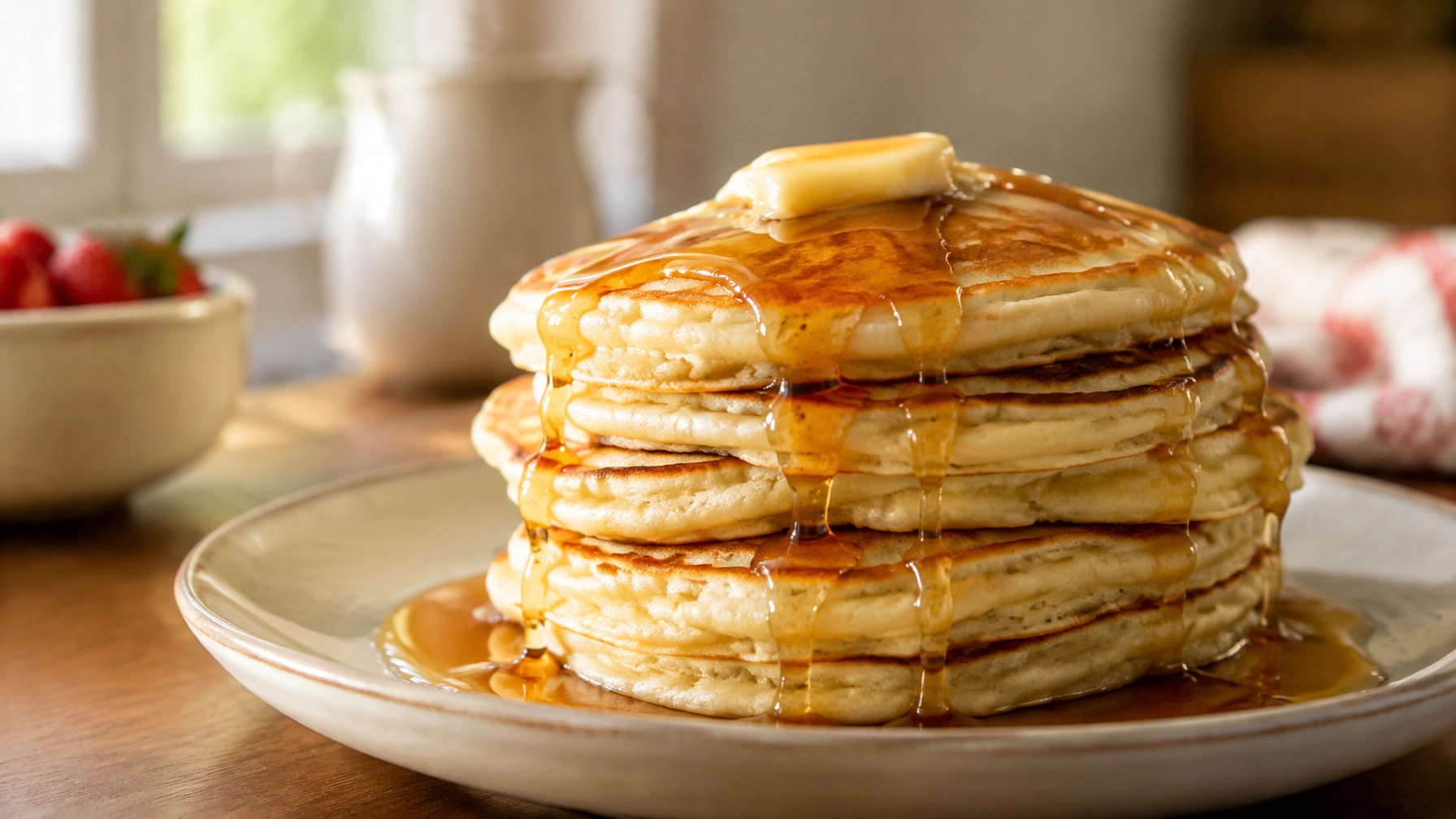
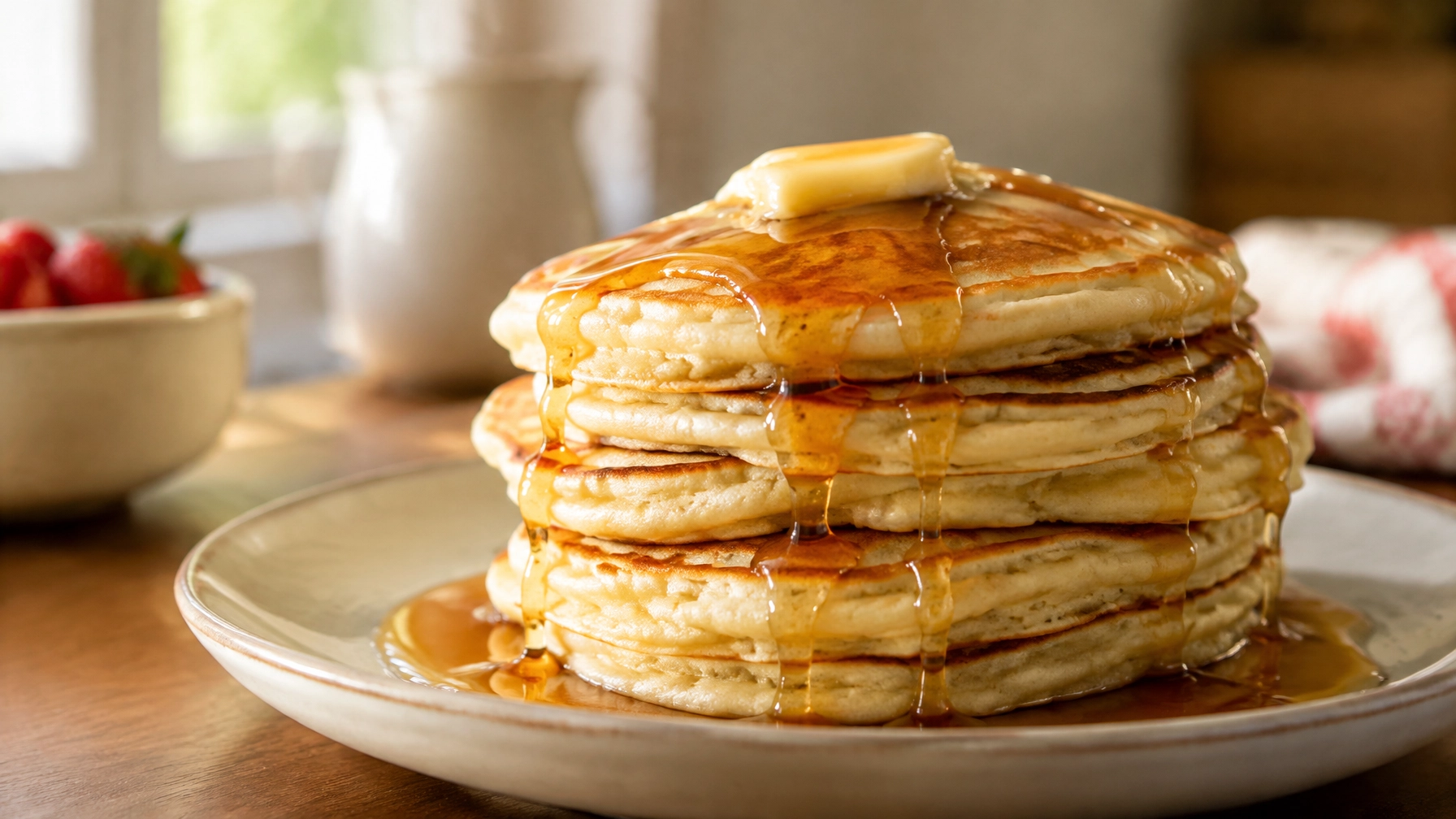
American-style pancakes are thicker and smaller than many everyday pancakes. This version uses buttermilk, baking powder and baking soda for lift, with a gentle mixing method to keep the crumb tender. Serve the pancakes warm with butter and maple syrup.
Texture
The main difference between a thick pancake and a flat one is the batter. It should be thick enough to mound briefly when spooned onto the pan. Avoid thinning it by spreading it with a spatula. Smaller portions also cook more evenly while keeping their height.
The leavening has two parts. Baking powder produces lift as the batter cooks. Baking soda reacts with the acidity in buttermilk. Together, they help the pancakes rise and brown. Measuring them accurately matters: too much baking soda can leave an unpleasant taste.
Mixing matters just as much. Stirring flour and liquid until completely smooth can develop gluten, making pancakes tougher. Fold the wet ingredients into the dry ingredients only until no large areas of dry flour remain. Small lumps are acceptable.
Preparation
Set out the ingredients before mixing. Melt the butter and let it cool slightly so it does not cook the eggs when combined. Room-temperature buttermilk mixes more easily with the other ingredients.
Heat the pan over medium heat before cooking. A pan that is too cool can make pancakes spread and cook slowly. A pan that is too hot may brown their outsides before the centres are set. Use the first pancake to check the heat, then adjust as needed.
Cook the batter soon after mixing. A brief rest of up to 10 minutes is fine if needed, but a long wait can reduce the batter's lift. If the batter thickens while standing, fold it gently rather than beating it.
Recipe
Servings: 4
Prep time: 15 minutes
Cook time: 20 minutes
Total time: 35 minutes
Tips
Measure flour carefully. Weighing gives the most consistent result. If using measuring cups, spoon the flour into the cup and level it rather than scooping directly from the bag.
Keep the batter thick. A thick batter supports a taller pancake. If it seems unusually stiff, fold in buttermilk a teaspoon at a time. Do not add extra liquid automatically; the batter should not pour like cream.
Control the heat. Medium heat is a starting point, not a fixed setting for every pan. If the first pancake is dark before bubbles form, reduce the heat. If it stays pale and takes much longer than expected to cook, increase the heat slightly.
Flip once. Wait for bubbles and set edges before turning. Repeated flipping and pressing can make the finished pancakes less tender.
Keep pancakes warm without stacking them too early. Hold them in a low oven in a single layer, then stack just before serving. Stacking immediately can trap steam and soften the edges.
Variations
Blueberry: Scatter a few fresh blueberries over each pancake after spooning the batter into the pan. This distributes the fruit without making the batter watery.
Chocolate chip: Add a small amount of chocolate chips to each pancake on the pan. Keep the quantity moderate so the pancakes remain easy to flip.
Cinnamon: Add 1/2 teaspoon ground cinnamon to the dry ingredients for a lightly spiced version.
Buttermilk substitute: If buttermilk is unavailable, use plain milk mixed with 1 tablespoon lemon juice. Leave it for 5 minutes before using. The result may be slightly less thick, so add the milk gradually and stop when the batter reaches the right consistency.
FAQ
Why are my pancakes flat?
Common causes include old baking powder, overmixed batter, batter that is too thin or a pan that is not hot enough. Check the raising agents' freshness and mix the batter only until combined.
Can I make the batter ahead?
It is better to mix the batter just before cooking. The raising agents begin working after they are combined with liquid, so a long wait can result in less lift.
How do I know when to flip?
Look for bubbles across the top and edges that appear set rather than wet. If the underside is already very dark, lower the heat before cooking the next pancake.
Can I freeze leftover pancakes?
Yes. Cool them completely, separate them with baking paper and store them in a sealed freezer-safe container. Reheat until hot throughout in a toaster, oven or pan.
How can I tell if the centre is cooked?
The pancake should feel set when lightly pressed and should not appear wet at the edges. If the outside is browning too quickly, lower the heat and allow more time for the centre to cook.