Recipe
Serves
2 1×
Serves 2Prep 5 minCook 10 minTotal 15 min
Ingredients
Method
- Heat the olive oil in a small frying pan over medium heat. Add the onion and green peppers. Cook for 4 to 5 minutes until soft.
- Add the tomatoes, salt, black pepper and pul biber, if using. Cook for 4 to 5 minutes until thick and moist.
- Beat the eggs lightly in a bowl.
- Reduce the heat to low and pour the eggs into the pan.
- Leave the eggs for approximately 20 seconds, then fold them slowly through the tomato and pepper mixture.
- Continue for 1 to 2 minutes until softly set. Remove from the heat and serve with bread.
Menemen (Turkish Scrambled Eggs, 15 Min)
Definition
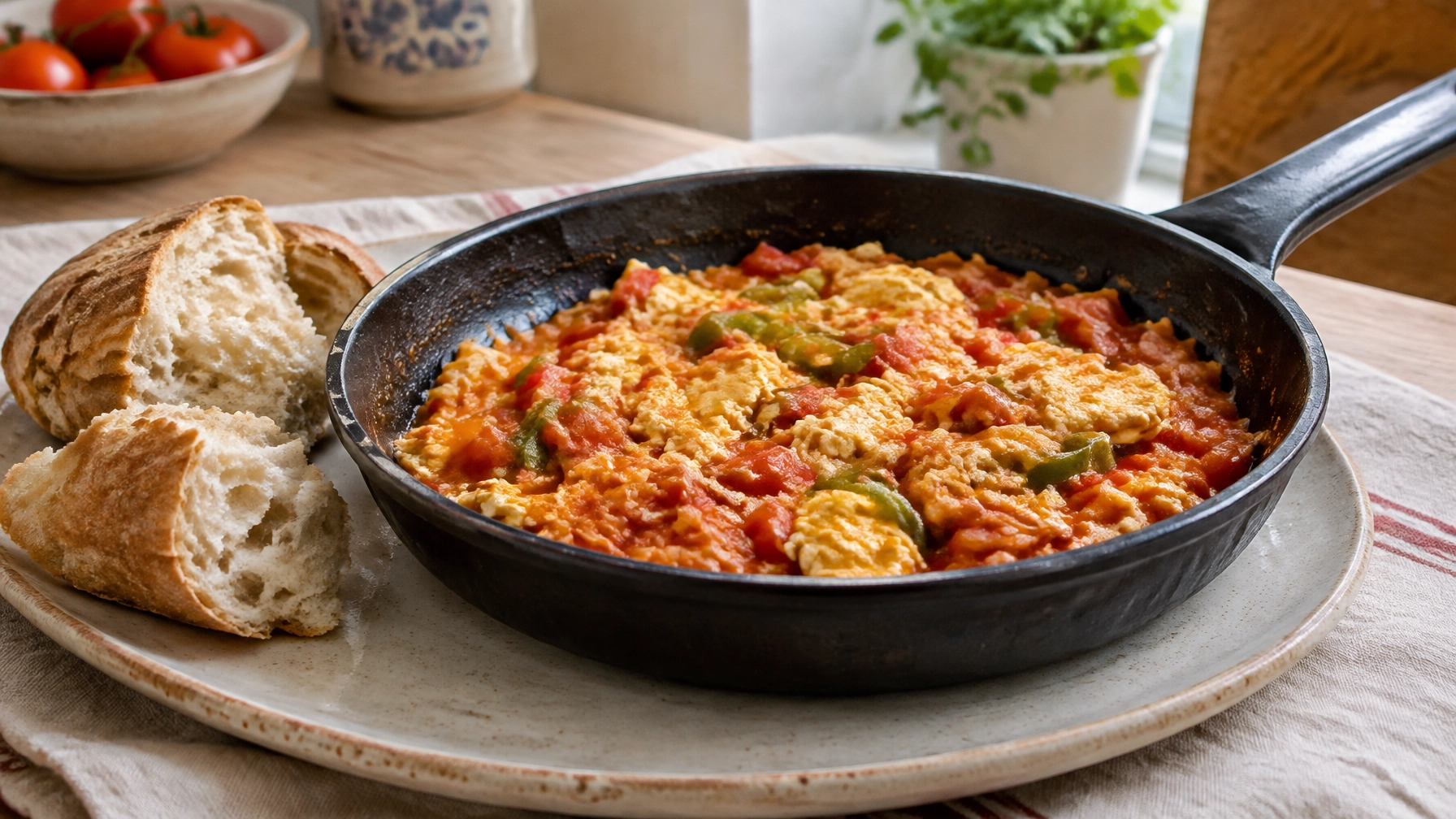
menemen (noun): Turkish scrambled eggs cooked through softened green peppers and tomato, usually served hot with bread.
Menemen is a practical, one-pan breakfast from Türkiye. It uses a short list of ingredients and takes approximately 15 minutes from preparation to serving. The finished dish should be moist, soft and spoonable, with the eggs lightly folded through the vegetables.
This is not a shakshuka variant. Shakshuka poaches whole eggs in a tomato-based sauce. Menemen mixes lightly beaten eggs directly through softened green peppers, onion and tomato, allowing them to set softly as scrambled eggs. The distinction is structural as well as visual: the egg is distributed throughout menemen rather than remaining as separate poached portions.
Texture
The defining feature of menemen is the texture of the egg. It should be softly scrambled rather than dry, firm or separated into large omelette-like pieces.
The tomato mixture must be reduced before the eggs are added. If it contains too much liquid, the eggs can become watery. If it is cooked until completely dry, the finished dish will lack the soft, cohesive texture associated with menemen.
Keep the heat low once the eggs enter the pan. High heat causes the egg proteins to tighten quickly. This produces firm curds and can make the tomato mixture split. Slow folding gives a more even result.
Remove the pan from the hob before the eggs appear fully cooked. They should retain a slight gloss. The pan will continue to supply heat for a short period after removal.
Serving
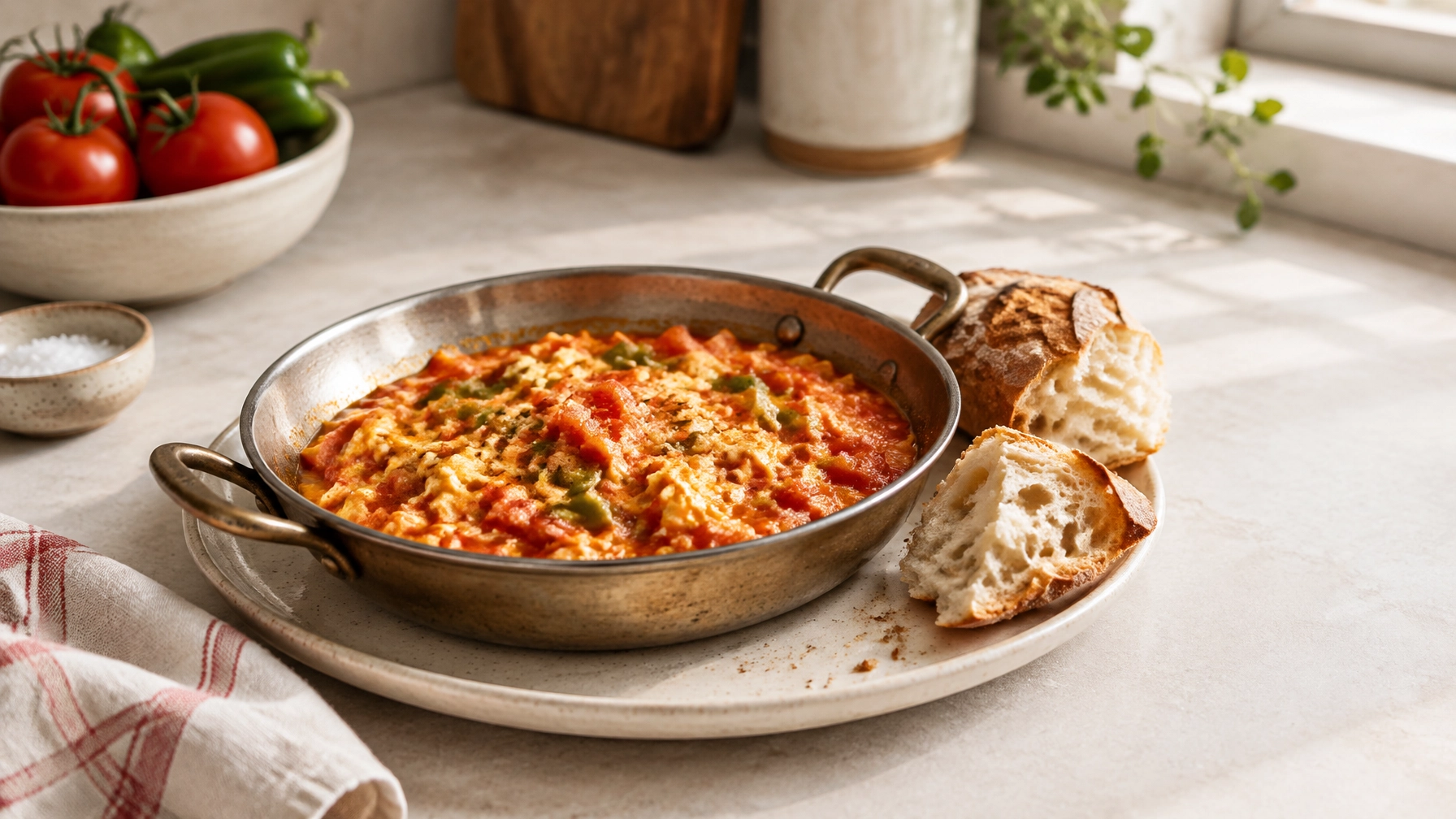
Serve menemen directly from the frying pan or transfer it to a warm dish. Bread is not optional from a practical standpoint. It provides a way to scoop up the soft eggs and tomato mixture and makes the dish suitable for a complete breakfast.
A plain crusty loaf works well. Flatbread, sourdough or toasted bread can also be used. Serve the dish as soon as it is cooked because the eggs become firmer as they stand.
A small amount of extra pul biber can be added at the table. Parsley, white cheese or a spoonful of thick yoghurt may be served alongside, although none is required for the basic recipe.
Safety
Eggs should be handled as a perishable food. Use clean, undamaged eggs and wash hands, utensils and work surfaces after handling shells. Keep eggs refrigerated according to the storage instructions on the packaging.
Softly cooked eggs carry a greater food safety risk than fully cooked eggs. People who are pregnant, very young, older or immunocompromised should use pasteurised eggs or cook the mixture until fully set. For a higher level of protection, cook the egg mixture to 70°C for 2 minutes. This produces a firmer result than traditional soft menemen.
Serve immediately. If leftovers must be retained, cool them quickly, refrigerate them and use them promptly. Reheat thoroughly until hot throughout. Do not leave cooked menemen at room temperature for extended periods.
Variations
No onion: Omit the onion for a simpler breakfast-style version. Increase the green peppers slightly if required.
More pepper: Use a mixture of green peppers and long sweet peppers. Avoid peppers with excessive moisture if you want a thicker final texture.
Spicy: Add pul biber, Aleppo-style chilli flakes or a finely chopped hot pepper with the green peppers.
Creamier: Fold in a small knob of butter with the eggs. Keep the heat low to prevent the butter and tomato mixture from separating.
Cheesed: Add crumbled white cheese immediately before serving. The cheese will soften in the residual heat.
More substantial: Serve with additional bread, olives and sliced cucumber. Keep the menemen itself focused on egg, tomato and pepper.
FAQ
Is menemen the same as shakshuka?
No. Shakshuka normally cooks whole eggs in wells made in a tomato and pepper sauce. Menemen beats the eggs and folds them directly through the softened vegetables. The finished textures and cooking methods are different.
Should menemen contain onion?
There is no single universal formula. Onion is often omitted from breakfast versions and included in versions served as a main meal. Both approaches are used. The onion should remain finely diced and softly cooked so that it does not overpower the peppers.
Can I use tinned tomatoes?
Yes. Use chopped tinned tomatoes when fresh tomatoes are unavailable. Drain a small amount of excess liquid if the tomatoes are very watery, then cook the mixture until thick but still moist before adding the eggs.
Why is my menemen watery?
The tomato mixture may not have reduced sufficiently, or the tomatoes may contain a high amount of liquid. Continue cooking the vegetables before adding the eggs. Avoid increasing the heat sharply, as this can overcook the eggs before the excess liquid evaporates.
Can menemen be made in advance?
It is best made and served immediately. The eggs continue to firm as they cool, so advance preparation reduces the soft texture. The tomato and pepper base can be prepared ahead, refrigerated, reheated until hot and then combined with freshly beaten eggs.
How do I keep the eggs soft?
Use low heat, fold slowly and remove the pan while the eggs still look slightly glossy. Do not leave the pan over the hob while setting the table. Residual heat is sufficient to finish the cooking.
Recipe
Serves: 2
Prep time: 5 minutes
Cook time: 10 minutes
Total time: 15 minutes
Tips
- Reduce the tomato mixture before adding the eggs.
- Use low heat for soft, creamy curds.
- Remove the pan while the eggs retain a slight gloss.
- Serve immediately because the eggs firm as they stand.
- Use pasteurised eggs or cook until fully set for people at higher risk from foodborne illness.
Variations
- Omit the onion for a simpler breakfast version.
- Add extra green pepper for a more vegetable-forward dish.
- Add pul biber or fresh chilli for heat.
- Fold through crumbled white cheese immediately before serving.
- Use tinned tomatoes when fresh tomatoes are unavailable.
FAQ
Can I use tinned tomatoes? Yes. Cook them until the mixture is thick before adding the eggs.
Is menemen vegetarian? This version is vegetarian. Check the ingredients of any bread or added cheese if dietary control is required.
Can I make one serving? Yes. Use two eggs, half the vegetable quantities and a smaller frying pan.