Recipe
Serves
12 1×
Serves 12 sconesPrep 20 minCook 20 minTotal 55 min
Ingredients
Method
- Line a baking sheet with parchment paper. Heat the oven to 400°F, or 200°C.
- Whisk the flour, brown sugar, baking powder, cinnamon, and salt in a large bowl.
- Cut or grate the cold butter into the flour mixture until coarse crumbs form, with some pea-sized pieces remaining.
- Fold in the diced apple.
- Whisk the egg, cream, and vanilla in a separate bowl.
- Add the wet mixture to the dry ingredients. Stir only until the dough comes together.
- Pat the dough into an 8-inch round approximately 1 inch thick.
- Cut the dough into 12 wedges and place them on the prepared baking sheet.
- Brush the tops with cream, add coarse sugar if desired, and chill for 15 minutes.
- Bake for 18 to 22 minutes, until lightly golden. Cool for 5 minutes before serving.
Apple Cinnamon Scones (Easy Baking Recipe)
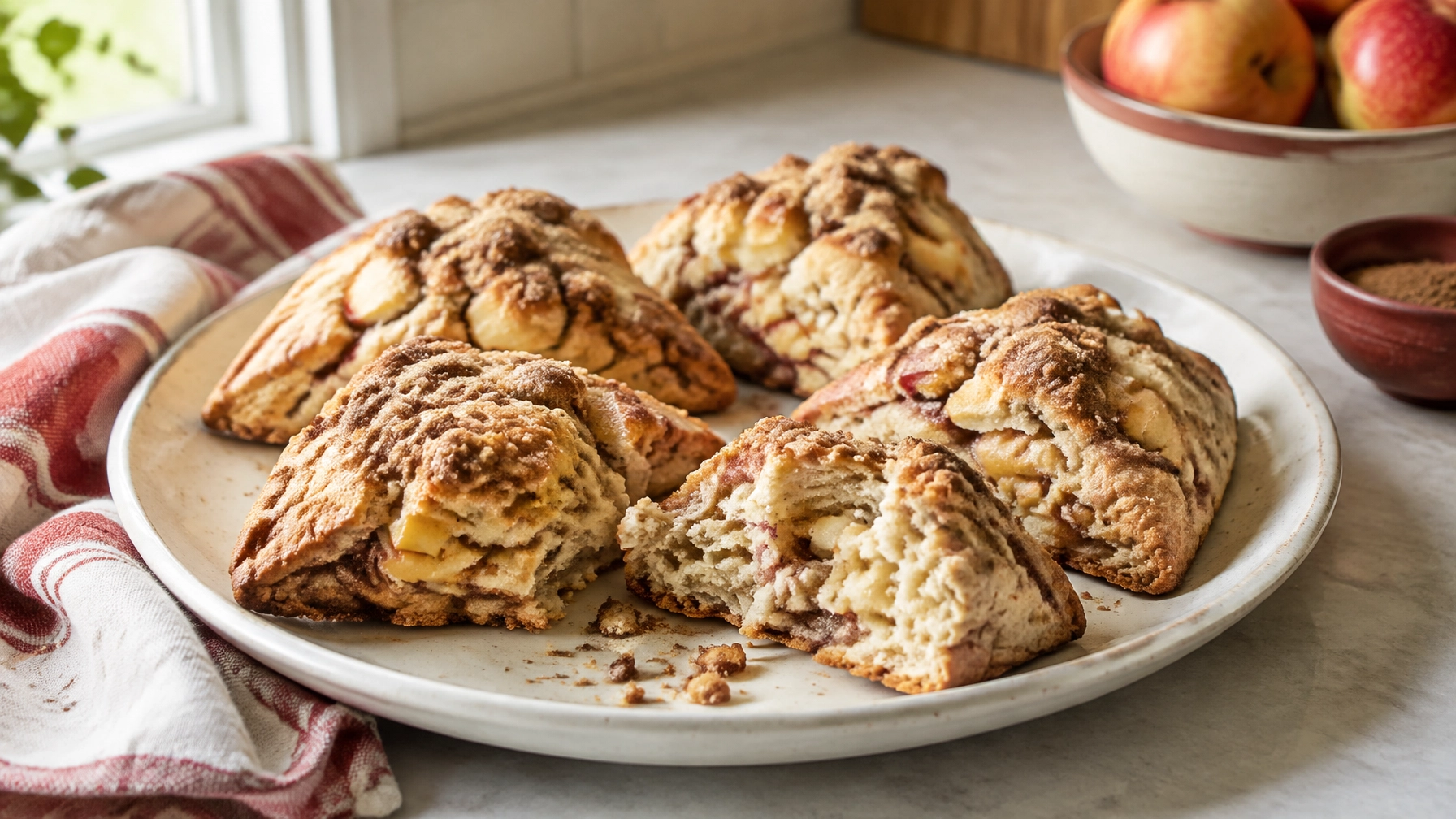
These apple cinnamon scones combine crisp apple pieces, brown sugar, cinnamon, and cold butter in a tender pastry dough. The dough requires no yeast and can be prepared, shaped, chilled, and baked in under an hour.
Cold butter is the primary control point. It creates small pockets in the dough that expand in the oven, producing a lighter interior and crisp edges. Chilling the shaped wedges before baking helps reduce spreading.
Preparation
- Place the butter in the freezer for 20 to 30 minutes if it is not already very cold. Line a large baking sheet with parchment paper.
- Whisk the flour, brown sugar, baking powder, cinnamon, and salt in a large bowl.
- Grate the frozen butter with the large holes of a box grater, or cut it into small cubes. Add it to the flour mixture. Use a pastry cutter, two forks, or your fingertips to work the butter into the flour until the mixture resembles coarse crumbs with several pea-sized pieces remaining.
- Fold in the diced apple. Keep the pieces small and distribute them throughout the mixture.
- In a separate bowl, whisk the egg, heavy cream, and vanilla extract until smooth.
- Pour the wet mixture into the dry mixture. Stir with a spatula until no dry flour remains. The dough should look rough and slightly sticky. Do not continue mixing after it comes together.
- Transfer the dough to a lightly floured surface. Pat it into a round approximately 8 inches wide and 1 inch thick. If the dough is difficult to handle, lightly flour your hands. Do not add large amounts of additional flour.
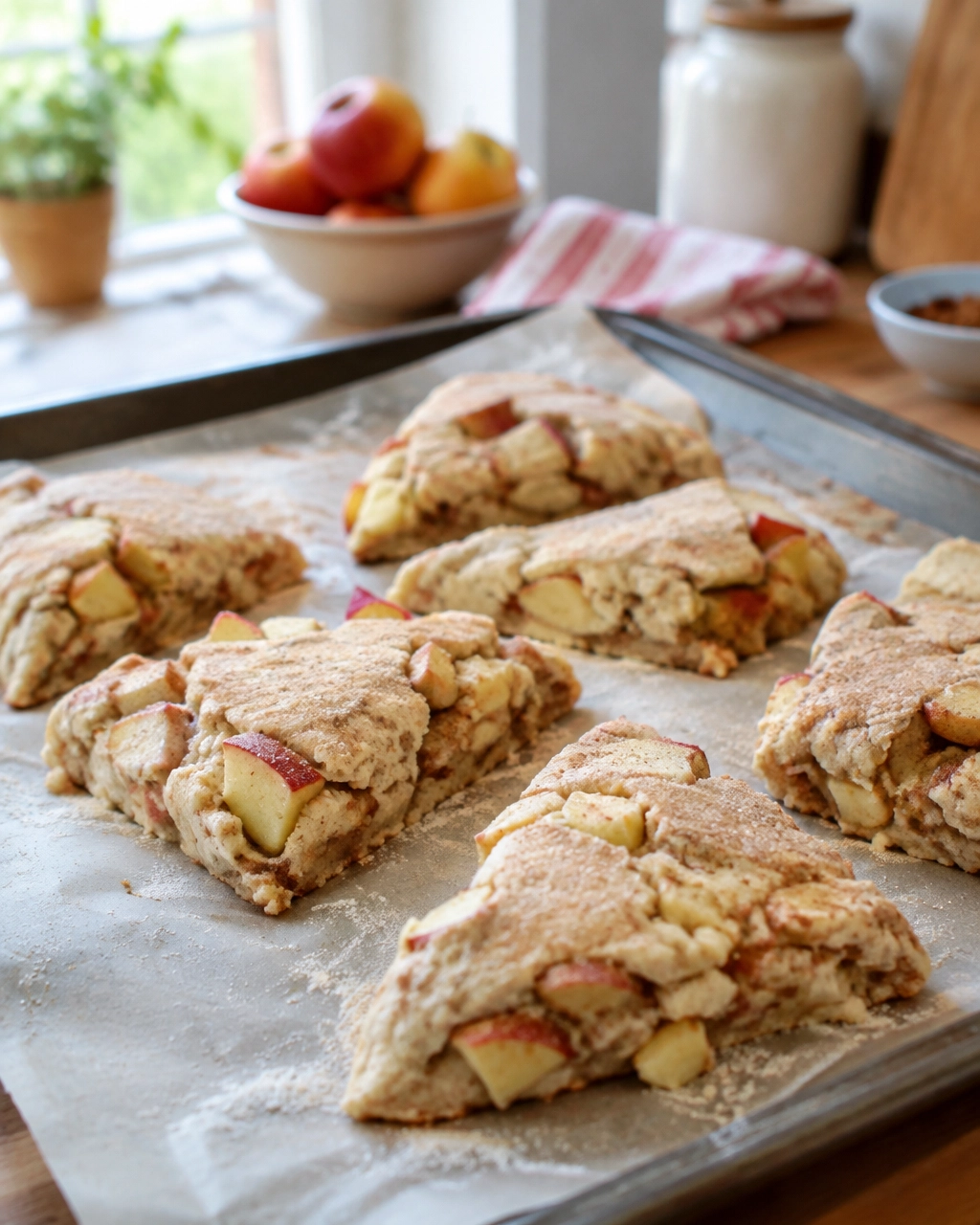
- Cut the dough into 12 wedges. Transfer the wedges to the prepared baking sheet, leaving space between each piece.
- Brush the tops with the remaining cream. Sprinkle with coarse sugar if using. Chill the tray for 15 minutes while the oven heats to 400°F, or 200°C.
- Bake for 18 to 22 minutes, until the tops are lightly browned and the edges are firm. Cool on the baking sheet for 5 minutes before transferring the scones to a rack.
Tips
Keep the butter cold. Warm butter blends too completely into the flour. The result is usually flatter and less flaky.
Avoid overmixing. Scone dough is not intended to become smooth. Stop stirring as soon as the dry flour has been absorbed.
Use small apple pieces. Pieces larger than 1/2 inch can make the dough difficult to portion and may leave damp areas inside the scones.
Chill before baking. A short chill firms the butter and helps the wedges retain their shape.
Measure flour correctly. Spoon flour into a measuring cup and level the top, or weigh it. Packing flour directly into a cup can make the dough dry.
Check the center. The edges may brown before the middle is fully baked. Separate one scone slightly to confirm that the interior is no longer wet.
Variations
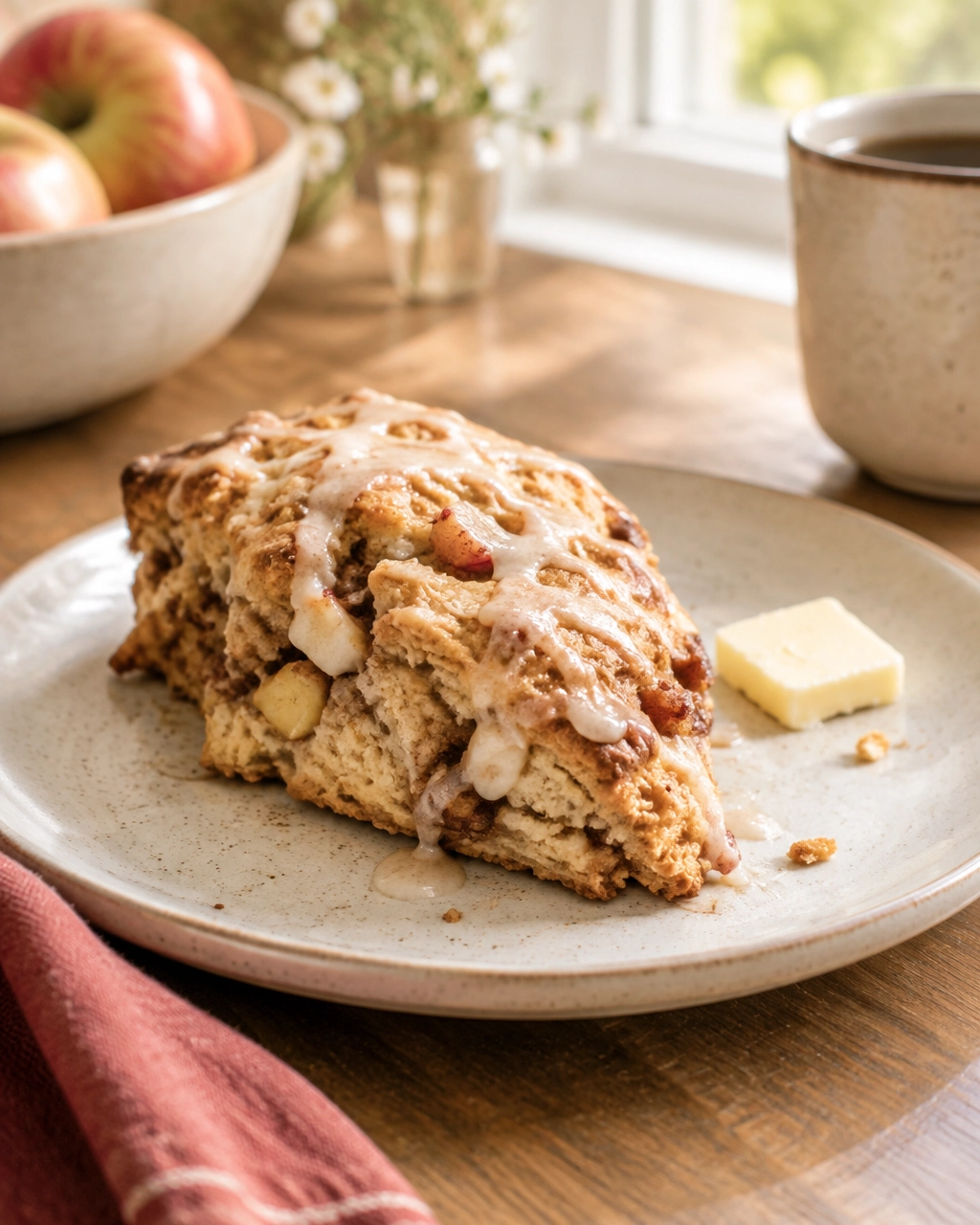
Apple glaze: Mix 1/2 cup icing sugar with 1 to 2 teaspoons of milk and a small pinch of cinnamon. Drizzle over cooled scones.
Cinnamon chip scones: Add 1/2 cup cinnamon chips with the diced apple. Reduce the brown sugar slightly if a less sweet result is required.
Pecan apple scones: Add 1/3 cup finely chopped toasted pecans. Confirm that all pieces are small enough to keep the dough easy to cut.
Orange apple scones: Add 1 teaspoon finely grated orange zest to the dry ingredients.
Free-form scones: Drop the dough in 12 rough portions onto the baking sheet instead of cutting wedges. Bake until golden and fully set.
Make-ahead scones: Shape the wedges, place them on a lined tray, and freeze until firm. Transfer them to a sealed container. Bake from frozen, adding approximately 3 to 5 minutes to the cooking time.
Storage
Cool the scones completely before storing. Keep them in an airtight container at room temperature for up to 2 days.
For longer storage, freeze the baked scones in a sealed freezer-safe container for up to 2 months. Thaw at room temperature, then warm in a 300°F, or 150°C, oven for approximately 10 minutes.
Unbaked shaped scones can also be frozen. Bake directly from frozen and check the center before removing them from the oven.
FAQ
Should the apple be peeled?
Peeling is optional. Peeled apple produces a softer, more uniform texture. Leaving the skin on adds color and a slightly firmer bite. In either case, dice the apple finely.
Which apples work best?
Firm apples are suitable. Granny Smith provides a sharper contrast to the sweet dough. Honeycrisp and Fuji provide a milder, sweeter result. Avoid apples that become very soft during baking.
Why are my scones dense?
The usual causes are warm butter, overmixing, excess flour, or an oven that is not fully heated. Keep the butter cold, mix briefly, and chill the shaped dough before baking.
Why did the scones spread?
The butter may have softened during mixing, or the dough may have contained too much liquid. Chill the shaped wedges for longer. If the dough is very soft, add flour gradually rather than adding a large quantity at once.
Can I use milk instead of heavy cream?
Whole milk can be used, but the scones may be less rich and slightly less tender. Buttermilk is an alternative that adds mild acidity and a softer crumb. Avoid adding extra liquid without adjusting the flour.
Can I use applesauce instead of fresh apple?
Applesauce changes the moisture level and structure of the dough. It should not replace the diced apple in this formula without further adjustment. For visible apple pieces and a stable dough, use fresh diced apple.
Can the dough rest overnight?
Yes. Shape the wedges, cover the tray, and refrigerate for up to 24 hours. Bake directly from the refrigerator. If the dough has been frozen, bake it without thawing.
What should I serve with apple cinnamon scones?
Serve them warm with butter, apple butter, plain yogurt, or a light cinnamon glaze. The scones are already sweetened, so additional toppings are optional.
Can I make smaller scones?
Yes. Cut the dough into 16 smaller wedges and begin checking them after 14 minutes. Smaller pieces can brown quickly, so monitor the edges and center carefully.
Where can I compare other tested methods?
The Fresh Apple Cinnamon Scones recipe from King Arthur Baking uses applesauce and cinnamon chips. Sally's apple cinnamon scones uses heavy cream and recommends chilling the shaped dough before baking. These references support the same basic controls: cold fat, limited mixing, and a fully heated oven.