Recipe
Ingredients
Method
- Place the chicken thighs, cold water, onion, carrots, celery, bay leaf, and 1 teaspoon of the salt in a large pot.
- Bring the liquid to a gentle boil over medium heat. Reduce the heat and simmer for 25 to 30 minutes, skimming foam from the surface when necessary.
- Remove the chicken and place it on a plate. Strain the broth if a clearer soup is required. Discard the cooked vegetables, bay leaf, and any loose solids.
- When the chicken is cool enough to handle, remove the skin and bones. Shred the meat into bite-sized pieces.
- Return the strained broth to the pot. Add the rinsed rice and remaining 1 teaspoon of salt.
- Simmer for 15 to 18 minutes, or until the rice is tender. Stir occasionally to prevent it from settling on the base of the pot.
- Return the shredded chicken to the pot. Keep the soup hot, but do not allow it to boil vigorously.
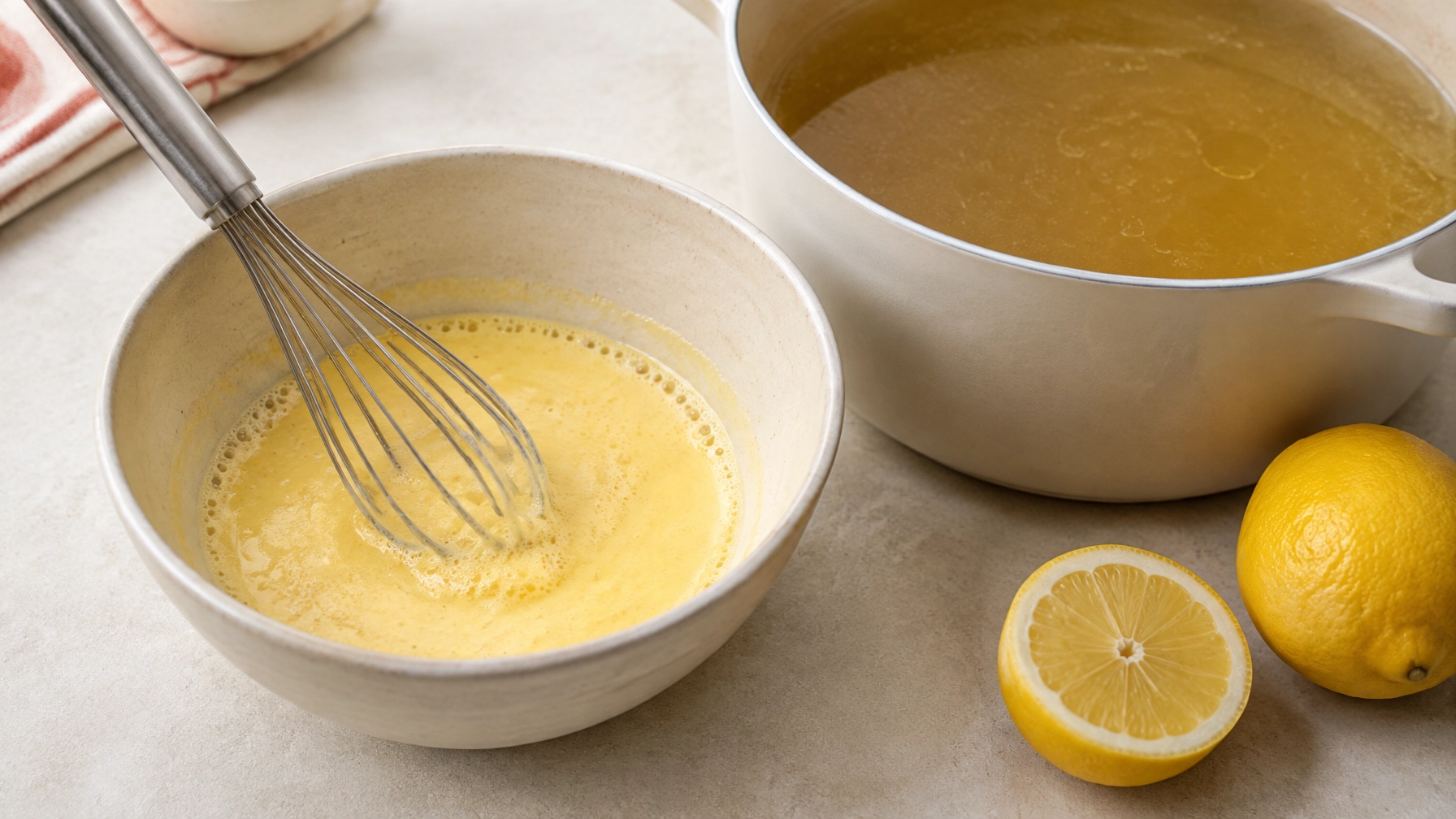
- In a separate bowl, whisk the eggs until smooth. Whisk in the lemon juice and lemon zest.
- Slowly ladle approximately 250 ml of hot broth into the egg and lemon mixture while whisking continuously.
- Add a second ladle of broth in a thin stream, continuing to whisk. Repeat once more until the egg mixture is hot and diluted.
- Reduce the heat to its lowest setting. Slowly pour the tempered egg mixture into the soup while stirring continuously.
- Heat for 2 to 4 minutes, stirring gently, until the soup is steaming and slightly thickened. Do not boil.
- Stir in the black pepper. Taste and adjust the salt or lemon juice if required.
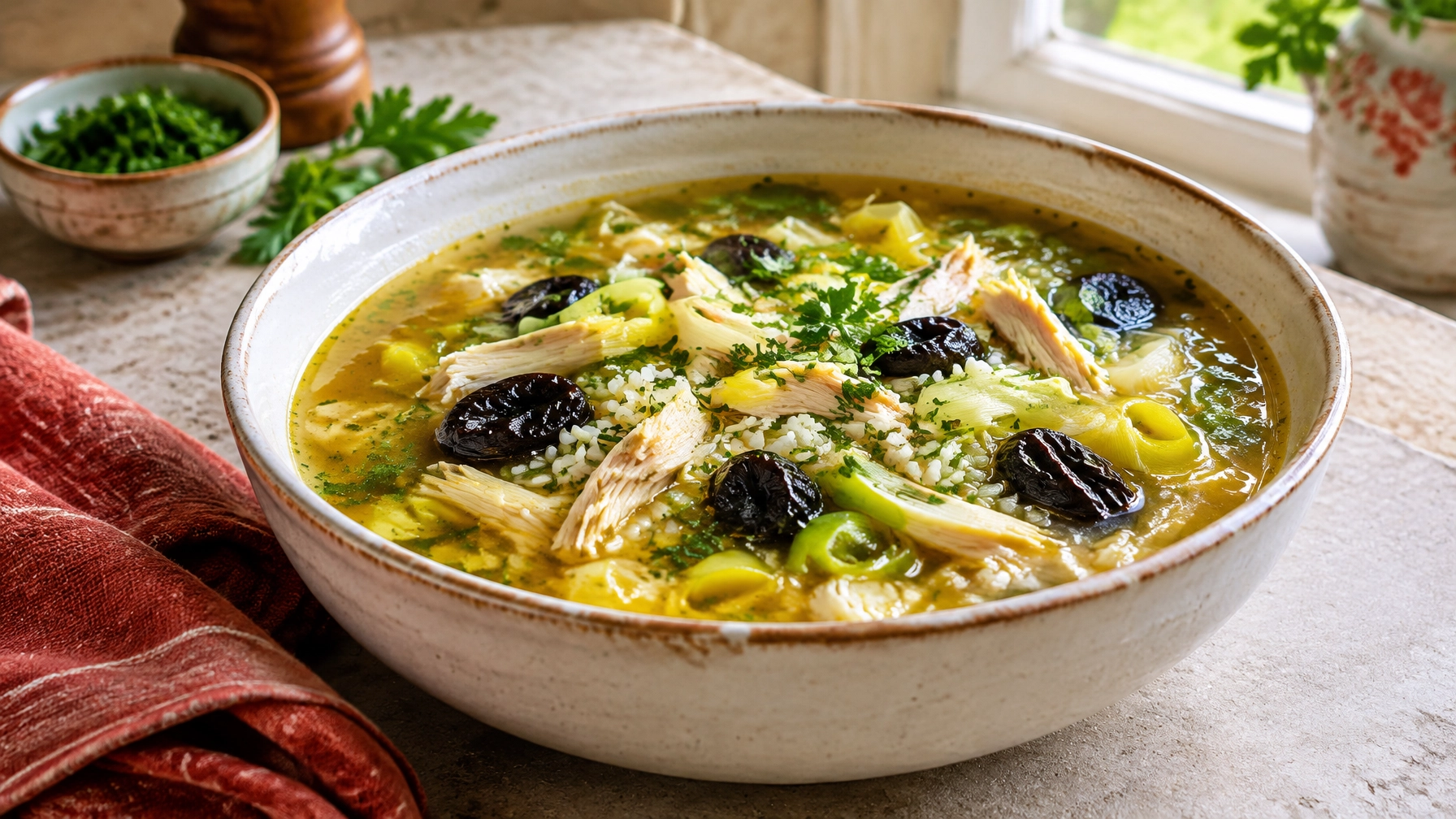
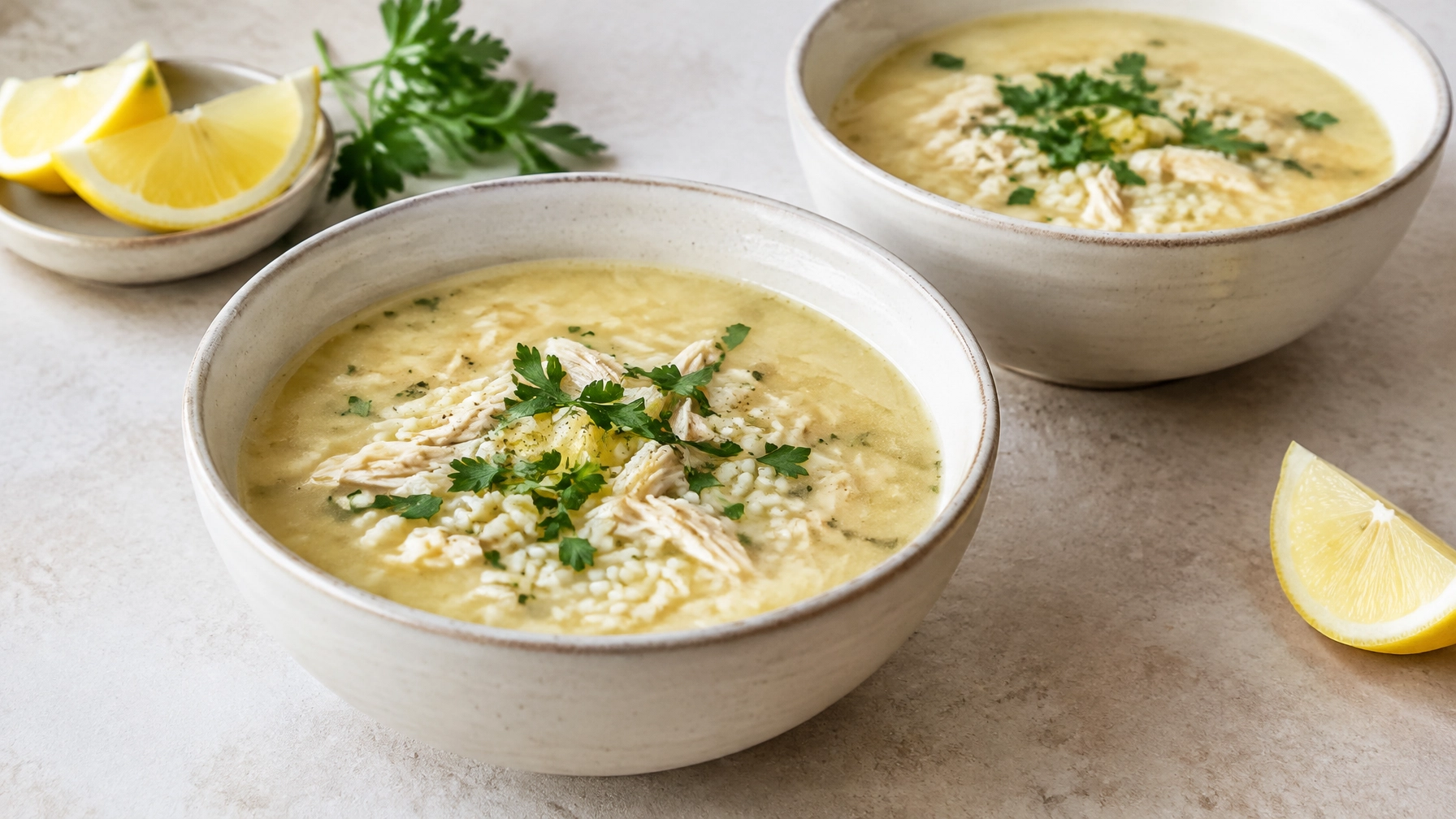
- Ladle into bowls and finish with chopped parsley.
Avgolemono (Greek Lemon Chicken Soup)
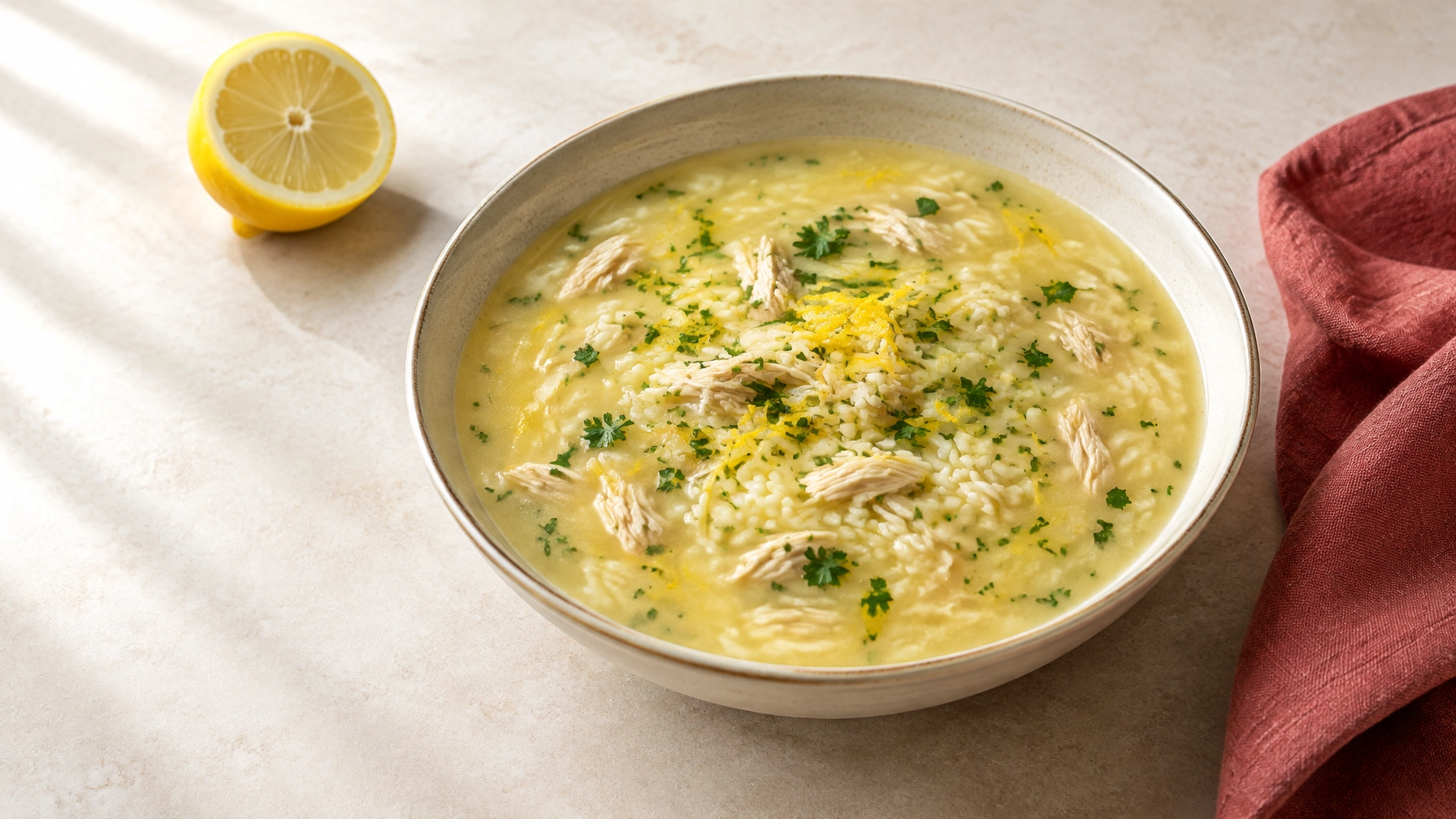
Avgolemono is a Greek lemon chicken soup thickened with eggs and finished with rice for a smooth, concentrated texture.
Definition
Avgolemono (noun): a Greek soup or sauce made by combining egg and lemon with hot broth.
The method is precise. Chicken broth provides the base. Rice adds substance. Eggs thicken the liquid. Lemon supplies acidity and prevents the finished soup from becoming heavy. No cream is required.
This preparation is distinct from chicken and lemon orzo soup. Avgolemono uses rice and an egg-based thickening method. Orzo soup uses small pasta and does not rely on eggs to create its texture.
The result should be pale gold, lightly thickened, and smooth. It should not resemble custard, scrambled egg, or a cream-based soup.
Control
The principal technical requirement is temperature control. Egg proteins coagulate when exposed to sudden high heat. If the egg mixture is added directly to boiling broth, it can separate into visible curds.
The eggs must therefore be tempered.
Tempering means gradually adding hot broth to the beaten egg and lemon mixture while whisking continuously. The temperature rises in stages. The mixture can then be returned to the pot with a lower risk of curdling.
Use a food thermometer if temperature verification is required. The eggs should be fully cooked before serving. General food safety information is available from the NHS food safety guidance and the Food Standards Agency.
Texture
Avgolemono thickens further as it stands. The initial consistency should be fluid enough to pour but substantial enough to coat a spoon lightly.
Do not use flour or cornflour. The egg provides the required body. Rice starch also contributes mild thickening during simmering.
If the soup becomes too thick, add a small amount of hot water or unsalted broth. If it remains too thin, do not boil it to force thickening. Hold it over low heat and allow the rice and egg mixture to work gradually.
A faintly grainy appearance usually indicates that the egg was exposed to excessive heat. The soup may still be edible, but the intended texture has not been achieved.
Notes
Room-temperature eggs combine more evenly with the lemon juice and hot broth. If the eggs are refrigerated, place them in a bowl of warm water for several minutes before preparation.
The broth should be well seasoned before the egg and lemon mixture is added. Acid reduces the perception of salt, so under-seasoning at the start can result in a flat final soup.
Keep the lemon flavour clear rather than aggressive. Start with 80 ml of juice, then add more in small increments after tasting.
For food safety, refrigerate leftovers promptly in a shallow container. Reheat gently over low heat. Avoid prolonged boiling, which can split the soup and create an uneven texture.
Variations
Chicken breast: Replace the thighs with 900 g boneless chicken breast. The broth will be lighter and the meat less rich. Do not overcook the breast during the initial simmer.
Prepared broth: Use 1.5 litres of unsalted or low-salt chicken broth and poach the chicken separately. Add the rice directly to the prepared broth.
Extra lemon: Add an additional 15 to 30 ml lemon juice at the end. This is suitable when the soup is being served with rich side dishes.
Yolk-based texture: Use 2 whole eggs and 2 additional yolks for a denser, more luxurious finish. The tempering procedure remains unchanged.
Vegetable version: Use a strong vegetable broth and replace the chicken with cooked white beans or additional rice. This changes the dish from the standard chicken preparation.
Herb finish: Parsley is neutral and practical. Dill can be added in small quantities, although its flavour is more pronounced.
FAQ
Why did the eggs scramble?
The broth was probably too hot, the egg mixture was added too quickly, or the soup boiled after tempering. Remove the pot from high heat before returning the eggs. Whisk continuously during both additions.
Can avgolemono be made ahead?
Yes. Prepare it several hours ahead and refrigerate it after cooling. Reheat it slowly over low heat. The rice will absorb additional broth during storage, so add hot water or broth before serving if necessary.
Can I use leftover cooked chicken?
Yes. Prepare the rice in chicken broth, then add the cooked chicken near the end. Continue with the egg and lemon tempering method. The broth must still be hot enough to cook and thicken the egg mixture safely.
Can I use orzo instead of rice?
You can, but the result is a different soup. Rice is the specified grain for this version. Orzo changes the starch level and produces a pasta-based texture rather than the intended avgolemono profile.
Does avgolemono contain dairy?
No. Traditional avgolemono does not require milk, cream, butter, or cheese. Its smooth texture comes from egg, lemon, broth, and rice.
How long does it keep?
Store the cooled soup in the refrigerator and use it within three days. Reheat only the portion required. Keep the heat low and stir frequently.
Can I freeze it?
Freezing is not recommended for the finished soup. Egg-based mixtures can separate after thawing, and the rice can become soft. Freeze the broth and chicken separately if advance preparation is necessary. Add freshly cooked rice and prepare the egg and lemon mixture when serving.