Recipe
Serves
8 1×
Serves 8Prep 25 minCook 40 minTotal 1H5 min
Ingredients
Method
- Heat the oven to 375°F (190°C) if baking the casserole immediately. Lightly grease a 9-by-13-inch baking dish.
- Bring a large pot of salted water to a boil. Cook the pasta for two minutes less than the package instruction. Drain thoroughly.
- Combine the ricotta, egg, Italian seasoning, ½ teaspoon salt, and black pepper in a medium bowl.
- Toss the pasta with two-thirds of the marinara sauce.
- Spread half of the sauced pasta in the baking dish. Add half of the ricotta mixture by spoonfuls.
- Sprinkle with one-third of the mozzarella and Parmesan.
- Add the remaining pasta and ricotta mixture. Spread the remaining marinara over the surface.
- Top with the remaining mozzarella and Parmesan.
- Cover with foil and bake for 20 minutes. Remove the foil and bake for 15 to 20 minutes more, until bubbling and browned.
- Rest for 10 minutes. Serve hot.
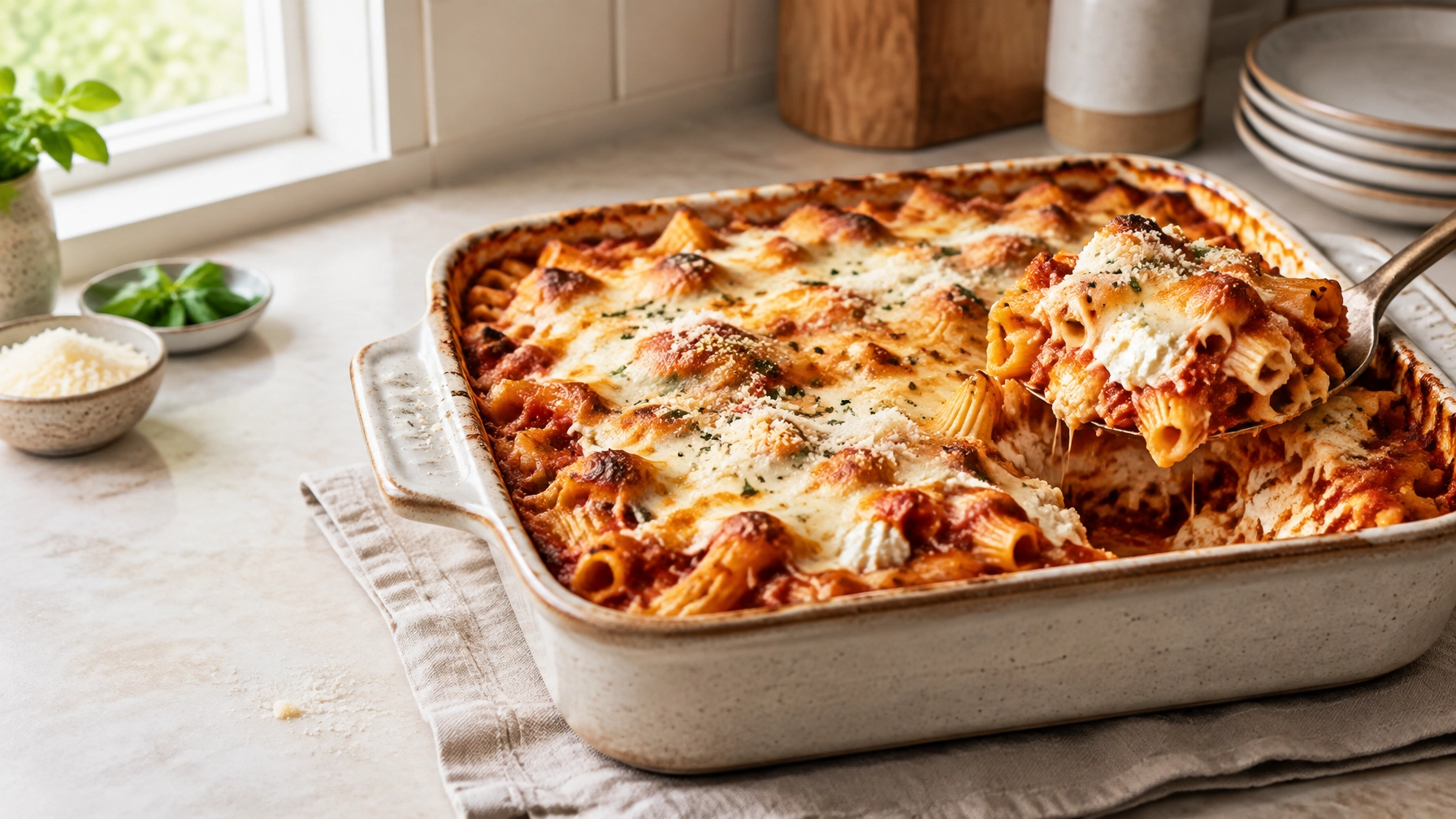
Baked Ziti with Ricotta (Easy Freezer Meal)
Definition
baked ziti (noun): A pasta casserole composed of tubular pasta, tomato sauce, cheese, and seasonings, baked until hot and consolidated.
This baked ziti with ricotta is designed for advance preparation. The assembled casserole can be baked immediately, refrigerated for later, or frozen for a planned meal. It uses ziti or penne, marinara sauce, ricotta, mozzarella, Parmesan, and a small amount of egg to bind the ricotta layer.
The pasta is deliberately cooked below full tenderness. It will continue cooking in the oven. This prevents a soft or broken texture after freezing and reheating.
Preparation
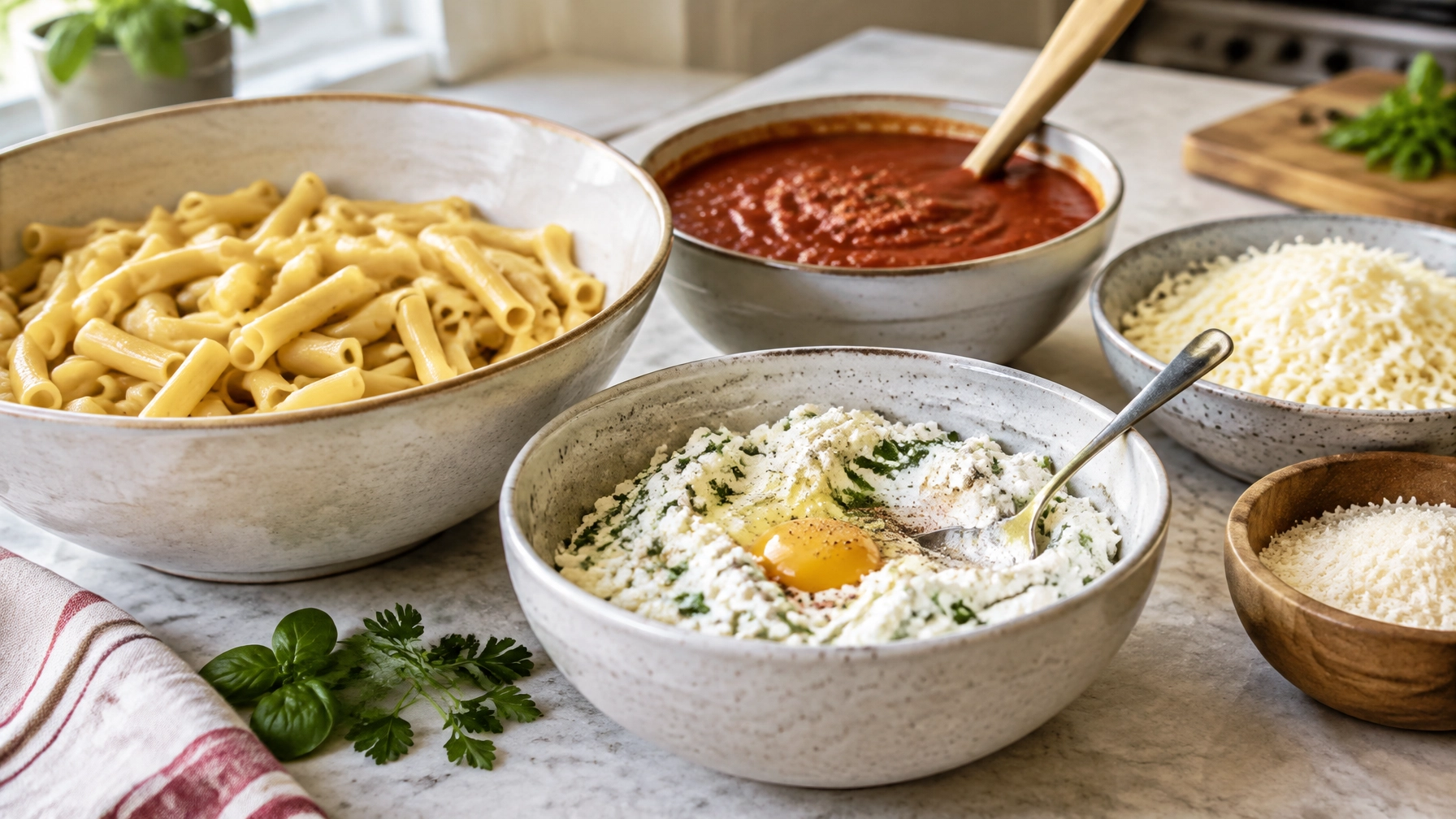
Use a 9-by-13-inch baking dish for one large casserole. A freezer-safe metal or disposable aluminum pan is practical if the entire dish will be frozen. If using glass or ceramic, confirm that the manufacturer permits transfer from freezer to oven. Sudden temperature changes can cause breakage.
Cook the pasta for approximately two minutes less than the package instruction for al dente. Drain it thoroughly. Excess water will dilute the sauce and can create a loose casserole.
The ricotta mixture should remain slightly textured. Do not process it into a completely smooth filling. Small pockets of ricotta provide the expected contrast between the tomato sauce and melted cheese.
Assembly
- Heat the oven to 375°F (190°C) if baking immediately.
- Cook the ziti in salted water until just under al dente. Drain.
- In a bowl, combine the ricotta, egg, Italian seasoning, salt, and black pepper.
- Toss the drained pasta with approximately two-thirds of the marinara sauce.
- Spread half of the sauced pasta in the baking dish.
- Add half of the ricotta mixture in small spoonfuls.
- Sprinkle with one-third of the mozzarella and Parmesan.
- Add the remaining pasta and the remaining ricotta mixture.
- Pour the remaining marinara over the top.
- Finish with the remaining mozzarella and Parmesan.
The surface should be covered with sauce and cheese. Exposed pasta can dry during baking, particularly after freezing.
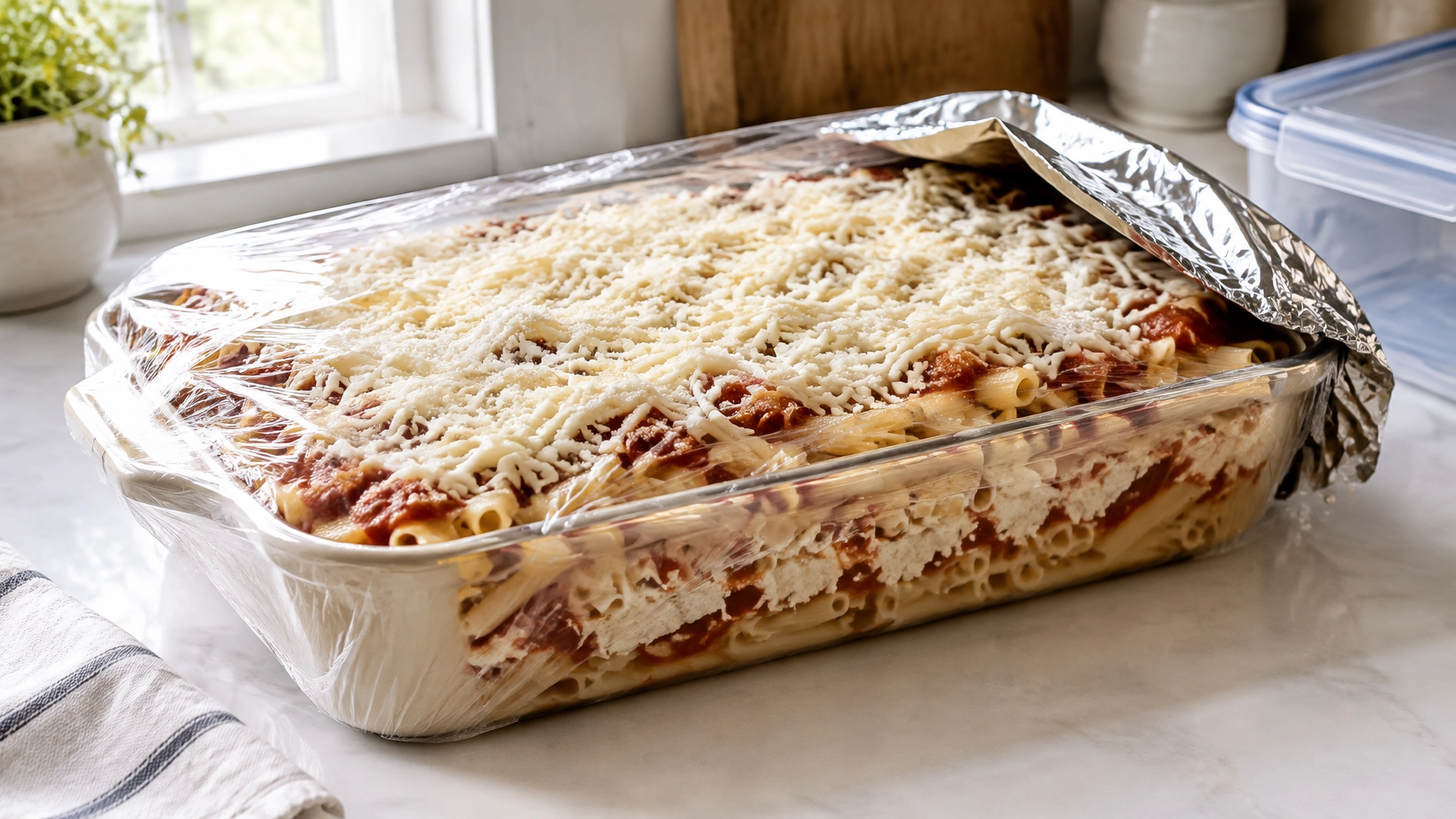
Freezing
For a freezer meal, allow the assembled casserole to stop steaming before wrapping. Do not leave it at room temperature for an extended period. Perishable food should be refrigerated or frozen within two hours, or within one hour when the surrounding temperature is above 90°F, according to USDA food-safety guidance.
Cover the dish tightly with plastic wrap, followed by a layer of foil. For longer storage, use a freezer-safe lid or an additional layer of foil. Label the package with the name, date, and baking instructions.
For best texture, use the frozen casserole within three months. It may remain safe for longer when continuously held at 0°F, but quality can decline through freezer burn and moisture loss.
Baking
Fresh
Cover the casserole loosely with foil. Bake at 375°F (190°C) for 20 minutes. Remove the foil and continue baking for 15 to 20 minutes, until the sauce is bubbling and the cheese is melted and lightly browned.
Rest for 10 minutes before serving. This allows the layers to stabilize and reduces liquid separation.
Thawed
Transfer the wrapped casserole from the freezer to the refrigerator approximately 24 hours before baking. Remove any plastic wrap and cover the dish with fresh foil.
Bake at 375°F (190°C) for 30 to 40 minutes, or until the center is hot. Remove the foil and bake for another 10 to 15 minutes to brown the cheese.
Frozen
Remove all plastic wrap. Keep the casserole covered with foil and place it in a cold oven if the dish is glass or ceramic and the manufacturer does not permit a frozen dish to enter a preheated oven. A disposable aluminum pan can usually be placed in a preheated oven on a sturdy baking sheet.
Bake at 350°F (175°C) for approximately 60 to 75 minutes. Remove the foil and bake for another 15 to 25 minutes. Dense or deeply frozen casseroles may require additional time.
The center must reach 165°F (74°C). Check the thickest central portion with a food thermometer. This temperature is consistent with USDA guidance for reheating leftovers and mixed dishes.
Storage
Refrigerate leftovers within two hours of serving. Store them in shallow, covered containers where possible. Refrigerated baked ziti should be eaten within three to four days. Reheat individual portions until the center reaches 165°F.
To freeze cooked leftovers, cool them promptly, divide them into freezer-safe containers, remove excess air, and label each portion. Frozen leftovers retain best quality for approximately three to four months.
Do not use appearance or smell as the only safety test. Discard the casserole if it remained at room temperature beyond the recommended time or has been refrigerated longer than the stated storage period. Additional general guidance is available from USDA information on leftovers.
Variations
Meat sauce: Brown 450g ground beef or Italian sausage, drain excess fat, and add it to the marinara. Ensure the meat is fully cooked before assembly.
Vegetable: Stir sautéed mushrooms, spinach, zucchini, or roasted peppers into the sauce. Remove excess liquid from cooked vegetables before layering.
Spinach ricotta: Add 150g thawed, squeezed-dry frozen spinach to the ricotta mixture. Excess water can make the casserole loose.
Spicy: Add red pepper flakes to the marinara or use a spicy Italian sausage.
Extra creamy: Replace up to 120g of the ricotta with softened cream cheese. The result will be denser and richer.
Tips
- Use ziti, penne, or another short tubular pasta if ziti is unavailable.
- Undercook the pasta slightly because it will soften during baking.
- Use enough sauce to coat every piece of pasta. Frozen pasta absorbs moisture.
- Cool the assembled casserole before wrapping to limit trapped steam and ice formation.
- Do not place a cold glass or ceramic dish directly into a hot oven unless it is rated for that use.
- Rest the baked casserole before cutting. Immediate serving produces less defined portions.
- Freeze the dish before baking rather than freezing a fully baked casserole when the intended result is the closest texture to a freshly assembled meal.