Recipe
Serves
4 1×
Serves 4Prep 35 minCook 2H45 minTotal 3H20 min
Ingredients
Method
- Place the beef bones and shank in a saucepan. Cover with cold water, boil for 10 minutes, drain and rinse.
- Return the rinsed bones and shank to a clean saucepan. Add 2.5 litres of fresh cold water.
- Char the onion and ginger in a dry frying pan over high heat for 5 to 8 minutes.
- Toast the star anise, cinnamon, cloves and coriander seeds in the same pan for 1 to 2 minutes.
- Add the charred aromatics and toasted spices to the saucepan.
- Bring the liquid to a boil, then reduce to a low simmer. Skim the surface during the first 20 minutes.
- Simmer uncovered for 2.5 hours. Remove the shank when tender.
- Strain the broth through a fine sieve into a clean saucepan.
- Season with fish sauce, salt and sugar. Slice or shred the cooked shank.
- Prepare the rice noodles according to the packet instructions. Drain, rinse and reheat briefly in boiling water.
- Bring the broth to a full boil. Divide the noodles between four bowls.
- Add the cooked shank and sliced raw steak to the bowls.
- Ladle the boiling broth over the beef. Cook any remaining visibly raw pieces until cooked through.
- Garnish with spring onion, coriander, basil, bean sprouts, chilli and lime. Serve immediately.
Beef Pho with Rice Noodles (Weekend)
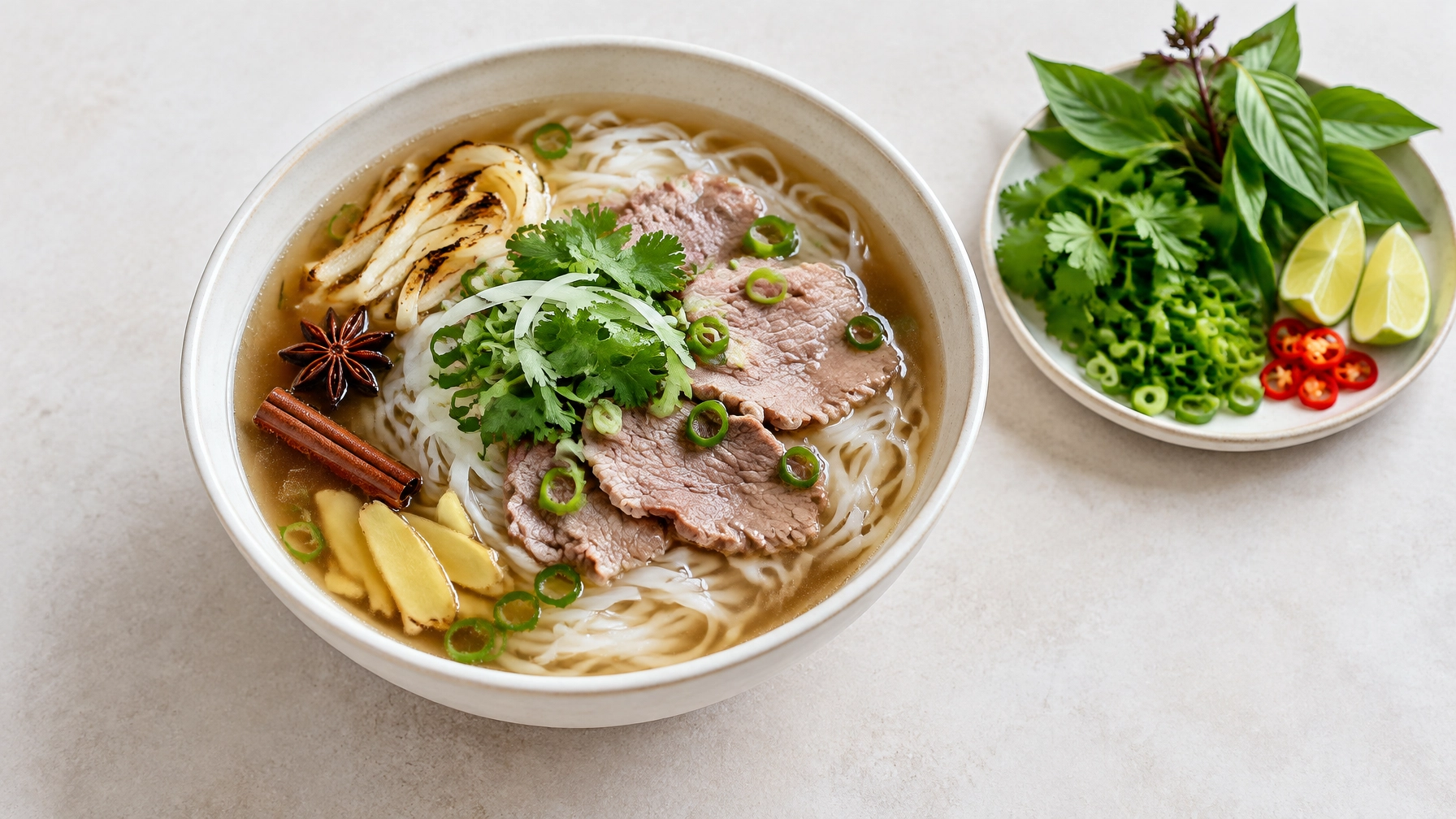
Beef pho requires a clear spiced broth, properly prepared rice noodles and thinly sliced beef added only when the broth is fully hot.
Purpose
This weekend version uses beef bones, beef shank, charred onion, ginger, star anise and cinnamon. The broth is simmered slowly to produce a concentrated base. Thinly sliced beef is added at serving time so it remains tender.
The process is divided into four controls:
- Clean the bones and meat.
- Char the aromatics.
- Simmer and strain the broth.
- Assemble each bowl immediately before serving.
Rice noodles are prepared separately. This prevents them from becoming soft while the broth is cooking.
Preparation
Place the beef bones and beef shank in a large saucepan. Cover with cold water and bring to a boil. Boil for 10 minutes. Drain the contents and rinse the bones and meat under cold running water.
Clean the saucepan. Return the rinsed bones and shank to it, then add 2.5 litres of fresh cold water.
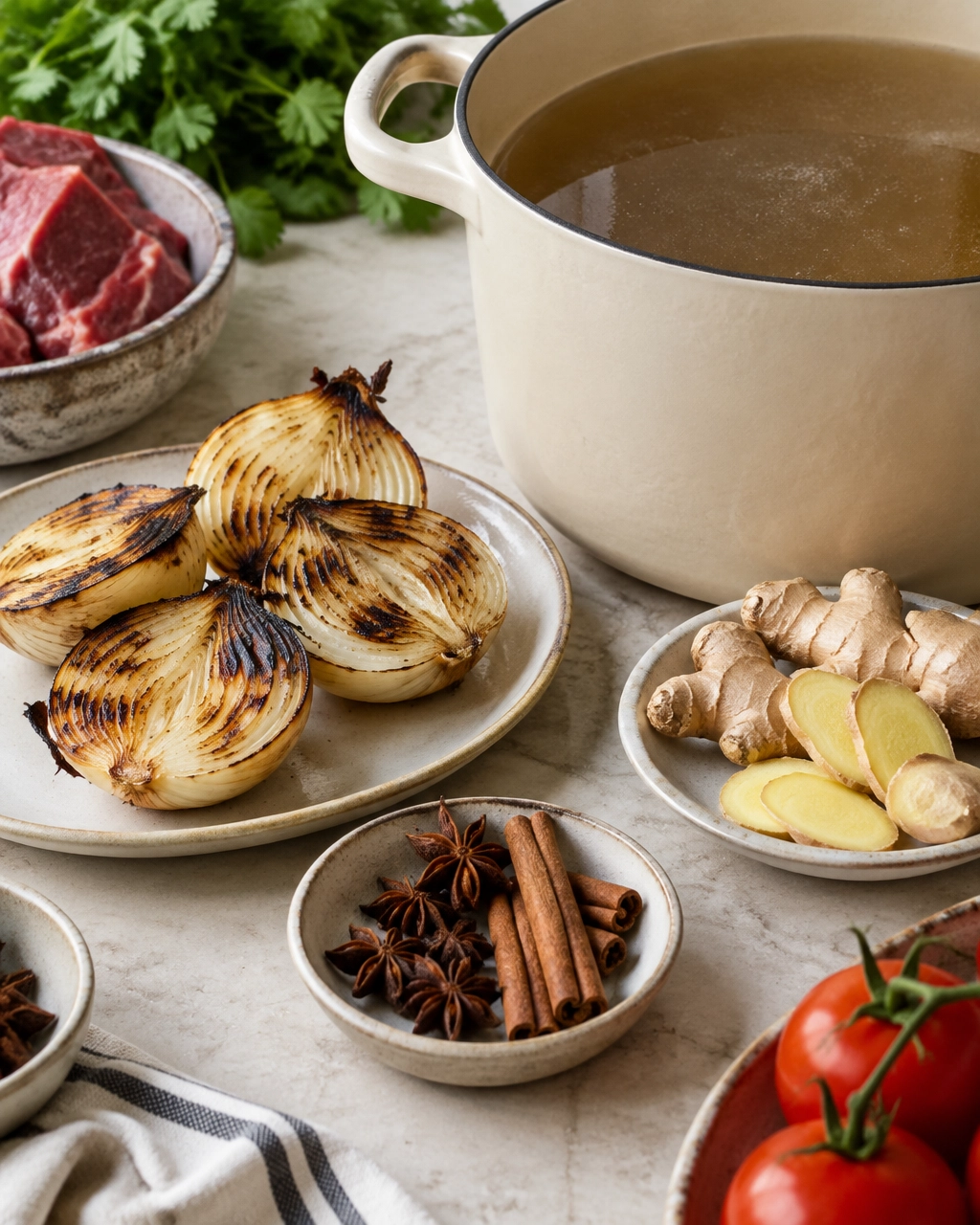
Halve the onion. Split the ginger lengthways. Place both in a dry frying pan over high heat. Cook until the cut surfaces develop dark charred patches. This normally takes 5 to 8 minutes. Turn the pieces during cooking. Set aside.
Place the star anise, cinnamon, cloves and coriander seeds in the same dry pan. Toast for 1 to 2 minutes until aromatic. Do not allow the spices to burn.
Add the charred onion, ginger and toasted spices to the saucepan containing the bones and beef.
Simmer
Bring the liquid to a boil. Reduce the heat immediately to maintain a low simmer. Skim foam from the surface during the first 20 minutes.
Simmer uncovered for 2.5 hours. The liquid should move gently rather than boil aggressively. A hard boil can make the broth cloudy and can cause excessive evaporation.
Remove the beef shank after approximately 2 hours, or when it is tender enough to pierce with a knife. Set it aside to cool. Continue simmering the bones for the remaining time.
Strain the broth through a fine sieve into a clean saucepan. Discard the bones, onion, ginger and spices. Remove any excess fat from the surface if required.
Slice or shred the cooked beef shank. Keep it covered while the broth is finished.
Season the strained broth with fish sauce, salt and sugar. Taste the liquid. The intended result is savoury, lightly sweet and strongly aromatic. Add seasoning in small quantities because the broth will be concentrated further when it is reheated.
Noodles
Prepare the rice noodles according to the packet instructions. Most dried flat noodles require either a short boil or a soak in hot water.
Drain the noodles when they are just tender. Rinse briefly under cold water to remove excess surface starch. Set them aside.
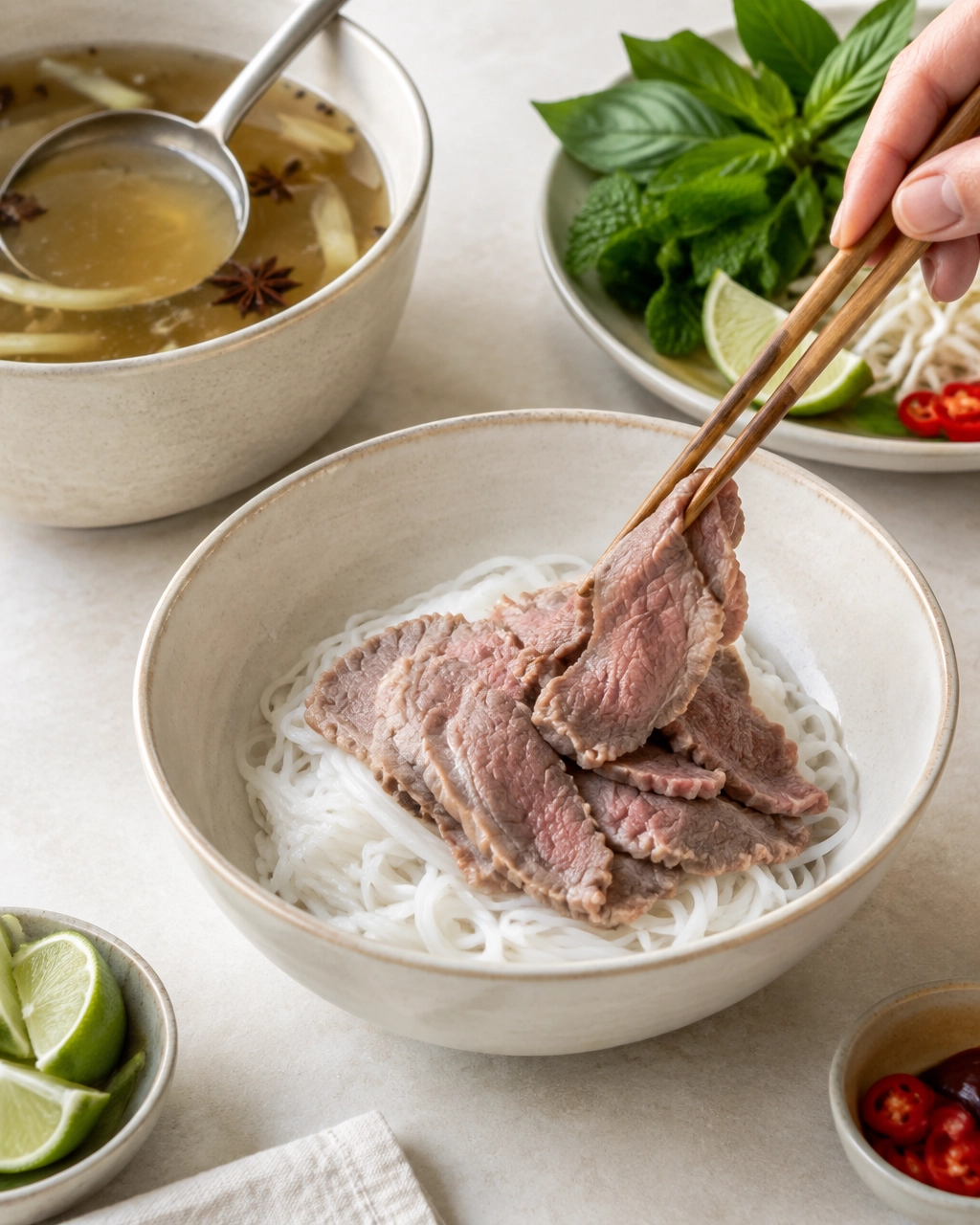
Before assembly, place the noodles in a sieve and dip them into boiling water for 10 to 20 seconds. This reheats them without leaving them in hot liquid for an extended period.
Assembly
Return the strained broth to the saucepan. Bring it to a full boil.
Divide the noodles between four large bowls. Add sliced cooked shank and the thinly sliced raw steak.
Ladle the boiling broth over the beef. The liquid must cover the thin slices completely. If any pieces remain visibly raw, return them to the saucepan for 1 to 3 minutes, or until cooked through.
Top each bowl with spring onion, coriander, basil, bean sprouts and chilli. Serve lime wedges separately. Hoisin sauce and chilli sauce may be provided at the table.
Use a separate knife and board for the raw steak. Wash all equipment, work surfaces and hands after handling raw beef. The Food Standards Agency provides further guidance on cooking food safely.
Tips
Use a gentle simmer. Pho broth is not improved by vigorous boiling. A low simmer extracts flavour while keeping the liquid clearer.
Char the aromatics properly. The onion and ginger should have visible dark patches. This gives the broth its characteristic roasted depth.
Slice the steak while cold. Place the steak in the freezer for 20 to 30 minutes before slicing. The firmer texture allows thinner, more even pieces.
Keep noodles separate. Do not leave cooked noodles in the broth while the pot is simmering. They will absorb liquid and lose their structure.
Season at the end. Bones, meat and evaporation affect the final concentration. Salt added at the beginning can produce an excessively strong broth.
Serve immediately. Pho is assembled to order. The noodles, beef and garnishes should not be held together for an extended period.
Variations
Brisket pho: Replace the beef shank with 600 g brisket. Simmer until tender, then slice thinly against the grain.
Lean pho: Use beef stock instead of marrow bones. The result will be lighter and require less time, but it will have less body.
More aromatic pho: Add one extra star anise or two additional cloves. Increase spice gradually because both ingredients can dominate the broth.
Vegetable garnish: Add thinly sliced onion, fresh mint or blanched greens. Keep the broth and noodles unchanged.
Lower-sodium pho: Use unsalted stock and reduce the fish sauce. Add lime at the table to increase acidity without adding salt.
Storage
Cool leftover broth promptly in a shallow container, then refrigerate it. The Food Standards Agency states that safe chilling helps prevent harmful bacteria from growing. See its guidance on chilling, freezing and defrosting food.
Store noodles, broth, cooked beef and garnishes separately. Reheat the broth until fully hot before serving. Do not store raw sliced steak in a bowl that has contained cooked food.
Questions
Can the broth be made a day ahead?
Yes. Prepare and strain the broth, then cool it promptly and refrigerate it. Remove any solidified fat from the surface before reheating. Prepare the noodles and garnishes on the day of serving.
Can ordinary beef stock be used?
Yes. Use a good-quality unsalted beef stock when bones are unavailable. The broth will require less simmering, but the flavour will be less gelatinous and concentrated.
Why is the broth cloudy?
Common causes include boiling too aggressively, failing to rinse the bones after parboiling or leaving foam in the liquid. The broth remains usable. Strain it carefully before seasoning.
Does the sliced beef need to be cooked in the saucepan?
It can be cooked directly in the boiling broth. Alternatively, place it over the noodles and cover it with boiling broth. Check that all pieces are cooked through before eating.
Can rice vermicelli be substituted?
Yes, but flat pho noodles provide the intended texture. If using thin vermicelli, reduce the soaking time and assemble the bowls immediately.
How long does the complete recipe take?
Allow approximately 35 minutes for preparation, 2 hours 45 minutes for cooking and assembly, and 3 hours 20 minutes in total. Additional cooling time is required if the broth is prepared in advance.