Recipe
Prep 45 minCook 1H20 minTotal 2H5 min
Ingredients
Method
- Heat the oven to 180°C conventional or 160°C fan. Grease a deep baking dish measuring approximately 23 cm by 33 cm.
- Make the ragu. Heat the olive oil in a large saucepan over medium heat. Add the onion and cook for 6 to 8 minutes until soft. Add the garlic and cook for 30 seconds.
- Add the chicken. Cook for 6 to 8 minutes, breaking it apart with a wooden spoon, until no raw areas remain and the meat begins to colour.
- Pour in the wine. Simmer for 2 to 3 minutes, scraping the base of the pan, until reduced by approximately half.
- Add the crushed tomatoes, tomato paste, cinnamon stick, bay leaf, cloves, allspice, salt, and black pepper. Reduce the heat and simmer uncovered for 25 to 35 minutes. The ragu must be thick rather than watery. Remove the cinnamon stick and bay leaf. Set aside to cool slightly.
- Cook the pasta in a large saucepan of salted water until just al dente. Drain thoroughly. Toss with the melted butter.
- Allow the pasta to cool for 5 minutes. Stir in the feta and egg whites. Transfer the pasta to the greased baking dish and spread it into an even layer.
- Prepare the béchamel. Melt the butter in a saucepan over medium heat. Whisk in the flour and cook for 2 minutes without allowing the mixture to brown.
- Add the warm milk gradually, whisking continuously. Continue cooking for 8 to 10 minutes until the sauce is thick and coats the back of a spoon.
- Remove the saucepan from the heat. Season with nutmeg, salt, and black pepper. Leave for 3 minutes, then whisk in the egg yolks one at a time. Stir in 75 g of the kefalotyri.
- Spoon the chicken ragu over the pasta. Spread it to the edges without disturbing the base.
- Pour the béchamel over the ragu. Smooth the surface and scatter over the remaining 25 g of kefalotyri.
- Bake for 40 to 50 minutes until the surface is set and golden brown. If the top colours too quickly, cover the dish loosely with foil.
- Remove from the oven and rest for 20 to 30 minutes before slicing. This resting period allows the layers to firm.
Chicken Pastitsio (Greek Baked Pasta)
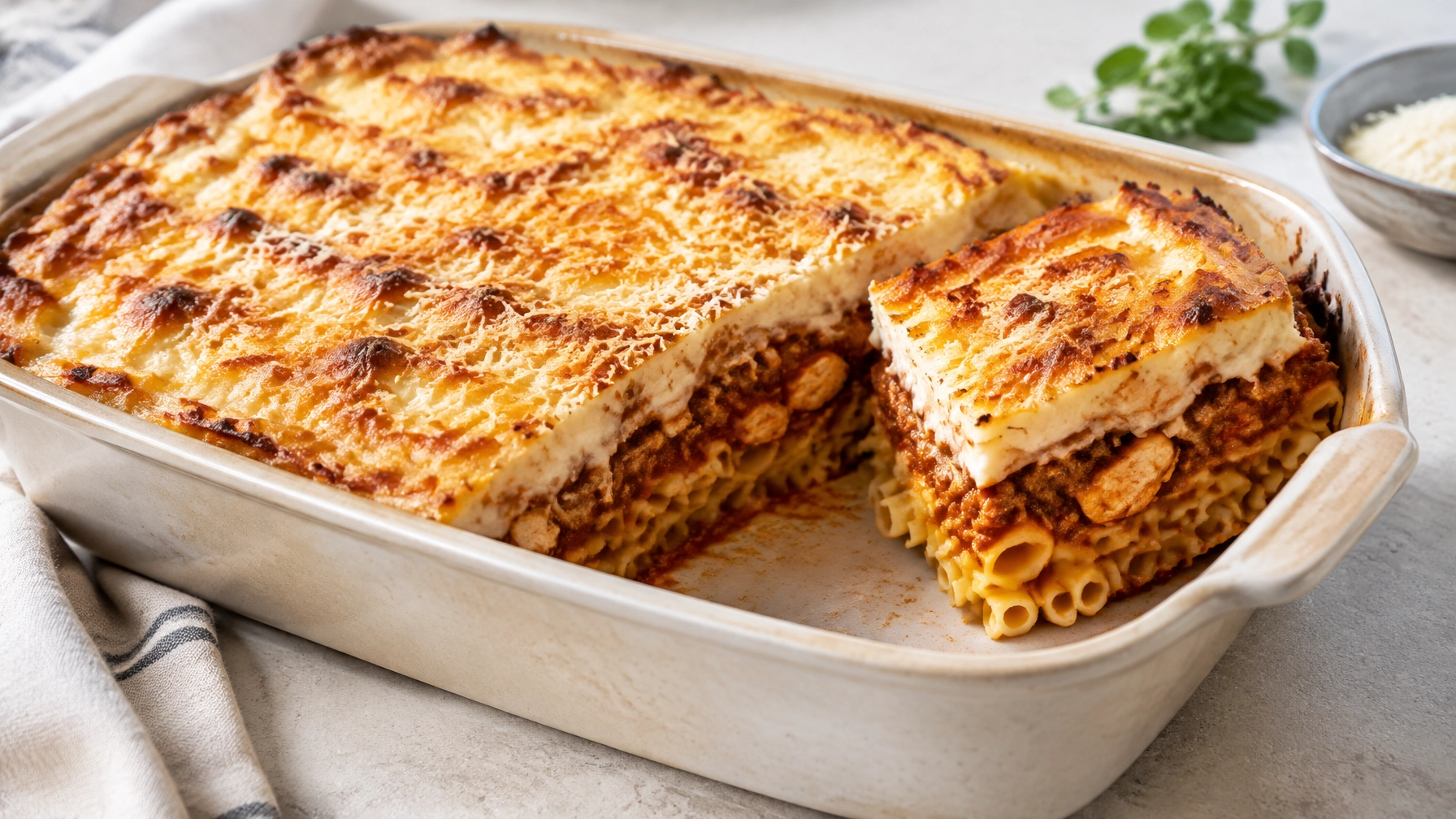
Chicken pastitsio is a layered Greek baked pasta made with tubular pasta, spiced tomato and chicken ragu, and a thick kefalotyri béchamel topping.
Structure
Pastitsio is assembled in three defined layers.
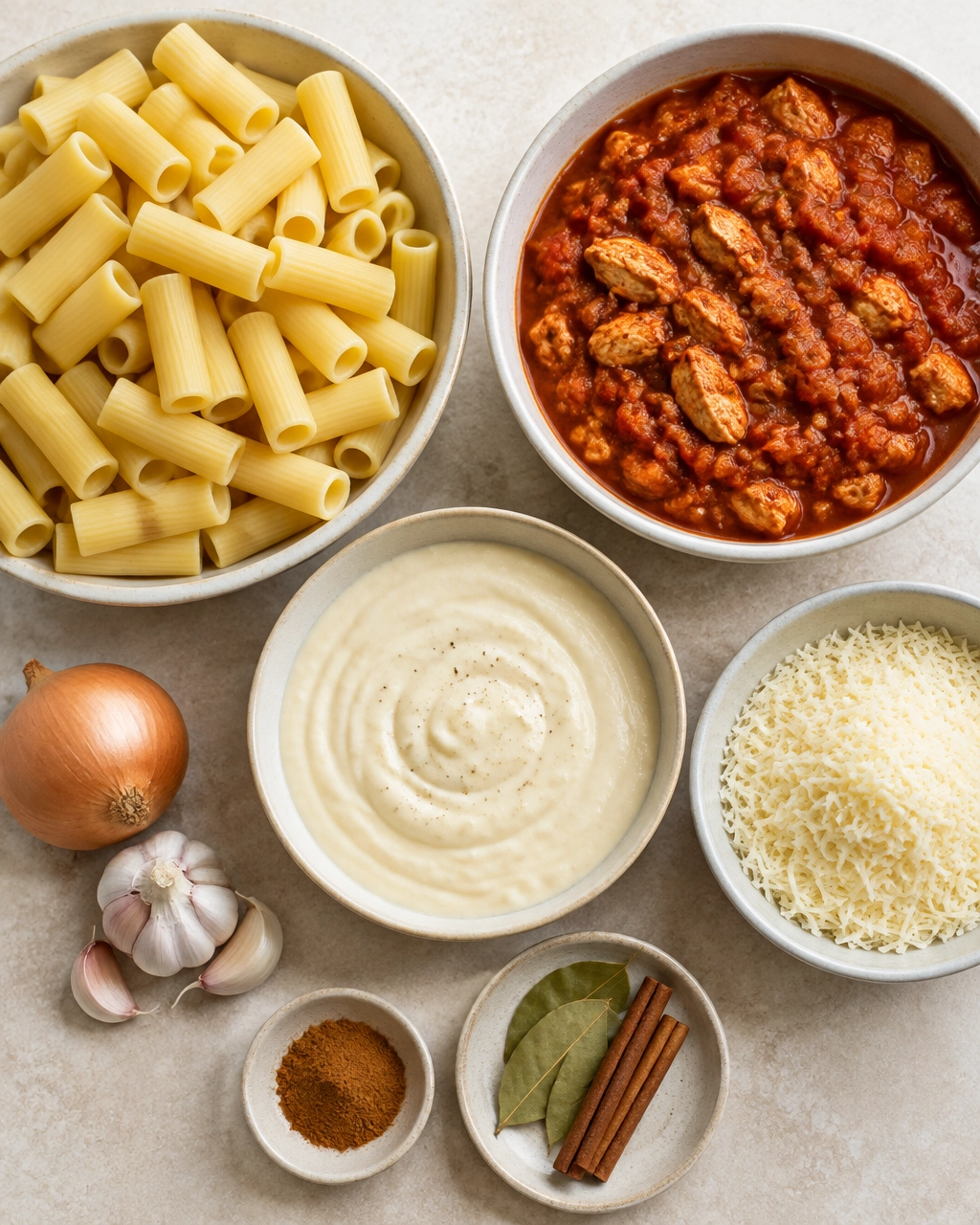
The base consists of thick tubular pasta. Bucatini, macaroni, or dedicated pastitsio pasta can be used. The pasta is cooked until just al dente, then mixed with butter, feta, and egg whites to help it form a stable layer.
The centre is a concentrated tomato and chicken ragu. Cinnamon, clove, bay leaf, and wine provide the warm, savoury profile associated with Greek pastitsio. Chicken is a lighter adaptation of the beef or lamb used in many traditional versions.
The top is a thick béchamel enriched with egg yolks and kefalotyri. It should be firm enough to remain a separate layer after baking.
Notes
Ragu
The ragu must be reduced before assembly. Excess liquid can make the pasta layer unstable and cause the béchamel to sink into the sauce.
Ground chicken is convenient and cooks quickly. Finely chopped chicken thighs produce a more substantial texture and remain moist during baking. Do not use raw chicken directly in the assembled dish.
Béchamel
A standard pouring béchamel is too loose for pastitsio. Continue cooking until it is visibly thick. The egg yolks and cheese add richness and help the topping set during baking.
If kefalotyri is unavailable, use finely grated pecorino Romano. Parmesan can also be used, although it has a milder and less salty profile.
Pasta
Do not overcook the pasta before baking. It continues to soften in the oven. Drain it well because retained water can dilute the base.
Safety
Chicken should be cooked thoroughly. Check the thickest part with a clean food thermometer. The Food Standards Agency provides cooking guidance based on core temperature and holding time in its food safety cooking guidance.
Cool leftovers promptly, cover, and refrigerate. Reheat until steaming hot throughout and reheat only once.
Variations
- Replace ground chicken with finely chopped chicken thighs for a firmer filling.
- Add 1 teaspoon dried oregano to the ragu for a more herbal profile.
- Use bucatini if dedicated pastitsio pasta is unavailable.
- Omit the feta from the pasta base for a cleaner cheese profile.
- Add a small pinch of chilli flakes to the ragu if additional heat is required.
- Prepare the assembled dish one day in advance, refrigerate, and allow it to stand at room temperature for 20 minutes before baking.
FAQ
Can chicken replace the traditional meat?
Yes. Chicken pastitsio is an adaptation of the established pastitsio structure. The pasta, spiced tomato ragu, and béchamel method remain the same. Chicken has a milder flavour than beef or lamb, so the cinnamon, clove, and wine should remain in the recipe.
Can I make pastitsio without kefalotyri?
Yes. Pecorino Romano is the closest practical substitute because it is firm and salty. Parmesan is also suitable. Adjust the added salt according to the cheese used.
Why is my béchamel too thin?
It may not have cooked long enough after the milk was added. Continue whisking over medium heat until it coats the back of a spoon. The sauce should be thicker than béchamel used for lasagne.
Can I assemble pastitsio in advance?
Yes. Assemble the dish, cover it, and refrigerate for up to 24 hours. Allow it to stand at room temperature briefly before baking. A cold dish may require additional baking time.
How long should pastitsio rest?
Rest the baked pastitsio for at least 20 minutes. Cutting immediately can cause the layers to separate.
Can I freeze chicken pastitsio?
Yes. Freeze it either assembled but unbaked or fully baked and cooled. Defrost it in the refrigerator before reheating. The béchamel may soften slightly after freezing.