Recipe
Serves
6 1×
Serves 6Prep 15 minCook 40 minTotal 1H15 min
Ingredients
Method
- Preheat the oven to 170 C, or 150 C fan. Grease a 20 x 25 cm ceramic baking dish and place it in a larger roasting tin.
- Butter each slice of bread and cut it into triangles.
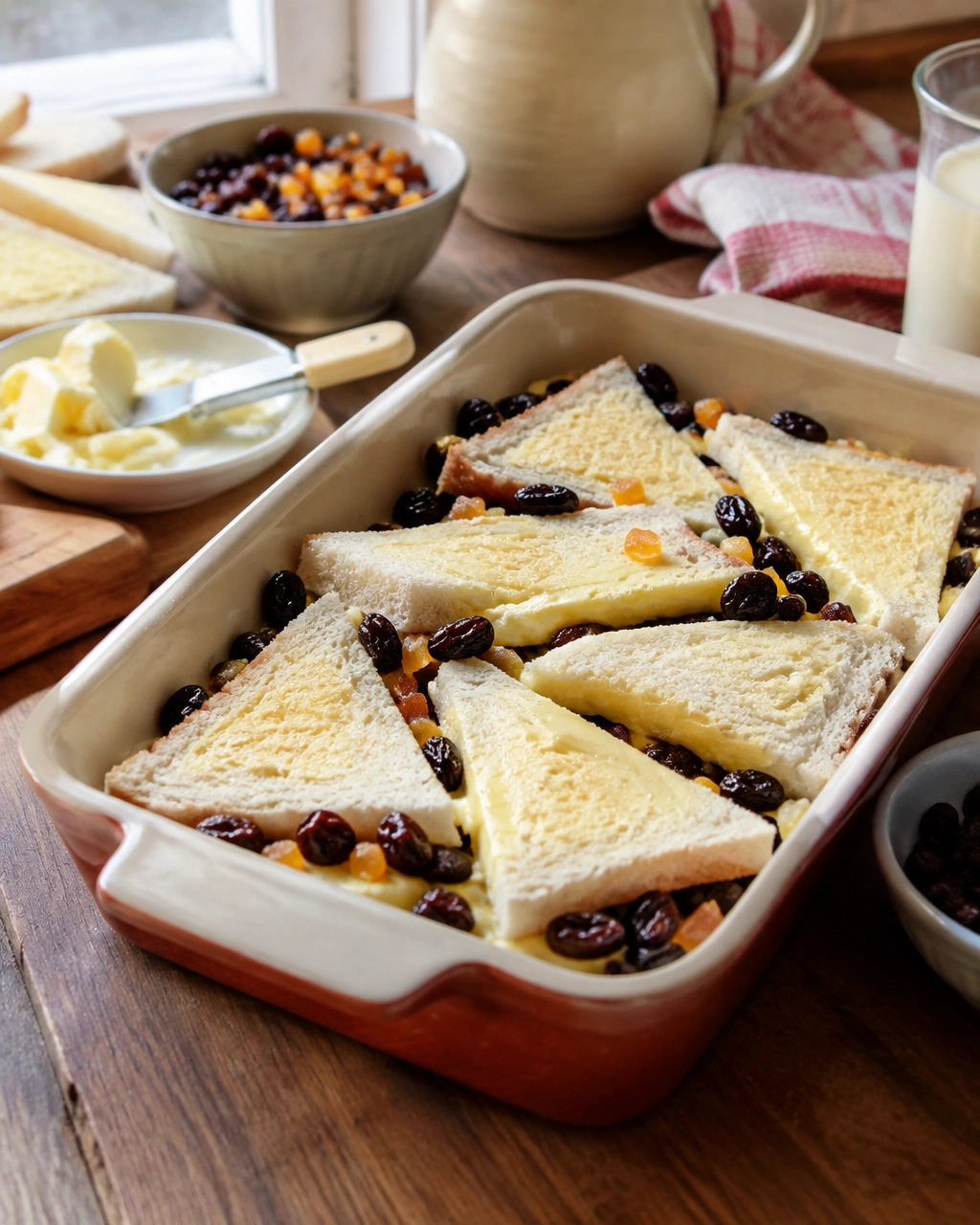
- Layer half of the bread in the dish with the buttered sides facing upwards.
- Scatter over half of the dried fruit, mixed peel, cinnamon and nutmeg.
- Add the remaining bread, arranging the points so they show above the surface.
- Scatter over the remaining dried fruit.
- Warm the milk, cream and vanilla in a saucepan until steaming but not boiling.
- Whisk the eggs and caster sugar. Gradually whisk in the warm dairy to make the custard.
- Pour the custard over the bread. Press down gently and leave to soak for 20 minutes.
- Sprinkle over the demerara sugar and extra nutmeg.
- Add boiling water to the roasting tin until it reaches halfway up the pudding dish. Bake for 40 minutes, until golden and just set. Remove from the water bath and rest for 5 to 10 minutes before serving.
Bread and Butter Pudding (Classic Baked)
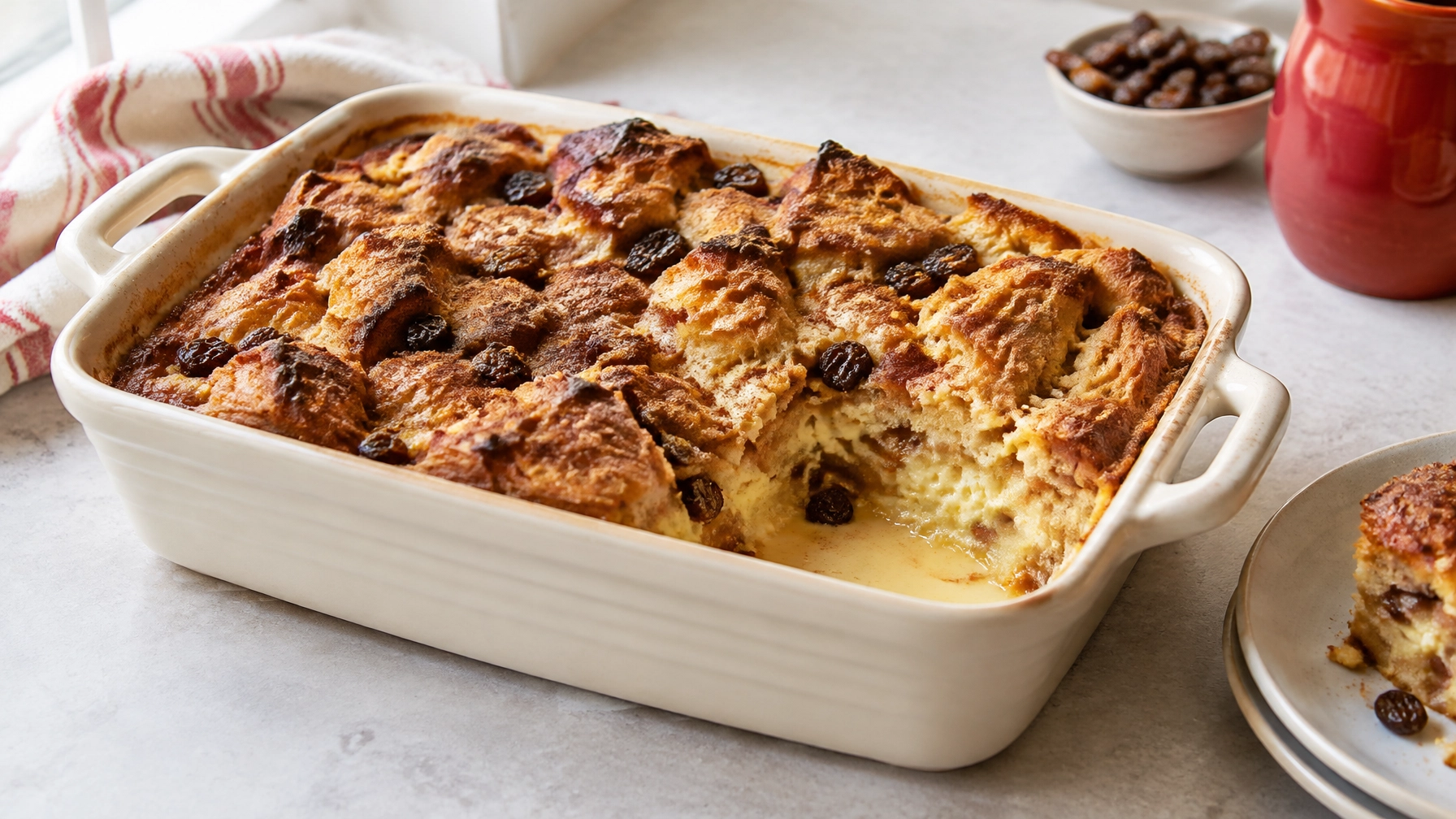
Classic bread and butter pudding is a British baked dessert made with buttered bread, dried fruit, warm spices and a softly set egg custard.
This version uses a water bath to cook the custard gently. The result is a crisp, golden top with a tender centre containing raisins, cinnamon and nutmeg. Serves 6.
Definition
pudding (noun): A baked dessert made by soaking buttered bread in sweet custard before cooking until set.
Bread and butter pudding is designed for slightly stale bread. The bread absorbs the custard more effectively than fresh bread, while the buttered edges toast during baking. White bread gives a traditional texture. Brioche produces a richer, softer pudding.
A water bath, also called a bain-marie, is required for this method. The surrounding hot water moderates the oven heat and helps prevent the custard from splitting.
Tips
Use slightly stale bread. Bread that has dried for a day absorbs more custard and is less likely to collapse. If the bread is fresh, leave the slices uncovered for several hours before assembling the pudding.
Do not boil the dairy. The milk and cream only need to be warm and steaming. Boiling liquid can make tempering the eggs more difficult.
Pour slowly. Adding the warm dairy gradually while whisking prevents hot liquid from cooking the eggs in patches.
Allow the full soaking time. The 20-minute rest allows the custard to reach the centre of the bread. Skipping this stage can produce dry areas beneath the top layer.
Keep the water below the rim. The water should reach halfway up the pudding dish but must not splash into the custard.
Check for a gentle wobble. A firm, liquid-free centre with a slight movement is the correct point. Overbaking can produce a dense, rubbery texture.
Rest before serving. Five to 10 minutes allows the custard to settle while the top remains warm and crisp.
Variations
Chocolate and orange: Replace the mixed peel with finely grated orange zest and add 75 g of chopped dark chocolate between the layers. Reduce the nutmeg slightly so the orange flavour remains distinct.
Croissant pudding: Use 4 to 5 plain croissants instead of sliced bread. Cut them into thick pieces, butter only if required, and reduce the soaking time to 15 minutes because croissants absorb custard quickly.
Marmalade version: Spread a thin layer of orange marmalade over the bread before arranging it in the dish. Use sultanas rather than raisins for a lighter fruit flavour.
Panettone version: Replace the bread with sliced panettone. Omit the mixed peel if the panettone already contains candied fruit. Reduce the caster sugar to 50 g because panettone is already sweet.
Apple and raisin version: Add a thin layer of peeled, finely sliced apple beneath the top layer of bread. Avoid adding too much fruit, as excess moisture can prevent the custard from setting.
Serving
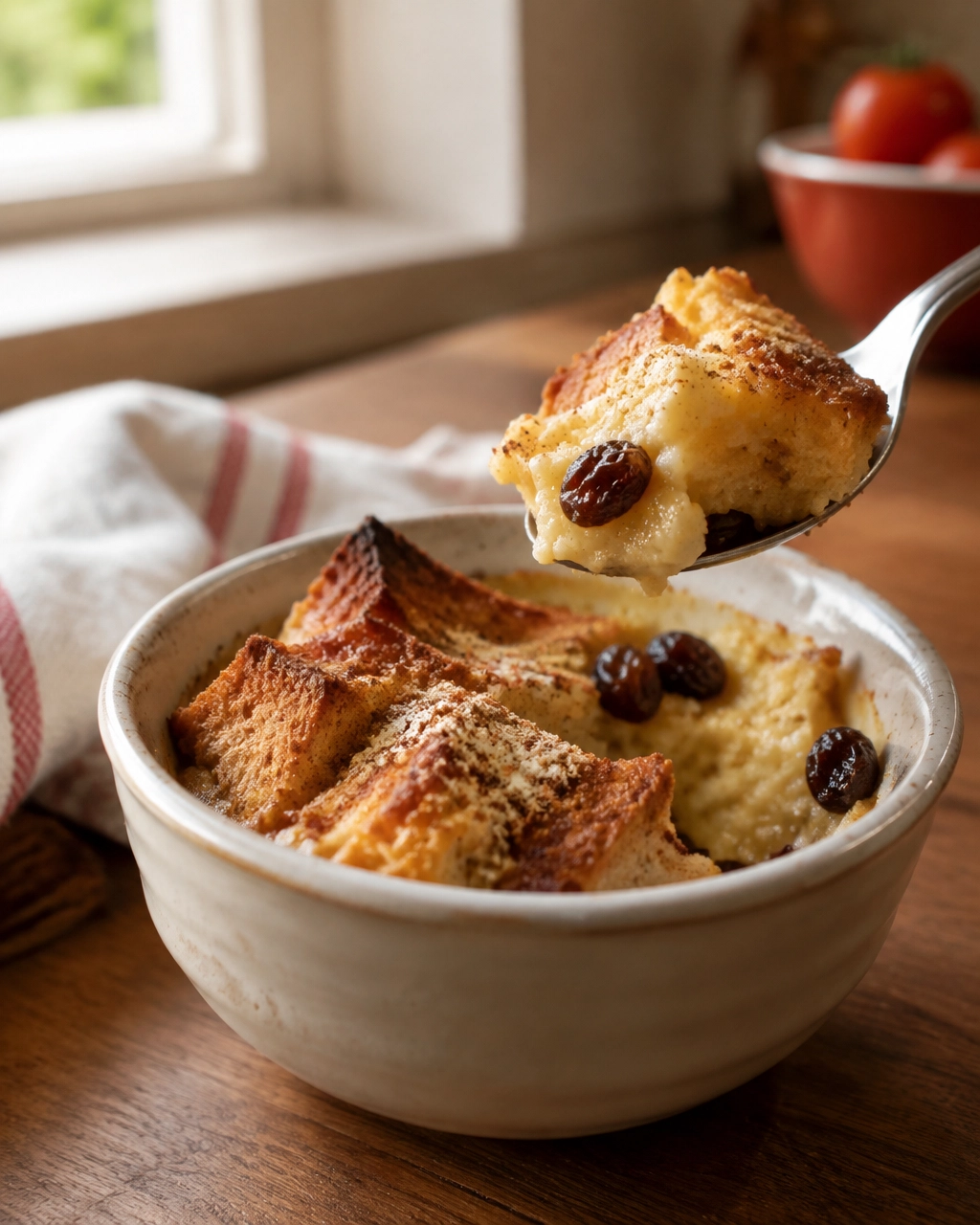
Serve the pudding warm in bowls. The centre should be soft and custard-like, while the top provides a toasted contrast.
It can be served plain or with a small amount of pouring cream, vanilla custard or lightly whipped cream. If reheating, use a moderate oven until warmed through. Avoid prolonged high heat, which can cause the custard to become firm and grainy.
Store leftovers covered in the refrigerator and use within 2 days. Reheat individual portions until hot throughout.
Questions
Can I make bread and butter pudding in advance?
Yes. Assemble the pudding, pour over the custard and leave it covered in the refrigerator for up to 12 hours. Allow the dish to stand at room temperature while the oven heats, then bake as directed. A cold dish should not be placed directly into a hot oven if it is not designed for thermal changes.
Why did my custard split?
The usual causes are excessive heat, overbaking or omitting the water bath. Heat the dairy only until steaming, temper the eggs gradually and remove the pudding when the centre still has a slight wobble.
Can I use fresh bread?
Yes, but slightly stale bread is preferable. Fresh bread can become very soft and may not hold its shape during soaking. Dry fresh slices briefly in a low oven before assembling the pudding.
Can I leave out the dried fruit?
Yes. The raisins, sultanas and mixed peel add sweetness and texture but are not required for the custard to set. Replace them with chopped chocolate, sliced banana or finely diced apple if preferred.
Can I freeze bread and butter pudding?
The pudding is best served fresh. Freezing can alter the texture of the custard and make the bread softer. If necessary, freeze cooled portions in sealed containers and defrost them in the refrigerator before reheating gently.