Recipe
Serves
4 1×
Serves 4Prep 10 minCook 15 minTotal 25 min
Ingredients
Method
- Bring a large saucepan of salted water to the boil and cook the pasta for two minutes less than the packet instructions state.
- Add the broccoli florets and sliced stems for the final two minutes of cooking, then reserve at least 100 ml of pasta water and drain.
- Toast the walnuts in a dry frying pan over medium heat for two to three minutes, then set aside.
- Warm the olive oil in the frying pan. Add the garlic and cook for 30 seconds.
- Add the double cream and Gorgonzola. Stir over low heat until the cheese has mostly melted.
- Add the drained pasta and broccoli. Toss with the sauce, adding pasta water gradually until smooth.
- Stir in the lemon juice and most of the walnuts. Season with black pepper and check the salt.
- Serve immediately with the remaining walnuts scattered over the top.
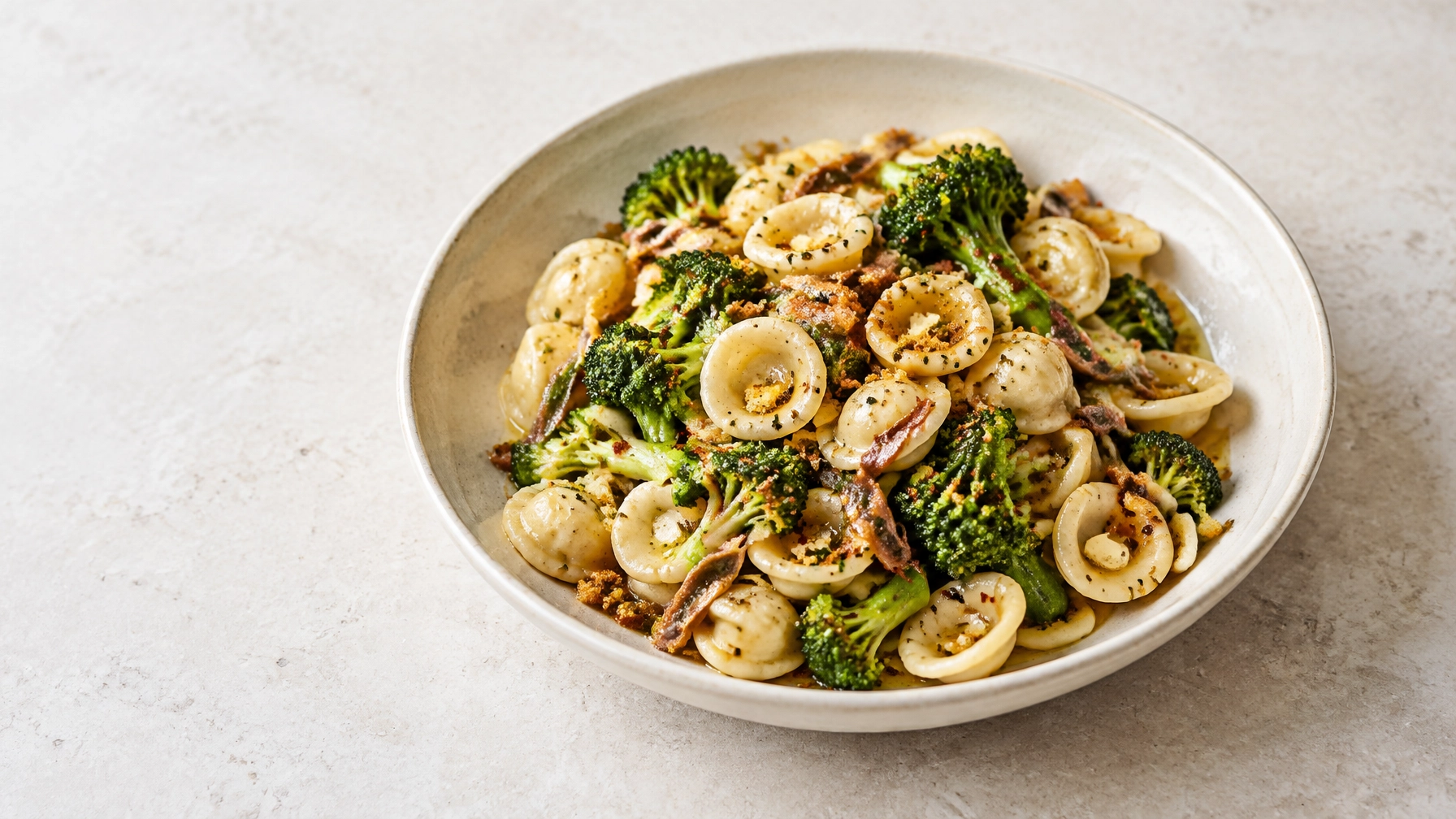
Broccoli and Gorgonzola Pasta (25 Minutes)
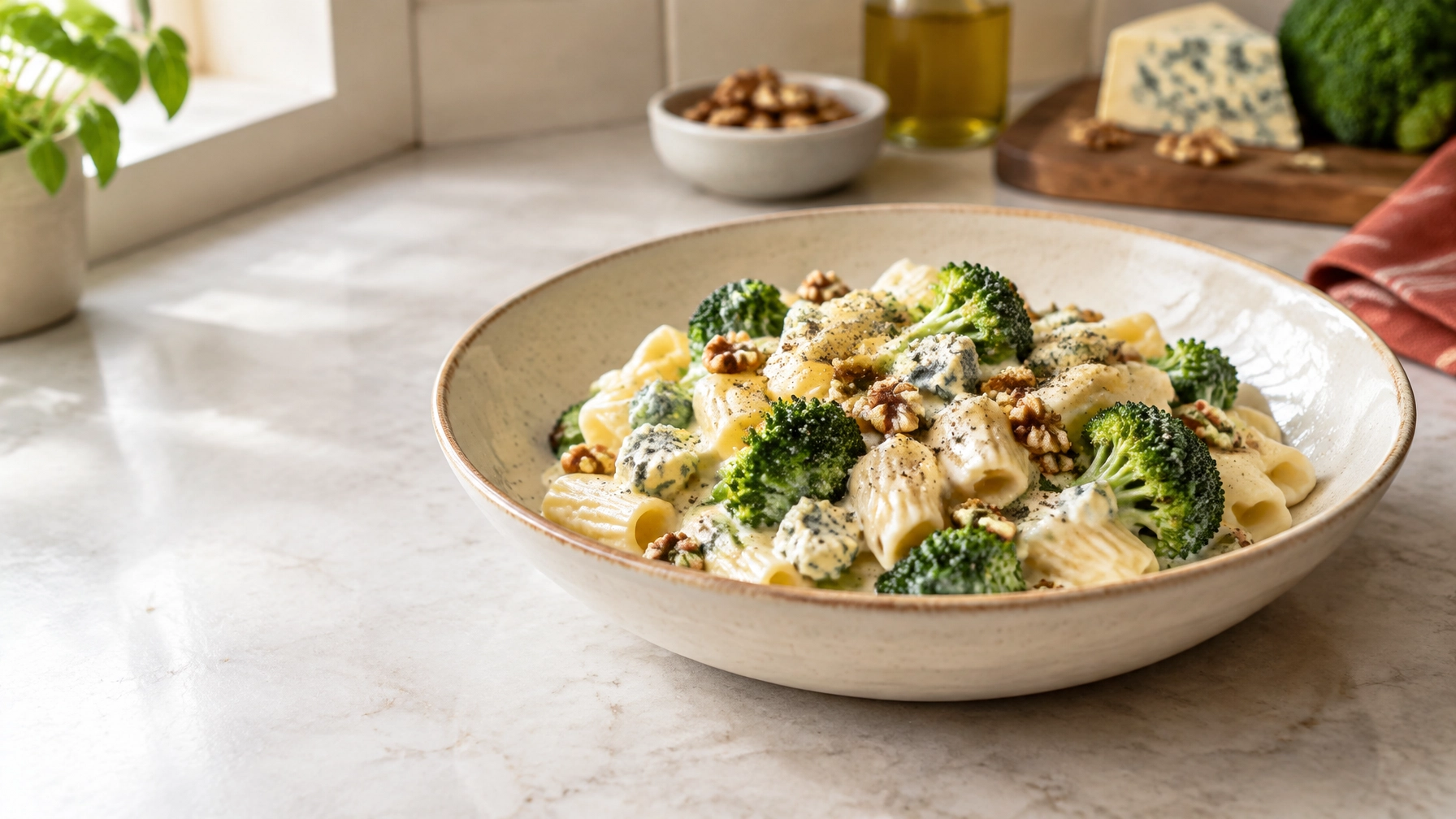
A practical vegetarian pasta recipe combining tender broccoli, creamy Gorgonzola and toasted walnuts in a 25-minute dinner.
Overview
This broccoli and Gorgonzola pasta is designed for a short cooking window. The broccoli cooks in the same water as the pasta, while the sauce comes together in a separate pan. The result is a creamy vegetarian pasta dish with a defined blue-cheese flavour, fresh green vegetables and a controlled amount of richness.
Gorgonzola provides more character than a mild Cheddar sauce. Toasted walnuts add texture and a slightly bitter contrast to the cheese. Lemon juice keeps the sauce from becoming excessively heavy.
Use Gorgonzola dolce for a softer, creamier flavour. Use Gorgonzola piccante for a stronger blue-cheese finish. Either works with broccoli, but the piccante variety should be used in a smaller quantity if you prefer a milder dinner.
Preparation
Bring a large saucepan of water to the boil. Salt it generously once boiling. The water should taste seasoned, as this is the main opportunity to season the pasta itself.
While the water heats, cut the broccoli into small florets. Slice the stems thinly rather than discarding them. The stems have a mild flavour and soften quickly when cut into narrow pieces.
Toast the walnuts in a dry frying pan over a medium heat for two to three minutes. Stir regularly. Remove them as soon as they smell nutty and begin to deepen in colour. Do not leave them unattended, as they can burn quickly.
Crumble the Gorgonzola before starting the sauce. This allows it to melt evenly and reduces the time the sauce needs over direct heat.
Timing
The preparation time is approximately 10 minutes. The cooking time is approximately 15 minutes. These stages overlap, which keeps the total time close to 25 minutes.
The broccoli should remain recognisable in the finished dish. Small florets usually need only two minutes in the pasta water. Larger pieces may require longer and can cause the pasta to overcook if added too early.
The sauce should be warm rather than aggressively boiling. Excessive heat can make the dairy split or cause the cheese to become oily. Gentle heat and a small amount of starchy pasta water produce a more even finish.
Texture
Pasta water is functional, not optional. The starch helps bind the cream and melted cheese to the pasta. Add it gradually. Too little can leave the sauce thick and clinging in patches. Too much can make the dish watery.
For a smoother sauce, break the Gorgonzola into small pieces before adding it to the pan. For a more pronounced texture, leave a few larger pieces to melt into pockets throughout the pasta.
The walnuts should remain toasted and distinct. Add them at the end rather than simmering them in the sauce.
Variations
For a stronger vegetable flavour, add a handful of finely sliced leek with the garlic. Cook it gently until softened before adding the cream.
For additional acidity, replace the lemon juice with half a teaspoon of Dijon mustard. This will make the sauce more savoury without adding heat.
For a milder version, use 100 g Gorgonzola and add 25 g finely grated hard cheese. Do not use a large quantity of extra cheese, as it can make the sauce excessively salty.
For a nut-free version, omit the walnuts. Toasted breadcrumbs can provide a similar contrast. Add them at the table so they retain their texture.
For a lower-cost version, use frozen broccoli. Add it directly to the pasta water according to the packet instructions and check that it is hot throughout before draining.
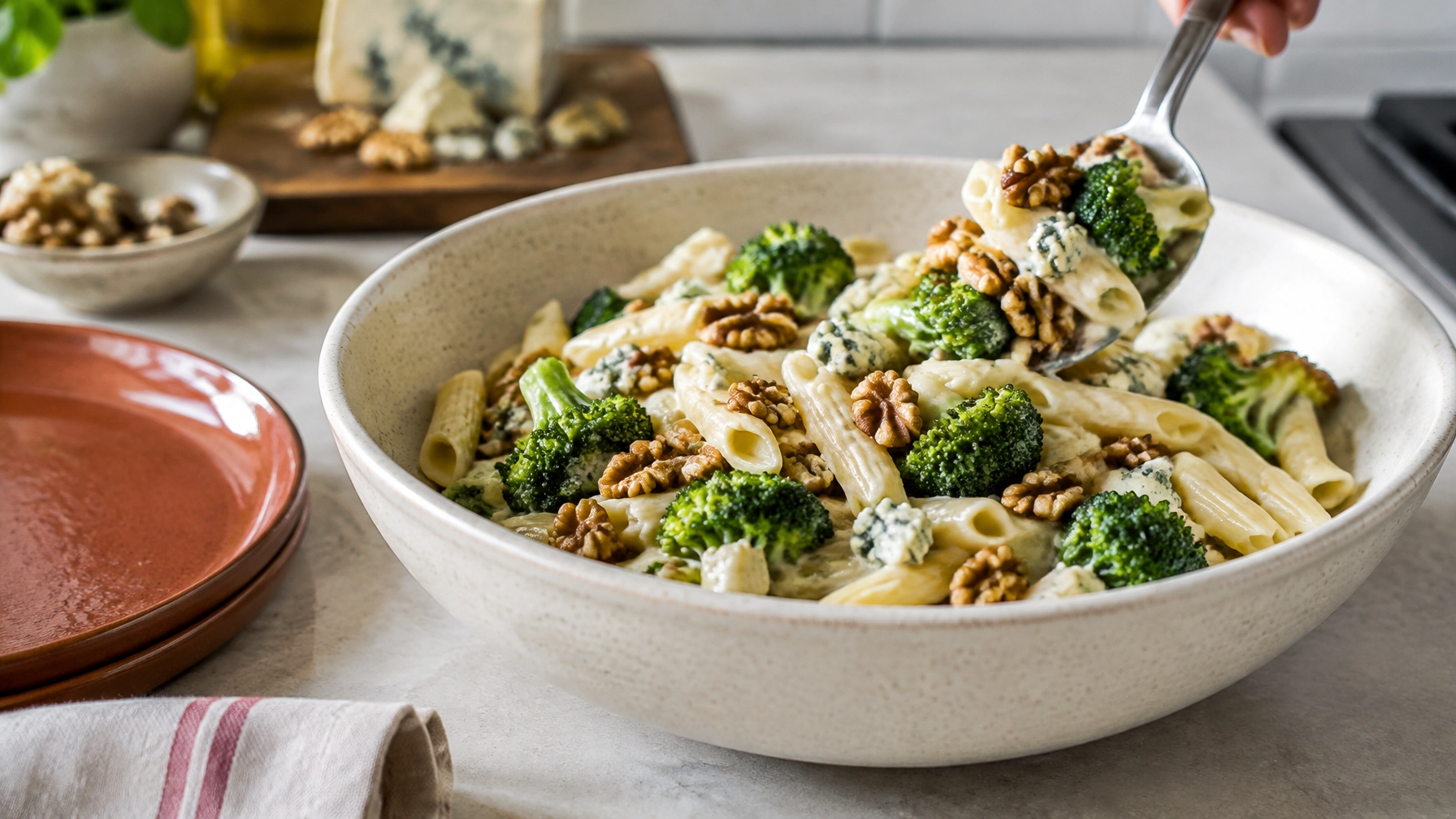
Storage
Transfer leftovers to a shallow container and cool them quickly. The Food Standards Agency advises placing cooked leftovers in the fridge within two hours. See its guidance on cooking food safely.
Eat refrigerated leftovers within 48 hours. Reheat only once and ensure the pasta is steaming hot throughout before serving. Stir during reheating to reduce cold spots. Add a small splash of water or milk if the sauce has thickened.
Freezing is possible, but the sauce may become slightly grainy after thawing. If freezing, cool the pasta completely, portion it into suitable containers and defrost it in the fridge before reheating.
FAQ
Can I use another blue cheese?
Yes. Stilton, Danish blue or Roquefort can be used, although each has a different salt level and intensity. Start with less cheese, taste the sauce and add more if required.
Can I make this without cream?
Yes. Replace the cream with 150 ml of reserved pasta water and use 175 g Gorgonzola. The sauce will be lighter and more dependent on the starch from the pasta water. Add the cheese over low heat to reduce the risk of splitting.
How do I stop the sauce from becoming oily?
Use low to medium heat and avoid boiling the Gorgonzola. Add pasta water gradually while tossing. If the sauce separates, remove the pan from the heat and stir in one tablespoon of warm pasta water.
Can I prepare the broccoli in advance?
Yes. Cut the broccoli several hours ahead and keep it covered in the fridge. Do not cook it in advance unless necessary, as reheating can make the florets soft and dull in colour.
Is Gorgonzola suitable during pregnancy?
Check the label and use pasteurised Gorgonzola. Cook the sauce until the cheese has fully melted and the dish is steaming hot. Anyone with specific dietary or medical requirements should follow current clinical advice.