Recipe
Serves
2 1×
Serves 2Prep 5 minCook 15 minTotal 20 min
Ingredients
Method
- Boil a large saucepan of salted water. Cook the linguine until al dente.
- Warm the olive oil in a frying pan over low to medium heat. Add the garlic and chilli. Cook for 2 to 3 minutes without allowing the garlic to burn.
- Reserve at least 150 ml of pasta water, then drain the linguine.
- Add the crabmeat, lemon juice and 60 ml of pasta water to the frying pan. Warm gently for 2 minutes.
- Add the linguine and lemon zest. Toss until glossy, adding more pasta water as required.
- Stir through the parsley. Season with black pepper and only as much salt as needed.
- Serve immediately with lemon wedges.
Crab Linguine with Chilli (20-Minute Dinner)
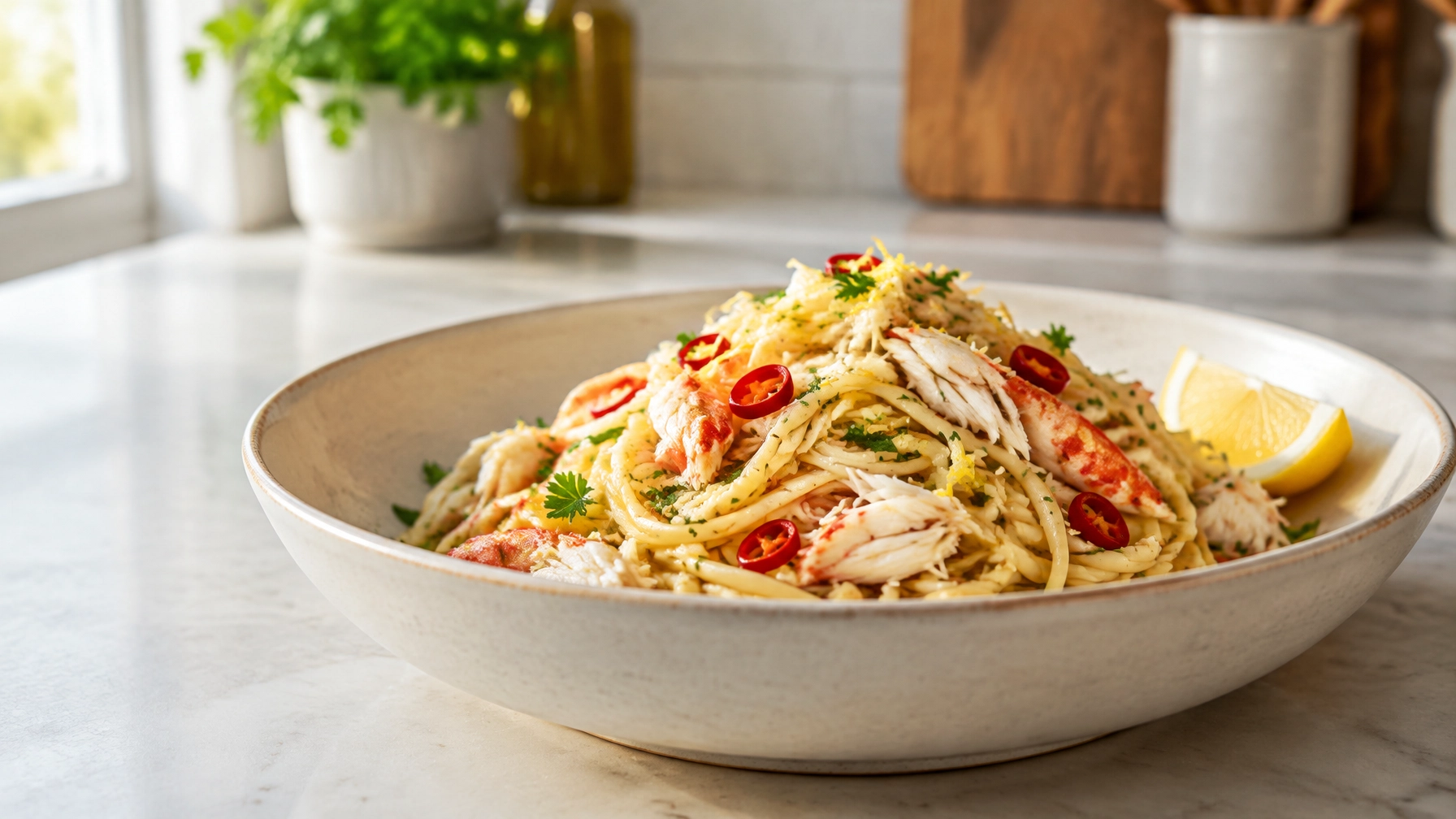
This crab linguine is a 20-minute seafood pasta made with cooked crabmeat, garlic, fresh chilli, lemon and olive oil.
Overview
Crab linguine requires little preparation and no heavy sauce. The cooking liquid from the pasta combines with olive oil, lemon and the crabmeat to create a light, glossy coating.
The method depends on timing. Start the linguine first. Prepare the garlic, chilli, lemon and parsley while the pasta cooks. Add the crab near the end because most crabmeat sold for this recipe is already cooked. Extended frying can make it dry and reduce its delicate flavour.
Use fresh cooked white crabmeat where available. A mixture of white and brown crabmeat gives the sauce a stronger, more savoury character. Pasteurised or tinned crab can also be used if it has been stored according to the packaging instructions.
Timing
The 20-minute schedule is as follows:
- Minutes 0 to 2: Bring the pasta water to the boil.
- Minutes 2 to 3: Add the linguine.
- Minutes 3 to 8: Slice the garlic, chilli and lemon. Chop the parsley.
- Minutes 8 to 15: Cook the garlic and chilli gently while the pasta continues to cook.
- Minutes 15 to 18: Add the crab, lemon juice and pasta water.
- Minutes 18 to 20: Toss with the linguine, adjust the texture and serve.
The exact time depends on the linguine brand and the amount of water used. The pasta should be judged by texture rather than the clock.
Technique
Use the pasta water
Pasta water contains starch released from the linguine. When combined with olive oil and moved through the pasta by tossing, it helps create a light emulsion. Add it gradually. Too much water can make the dish thin.
Keep the garlic pale
Garlic that is dark brown can taste bitter. Use low to medium heat and stir it regularly. The garlic should be soft and fragrant before the crab is added.
Add the crab late
Cooked crabmeat only needs to be warmed. It should not be fried for an extended period. Add it after the garlic and chilli have flavoured the oil, then combine it with the pasta as soon as possible.
Check for shell
Even prepared crabmeat can contain small fragments of shell. Check it carefully before adding it to the pan, particularly when serving children or anyone with an allergy.
Variations
Brown crabmeat
Replace up to 50 g of the white crabmeat with brown crabmeat. This creates a deeper flavour and a slightly richer sauce. Larger amounts may dominate the lemon and chilli.
Tomato
Add 100 g of halved cherry tomatoes to the pan after the garlic has softened. Cook for 3 to 4 minutes until they begin to collapse, then continue with the crab.
Greens
Add a small handful of finely sliced spinach or rocket during the final toss. The residual heat will wilt the leaves without requiring a separate pan.
No chilli
Omit the fresh chilli and add extra black pepper with the lemon zest. The result will be milder while retaining the main flavour of the crab and garlic.
Wholewheat linguine
Wholewheat linguine can be used, although it has a firmer texture and a more pronounced flavour. Reserve additional cooking water because it may absorb more liquid.
Storage
This recipe is best served immediately. If leftovers remain, cool them quickly, place them in a covered container and refrigerate them within two hours. The Food Standards Agency advises eating properly cooled leftovers within 48 hours or freezing them. Further guidance is available from the Food Standards Agency food allergy and intolerance information and its cooking guidance.
Reheat only once and heat until piping hot throughout. The texture of the linguine will soften during storage, and the crab may become firmer.
Safety
Crab is a crustacean and is a regulated allergen. Anyone with a shellfish allergy should not eat this dish. Use clean utensils and prevent contact between the crab, preparation surfaces and foods intended for someone with an allergy.
Keep crab chilled until required. Follow the use-by date and storage instructions on the packaging. If using crab removed from a whole cooked crab, check the meat thoroughly for shell fragments.
FAQ
Can I use tinned crab?
Yes. Drain it well and check the label for storage instructions. Add the crab at the same stage as fresh cooked crab and warm it gently.
Can I use frozen crabmeat?
Yes, if the product instructions allow it. Defrost it safely in the refrigerator, drain any excess liquid and use it promptly. Do not refreeze previously frozen crabmeat unless the packaging specifically permits this.
Can I make this without parsley?
Yes. Parsley provides freshness but is not essential. Use additional lemon zest, a small amount of finely sliced basil or extra black pepper instead.
Why is my sauce watery?
Too much pasta water may have been added at once. Return the pan to low heat and toss the linguine for 30 to 60 seconds. The pasta will absorb some of the liquid and release more starch.
Why is my crab dry?
The crab may have been cooked for too long or over a high heat. Since prepared crabmeat is already cooked, warm it briefly and avoid aggressive frying.
Can I prepare the ingredients ahead?
The garlic, chilli, lemon and parsley can be prepared a few hours in advance and stored separately in the refrigerator. Keep the crab chilled and unopened until needed.