Recipe
Serves
4 1×
Serves 4Prep 5 minCook 15 minTotal 20 min
Ingredients
Method
- Bring a large pot of water to a boil. Add 1 teaspoon of fine sea salt. Cook the pasta according to the packet instructions until al dente.
- Before draining the pasta, reserve 1 cup of the cooking water. Drain the pasta. Do not rinse it.
- While the pasta cooks, place the butter in a large light-coloured skillet over medium heat. Allow it to melt completely.
- Continue cooking the butter as it foams. Swirl the skillet or stir with a wooden spoon. When the foam begins to reduce, watch for golden-brown milk solids at the bottom of the pan.
- When the butter smells nutty and the milk solids are golden brown, add the sage leaves. Cook for 20 to 40 seconds, until the leaves are crisp and the butter is aromatic.
- Remove the skillet from the heat. Add the drained pasta and 1/2 cup of the reserved pasta water.
- Toss the pasta continuously for 30 to 60 seconds. Add more pasta water, 1 tablespoon at a time, until the butter forms a glossy coating around the noodles.
- Add the Parmesan, black pepper, the finely grated zest of the lemon, and 1 tablespoon of lemon juice. Toss again until the cheese is incorporated.
- Taste and adjust the salt. Serve immediately with the remaining crisp sage leaves and additional Parmesan.
Brown Butter Sage Pasta (20-Minute Autumn Pasta)
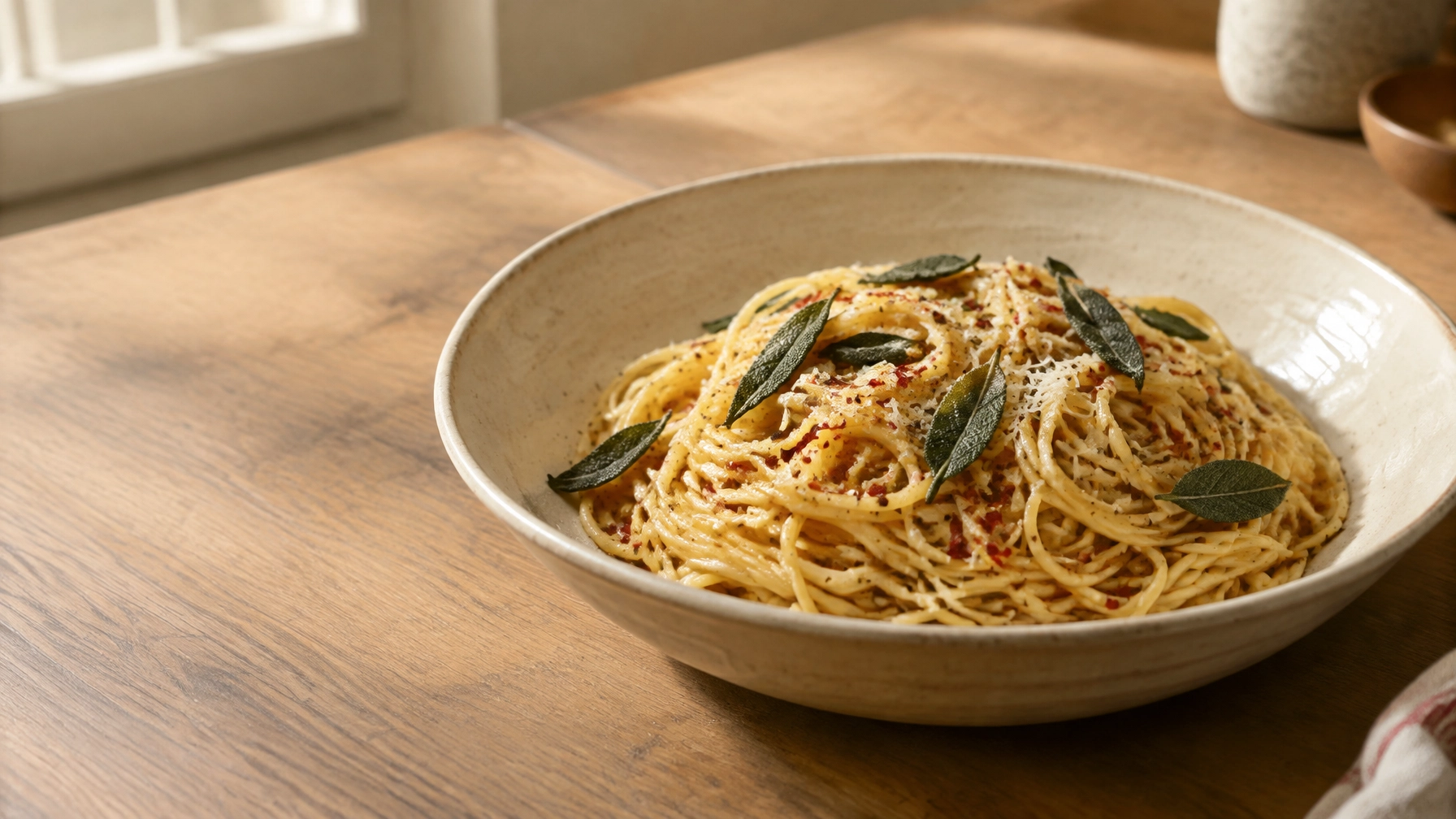
Brown butter sage pasta is a 20-minute autumn dinner made with dried pasta, unsalted butter, fresh sage, Parmesan, lemon, and black pepper. The sauce depends on controlled heat, reserved pasta water, and immediate serving.
Introduction
Brown butter sage pasta uses a short ingredient list and a defined cooking sequence. Butter is heated until its milk solids turn golden and aromatic. Fresh sage is added to the hot butter until crisp. Cooked pasta is then tossed with the butter, sage, Parmesan, and starchy pasta water.
The result is a glossy sauce with a toasted, nut-like flavour and a clear herbal finish. Lemon prevents the dish from becoming excessively rich. Black pepper provides additional contrast.
The recipe is suitable for a weeknight meal because the sauce can be prepared while the pasta cooks. The complete dish takes 20 minutes from start to finish.
For general pasta timing guidance, consult the BBC Food quick dinner collection. The browning technique also follows the standard process described in Land O Lakes' brown butter pasta recipe.
Brown
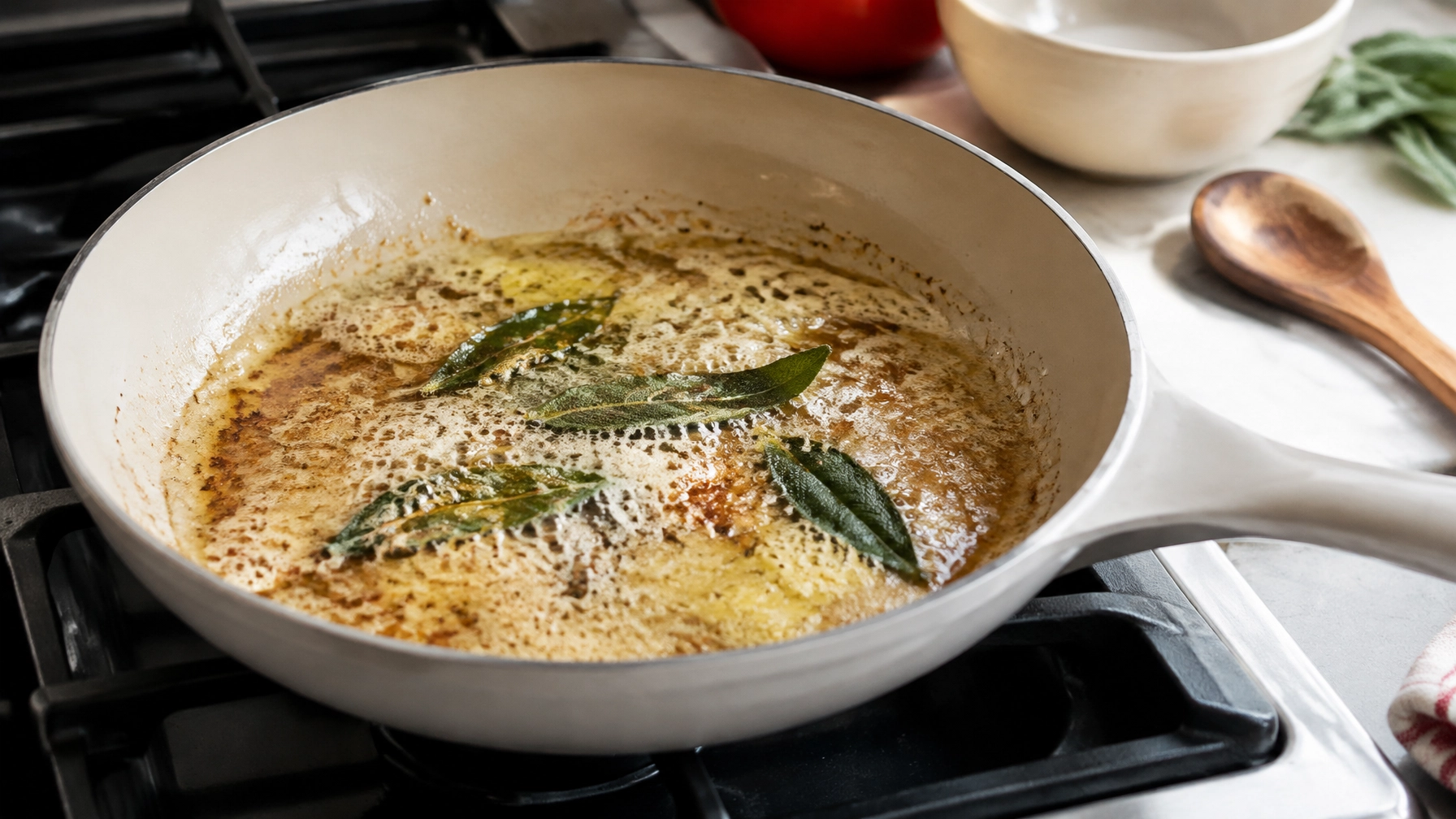
Brown butter is butter in which the water has evaporated and the milk solids have toasted. The change occurs quickly after the butter begins to foam.
Use a light-coloured skillet if available. It makes the milk solids easier to monitor. Stir or swirl the butter continuously once the foam begins to subside. Remove the pan from the heat when the solids are golden brown and the aroma is nutty.
Do not wait for the butter to become dark brown. Residual heat continues the cooking process, and the milk solids can burn within seconds. Burnt butter will taste bitter rather than toasted.
Sage
Fresh sage leaves are added directly to the hot butter. They become crisp while releasing their fragrance into the sauce.
Small leaves may crisp in approximately 20 seconds. Larger leaves may require slightly longer. Remove a few leaves before adding the pasta if you want a firm garnish. The remaining leaves can stay in the pan and soften as they coat the pasta.
Recipe
Details
- Servings: 4
- Prep time: 5 minutes
- Cook time: 15 minutes
- Total time: 20 minutes
- Category: Main course
- Method: Stovetop
Tips
Monitor the butter
The butter can move from properly browned to burnt quickly. Use medium heat rather than high heat. Once the butter becomes golden and aromatic, remove the skillet from the hob.
Reserve enough pasta water
Pasta water is a functional ingredient. Its starch helps combine the butter, cheese, and pasta into a cohesive sauce. Reserve the full cup even if the recipe uses less.
Add the water gradually. Excess liquid can make the sauce thin. Insufficient liquid can leave the pasta greasy instead of glossy.
Grate the Parmesan finely
Finely grated Parmesan melts more efficiently than coarse shavings. Add it away from direct heat to reduce the risk of clumping.
Use a wide skillet
A wide cooking surface allows the pasta to contact the sauce evenly. It also makes tossing easier and reduces the time needed to emulsify the butter with the pasta water.
Serve at once
Brown butter sage pasta is most stable immediately after preparation. As it cools, the butter thickens and the cheese can become firm. If reheating is necessary, add a small splash of water and use low heat.
Variations
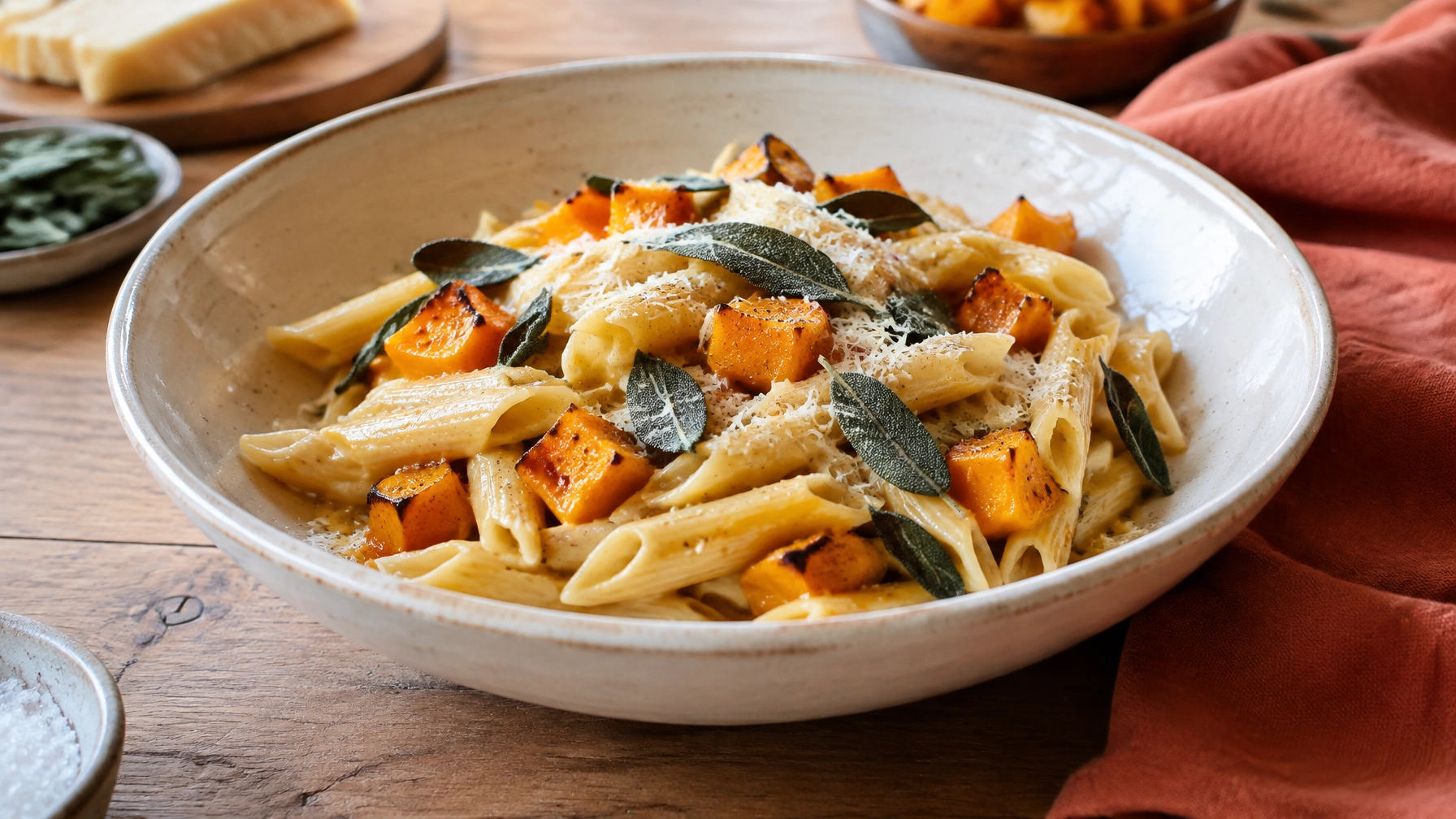
Butternut squash
Add 2 cups of roasted butternut squash cubes after the pasta has been emulsified. The squash provides sweetness and makes the dish more substantial. Finish with Parmesan and black pepper.
Mushrooms
Slice 8 ounces of mushrooms and cook them separately until their liquid has evaporated and the edges are browned. Fold them into the finished pasta. This produces a more savoury version without changing the core sauce.
Chilli
Add 1/4 teaspoon of red pepper flakes to the butter immediately before the sage. The chilli will infuse the fat and provide controlled heat.
Walnuts
Toast 1/3 cup of chopped walnuts in a dry skillet. Add them at the table for texture. Pecans can be used in the same quantity.
Pumpkin
For a more concentrated autumn variation, stir 1/2 cup of plain pumpkin purée into the brown butter after the sage has crisped. Add pasta water gradually and finish with Parmesan, lemon, and black pepper.
Garlic
Add 1 finely minced garlic clove after the butter has browned. Cook for 20 to 30 seconds before adding the pasta. Garlic must not be added at the beginning because it can burn before the butter is ready.
FAQ
Can I use dried sage?
Fresh sage is recommended because it crisps in the butter and provides a stronger aroma. If dried sage is the only available option, use 1 teaspoon and add it after the butter has browned. Dried sage will not produce crisp leaves.
What pasta shape is best for brown butter sage pasta?
Spaghetti, linguine, tagliatelle, and fettuccine all work well. Rigatoni and other short shapes are also suitable, particularly when adding squash or mushrooms. The pasta should be cooked al dente so it retains structure during tossing.
Why is my brown butter sauce greasy?
The sauce may need more starchy pasta water or more vigorous tossing. Add water 1 tablespoon at a time while tossing the pasta continuously. The liquid and butter need movement to form a temporary emulsion.
Can I make this recipe without Parmesan?
Yes. Nutritional yeast or a finely grated hard cheese can be used instead. If omitting cheese entirely, use less pasta water and add additional salt and lemon to compensate for the lost savoury flavour.
Can I prepare brown butter sage pasta in advance?
The dish is best served immediately. You can prepare the brown butter and sage several hours in advance, then reheat the mixture gently while the pasta cooks. Do not boil the butter.
How should leftovers be stored?
Place leftovers in a sealed container and refrigerate for up to 3 days. Reheat in a skillet over low heat with 1 to 2 tablespoons of water. Toss until warm. The sauce may not return to its original texture.
Is brown butter sage pasta vegetarian?
It is vegetarian if the Parmesan used is suitable for a vegetarian diet. Check the cheese label because some Parmesan-style cheeses are made with animal rennet.
Sources
- Land O Lakes: Brown Butter Sage Pasta
- Serious Eats: Pasta with Butternut Squash, Sage, and Brown Butter
- BBC Food: Easy Pasta Recipes