Recipe
Serves
4 1×
Serves 4Prep 15 minCook 20 minTotal 35 min
Ingredients
Method
- Bring a large pot of water to a boil. Salt the water generously, then cook the pasta according to the package directions until al dente. Before draining, reserve 1 cup of the pasta water. Drain the pasta and set it aside.
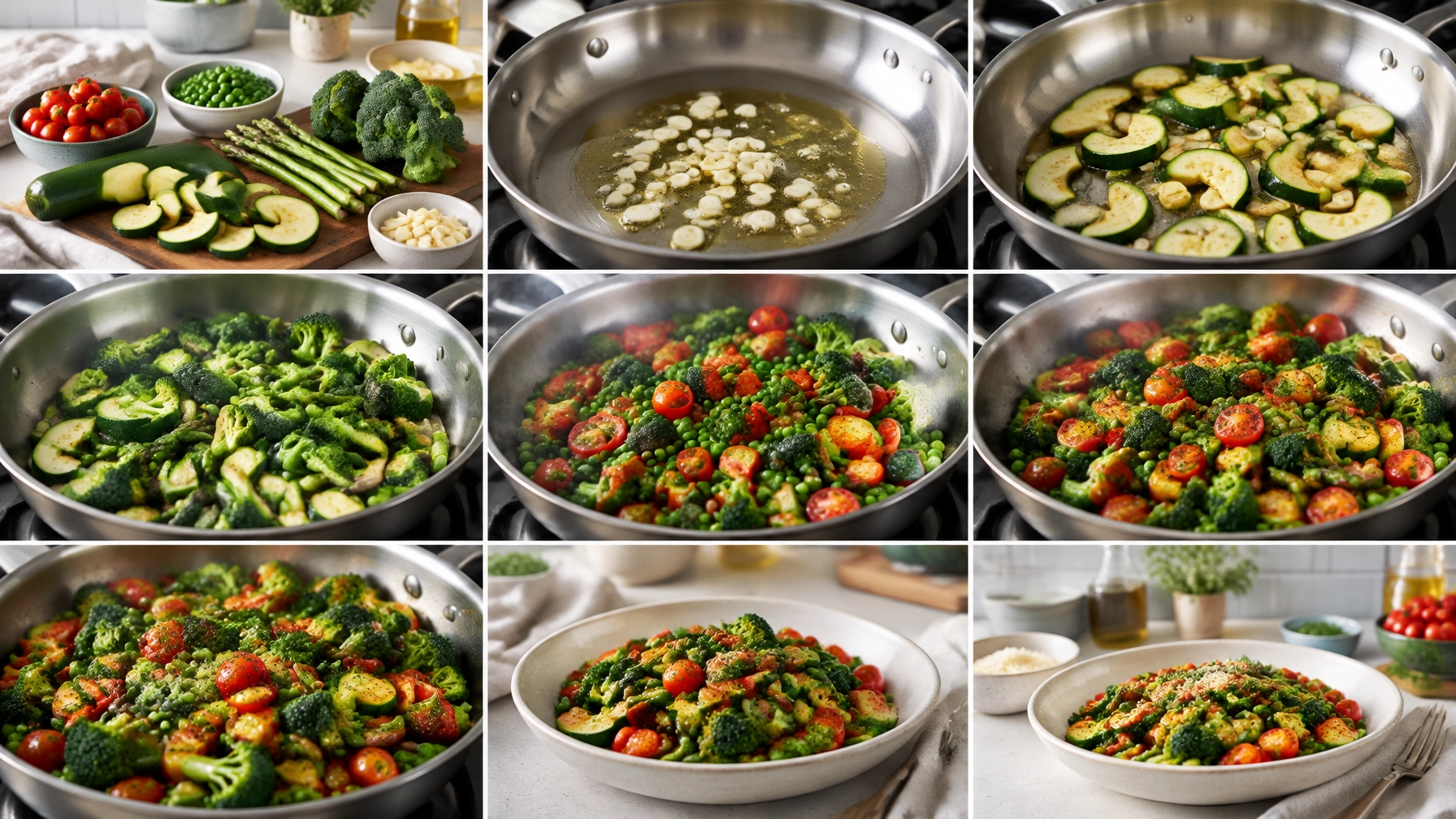
- While the pasta cooks, heat the olive oil in a large skillet over medium heat. Add the broccoli and asparagus. Cook for 3 to 4 minutes, stirring occasionally, until the vegetables begin to turn bright green and soften.
- Add the zucchini and cook for 2 minutes. The zucchini should soften slightly while retaining its shape.
- Add the garlic, peas, cherry tomatoes, salt, black pepper, and red pepper flakes, if using. Cook for 2 minutes, stirring frequently. Do not allow the garlic to brown heavily.
- Pour in the vegetable broth and add the lemon zest. Simmer for 2 minutes. The tomatoes should begin to release some liquid, but the vegetables should remain intact.
- Add the drained pasta to the skillet. Toss continuously while adding 1/4 cup of reserved pasta water. Add more pasta water, 1 tablespoon at a time, until the sauce lightly coats the pasta.
- Remove the skillet from the heat. Add the lemon juice, nutritional yeast, and basil. Toss again. Taste and adjust the salt, pepper, or lemon juice as required.
- Divide the pasta among four bowls. Serve immediately. Additional basil, lemon zest, or nutritional yeast may be added at the point of service.
Vegan Pasta Primavera (Fresh and Light)
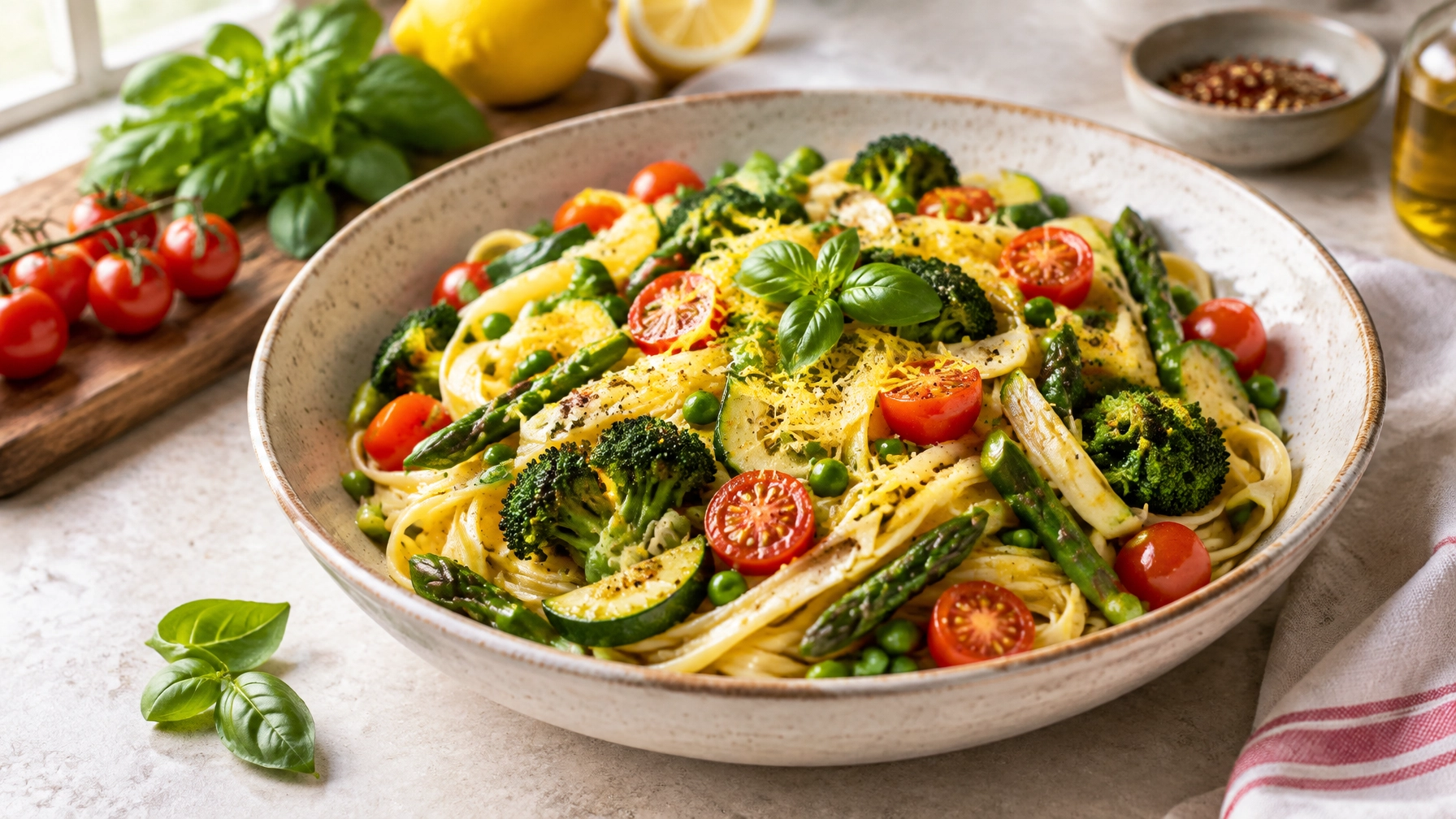
A bowl of pasta is commonly treated as a neutral object: starch, sauce, heat, completion. This version contains more administrative detail. Broccoli, asparagus, zucchini, peas, and tomatoes are added in sequence according to density. Lemon and garlic provide structure without dairy. The result is a fresh, light meal with crisp-tender vegetables and a simple coating of olive oil, vegetable broth, and pasta water.
The method is based on a standard primavera principle: cook sturdy vegetables first, add delicate vegetables later, and stop before the mixture becomes soft and indistinct. Similar approaches are used in vegan pasta primavera recipes from A Couple Cooks, From My Bowl, and The Full Helping.
Definition
primavera (noun): A pasta preparation containing fresh vegetables, usually combined with a light sauce rather than a heavy cream-based coating.
The term does not require one fixed vegetable list. Use what is available, provided the pieces are cut to similar sizes and cooked in an appropriate order. The objective is contrast: tender pasta, bright vegetables, and enough sauce to bind the ingredients without making the dish heavy.
Preparation
Wash the vegetables under running water. Remove the woody ends from the asparagus and cut the spears into short pieces. Cut the broccoli into small florets, halve the tomatoes, and slice the zucchini into half-moons.
The vegetables should be ready before the pasta enters the cooking water. This prevents the pan from becoming an unplanned waiting area for ingredients.
Sequence
The cooking order is functional.
Broccoli and asparagus require more time than peas, tomatoes, or zucchini. Garlic can become bitter if exposed to high heat for too long, so it is added after the first vegetables have softened slightly. Pasta water is reserved because its starch helps the olive oil and broth form a light coating.
The vegetables should remain brightly colored and crisp-tender. If they collapse, the process has continued beyond the required point.
FAQ
Is vegan pasta primavera dairy-free?
Yes. This recipe contains no milk, butter, cheese, or other dairy ingredients. Nutritional yeast provides a savory flavor, but it is not dairy.
Can I use frozen vegetables?
Yes. Frozen peas can be added directly to the skillet. Frozen broccoli or asparagus may also be used, although they can release more water and may require slightly longer cooking.
What pasta works best?
Linguine and spaghetti provide a broad surface for the light sauce. Penne, fusilli, and farfalle also work. Short pasta is useful when the vegetables are cut into smaller pieces.
How do I prevent the pasta from becoming dry?
Reserve pasta water before draining and add it gradually while tossing the pasta with the vegetables. The starch helps create a coating. Adding all the water at once can make the sauce thin.
Can I make this recipe ahead?
You can prepare the vegetables and measure the sauce ingredients in advance. For the best texture, cook the pasta immediately before serving. Fully assembled leftovers remain suitable for refrigeration and reheating for up to 3 days.
Is nutritional yeast necessary?
No. It adds a savory, slightly nutty flavor and helps replace some of the depth normally provided by cheese. The recipe remains functional without it.
How can I make the dish more filling?
Add white beans, chickpeas, edamame, lentil pasta, or tofu. These additions change the texture and increase the protein content without requiring a heavier sauce.