Recipe
Serves
4 1×
Serves 4Prep 25 minCook 30 minTotal 55 min
Ingredients
Method
- Prepare the fennel. Bring a large pot of lightly salted water to the boil. Add the wild fennel and cook for 8–10 minutes, or until tender. Remove the fennel with tongs or a slotted spoon. Keep the cooking water in the pot.
- Chop the fennel. Allow the cooked fennel to cool briefly, then squeeze out excess water and chop it finely. Set aside.
- Soak the raisins. Place the raisins in a small bowl and cover with warm water. Leave for 5–10 minutes, then drain thoroughly.
- Steep the saffron. Put the saffron threads in a small cup with 2 tablespoons of hot water. Leave to infuse while the sauce is prepared.
- Toast the breadcrumbs. Heat 1 tablespoon of olive oil in a small frying pan over medium heat. Add the breadcrumbs and salt. Stir continuously for 3–5 minutes, until golden and crisp. Transfer to a bowl and set aside.
- Cook the onion and anchovies. Heat 4 tablespoons of olive oil in a wide sauté pan over medium-low heat. Add the onion and cook for 5–7 minutes, until soft and translucent. Add the anchovies and stir until they dissolve into the oil.
- Add the fennel. Stir the chopped fennel into the pan. Cook for 2–3 minutes so it absorbs the seasoned oil.
- Build the sauce. Add the drained raisins, pine nuts and saffron water. Stir to combine. Season cautiously with black pepper. Add salt only if required, as the anchovies and sardines may already provide enough seasoning.
- Cook the sardines. Add the sardine fillets to the pan. Cook gently for 4–6 minutes, turning once, until the fish is opaque and cooked through. Break some of the sardines into the sauce while leaving a few pieces intact.
- Cook the bucatini. Bring the reserved fennel water back to the boil. Add the bucatini and cook according to the packet instructions, stopping when the pasta is al dente. Before draining, reserve at least 250 ml of the pasta water.
- Combine the pasta and sauce. Add the drained bucatini to the sardine and fennel pan. Toss gently over low heat. Add reserved pasta water a little at a time until the sauce coats the strands without becoming watery.
- Rest briefly. Remove the pan from the heat and leave the pasta for 1 minute. This allows the sauce to settle and cling to the bucatini.
- Serve. Divide the pasta between four bowls. Sprinkle with the toasted breadcrumbs and serve immediately.
Bucatini with Sardines & Fennel (Sicilian)
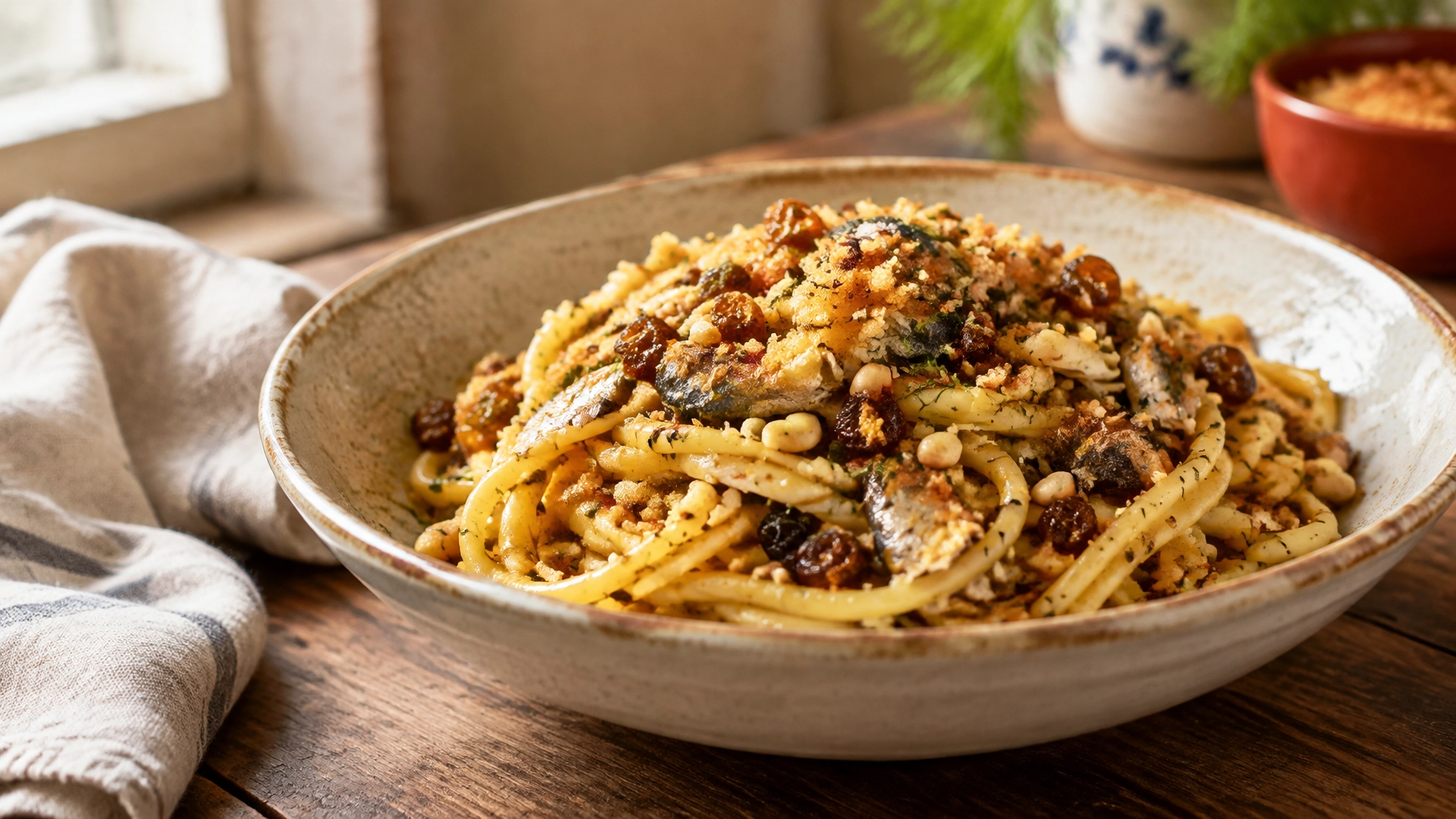
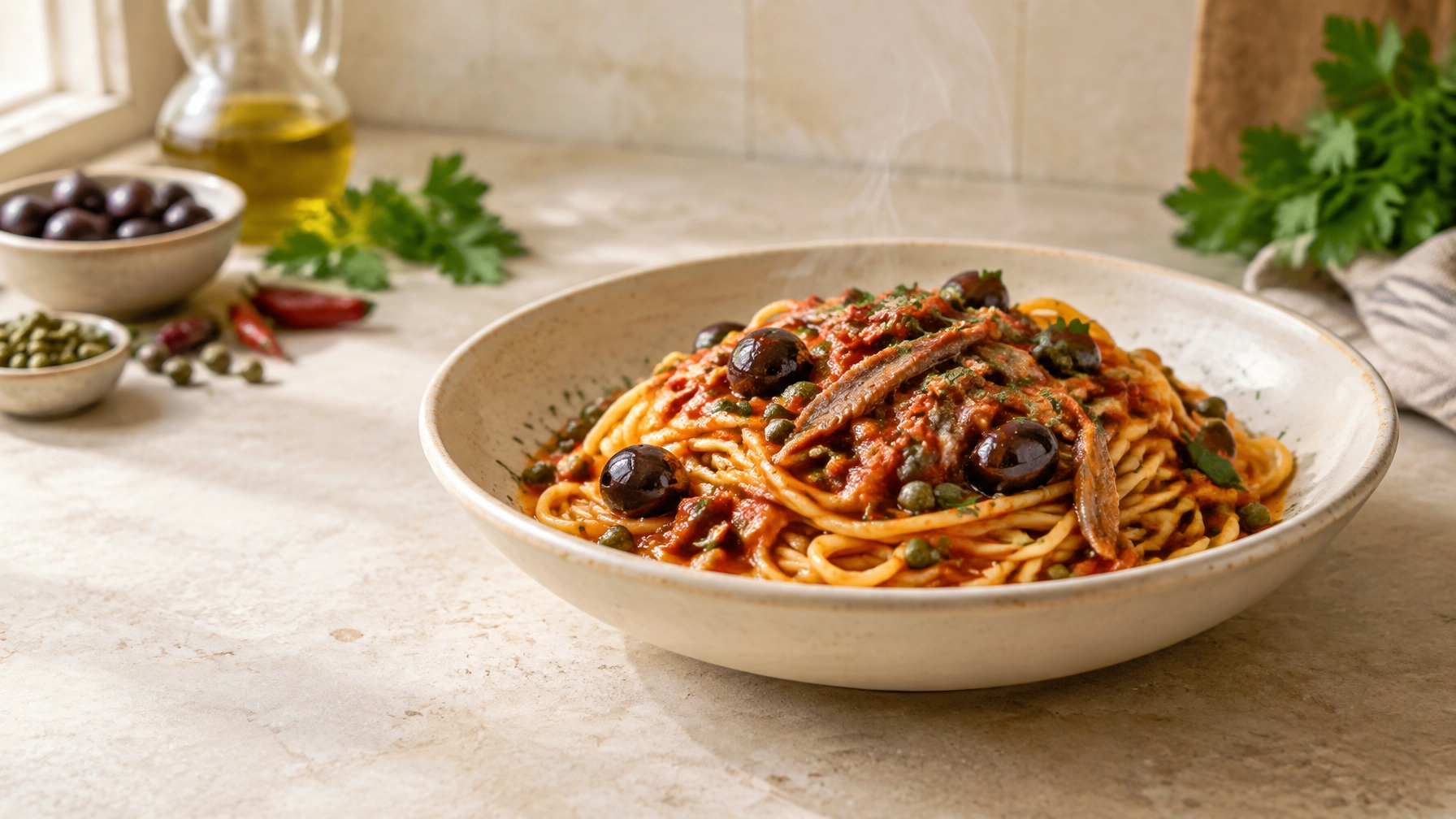
This Sicilian bucatini with sardines and fennel is based on pasta con le sarde, a traditional dish associated with Palermo. It combines fresh sardines, wild fennel, saffron, raisins, pine nuts and anchovies in a pasta sauce that is savoury, aromatic and lightly sweet.
The dish is finished with toasted breadcrumbs rather than cheese. This crisp topping, known as muddica atturrata, provides texture and is a standard feature of many Sicilian versions.
For the most traditional result, use fresh sardines and wild fennel. Fennel fronds are a practical substitute when wild fennel is unavailable. The pasta is cooked in the fennel water, which gives the bucatini a deeper herbal flavour.
[JUMP TO RECIPE](#recipe)
The dish
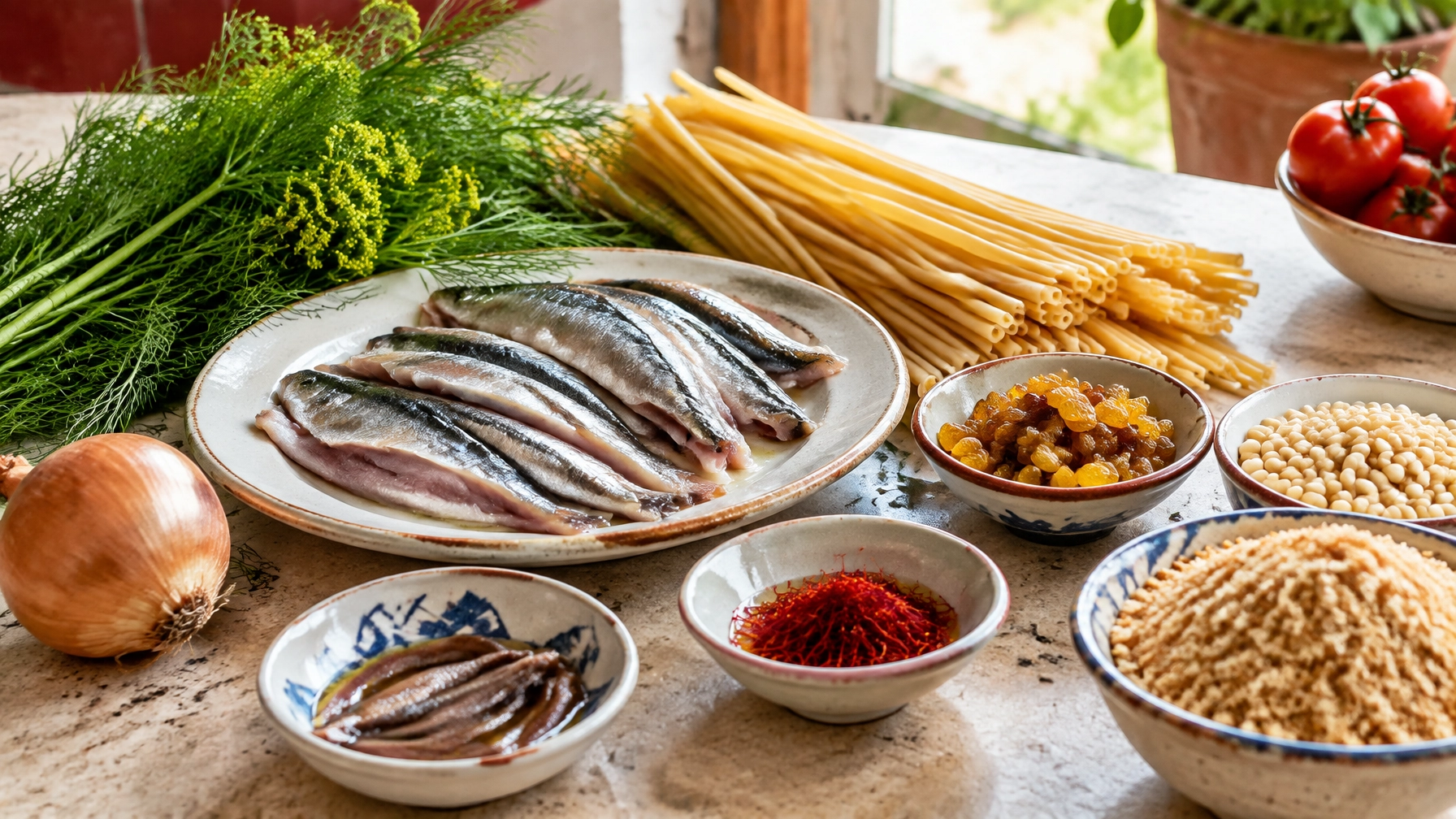
The flavour structure is deliberate:
- Sardines provide the main savoury character.
- Anchovies dissolve into the oil and add depth without making the sauce taste strongly of anchovy.
- Fennel contributes a green, aromatic note.
- Raisins add controlled sweetness.
- Pine nuts add richness and texture.
- Saffron gives the sauce colour and a warm fragrance.
- Toasted breadcrumbs replace grated cheese and provide a crisp finish.
Traditional versions vary between households. Some include a small amount of tomato paste, while others remain completely free of tomato. This recipe follows the lighter, saffron-based approach.
Recipe
Bucatini with Sardines and Fennel
Servings: 4
Prep time: 25 minutes
Cook time: 30 minutes
Total time: 55 minutes
Cuisine: Sicilian
Course: Main course
Tips
- Clean the sardines carefully. Remove the head, innards and central spine. Pat the fillets dry before cooking.
- Do not discard the fennel water. Cooking the pasta in it is one of the simplest ways to increase the fennel flavour.
- Use low heat for the fish. Sardines cook quickly and can become dry if left in a rapidly simmering sauce.
- Add salt gradually. Anchovies, sardines and salted pasta water can make the finished dish salty.
- Toast the breadcrumbs carefully. They can move from golden to burnt quickly. Stir continuously and remove them from the pan as soon as they are crisp.
- Avoid Parmesan. Toasted breadcrumbs are the traditional finishing ingredient for this style of Sicilian pasta.
Variations
Using fennel tops
If wild fennel is unavailable, use the green fronds from two small Florence fennel bulbs. Add a pinch of fennel seeds to the sauce for a stronger aniseed aroma.
Using canned sardines
Good-quality sardines packed in olive oil can be used when fresh sardines are not available. Drain them, add them near the end of cooking and warm them gently rather than simmering them for several minutes.
Adding tomato
For a version known as in rosso, add 1 tablespoon of tomato paste after the fennel. Cook it for 1 minute before adding the saffron water. The result will have a deeper colour and a more concentrated flavour.
Using currants
Currants can replace raisins. They are smaller and less sweet, making them suitable when a subtler sweet note is preferred.
Making it without pine nuts
Replace the pine nuts with toasted almonds, or omit them entirely. The texture will change, but the fennel, sardines, saffron and breadcrumbs will remain central to the dish.
Frequently asked questions
Can I use ordinary spaghetti instead of bucatini?
Yes. Spaghetti or spaghettoni can be used. Bucatini is particularly suitable because its hollow centre holds the loose sardine and fennel sauce.
Can I prepare the sauce in advance?
The fennel can be cooked and chopped several hours in advance. The complete sauce is best made shortly before serving because sardines can dry out when reheated.
Do I have to use fresh sardines?
Fresh sardines provide the most traditional result, but canned sardines are an acceptable practical substitute. Add canned sardines later in the process so they retain their shape.
What can I use instead of wild fennel?
Use fennel fronds with a small pinch of fennel seeds. Do not replace all the fennel with bulb alone, as the fronds provide the herbal flavour associated with this dish.
Is pasta con le sarde served with cheese?
Typically, no. Sicilian versions are generally finished with toasted breadcrumbs, which provide the necessary salty, crisp topping without masking the flavour of the fish.
Can I make this recipe without anchovies?
Yes, although anchovies provide depth and seasoning. If omitting them, season the sauce carefully and consider adding a small amount of capers for additional savoury flavour.
What should I serve with Sicilian sardine pasta?
Serve it as a complete main course with a simple green salad, steamed vegetables or crusty bread. A dry white wine or sparkling water with lemon is also suitable.
For further background on the traditional dish, compare the ingredient and preparation notes from Recipes from Italy, Serious Eats and the overview of pasta con le sarde.