Recipe
Serves
4 1×
Serves 4Prep 5 minCook 15 minTotal 20 min
Ingredients
Method
- Boil the water. Bring a large pot of water to a full boil. Salt it adequately, but account for the salt already present in the anchovies, olives, and capers.
- Cook the spaghetti. Add the spaghetti and cook according to the packet instructions until it is approximately one minute short of al dente. Stir occasionally to prevent the strands from sticking.
- Start the sauce. While the pasta cooks, place a wide skillet over medium-low heat. Add the olive oil, sliced garlic, anchovies, and red pepper flakes. Cook for 2 to 3 minutes, stirring frequently, until the garlic softens and the anchovies dissolve into the oil. Do not allow the garlic to become dark brown.
- Add the salty ingredients. Stir in the capers and olives. Cook for 1 minute so their flavor transfers into the oil.
- Add the tomatoes. Pour in the chopped or crushed tomatoes. Add the oregano, if using, and several turns of black pepper. Stir to combine. Do not add additional salt at this stage.
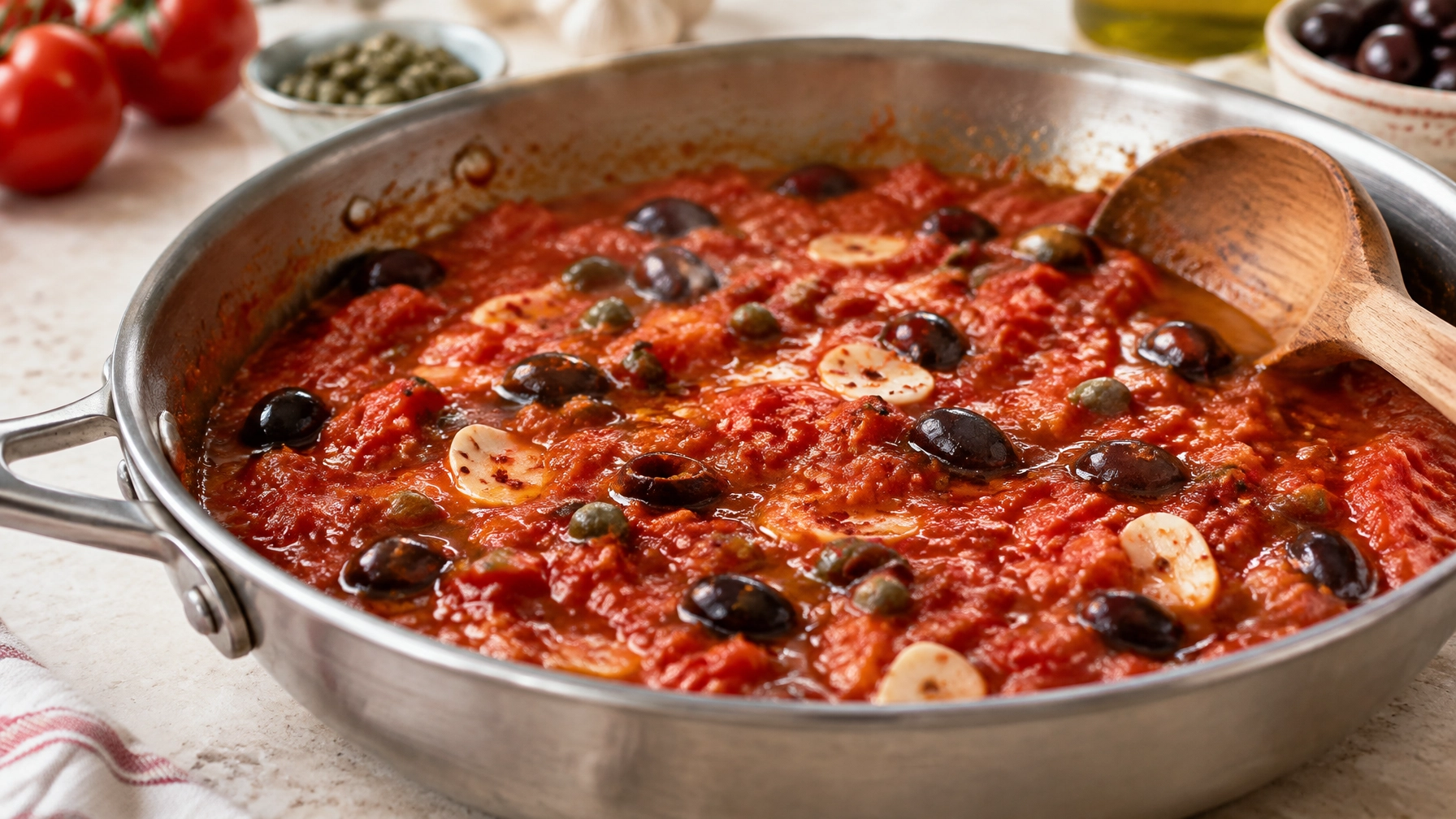
- Simmer. Cook the sauce over medium-low heat for 8 to 10 minutes. It should reduce slightly while remaining loose enough to coat the pasta. Stir occasionally.
- Reserve pasta water. Before draining the spaghetti, remove at least 250 ml of the cooking water. The water contains starch that can help bind the tomato sauce and olive oil.
- Combine. Drain the spaghetti and transfer it directly to the skillet. Add approximately 60 ml of reserved pasta water and toss over medium heat for 1 to 2 minutes. Add more water in small amounts if the sauce appears dry.
- Finish. Remove the skillet from the heat. Stir through most of the parsley and taste the sauce. Adjust with black pepper, chili, or a small amount of salt only if required.
- Serve. Divide the pasta between four bowls. Add the remaining parsley and, if preferred, a small amount of grated pecorino or Parmesan.
Pasta Puttanesca (Bold 20-Minute Italian)
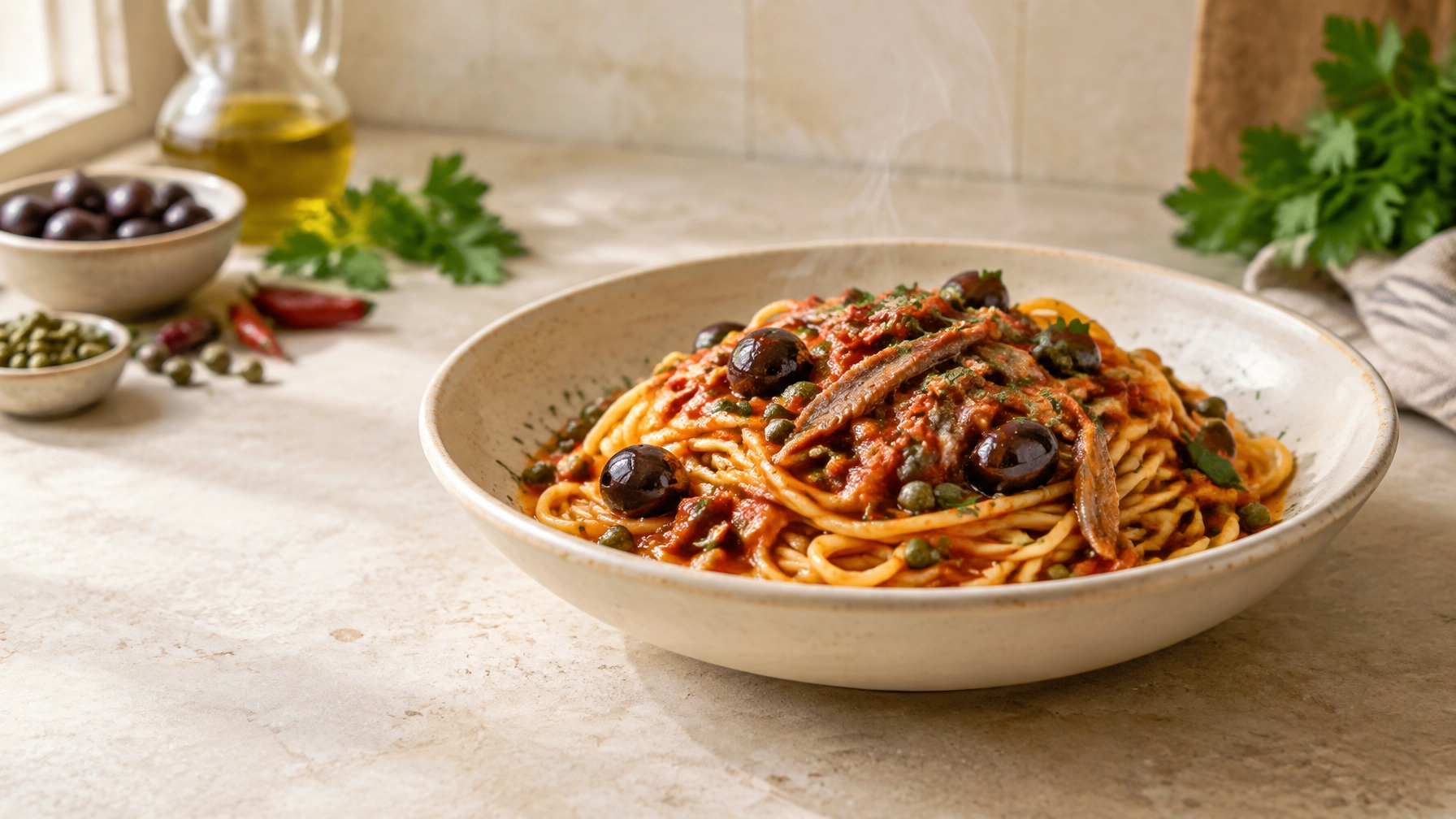
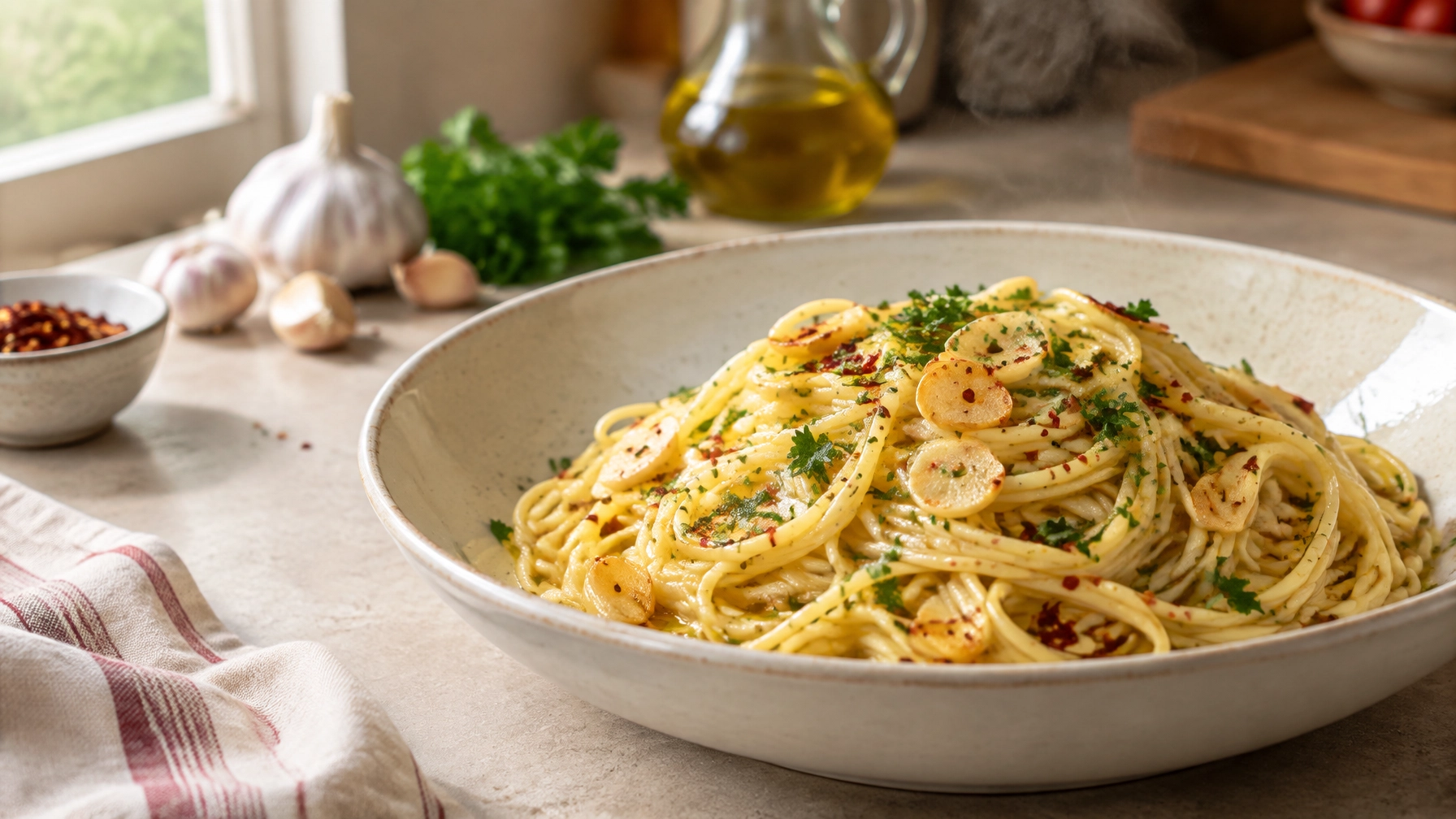
Pasta puttanesca is a fast Italian pasta dish with a concentrated tomato sauce and a clearly defined savory profile. Anchovies, olives, and capers supply salt and depth, while garlic, chili, and parsley balance the sauce. The result is a practical pantry meal that requires limited preparation and no long simmering.
This version uses canned tomatoes for consistency and finishes the spaghetti directly in the sauce. That final step, combined with reserved pasta water, helps the sauce adhere to the pasta instead of separating in the bowl. For more detail on this technique, see Cookpedia’s guide to using pasta water for silky sauces.
Background
Pasta alla puttanesca is associated with Naples and Campania. The exact origin of the name is disputed, but the cooking method is not complicated: aromatics are gently cooked in olive oil, tomatoes are added, and the sauce is finished with olives, capers, and anchovies.
Traditional versions generally use long pasta such as spaghetti. The ingredients are shelf-stable or easily stored, which makes this an appropriate meal when fresh produce and preparation time are limited. The dish is also adaptable, provided the defining salty ingredients remain balanced.
The recipe below serves four and is designed to be completed in approximately 20 minutes.
Recipe
Servings
4
Prep time
5 minutes
Cook time
15 minutes
Total time
20 minutes
Tips
- Control the salt. Anchovies, capers, and olives are all concentrated sources of salt. Rinse salt-packed capers thoroughly and taste the sauce before seasoning.
- Use gentle heat for garlic. Burnt garlic introduces bitterness that cannot be removed later.
- Do not overcook the sauce. Puttanesca is intended to remain quick and direct. Ten minutes is generally sufficient for canned tomatoes to reduce and combine with the other ingredients.
- Finish in the skillet. Transferring the pasta directly into the sauce allows the starch on the pasta surface to contribute to the final texture.
- Add pasta water gradually. Start with a small amount. Too much will dilute the sauce and make it watery.
- Use a wide pan. A wide skillet gives the spaghetti enough room to move while it is being tossed with the sauce.
- Hold back on cheese. Cheese is optional. The sauce already contains substantial savory flavor from the anchovies, capers, and olives.
For a broader selection of pasta recipes, use the Cookpedia pasta category.
Variations
Vegetarian puttanesca
Omit the anchovies and add 1 teaspoon of white miso or ½ teaspoon of mushroom seasoning if a deeper savory flavor is required. Check the label of the miso if strict dietary requirements apply.
Fresh tomato puttanesca
Replace the canned tomatoes with approximately 600 g ripe tomatoes. Blanch, peel, seed, and dice them before adding them to the skillet. This method follows the fresh-tomato approach described by La Cucina Italiana.
Spicy puttanesca
Increase the red pepper flakes to 1 teaspoon, or add one finely sliced fresh red chili with the garlic. Add heat progressively because the chili becomes more noticeable as the sauce reduces.
Puttanesca with linguine
Linguine can replace spaghetti at a one-to-one weight ratio. It has a wider surface area and will hold a substantial tomato sauce effectively.
Tuna puttanesca
Add 120 g drained canned tuna during the final 2 minutes of simmering. Break it into large pieces rather than mixing it into a paste.
Gluten-free puttanesca
Use gluten-free spaghetti and check all packaged ingredients, particularly anchovies, capers, olives, and canned tomatoes, for cross-contact information where necessary.
FAQ
What does pasta puttanesca taste like?
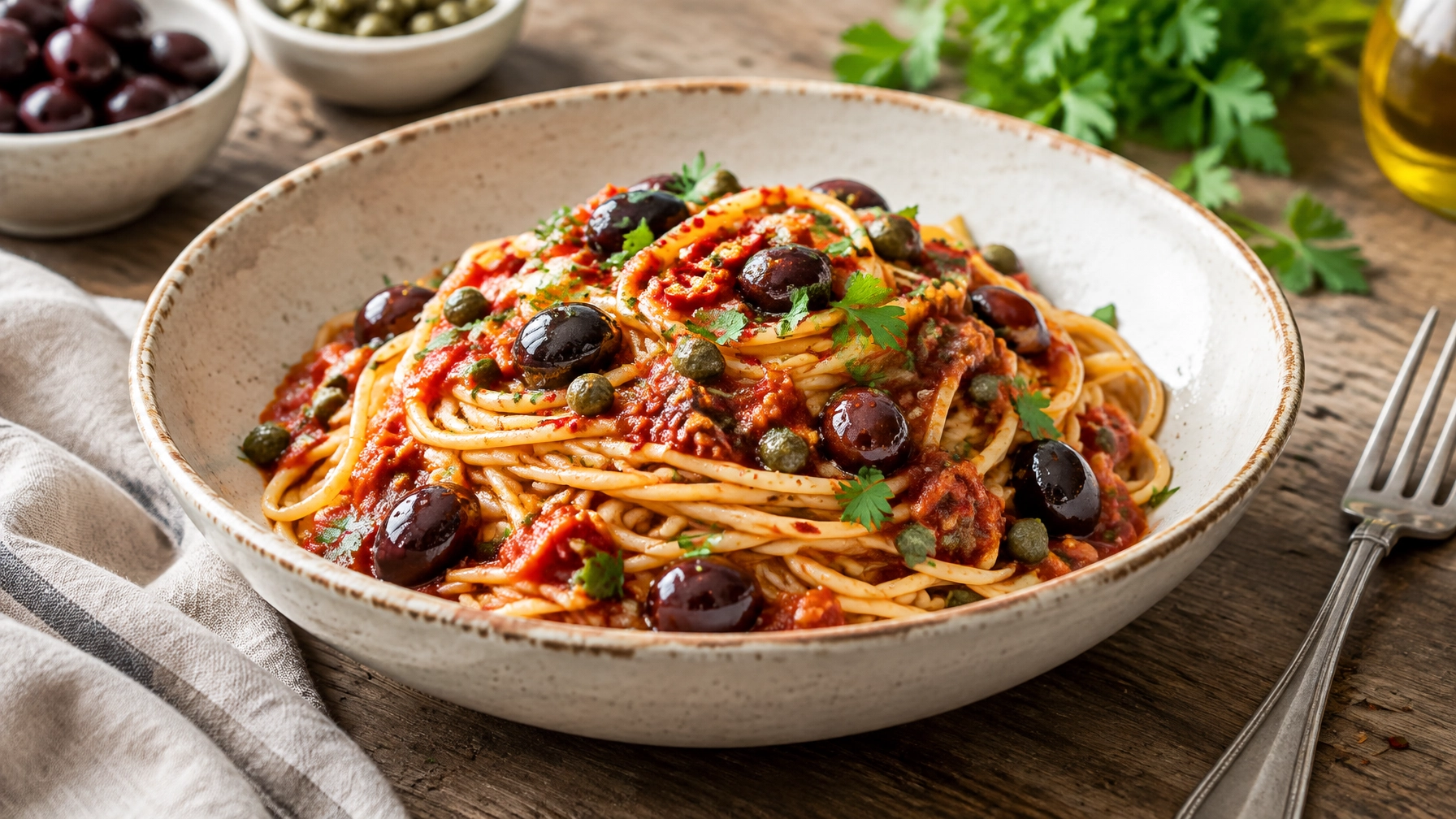
It has a concentrated tomato flavor with pronounced saltiness from olives, capers, and anchovies. Garlic provides the base, chili adds heat, and parsley supplies a fresh finish. The sauce is savory rather than creamy or sweet.
Can I make puttanesca without anchovies?
Yes. Anchovies can be omitted, but the sauce will have less umami and a lower level of salt. Use additional olives or a small amount of miso if appropriate for your diet.
Do anchovies make the sauce taste fishy?
When cooked in olive oil, anchovies generally dissolve into the sauce and provide savory depth rather than a distinct fish flavor. Use fewer fillets if you are unfamiliar with the ingredient.
Should capers be rinsed?
Rinse capers if they are packed in salt or if their brine is strongly concentrated. Brined capers can be drained and used directly, although a quick rinse will produce a more controlled level of salt.
Can I use tomato sauce instead of canned tomatoes?
You can, but prepared tomato sauce may contain added salt, sugar, herbs, or onion. Canned chopped tomatoes provide more direct control over the finished seasoning.
Why is my puttanesca sauce watery?
The sauce may not have reduced sufficiently, or too much pasta water may have been added. Simmer it uncovered for a few minutes, then toss the pasta through the sauce until the liquid begins to cling to the strands.
Is pasta puttanesca traditionally served with cheese?
Cheese is optional and varies by household. Because the sauce contains anchovies, olives, and capers, many versions are served without cheese. A small amount of pecorino or Parmesan is acceptable if preferred.
Can I prepare the sauce in advance?
Yes. Prepare the sauce, cool it promptly, and refrigerate it in a sealed container for up to 3 days. Reheat it in a skillet with a small splash of water, then add freshly cooked pasta.
Sources
- La Cucina Italiana: Puttanesca
- Cookpedia: Using Pasta Water for Silky Sauces
- Cookpedia: Pasta Recipes