Recipe
Servings
4 1×
Serves 4Prep 10 minCook 20 minTotal 30 min
Ingredients
- 2 tablespoons olive oil
- 1 medium onion, finely chopped
- 3 garlic cloves, minced
- 2 tablespoons tomato paste
- 1 can chopped tomatoes, about 14 ounces
- 1 can chickpeas, drained and rinsed
- 12 ounces short pasta
- 3½ to 4 cups water or vegetable broth
- 1 teaspoon dried oregano
- ½ teaspoon paprika or chili flakes, optional
- Salt and black pepper
- Fresh parsley or basil
- Grated Parmesan, optional
- Lemon wedges, optional
Method
- Warm the oil in a wide pot over medium heat. Soften the onion, then add the garlic.
- Stir in the tomato paste, oregano, and paprika. Cook briefly until fragrant.
- Add the tomatoes and chickpeas. Crush about one-third of the chickpeas.
- Add the pasta and enough water or broth to just cover it. Bring to a boil.
- Reduce to a gentle simmer. Stir regularly until the pasta is al dente and the sauce is thick.
- Rest for 3–5 minutes. Season to taste and finish with herbs, Parmesan, or lemon.
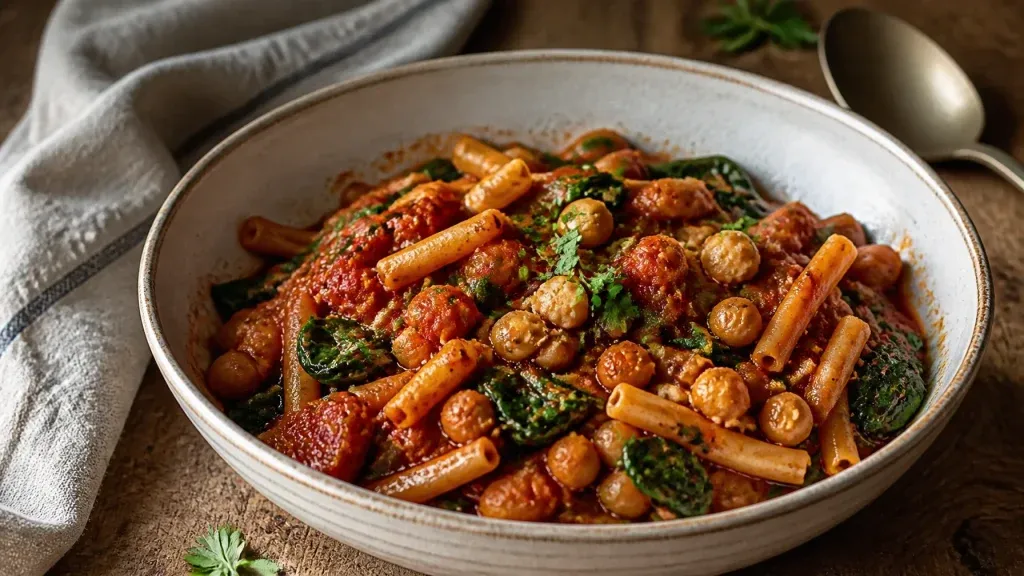
Some dinners ask you to dirty three pans, a colander, and your last nerve. This one asks for one pot and a little stirring. Tomato and chickpea pasta is hearty, inexpensive, and built from pantry staples, but it does not taste like a compromise. The sauce thickens around the pasta, chickpeas bring satisfying texture, and a few smart finishing touches make the whole bowl taste much more generous than its price tag.
Why One-Pot Pasta Gets So Much Flavor
One-pot cooking works because the liquid has nowhere else to go. When pasta boils in a separate pot, much of its surface starch disappears down the drain. Here, that starch stays in the tomato mixture and helps turn it into a naturally thick sauce.
That is the first non-negotiable: keep the liquid measured and resist the urge to rinse or drain anything. As the pasta cooks, starch slips into the surrounding sauce. It binds with water, oil, and tomato juices, creating a creamy texture without cream. The result should cling to the pasta rather than pool at the bottom of the bowl.
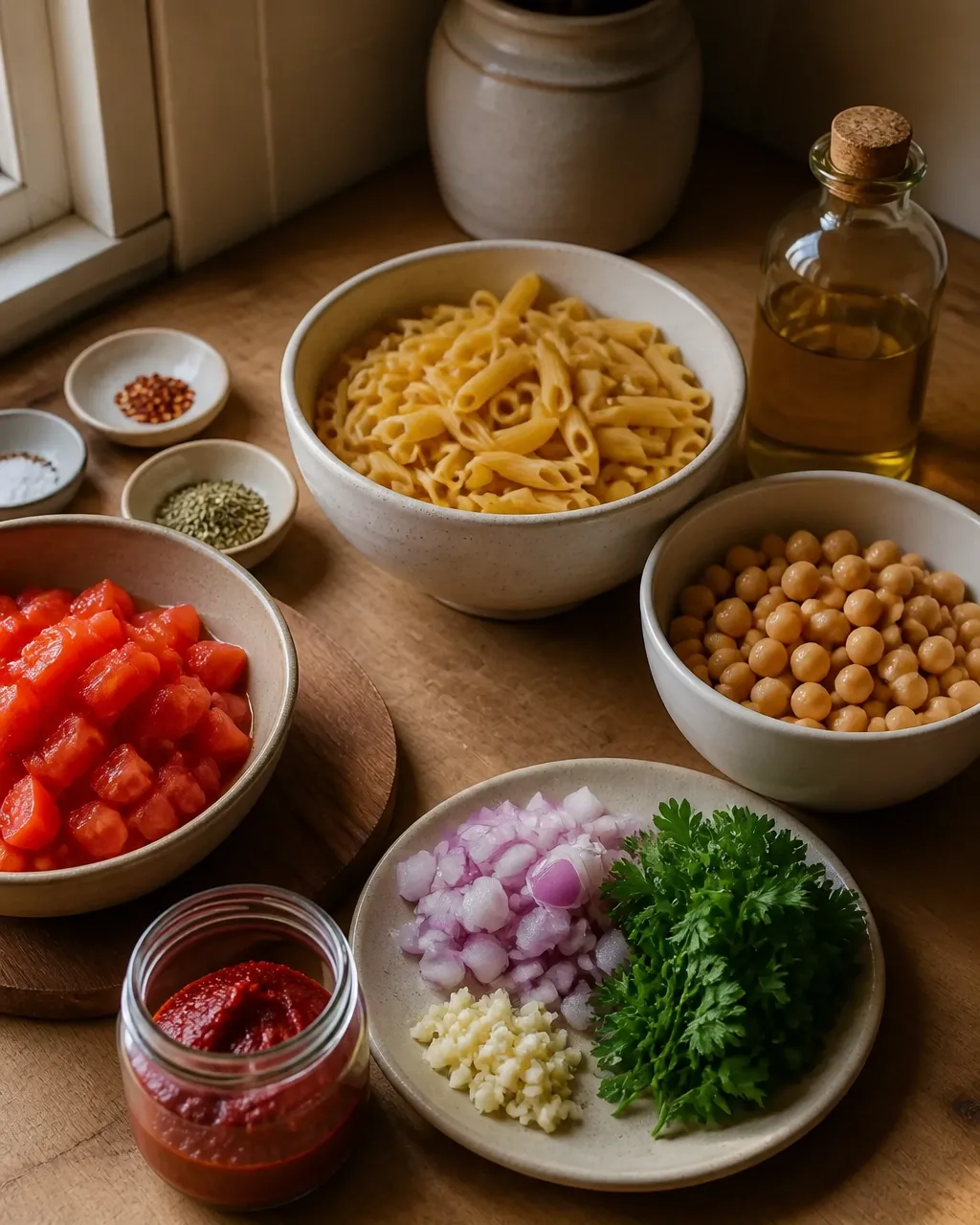
Use a broad, heavy pot if you have one. A wide base spreads the pasta into a more even layer, which reduces clumping and helps the liquid evaporate at the right speed. A narrow pot can work, but it needs more attention because pasta tends to stack and stick.
Start with the aromatics over moderate heat. Onion needs time to soften and release sweetness, while garlic needs less time and can turn bitter if abandoned in hot oil. Add the garlic after the onion has begun to relax, and keep it moving. Your nose is a better timer than a stopwatch here: stop when it smells warm and savory, not toasted.
Tomato paste deserves a brief moment in the oil before the liquid arrives. This small step deepens its flavor by concentrating its sugars and allowing its savory notes to develop. Think of it as giving the tomatoes a head start. Do not scorch it, though. Dark brick red is useful; black is a cry for help.
Chickpeas provide more than protein. Their soft centers and soluble fiber give the sauce body, especially when some of them are gently crushed against the side of the pot. Keep plenty whole for contrast. A completely smooth sauce loses the pleasant chew that makes this dinner feel substantial.
Choose short pasta with ridges, curves, or hollow centers. Penne, fusilli, shells, and elbows all hold onto the sauce well. Avoid mixing shapes from several half-empty packets unless you enjoy conducting a small experiment at dinnertime. Different shapes cook at different speeds, so keep the pieces reasonably similar.
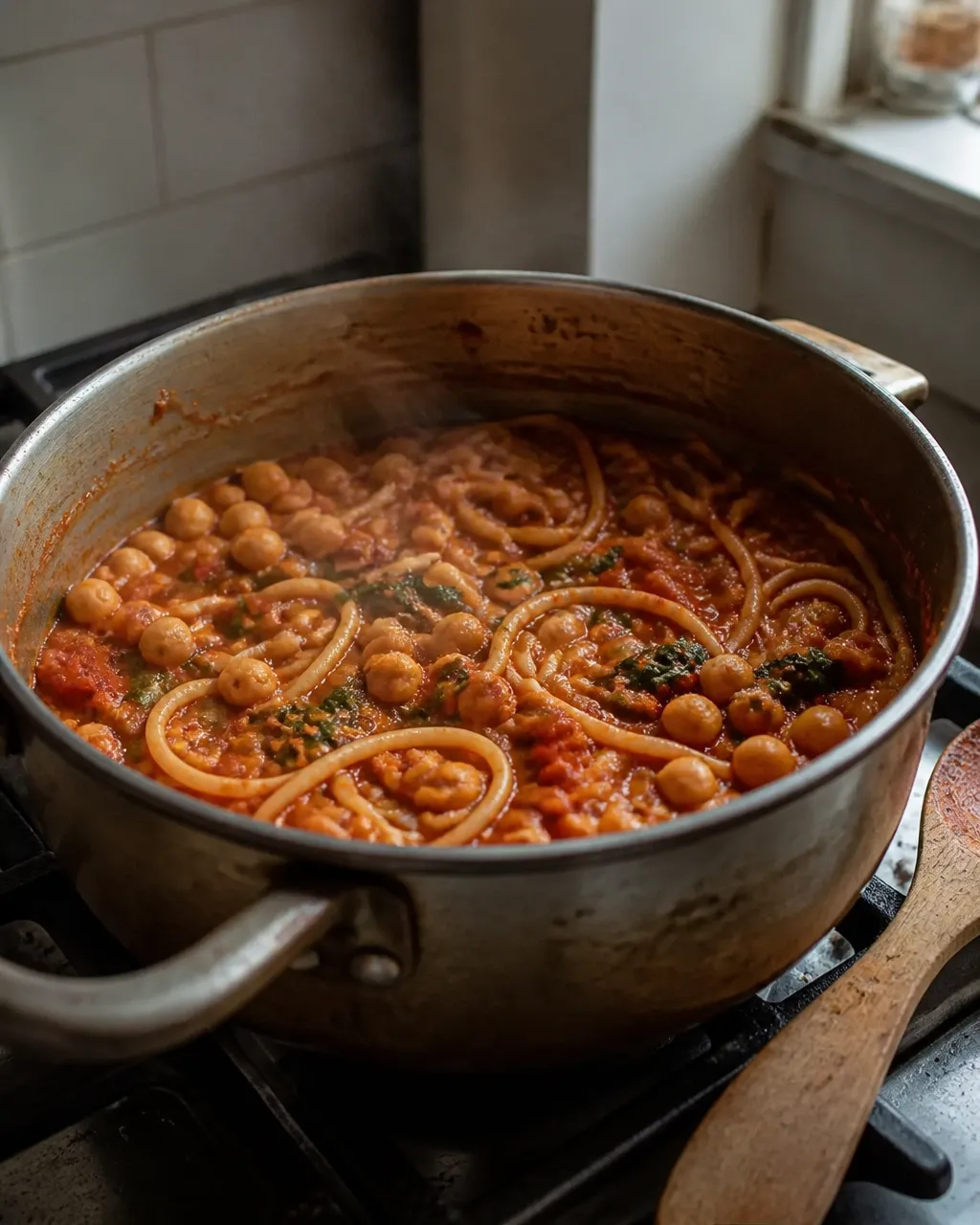
The simmer must be gentle. A furious boil makes the outside of the pasta shed starch too quickly while the center stays firm, and it encourages the mixture to catch on the bottom. Stir every few minutes, scraping across the base and lifting the pasta through the sauce. Add a small splash of water if the mixture becomes thick before the pasta is tender.
Expect the pasta to continue absorbing liquid after the heat is off. Give it a short rest before judging the final texture. This is not idle time; it is the moment when the sauce settles, the starch finishes thickening, and the flavors stop bumping into one another like guests arriving too early.
Taste at the end, but season the cooking liquid, too. Pasta absorbs its environment. If the liquid tastes flat, the finished pasta will taste flat wearing a red jacket. Add salt gradually, especially if your chickpeas or broth are already seasoned. Finish with black pepper, herbs, a little olive oil, or cheese to sharpen the contrast.
For more ideas built around the same low-washing-up principle, browse Cookpedia’s one-pot meals and pasta recipes.
Budget-Friendly Variations That Still Feel Complete
Keep the base recipe meat-free and make the chickpeas do the heavy lifting. For extra vegetables, add finely diced carrot or celery with the onion. They soften into the sauce and stretch the meal without making it feel like a bowl of leftovers disguised as dinner.
Stir in spinach near the end, just long enough for it to wilt. Chopped kale needs a little more time, while frozen peas can go in during the final few minutes. Use what is affordable and already sitting in the refrigerator. The goal is flexibility, not a vegetable obstacle course.
For a smoky version, add paprika and a pinch of chili flakes. For a Mediterranean direction, use oregano, lemon zest, and parsley. A spoonful of pesto at the end adds basil richness, although you may want to reduce the salt until you taste it.
Make it vegan by skipping Parmesan and finishing with toasted breadcrumbs, nutritional yeast, or a drizzle of good olive oil. Make it extra creamy by crushing more chickpeas into the sauce rather than adding dairy. The starch is already doing useful work; let it earn its keep.
If you have leftover cooked vegetables, fold them in during the final minutes. Roasted zucchini, mushrooms, or peppers are particularly good because their browned edges bring another layer of flavor. This is precisely the kind of flexible dinner that belongs beside Cookpedia’s budget-friendly red lentil dahl.
Side Dishes That Balance the Bowl
Tomato sauce brings acidity, pasta brings starch, and chickpeas bring earthy richness. Pair the dish with something fresh, crisp, or slightly bitter to keep the meal balanced.
A simple green salad with lemony dressing is the easiest win. The acidity cuts through the soft, rich sauce and makes each bite taste brighter. Try cucumber, arugula, or shredded cabbage for crunch.
Serve steamed broccoli or roasted green beans when you want more vegetables without adding another heavy element. Their slight bitterness works well against sweet tomato.
Crusty bread is welcome, but choose a modest piece. The pasta already contains plenty of starch, so use bread for mopping up sauce rather than building a second entrée beside it. A spoonful of plain yogurt or a little feta can also provide cool contrast, although the pasta is perfectly satisfying without it.
Frequently Asked Questions
Can I use whole-wheat pasta?
Yes, but expect it to absorb more liquid and take slightly longer to become tender. Check it early and keep extra hot water nearby. Whole-wheat pasta also has a stronger flavor, so use enough tomato, herbs, and seasoning to keep the sauce lively.
Why is my pasta sticking to the bottom?
The heat is probably too high, the pot is too narrow, or the liquid has reduced too quickly. Lower the heat and stir from the bottom every few minutes. If the sauce is already very thick while the pasta is still firm, add water a little at a time. Do not wait until the bottom has formed a tomato-flavored crust.
What if the pasta is cooked but the sauce is watery?
Let the pot stand uncovered for a few minutes. The pasta will continue absorbing liquid, and the starch will thicken the sauce as it cools slightly. If it is still loose, return it to low heat and stir briefly. Avoid adding flour, which can make the sauce pasty instead of silky.
Can I use dried chickpeas?
Not directly in this quick version. Dried chickpeas need soaking and a separate, longer cooking process. Use canned chickpeas for convenience, or cook dried chickpeas ahead of time until tender. Drain and rinse canned chickpeas if you want a cleaner tomato flavor, but keep some of their liquid if you prefer a softer, more bean-forward sauce.
Can I make this gluten-free?
Yes. Use a gluten-free short pasta, but watch the pot closely because different varieties release starch and absorb liquid differently. Corn- and rice-based pastas can become tender quickly, so begin checking earlier than you would with wheat pasta. Use certified gluten-free broth if broth is included.
How do I reheat leftovers?
Reheat gently in a saucepan or microwave with a splash of water. The pasta will thicken in the refrigerator because it continues absorbing the sauce as it cools. Add liquid before reheating, not after the dish has become stiff. Finish with fresh herbs, lemon, or a little olive oil to wake up the flavors.
Is this suitable for meal prep?
Absolutely. Store it in airtight containers and refrigerate promptly. The texture will be softer the next day, but the flavor often improves. Portion it with a fresh salad, steamed vegetables, or fruit to make balanced quick family meals without cooking from scratch every evening.
How can I make it higher in protein?
Keep the chickpeas generous, or add white beans for an even heartier texture. A little grated Parmesan contributes protein but is not essential. For more healthy dinner ideas, pair a moderate portion with extra vegetables rather than simply increasing the pasta.
Can I cook it in an air fryer?
No. This recipe depends on liquid simmering around the pasta, so an air fryer is the wrong tool. Save the air fryer for crisp toppings or a separate vegetable side; search for air fryer recipes dinner when you want a meal designed around dry, circulating heat.