Recipe
Servings
4–6 1×
Serves 4–6Prep 25 minCook 38 min
Ingredients
- 20–24 jumbo pasta shells
- 3–4 cups marinara sauce
- 2 cups ricotta, preferably drained
- 5–6 ounces fresh spinach, or 8–10 ounces frozen spinach, thawed and squeezed dry
- 1 cup shredded mozzarella for the filling
- 1–1½ cups shredded mozzarella for topping
- ½ cup grated Parmesan, plus extra for topping
- 1 egg
- 2–3 garlic cloves, minced
- 1 tablespoon olive oil
- 1 teaspoon dried basil
- 1 teaspoon dried oregano
- ½ teaspoon salt
- ½ teaspoon black pepper
- Fresh basil or parsley, for serving
Method
- Cook the shells in salted water until just al dente. Drain and cool slightly.
- Sauté the garlic in olive oil, add the spinach, and cook until wilted. Cool, then squeeze out excess moisture.
- Mix the spinach with ricotta, mozzarella, Parmesan, egg, herbs, salt, and pepper.
- Spread marinara in a baking dish. Fill the shells and arrange them open-side up in one layer.
- Spoon more marinara over the shells and finish with mozzarella and Parmesan.
- Cover and bake at 375°F (190°C) for 20–25 minutes. Uncover and bake for another 10–15 minutes, until bubbling and lightly golden.
- Rest briefly, garnish with herbs, and serve warm.
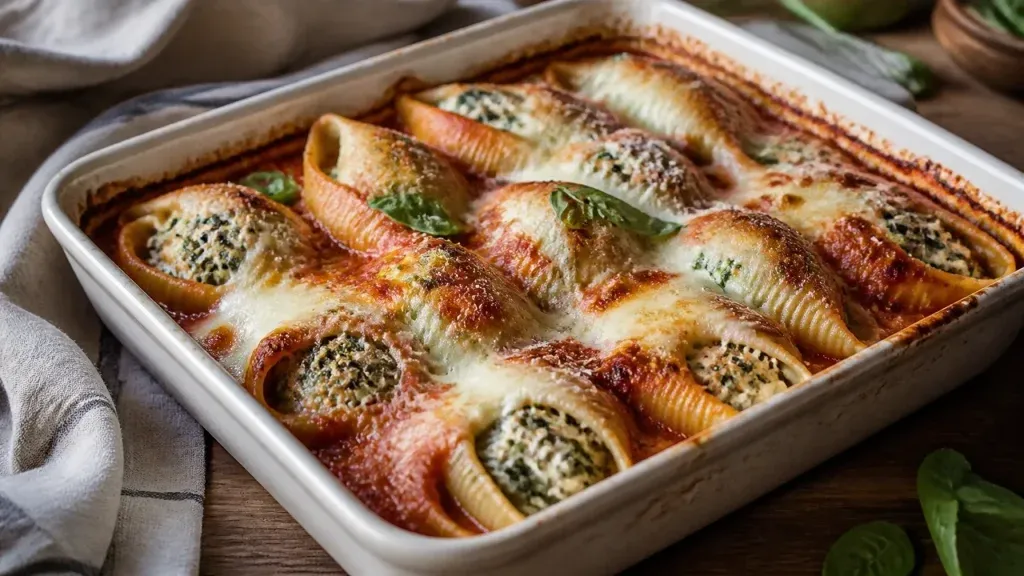
Stuffed shells look like you made a grand culinary entrance, but they are really a very sensible pasta bake wearing its good shoes. Creamy ricotta, tender spinach, bright marinara, and bubbling cheese turn a handful of everyday ingredients into a deeply comforting dinner. This is one of my favorite simple pasta recipes for a Sunday prep session or a busy evening when you want the oven to do most of the work.
Why These Stuffed Shells Work: The Science of a Better Pasta Bake
Start with the pasta texture. Cook the shells only until they are just al dente, not completely soft. They will continue cooking in the oven as they absorb moisture from the marinara and filling. If you boil them until floppy, they can tear during filling and collapse into the sauce. Firm shells are easier to handle and finish with a pleasantly chewy center.
Salt the pasta water properly, too. Pasta absorbs water as it cooks, and that water becomes part of the final flavor. The sauce and cheese bring plenty of richness, but neither can fully rescue bland pasta. Season early, then let the marinara and filling add their own layers.
Control moisture before you assemble. Spinach contains a surprising amount of water, especially after it wilts. Ricotta also varies widely in thickness. Too much moisture creates a loose filling and a watery baking dish. Squeeze cooked or thawed spinach thoroughly, and drain ricotta if it looks wet. Be firm here; “a little extra moisture” is how a beautiful casserole becomes soup with pasta islands.
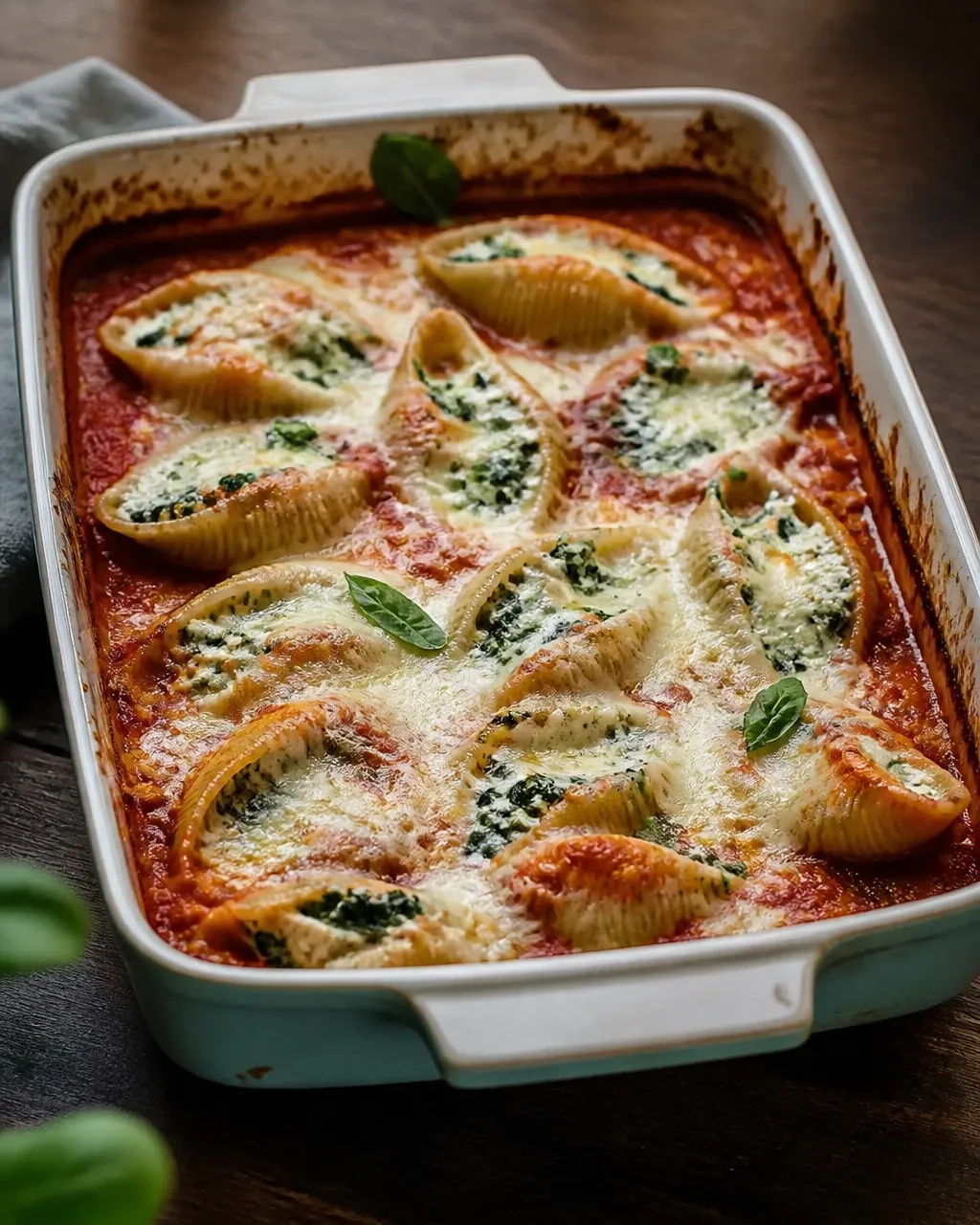
Let the spinach cool before mixing it with the ricotta. Heat can soften the cheese too quickly and make the filling runny. Cooling also protects the egg if you are using one to help bind the mixture. The egg sets gently in the oven, giving the filling enough structure to stay inside the shells without turning rubbery.
Balance the cheeses rather than simply adding more. Ricotta supplies creaminess, mozzarella melts into stretchy pockets, and Parmesan contributes salt and savory depth. More cheese is not automatically more delicious. Too much mozzarella can make the top greasy, while too much Parmesan can dominate the delicate spinach. Aim for contrast: soft, stretchy, and pleasantly salty.
Use enough marinara to create steam, but do not drown the pasta. Sauce on the bottom prevents sticking and gives the shells moisture from underneath. A little over the top keeps the exposed pasta from drying out. Covering the dish for the first part of baking traps steam and warms the filling evenly. Uncover it near the end so the cheese can brown.
Think of the covered bake as gentle reheating and the uncovered bake as browning. These are different jobs, so give them different conditions. Foil helps the center heat without scorching the cheese. Removing it allows surface moisture to evaporate and encourages the golden crust you actually want.
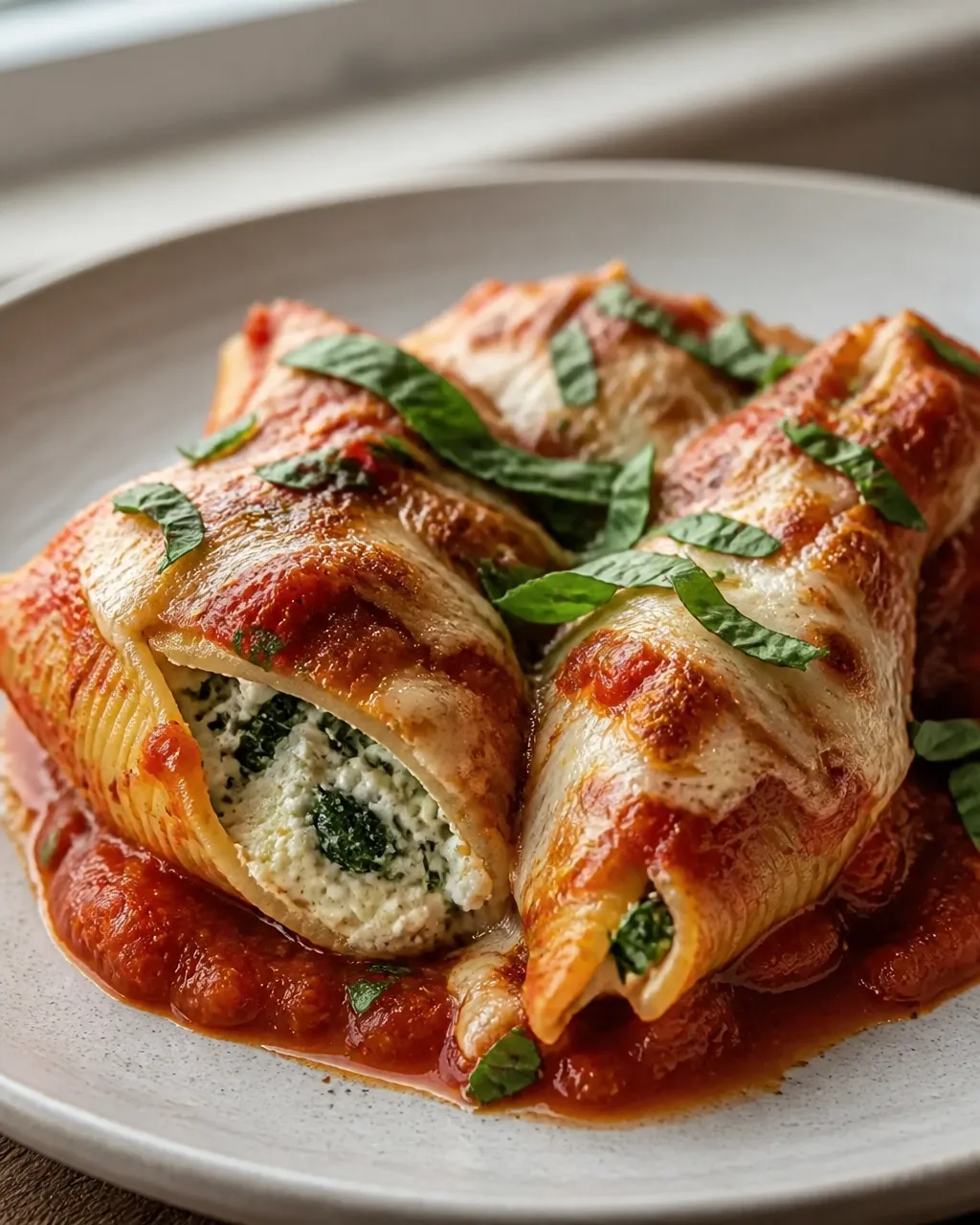
Rest the casserole before serving. Five to ten minutes gives the ricotta filling time to firm slightly and lets the sauce settle around the shells. Cut into it immediately and the filling may slide out, leaving each shell looking a little emotionally exhausted. A short rest makes serving neater and the first bite more satisfying.
For more pasta inspiration, browse Cookpedia’s pasta recipe collection, or try the silky, starch-powered method in one-pot lemon asparagus spaghetti.
Variations That Keep the Balance
Make the filling more herb-forward with fresh basil, parsley, or a small amount of mint. Use lemon zest when the ricotta tastes especially rich; its aromatic oils brighten the dish without adding extra liquid.
Add mushrooms for a deeper savory flavor, but cook them until their moisture has evaporated before they meet the ricotta. Raw mushrooms release water in the oven, which can loosen the filling. For another meat-free dinner with a rich texture, see Cookpedia’s creamy mushroom pasta.
Bring heat with red pepper flakes or a spoonful of Calabrian chili paste in the marinara. Add it gradually. The goal is warmth that sharpens the tomato sauce, not spice that bullies the spinach.
For extra protein, replace part of the ricotta with well-drained cottage cheese or stir finely chopped white beans into the filling. Blend the beans first if you want a smoother texture. Keep the marinara bright and acidic to balance the added creaminess.
You can also turn this into a lighter bake by reducing the cheese on top and adding more sauce around the shells. The filling will remain creamy, while the dish feels less heavy. It is a useful trick when you want healthy dinner ideas that still taste like dinner rather than a punishment disguised as vegetables.
Side Dish Pairings: Add Freshness, Not Competition
Pair these shells with something crisp and acidic. A green salad dressed with lemon vinaigrette cuts through the creamy ricotta and melted cheese, while bitter greens such as arugula or radicchio add useful contrast. Keep the dressing lively and avoid a heavy creamy version; the pasta already has that department covered.
Roasted broccoli, green beans, or asparagus work well because their slight bitterness balances the sweet tomato sauce. Add a squeeze of lemon after roasting rather than before, so the bright flavor stays noticeable.
Serve garlic bread only if the table is hungry enough to justify it. A small piece is excellent for catching extra marinara, but a large buttery loaf can make the meal feel overly rich. For more meat-free combinations, explore Cookpedia’s vegetarian dinner recipes.
Frequently Asked Questions
Can I assemble the shells ahead of time?
Yes. Assemble the dish, cover it tightly, and refrigerate it for up to 24 hours. The cold pasta and filling will need extra time to heat through, so add roughly 5–10 minutes to the covered baking stage. Do not leave the assembled dish at room temperature for hours; dairy-based fillings are happier in the refrigerator.
Why did my stuffed shells turn watery?
The usual culprit is excess moisture from spinach, ricotta, or mushrooms. Squeeze spinach until it stops dripping, drain loose ricotta, and cook mushrooms until their pan is dry. Also avoid adding more marinara than the shells need. Sauce should surround and moisten the pasta, not float it.
What should I do if the shells tear?
Handle them gently and cook a few extra shells in case some split. A torn shell is not a disaster: place it in the baking dish with the opening supported by another shell, then spoon the filling into the gap. The sauce and cheese will hold everything together. Nobody at the table needs to know about the incident.
Can I use frozen spinach?
Absolutely. Thaw it completely and squeeze it very dry before mixing it into the filling. Frozen spinach is often more convenient than fresh and works beautifully here. Chop it if the strands are long so the filling is easier to portion and less likely to pull out of the shells.
Can I freeze spinach ricotta stuffed shells?
Freeze the assembled, unbaked casserole for up to two months in a freezer-safe dish. Wrap it well to prevent freezer burn. Thaw it in the refrigerator overnight before baking. If you bake it straight from frozen, the edges may overcook before the center becomes hot, so thawing gives you more even results.
Can I make this without an egg?
Yes. The egg helps the filling set, but the ricotta and Parmesan provide plenty of body. Use well-drained ricotta and avoid overfilling the shells. The finished texture will be slightly softer but still delicious.
Can I use a different pasta shape?
Use manicotti, cannelloni, or even layered lasagna sheets if jumbo shells are unavailable. Adjust the filling method and make sure the pasta is covered well with sauce. The shape changes the presentation, but the core principle stays the same: firm pasta, controlled moisture, balanced cheese, and enough sauce to finish the cooking.
Is this suitable for busy weeknights?
It is especially useful as one of your reliable quick family meals because the filling can be mixed ahead and the casserole can go straight from the refrigerator into the oven. If you usually search for “air fryer recipes dinner,” this is a different kind of convenience: less hands-on work, a generous batch, and leftovers that reheat well.