Recipe
Serves
6 1×
Serves 6Prep 15 minCook 10 minTotal 25 min
Ingredients
Method
- Bring 4 litres of water to a boil in a large pot. Add 4 g of the salt and stir until dissolved.
- Add the fusilli and cook for 10 minutes, or according to the package instructions, until al dente.
- Drain the pasta. Rinse it under cold water for 30 seconds, then drain again until no excess water remains.
- Place the olive oil, balsamic vinegar, garlic, Dijon mustard, honey, remaining 1 g of salt and black pepper in a small bowl. Whisk for 30 seconds.
- Add the cooled pasta, halved tomatoes and drained mozzarella to a large mixing bowl.
- Pour the dressing over the pasta mixture. Toss gently for 30 seconds, until the ingredients are evenly coated.
- Add 20 g of the basil and toss for 10 seconds.
- Cover the bowl and refrigerate the salad for 10 minutes.
- Add the remaining 10 g of basil immediately before serving. Taste and adjust the seasoning if required.
Caprese Pasta Salad (Fresh and Easy)
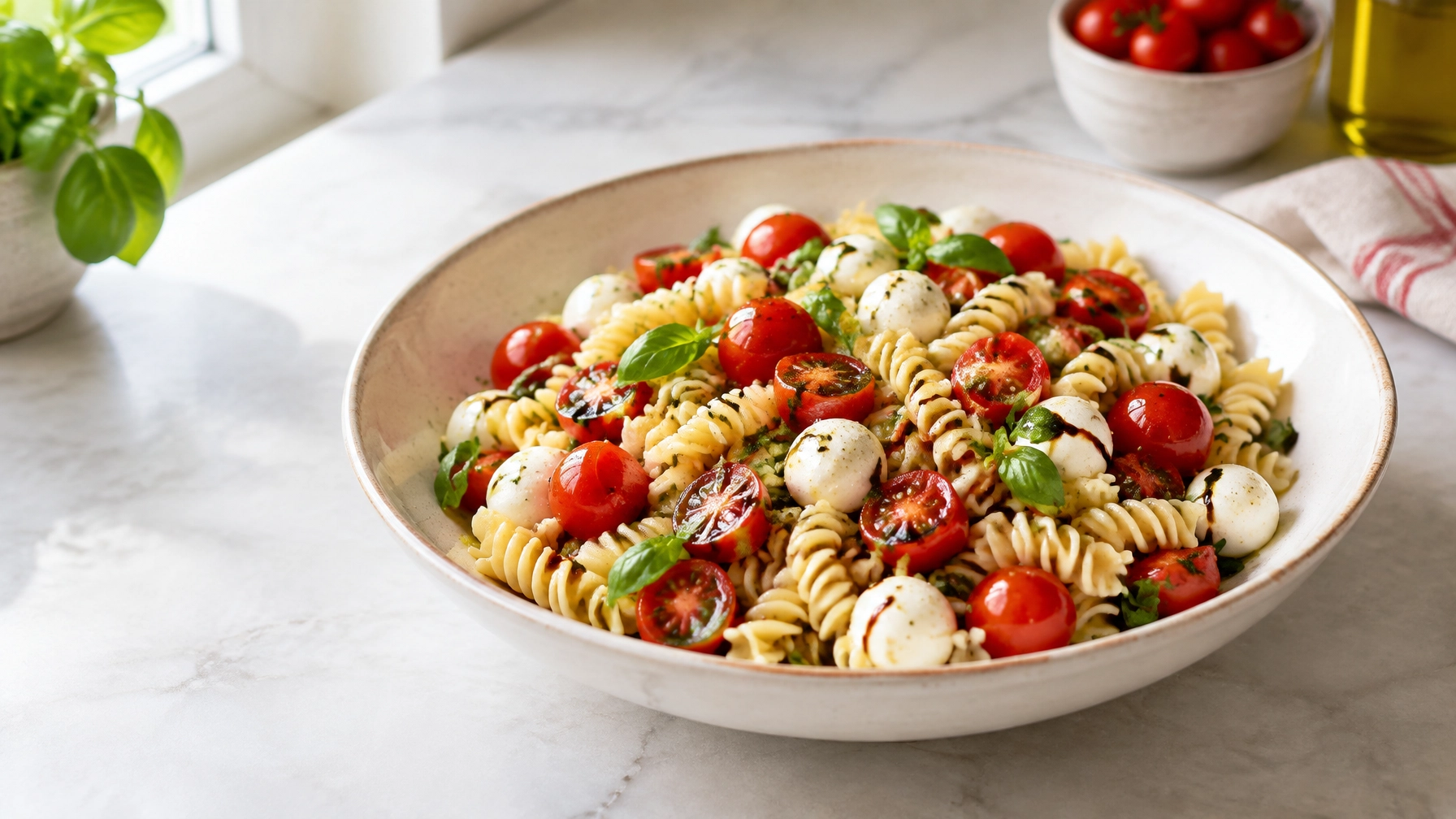
Caprese pasta salad is a cold pasta dish combining short pasta, tomatoes, fresh mozzarella, basil, olive oil and balsamic vinegar in one bowl.
Definition
Caprese (adjective): relating to a combination of tomato, mozzarella and basil, generally finished with olive oil and seasoning.
This pasta salad applies that established combination to a practical cold dish. The result is suitable for lunch, picnics, potlucks and advance preparation. Fusilli is specified because its ridges hold the dressing, although rotini, penne or orecchiette can also be used.
The method is straightforward. Cook the pasta until firm, cool it promptly, prepare the dressing, then combine the components. Basil is added at the end to reduce discoloration. Fresh mozzarella should be drained before assembly to limit excess liquid.
Selection
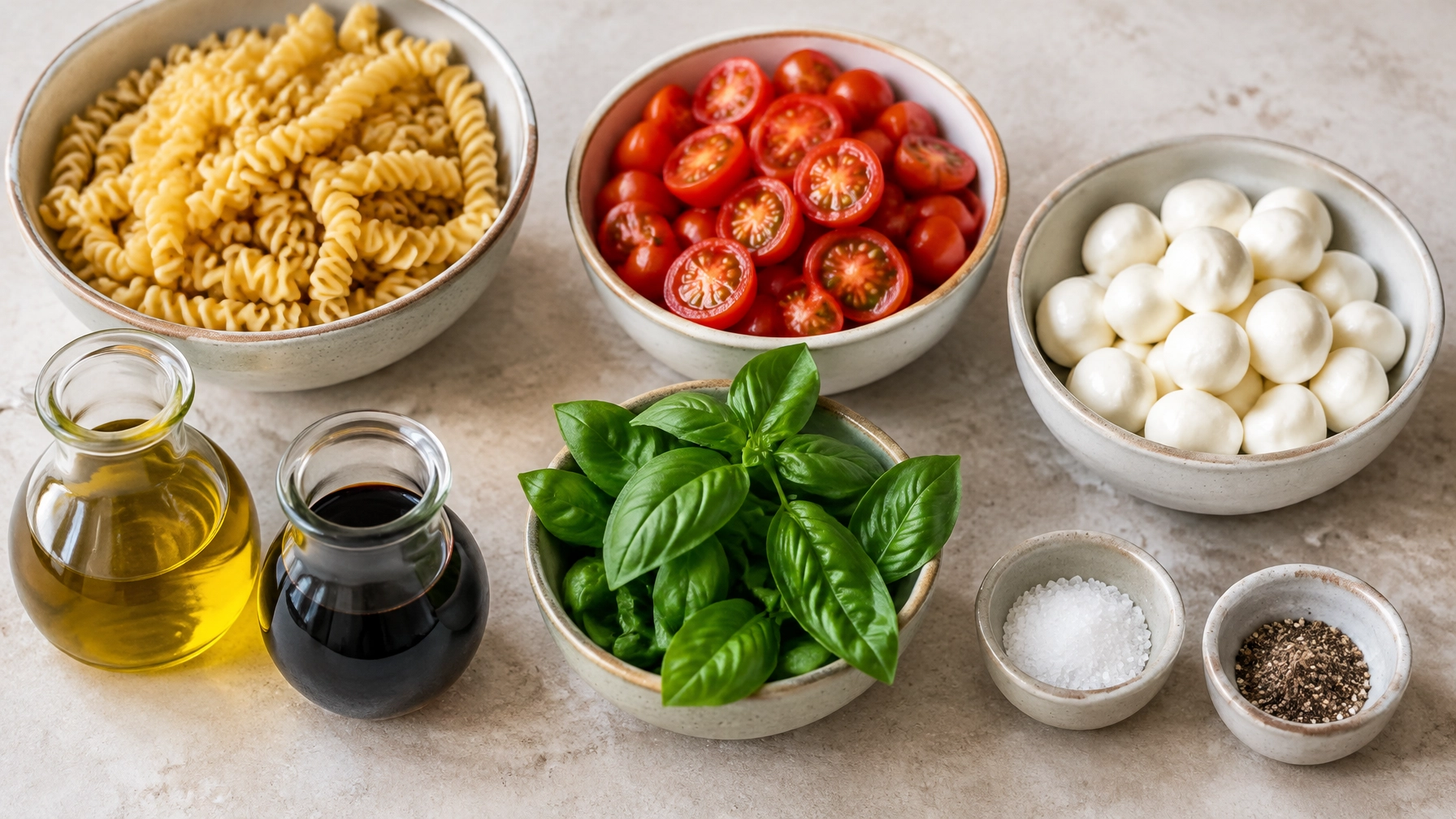
Use a short pasta shape with enough surface area to carry the dressing. Fusilli is the default option for this recipe.
Choose cherry or grape tomatoes that are firm and fully coloured. Tomatoes with excessive softness can release too much liquid into the salad. Fresh mozzarella pearls are convenient because they require minimal cutting. Larger mozzarella balls may be quartered.
Fresh basil is preferable to dried basil. Dried basil does not provide the same texture or aroma and is not a direct substitute in this preparation.
Balsamic vinegar provides acidity and contrast. Balsamic glaze may be used as a finishing ingredient, but it is thicker and sweeter than vinegar. If using glaze, apply it sparingly.
Preparation
The pasta must be cooled before it is mixed with mozzarella. Warm pasta can soften the cheese and cause the dressing to separate. It can also make the tomatoes lose structure.
Do not overcook the pasta. A firm texture is required because the pasta will continue to absorb dressing while it rests. After draining, rinse the pasta briefly under cold water, then drain it thoroughly. Excess water will dilute the dressing.
The tomatoes should be halved. This exposes the interior and distributes tomato juice through the salad. Drain the mozzarella well, especially if it has been stored in liquid.
The dressing consists of olive oil, balsamic vinegar, salt, pepper, garlic and Dijon mustard. The mustard is optional in traditional terms, but it helps the dressing combine evenly. Honey is also optional and is included only to moderate the acidity.
Assembly
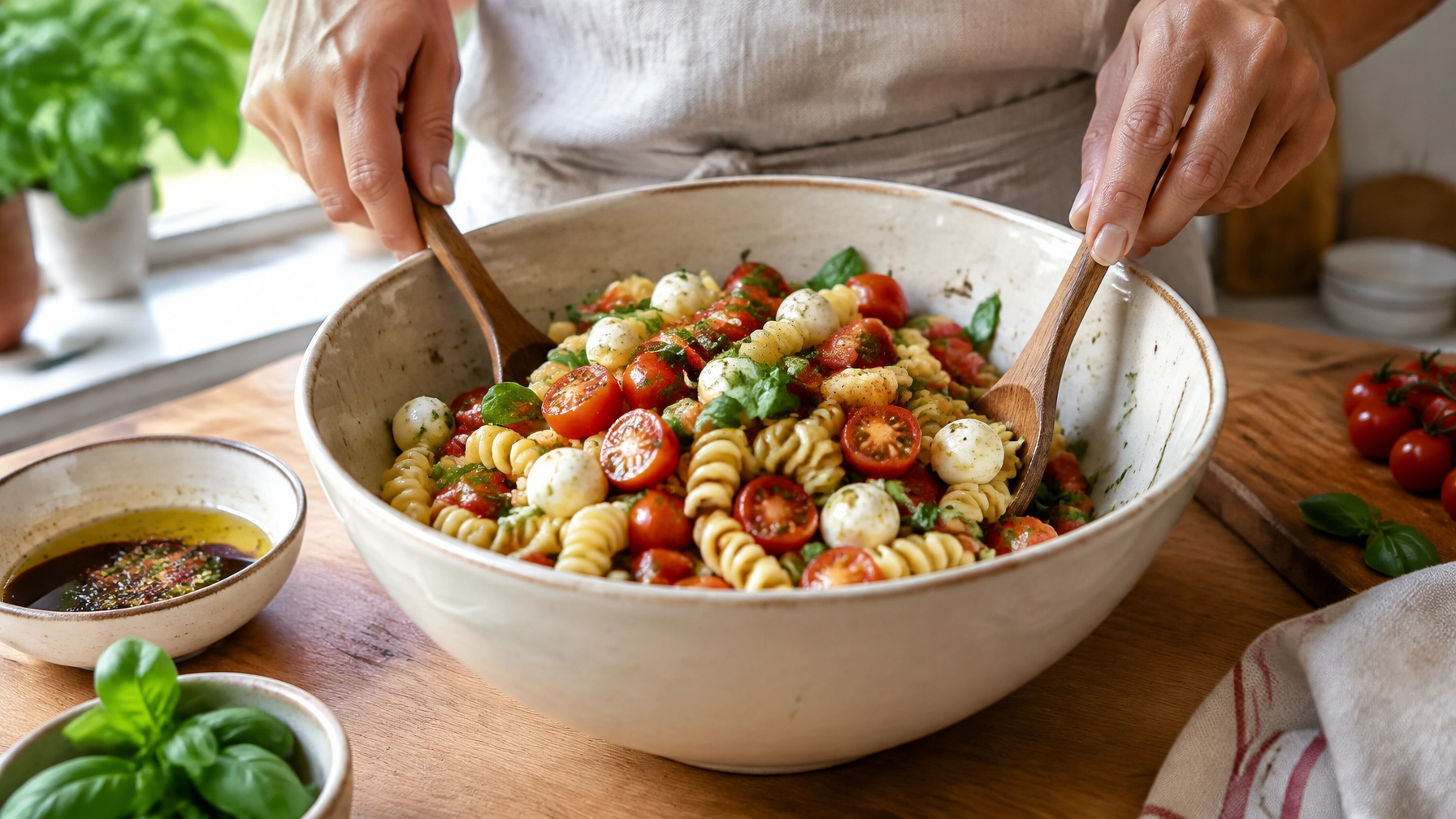
Combine the cooled pasta, tomatoes and mozzarella before adding most of the basil. Pour the dressing over the ingredients and toss gently. Excessive mixing may break the mozzarella or crush the tomatoes.
Allow the salad to stand for 10 minutes before serving. This permits the pasta to absorb some of the dressing. Add the remaining basil immediately before serving.
For advance preparation, store the dressing separately where practical. Alternatively, combine the pasta, tomatoes and mozzarella, then dress the salad shortly before serving. This produces a firmer texture and reduces the accumulation of liquid at the bottom of the container.
Tips
Drain thoroughly. Water remaining on the pasta or mozzarella will weaken the dressing and produce a watery salad.
Salt the cooking water. The pasta absorbs some of the salt during cooking. This seasons the base rather than relying only on the dressing.
Cool the pasta quickly. Rinsing under cold water stops the cooking process and prevents the pasta from becoming soft.
Add basil late. Cut or torn basil can darken when exposed to air, moisture and acidity. Add it shortly before serving for better colour.
Rest before serving. Ten minutes of resting allows the dressing to distribute through the pasta without making the texture excessively soft.
Serve chilled or cool. Remove the salad from refrigeration shortly before serving. Do not leave it at room temperature for extended periods because it contains cooked pasta and fresh dairy.
Variations
Pesto version: Replace the olive oil, balsamic vinegar, garlic, Dijon mustard and honey with 120 g of prepared basil pesto. Add 30 ml of lemon juice if additional acidity is required.
Whole-wheat version: Replace the fusilli with 340 g of whole-wheat fusilli. The final texture will be firmer and the flavour more pronounced.
Vegetable version: Add 150 g of diced cucumber or 100 g of roasted red pepper. Drain both ingredients before use.
Lemon version: Replace the balsamic vinegar with 30 ml of fresh lemon juice. Add 2 g of finely grated lemon zest.
Protein version: Add 240 g of drained chickpeas or 250 g of cooked, chilled chicken. Confirm that all added ingredients are cooled before assembly.
Storage
Transfer the finished salad to an airtight container and refrigerate it within 2 hours of preparation. If the surrounding temperature is above 32°C, refrigerate it within 1 hour.
The salad is best consumed within 3 days. Keep additional basil separately and add it immediately before serving. If the salad becomes dry, add 5 ml of olive oil and toss gently.
Do not freeze this dish. Freezing changes the texture of the mozzarella and tomatoes, while the cooked pasta may become soft after thawing.
Discard the salad if it develops an unpleasant odour, slimy texture, unusual bubbling or visible mould. Do not taste food to determine whether it is safe.
FAQ
Can Caprese pasta salad be made the day before?
Yes. Prepare the pasta, tomatoes and mozzarella up to 24 hours in advance. Store the dressing and basil separately where possible. Combine the components shortly before serving.
Should pasta be rinsed for pasta salad?
Yes. A brief rinse cools the pasta, stops residual cooking and removes surface starch that could make the salad sticky.
Can dried basil be used?
Dried basil can be used in the dressing, but it is not an equivalent replacement for fresh basil as a finishing ingredient. Use 2 g of dried basil if fresh basil is unavailable.
Why is the pasta salad watery?
The likely causes are wet mozzarella, insufficiently drained pasta, very juicy tomatoes or an excess of dressing. Drain the ingredients thoroughly and add the dressing shortly before serving.
Can balsamic glaze replace balsamic vinegar?
Yes, but use 15 ml of balsamic glaze instead of 30 ml of balsamic vinegar. The glaze is sweeter and more concentrated.
Is Caprese pasta salad served hot?
No. It is intended to be served chilled or cool. The mozzarella, basil and tomatoes are best combined after the pasta has cooled.
What pasta shape is best?
Fusilli is the specified shape because its spirals retain the dressing. Rotini, penne and orecchiette are suitable alternatives.
Can the mozzarella be replaced?
Small cubes of fresh mozzarella can replace mozzarella pearls at a one-to-one weight ratio. Firm dairy-free mozzarella may also be used, although the texture and flavour will differ.
Sources
- Love and Lemons: Caprese Pasta Salad
- Fifteen Spatulas: Caprese Pasta Salad
- Feel Good Foodie: Caprese Pasta Salad
- Natasha's Kitchen: Caprese Pasta Salad