Recipe
Prep 10 minCook 15 minTotal 25 min
Ingredients
Method
- Brown the sausage. Heat the olive oil in a large, deep skillet over medium-high heat. Add the sausage and break it into small pieces with a wooden spoon. Cook for 5 to 6 minutes, stirring occasionally, until browned and cooked through.
- Cook the onion. Reduce the heat to medium. Add the diced onion to the same skillet. Cook for 2 to 3 minutes, stirring frequently, until softened. The browned residue from the sausage should remain in the pan.
- Add the garlic and tomato paste. Stir in the garlic and cook for 30 seconds. Add the tomato paste and cook for 1 minute, stirring continuously. The paste should darken slightly.
- Build the sauce. Add the diced tomatoes, chicken stock, double cream, Italian seasoning, salt, and black pepper. Stir thoroughly, scraping the bottom of the skillet to release any browned pieces.
- Add the gnocchi. Stir the uncooked gnocchi into the sauce. Bring the mixture to a gentle simmer. Cover the skillet and cook for 5 minutes.
- Check the texture. Remove the lid and stir. The gnocchi should be tender when pierced, and the sauce should coat the back of a spoon. If the gnocchi remain firm, cover and cook for 1 to 2 additional minutes.
- Finish the dish. Stir in the Parmesan and spinach. Cook uncovered for 1 to 2 minutes, until the spinach has wilted and the sauce has thickened. Taste and adjust the salt and pepper.
- Serve. Remove the skillet from the heat. Rest for 2 minutes, then garnish with fresh basil or parsley and additional Parmesan if required. Serve immediately.
Sausage and Gnocchi Skillet (One-Pan, 25 Minutes)
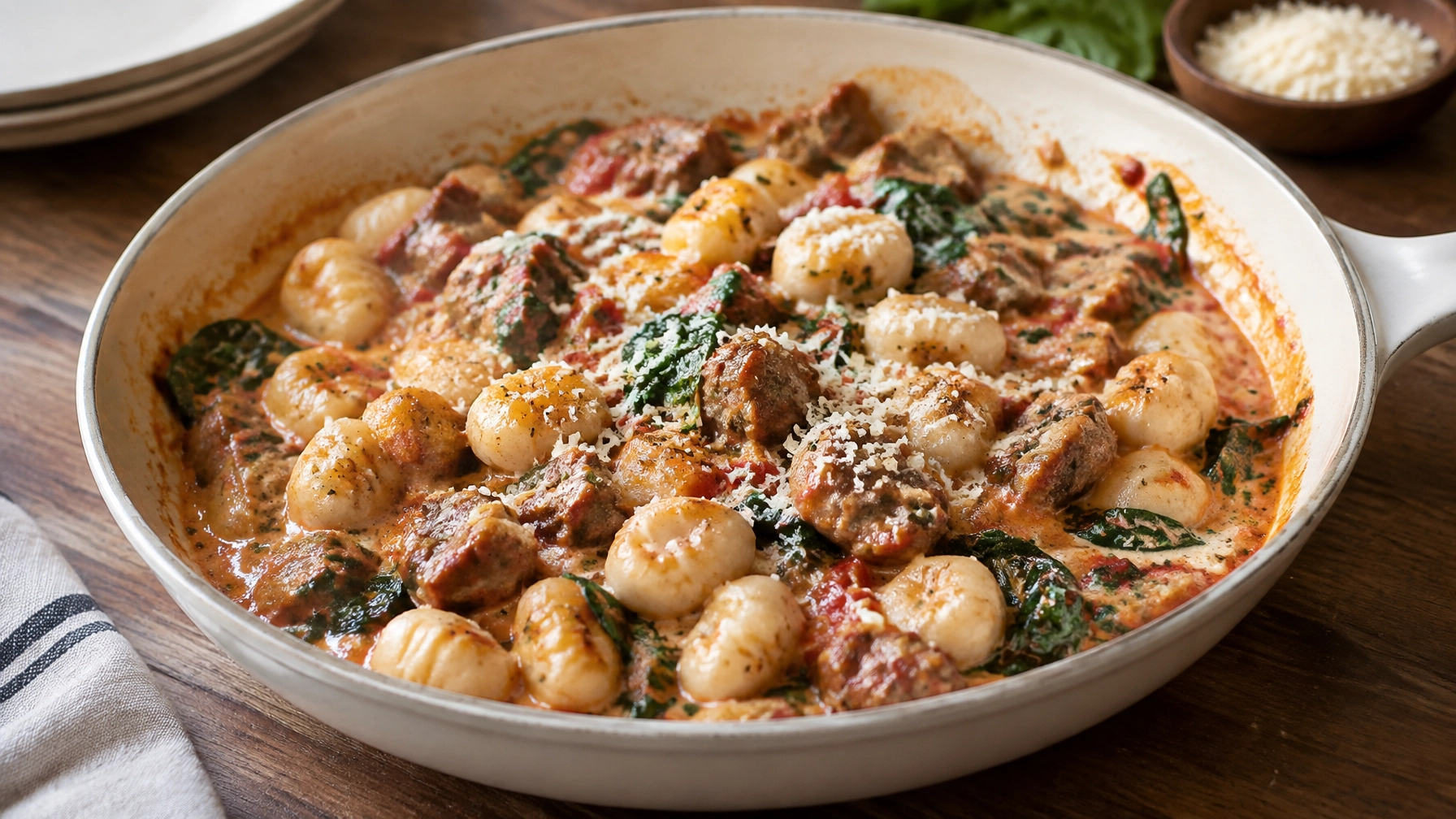
This sausage and gnocchi skillet is a complete one-pan dinner prepared in 25 minutes. Italian sausage, shelf-stable potato gnocchi, diced tomatoes, cream, spinach, and Parmesan are combined in a single skillet. The gnocchi cooks directly in the sauce, which reduces preparation time and limits washing up.
The method is suitable for a weeknight meal. Use a wide, deep skillet so the gnocchi can remain mostly submerged during cooking. Maintain a gentle simmer. Excessive heat can cause the cream sauce to separate and the gnocchi to become soft.
Definition
sausage and gnocchi skillet (noun): A one-pan meal consisting of browned sausage and potato gnocchi cooked in a seasoned sauce, commonly containing tomatoes, cream, cheese, or vegetables.
The result is a dense, complete meal with protein, starch, sauce, and greens. The dish can be served directly from the pan.
Technique
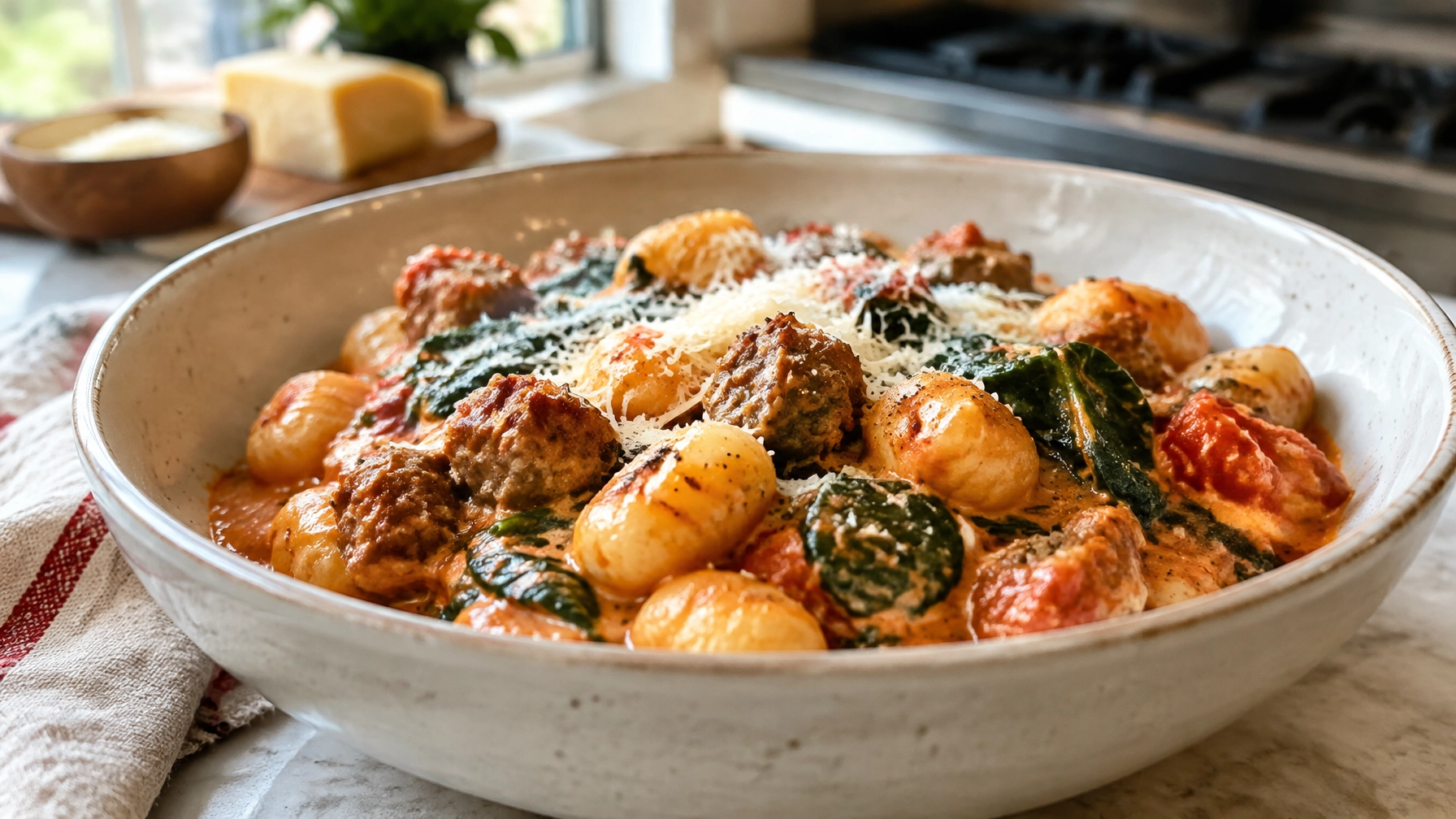
The gnocchi does not require separate boiling. Direct cooking allows the potato dumplings to absorb the tomato and cream sauce. It also prevents the starch water from diluting the final consistency.
The sauce should remain at a gentle simmer rather than a rapid boil. Gnocchi can become overly soft when cooked for too long, while cream may separate when exposed to excessive heat.
Browning the sausage before adding the liquid creates a more developed base. The residue on the bottom of the pan is released when the tomatoes and stock are added. Cooking the tomato paste before adding liquid also reduces its raw taste.
The final texture should be thick enough to cling to the gnocchi. If the sauce is too thin, simmer uncovered for an additional minute. If it is too thick, add 1 to 2 tablespoons of chicken stock.
Tips
- Use a wide skillet. A broad cooking surface helps the sausage brown evenly and gives the gnocchi room to cook in the sauce.
- Do not rinse the gnocchi. Shelf-stable gnocchi can be added directly from the packet.
- Brown the sausage fully. The pieces should have visible colour before the liquid is added.
- Keep the salt controlled. Sausage, stock, Parmesan, and canned tomatoes may already contain salt. Adjust only after the cheese has been added.
- Stir once during covered cooking. This distributes the gnocchi and reduces the risk of sticking.
- Serve immediately. The sauce thickens as it stands and may become dense after refrigeration.
- Use a thermometer if required. Pork sausage should reach an internal temperature of 71°C. Chicken or turkey sausage should reach 74°C.
For a comparable direct-simmer approach, see this stovetop gnocchi guide. A similar creamy sausage method is outlined by Salt and Lavender.
Variations
Spicy sausage: Replace the mild Italian sausage with hot Italian sausage. Omit additional chilli unless a higher heat level is required.
Mushroom: Add 150 grams of sliced chestnut mushrooms after browning the sausage. Cook for 3 to 4 minutes before adding the onion.
Kale: Replace the spinach with 75 grams of finely sliced kale. Add it with the gnocchi so it has additional time to soften.
Broccoli: Add 200 grams of small broccoli florets during the final 5 minutes of cooking. Check that the florets are tender before serving.
Dairy-free: Use an unsweetened plant-based cream and replace the Parmesan with a dairy-free hard cheese alternative. Confirm that the sausage and gnocchi are also dairy-free.
Lower-fat: Use chicken sausage and substitute half of the double cream with additional chicken stock. The sauce will be lighter and less thick.
Crisp gnocchi: For a firmer surface, remove the sausage after browning. Add the gnocchi to the sausage fat and cook for 3 to 4 minutes before returning the sausage and adding the sauce ingredients. The cooking time may increase slightly.
FAQ
Can gnocchi be cooked directly in the sauce?
Yes. Shelf-stable potato gnocchi can cook directly in a simmering sauce. The liquid must be sufficient to keep the gnocchi partially submerged. Covering the skillet helps the dumplings cook evenly.
Can I use refrigerated gnocchi?
Yes. Refrigerated gnocchi can be used in the same quantity. It may cook slightly faster, so begin checking the texture after 4 minutes of covered cooking.
Can I use frozen gnocchi?
Frozen gnocchi can be used, but the cooking time may increase. Add 2 to 3 minutes and check that the centre is tender before adding the spinach and Parmesan.
How long does sausage and gnocchi skillet keep?
Refrigerate leftovers in a sealed container for up to 3 days. Reheat in a skillet over low heat with a small splash of stock or water. Stir regularly. The sauce may thicken during storage.
Can I freeze this dish?
Freezing is not recommended. Cream sauces can change texture after freezing, and gnocchi may become soft when thawed. For best results, prepare the dish fresh.
What can I serve with sausage and gnocchi skillet?
The dish is complete on its own. A simple green salad, steamed green beans, or roasted vegetables can be served alongside it. Crusty bread may also be used to collect the remaining sauce.