Recipe
Serves
6 1×
Serves 6Prep 20 minCook 1H10 minTotal 1H30 min
Ingredients
Method
- Heat the oven to 170°C, or 150°C fan. Peel the celeriac and potatoes. Slice them evenly to about 2 mm using a mandoline or a sharp knife. Keep the celeriac and potatoes in separate bowls of cold water with a squeeze of lemon juice to help stop the celeriac discolouring.
- Stir together the double cream, milk, crushed garlic, Dijon mustard, nutmeg, salt and plenty of pepper in a jug or bowl. Mix well so the mustard and seasoning are distributed through the liquid.
- Drain the vegetable slices and pat them dry with a clean tea towel. Arrange a layer of potato in an ovenproof dish, followed by a layer of celeriac. Continue alternating the vegetables, seasoning every other layer with a little salt and pepper. Use the slices to fill the dish evenly.
- Pour the cream mixture over the layers. It should come just below the top of the vegetables rather than covering them completely. Scatter the grated Gruyere over the surface.
- Cover the dish tightly with foil and bake for 45 minutes. The foil traps steam, helping the vegetables soften before the top browns.
- Remove the foil and bake for a further 25 minutes, until the top is browned and a knife slides through the layers with no resistance. If the top is colouring before the vegetables are tender, cover it loosely with foil again and continue baking until the knife test is clear.
- Take the gratin out of the oven and leave it to rest for 10 minutes before cutting. This gives the creamy layers time to settle, making the portions easier to lift and serve.
Celeriac and Potato Gratin
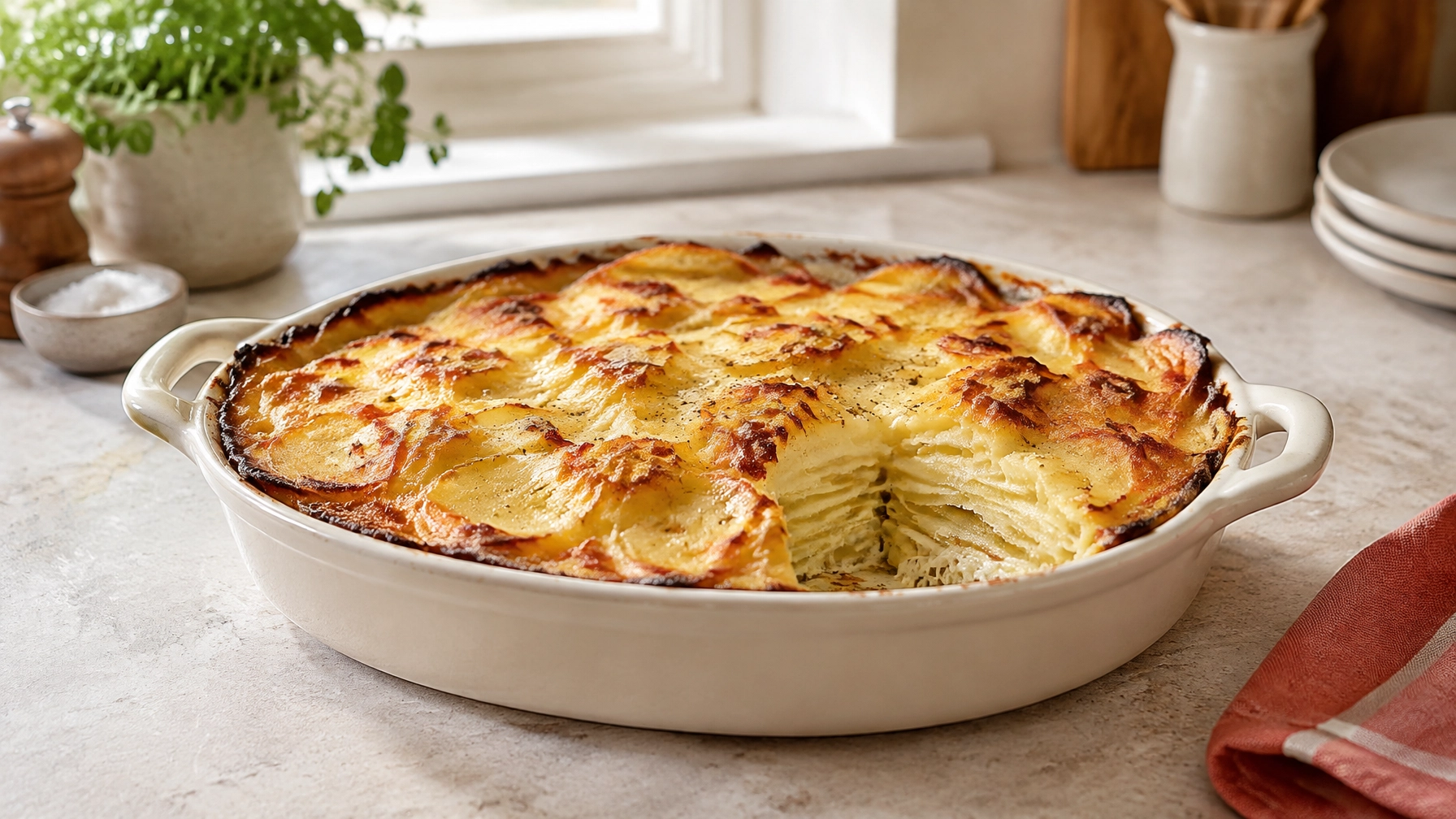
This celeriac and potato gratin has tender, thin layers beneath a golden Gruyere top. Double cream, milk, garlic, Dijon mustard and nutmeg make a savoury sauce that brings the two vegetables together.
Slice the vegetables to about 2 mm so they cook evenly. Celeriac shrinks as it bakes, so do not worry if the dish looks generously filled before it goes into the oven. Rest the gratin for 10 minutes after baking to help the layers settle for serving.
Recipe
Serves: 6
Prep time: 20 minutes
Cook time: 70 minutes
Total time: 90 minutes
Tips
The thickness of the slices is the main detail to get right. Slices thicker than 2 mm can stay hard in the centre even when the top is browned. That is the common problem with this dish: the surface looks ready, but the vegetables underneath still need time. A mandoline makes even slices quickly, but take care and use its safety guard. If cutting by hand, work slowly and aim for slices of a consistent thickness.
Celeriac is knobbly, so peel it thoroughly and trim away any rough, fibrous areas before slicing. Once peeled, cut it into manageable pieces that sit securely on your board. Keep your fingers clear of the blade and do not try to rush the final small pieces.
The dish can look very full once the alternating layers are in place. That is expected. Celeriac loses volume as it cooks, and the slices soften into the cream. Arrange them neatly but do not press them down hard; the liquid needs room to move between the layers.
Pour the cream mixture slowly over the dish so it can seep into the gaps. It should sit just below the top layer. If the liquid reaches the rim, place the dish on a baking tray before putting it in the oven to catch any drips.
Use the knife test rather than the colour of the top alone to check that the gratin is done. Push a thin, sharp knife into the centre. It should pass through the vegetables without resistance. If it catches, the middle needs more time.
Variations
For a stronger cheese flavour, replace some of the Gruyere with another firm cheese that melts well. Keep the total amount close to 80 g so the top browns without becoming too heavy.
You can adjust the seasoning to suit the rest of the meal. Add a little more black pepper for a sharper finish, or use a slightly more generous grating of nutmeg for a warmer, rounded flavour. Keep the Dijon in the cream mixture; it gives the sauce savoury depth without making the finished gratin taste strongly of mustard.
Serve the gratin as a side dish with roast vegetables or a main course. It is also substantial enough to serve in larger portions with a simple salad. Allow it to rest before serving whichever way you choose, so the layers hold together on the plate.
FAQ
Can I prepare celeriac and potato gratin in advance?
You can assemble the layers and cream mixture ahead, then cover and chill the dish. For the most even cooking, let it sit out briefly while the oven heats, but do not leave it at room temperature for an extended period. The centre may need a little extra time if the dish is still cold, so check it with a knife before serving.
Why is my gratin still hard in the middle?
The slices may be thicker than 2 mm, or the centre may need more time in the oven. A browned surface does not always mean the vegetables underneath are tender. Cover the top loosely with foil if it is already well browned, then continue baking until a knife slides through the centre easily.
Can I reheat the leftovers?
Yes. The gratin reheats well. Cover the dish and warm it in the oven until heated through, removing the cover near the end if you would like to bring back some colour on top. For a small portion, use a covered ovenproof dish and check the centre is hot before serving.