Recipe
Serves
8 1×
Serves 8 sconesPrep 15 minCook 15 minTotal 30 min
Ingredients
Method
- Heat the oven to 220C conventional or 200C fan. Line a baking tray with baking paper.
- Rub the butter into the flour, mustard powder and salt until the mixture looks like fine crumbs.
- Stir in 100 g of the cheddar and all but a pinch of the chives.
- Add the milk and mix with a knife or your hands to a soft, slightly sticky dough. Do not overwork it.
- Turn out onto a floured surface and pat to 3 cm thick. Cut into 8 rounds with a 6 cm cutter, pressing straight down without twisting.
- Put the scones on the tray, brush the tops with milk and scatter over the remaining cheddar.
- Bake for 13 to 15 minutes until well risen and deep gold on top.
- Cool on a wire rack for 10 minutes. Eat warm.
Cheddar and Chive Scones
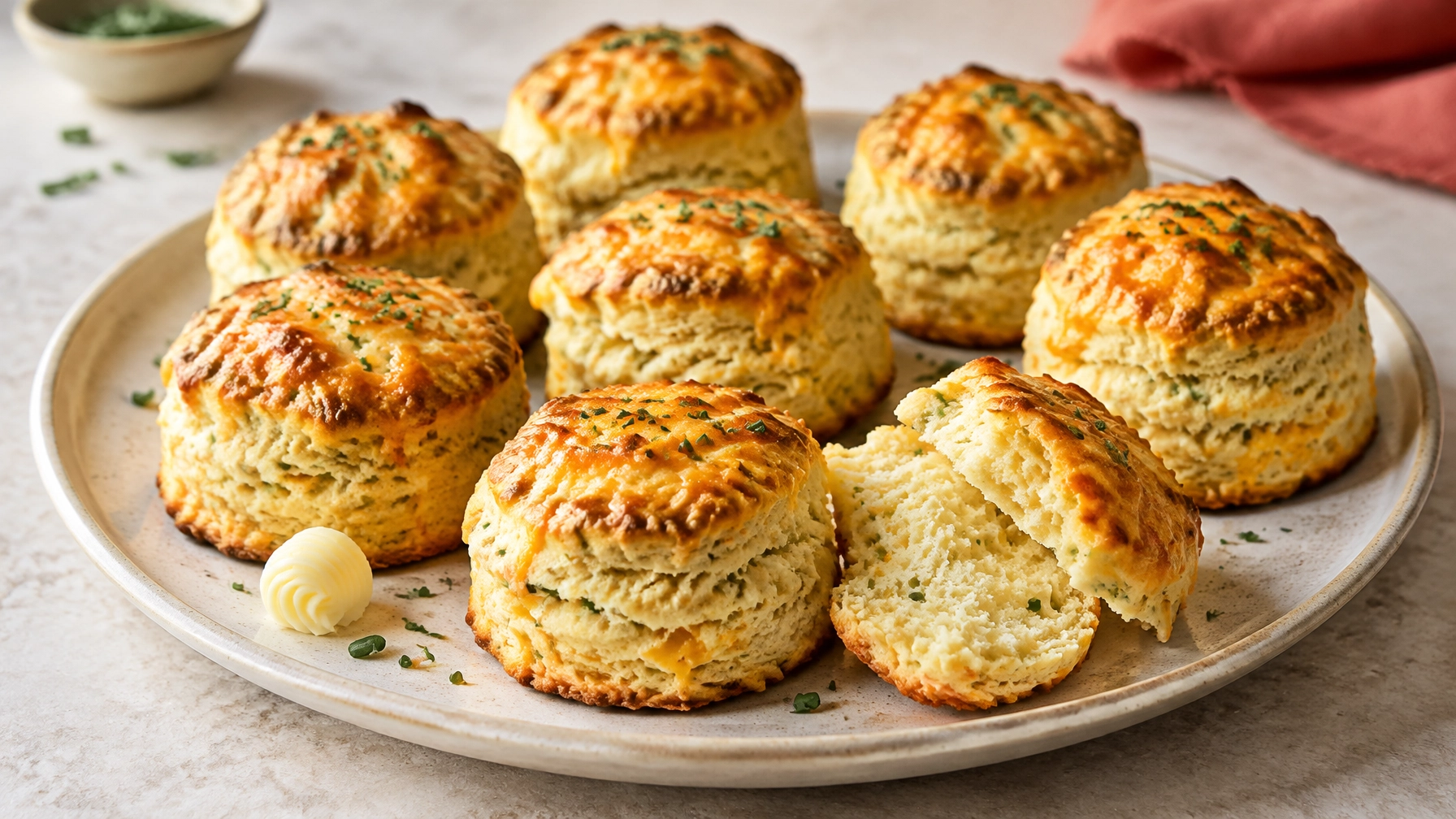
Cheddar and chive scones are savoury, tall-risen and ready in half an hour. Sharp mature cheddar melts through the crumb while fresh chives add a mild onion note. Tear them warm and serve with butter, or split for soup dunking and lunchbox filling.
Recipe
Servings: 8 scones
Prep time: 15 minutes
Cook time: 15 minutes
Total time: 30 minutes
Tips
Cold butter and a light hand give the tallest rise. Keep the butter chilled until you are ready to use it, then rub it into the flour mixture with your fingertips. Work briskly so the butter does not soften too much. Stop when the mixture resembles fine crumbs; there is no need to press it into a paste.
Once the milk goes in, mix only until the dough comes together. A slightly sticky dough is expected. Extra flour can make the dough drier and the baked scones heavier, so use just enough on the work surface to prevent sticking. Pat the dough to an even 3 cm thickness so the rounds bake at a similar rate.
Press the cutter straight down and lift it cleanly. Twisting the cutter seals the edge and stops the scones rising evenly. Gather any scraps gently and pat them together rather than kneading them. Reworked dough can become firm.
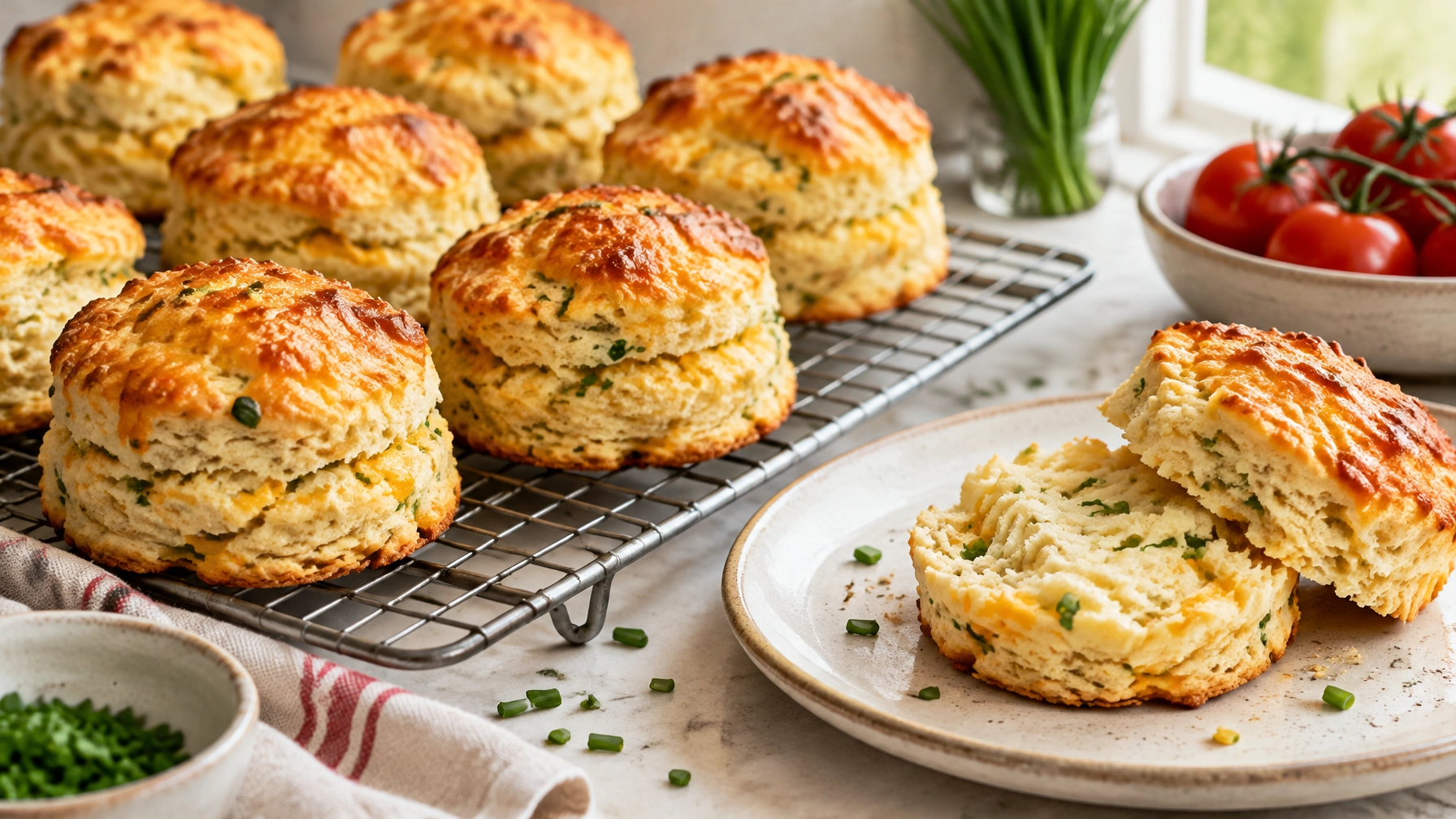
Bake close together on the tray for soft sides, spaced apart for crusty sides. Leave enough room for the scones to rise without touching if you prefer more colour around their edges. Check them at 13 minutes: the tops should be deep gold and the scones well risen. If needed, return them to the oven for the remaining time.
Let them cool on a wire rack for 10 minutes before serving. This gives the crumb time to settle while keeping the centres warm. They are best eaten warm, split and buttered.
Variations
For gentle heat, add a pinch of cayenne to the dry ingredients. Mix it evenly through the flour before rubbing in the butter.
To change the onion note, swap the chives for finely chopped spring onion tops. Keep the pieces small so they distribute through the dough without making it difficult to cut neat rounds.
For a saltier crumb, mix 50 g crumbled feta through the dough. The mature cheddar remains part of the recipe; add the feta alongside it and fold the mixture together gently. As feta adds saltiness, taste the finished scones before adding any extra salt at the table.
FAQ
Can I use dried chives?
Fresh is far better here. In a pinch, use half the quantity of dried chives and add them with the flour. Mixing them into the dry ingredients helps distribute them evenly through the dough.
How do I reheat them?
Warm them in a low oven for 5 minutes, or split them and toast the cut side. Serve once warmed through. Reheating whole scones in the oven keeps the outside intact; toasting the cut side gives a firmer surface.
Can I freeze them?
Yes. Freeze baked scones for up to 2 months and reheat from frozen. Allow enough time for them to warm through before serving. For best results, freeze them once cooled and keep them covered until needed.
Why are my scones heavy?
Overworking the dough or patting it too thin are the usual causes. Handle it as little as possible after adding the milk, and pat it to the specified 3 cm thickness. Press the cutter down without twisting, then bake until the scones are well risen and deep gold.