Easy Blueberry Scones (Flaky & Buttery)
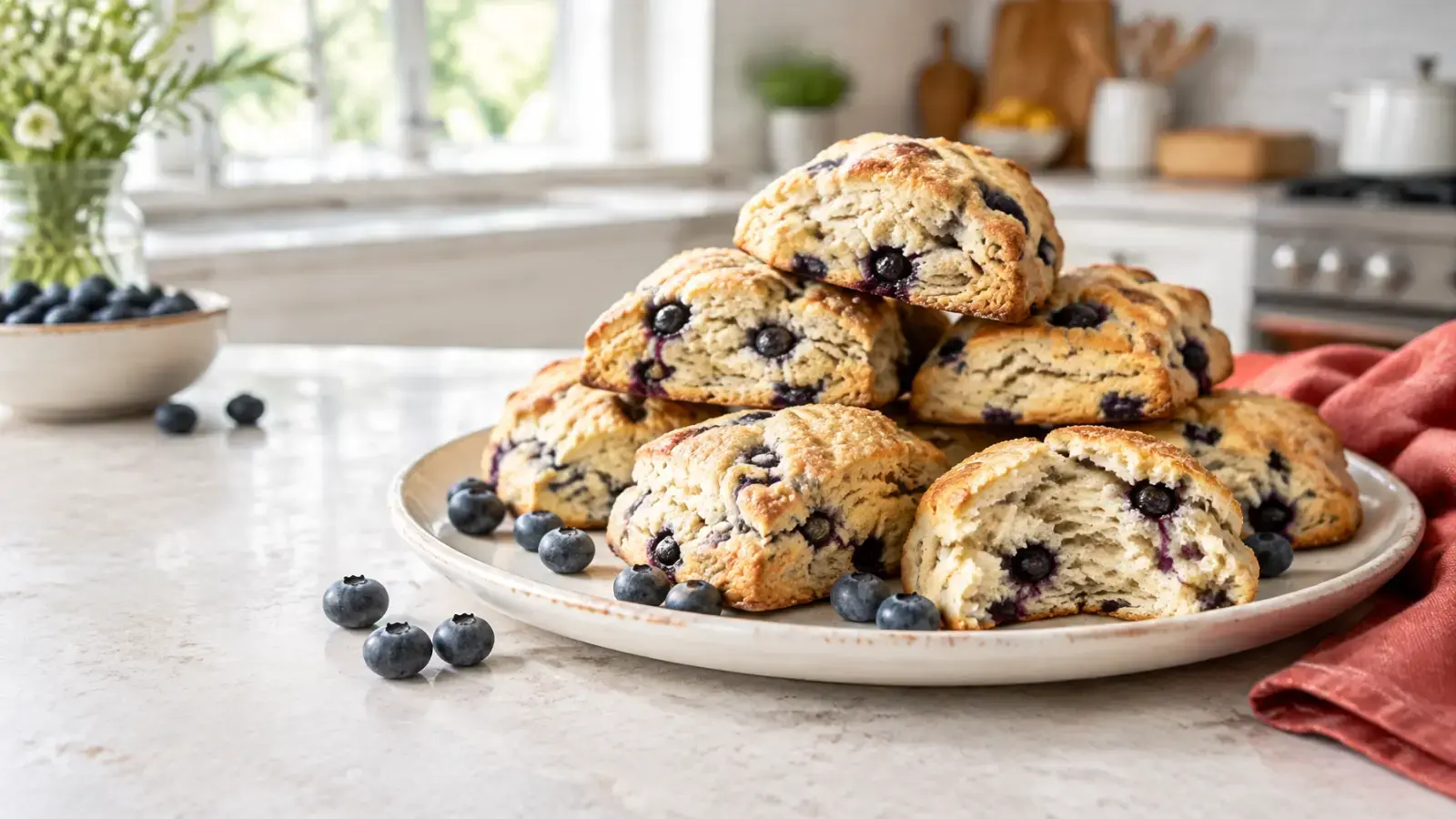
These easy blueberry scones have crisp, golden edges, a soft centre, and plenty of juicy blueberries in every bite. Cold butter creates flaky layers, while heavy cream keeps the dough rich and tender.
The method is straightforward: mix the dry ingredients, cut in cold butter, add blueberries and cream, shape the dough, chill it briefly, and bake. No mixer is required.
For the best texture, handle the dough as little as possible. It should look slightly rough and shaggy before shaping. That is preferable to a smooth, heavily worked dough, which can produce dense or tough scones.
Tips
- Keep the butter cold. If the butter starts to soften while you work, place the bowl in the refrigerator for a few minutes.
- Measure the flour accurately. Spoon flour into a measuring cup and level the top, or use a digital scale.
- Do not overmix. A shaggy dough produces a more tender result than a smooth, kneaded dough.
- Use a thick dough round. A round about 1½ inches thick gives the scones enough height to rise properly.
- Chill before baking. This step helps prevent spreading and improves the flaky texture.
- Use frozen blueberries without thawing. Add them directly from the freezer and mix gently. The dough may need an extra minute or two in the oven.
- Avoid overcrowding. Leave space around each wedge so hot air can circulate and the edges can brown.
- Check for doneness. The centres should be set, not wet. An instant-read thermometer should register about 200°F (93°C) in the thickest part.
Variations
Lemon
Add 1½ teaspoons of finely grated lemon zest to the dough. For a simple glaze, whisk ½ cup icing sugar with 1–2 teaspoons of lemon juice and drizzle it over cooled scones.
Buttermilk
Replace the heavy cream with ½ cup cold buttermilk. The result will have a slightly tangier flavour and a tender crumb. If the dough appears dry, add another teaspoon of buttermilk.
White chocolate
Fold in ½ cup white chocolate chips with the blueberries. Reduce the sugar to ¼ cup if you prefer a less sweet scone.
Cinnamon
Add ½ teaspoon ground cinnamon to the dry ingredients. Cinnamon pairs well with blueberries and gives the scones a warmer flavour.
Smaller scones
Divide the dough into 12 wedges instead of 8. Begin checking them after 15 minutes, as smaller scones bake more quickly.
Storage
Store cooled scones in an airtight container at room temperature for up to 2 days. For longer storage, freeze them in a sealed freezer bag for up to 2 months.
Reheat room-temperature scones in a 300°F (150°C) oven for 5–8 minutes. Frozen baked scones can be reheated for 10–15 minutes. For the best texture, do not microwave them for extended periods because the crumb can become rubbery.
Unbaked, cut scones can also be frozen. Arrange them on a tray until firm, then transfer them to a freezer bag. Bake from frozen at 400°F (200°C), adding approximately 3–5 minutes to the cooking time.
FAQ
Can I use frozen blueberries?
Yes. Use them directly from the freezer without thawing. Add them gently to the dry ingredients before mixing in the cream mixture. Frozen blueberries help keep the dough cold, although they may add a few minutes to the baking time.
Why are my blueberry scones dry?
Dry scones are commonly caused by too much flour, overmixing, or overbaking. Measure flour carefully, stir only until the dough comes together, and remove the scones once the centres are set and the tops are golden.
Why did my scones spread?
The butter may have become too warm, or the dough may not have been chilled before baking. Shape the scones quickly and refrigerate them for at least 15 minutes before placing them in the oven.
Can I make these scones without eggs?
Yes. Replace the egg with 3 tablespoons of additional cold cream. The scones may be slightly less rich but should still be tender and flaky.
Can I prepare the dough in advance?
Yes. Cut the dough into wedges, place the wedges on a parchment-lined tray, cover, and refrigerate for up to overnight. Bake directly from the refrigerator the next morning.
How do I stop blueberries from bleeding into the dough?
Handle the berries gently and add them before the liquid. Avoid stirring more than necessary. A small amount of colour transfer is normal, especially with very ripe or frozen berries.
Notes
This recipe follows standard cold-butter scone technique. For additional baking guidance, compare the methods at Sally’s Baking Addiction, King Arthur Baking, and BBC Good Food.