Recipe
Serves
6 1×
Serves 6Prep 20 minTotal 1H
Ingredients
Method
- Toss the cherries with 2 tablespoons of the caster sugar and the kirsch, if using. Leave for 30 minutes to 2 hours, or continue immediately if preferred.
- Heat the oven to 180°C conventional or 160°C fan. Grease a shallow 25cm ovenproof dish with butter and coat the base with the demerara sugar.
- Sift the flour into a bowl. Add the remaining caster sugar and salt.
- Whisk in the eggs, then gradually whisk in the milk until the batter is smooth and thin.
- Whisk in the melted butter, almond extract and lemon zest, if using.
- Arrange the cherries in one layer in the prepared dish.
- Pour the batter over the cherries, including any released cherry juice.
- Bake for 30 to 40 minutes, until puffed and golden at the edges and set in the centre.
- Remove from the oven and rest for 10 to 15 minutes. Expect the clafoutis to fall as it cools.
- Dust with icing sugar and serve warm or at room temperature.
Cherry Clafoutis (French Baked Custard)
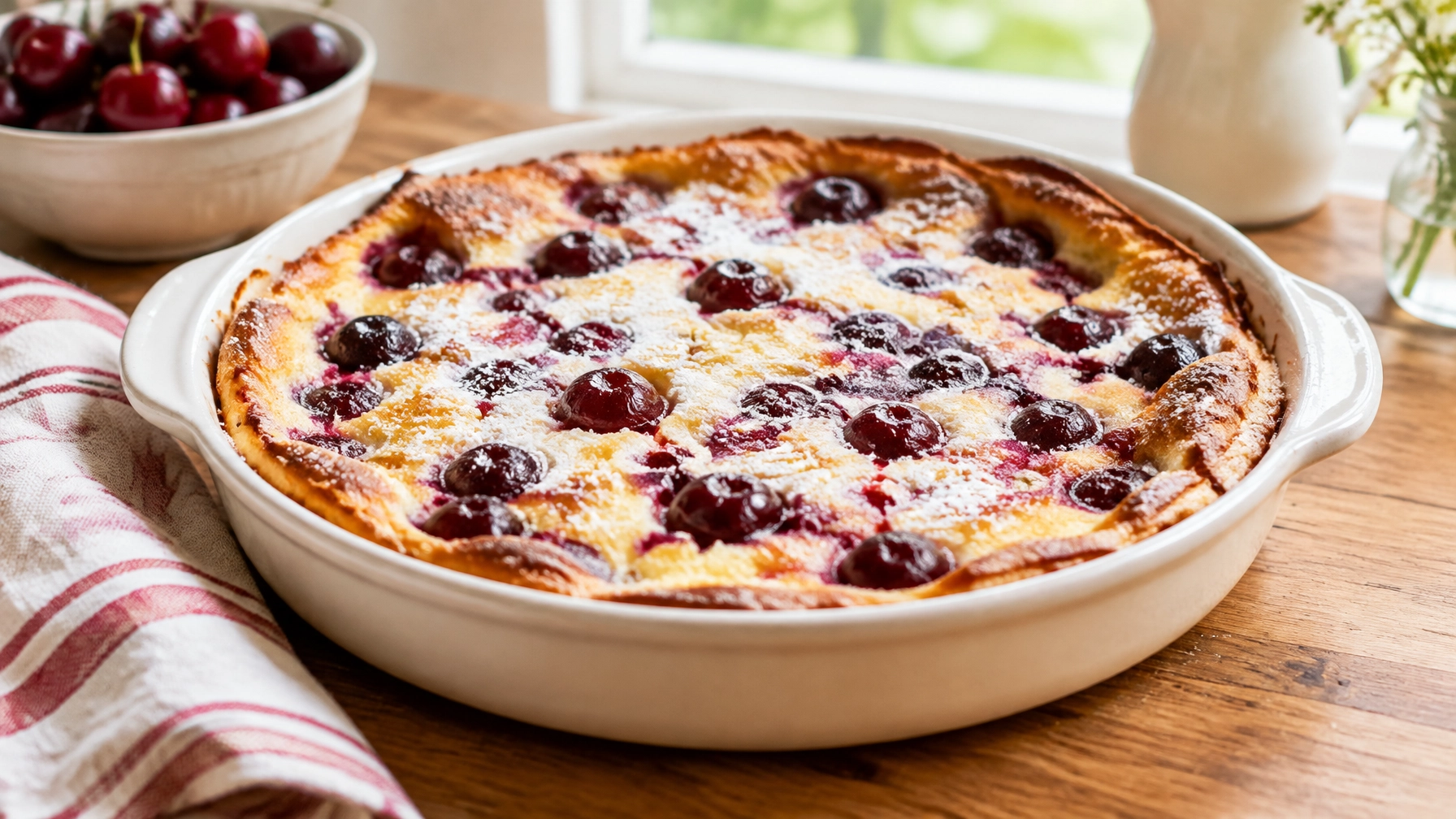
Cherry clafoutis is a simple French baked custard dessert made by pouring a thin batter of eggs, flour, milk and sugar over cherries, then baking until puffed and golden. It is not a tart, crumble, cheesecake or traybake. The texture sits between a set custard and a tender pancake.
The mixture rises in the oven and falls as it cools. This is normal. The finished clafoutis should not remain dramatically puffed. It will settle into a soft, gently set dessert with cherries distributed through the custard.
This recipe uses pitted cherries for practical serving. Traditional versions sometimes leave the stones in, but that creates a choking and dental risk. Pitting is the appropriate choice when serving children, older people or a group.
Preparation
If using frozen cherries, thaw them fully and drain excess liquid before starting. Excess water can make the centre slow to set.
Toss the pitted cherries with 2 tablespoons of the caster sugar and the kirsch, if using. Leave them for 30 minutes to 2 hours. This draws out some juice and gives the fruit a deeper flavour. The step can be omitted when time is limited.
Grease the baking dish thoroughly with butter. Scatter over the demerara sugar and tilt the dish so the base is lightly coated. The sugar adds a fine crust beneath the custard and helps prevent sticking.
Sift the flour into a mixing bowl. Add the remaining caster sugar and salt. Whisk in the eggs until smooth, then add the milk gradually. Slow addition reduces lumps.
Whisk in the melted butter, almond extract and lemon zest, if using. The finished batter should be thin and pourable, similar to crêpe batter. Resting it for 10 minutes is useful but not essential.
Arrange the cherries in one layer in the prepared dish. Pour over the batter, including any juice released by the fruit.
Baking
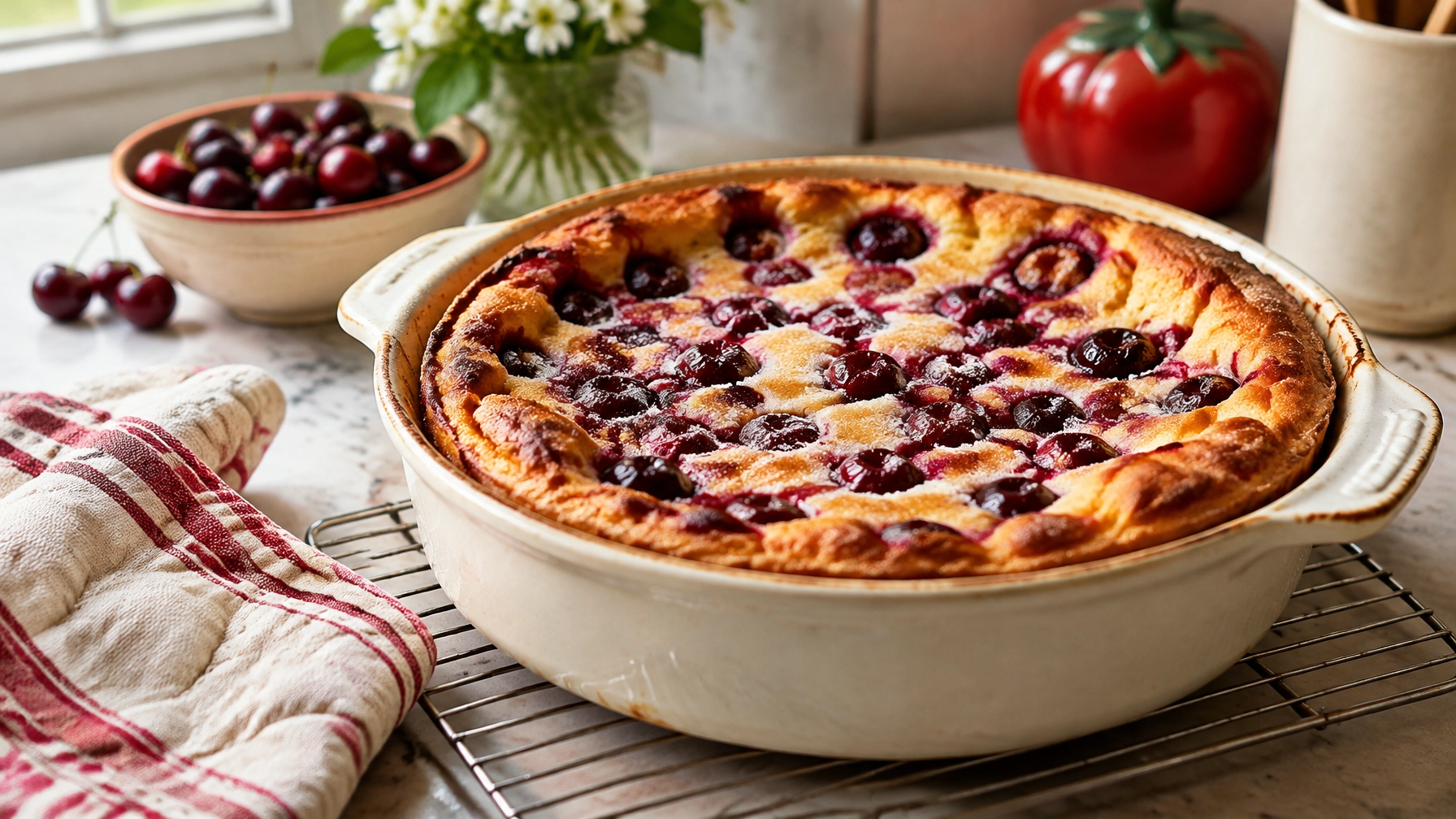
Bake at 180°C conventional or 160°C fan for 30 to 40 minutes. The edges should be puffed and golden. The centre should be set but may retain a slight wobble when the dish is moved.
Do not judge the clafoutis by its height. It will be visibly inflated when it leaves the oven and will deflate during the first 10 to 15 minutes of cooling. This is an expected part of the dessert, not evidence of a failed bake.
The centre should not contain liquid batter. If it remains loose after 40 minutes, continue baking in 5-minute intervals. A deep dish, cold ingredients or especially juicy cherries may increase the cooking time.
Rest the clafoutis for 10 to 15 minutes. Dust lightly with icing sugar and serve warm. It can also be served at room temperature, when the custard becomes firmer and easier to portion.
For egg safety, use clean, intact eggs and cook the dessert until the centre is set and hot. The Food Standards Agency guidance on cooking food provides general advice on cooking eggs and dishes containing eggs.