Recipe
Serves
4 1×
Serves 4 generous portionsPrep 10 minCook 15 minTotal 25 min
Ingredients
Method
- Purge the live clams in cold seawater-strength salted water for at least 30 minutes. Rinse them and discard cracked or unresponsive clams.
- Bring a large pot of generously salted water to the boil.
- Cook the spaghetti for 1 to 2 minutes less than the packet instructions. Reserve at least 250 ml pasta water.
- Warm the olive oil in a wide pan over medium-low heat. Add the garlic and chilli.
- Sweat the garlic and chilli for 2 to 3 minutes without browning.
- Add the white wine and simmer for 1 minute.
- Add the clams, cover the pan and steam for 3 to 5 minutes until the shells open.
- Discard any clams that stay shut. Remove the opened clams and strain the cooking liquor through a fine sieve.
- Return the strained liquor to the pan. Add the undercooked spaghetti and a splash of pasta water.
- Toss over medium-high heat until the pasta finishes cooking and the sauce becomes glossy.
- Return the clams for the final 30 to 60 seconds.
- Remove from the heat. Add parsley and black pepper, taste for salt and serve immediately.
Spaghetti alle Vongole (Clam Pasta, 25 Minutes)
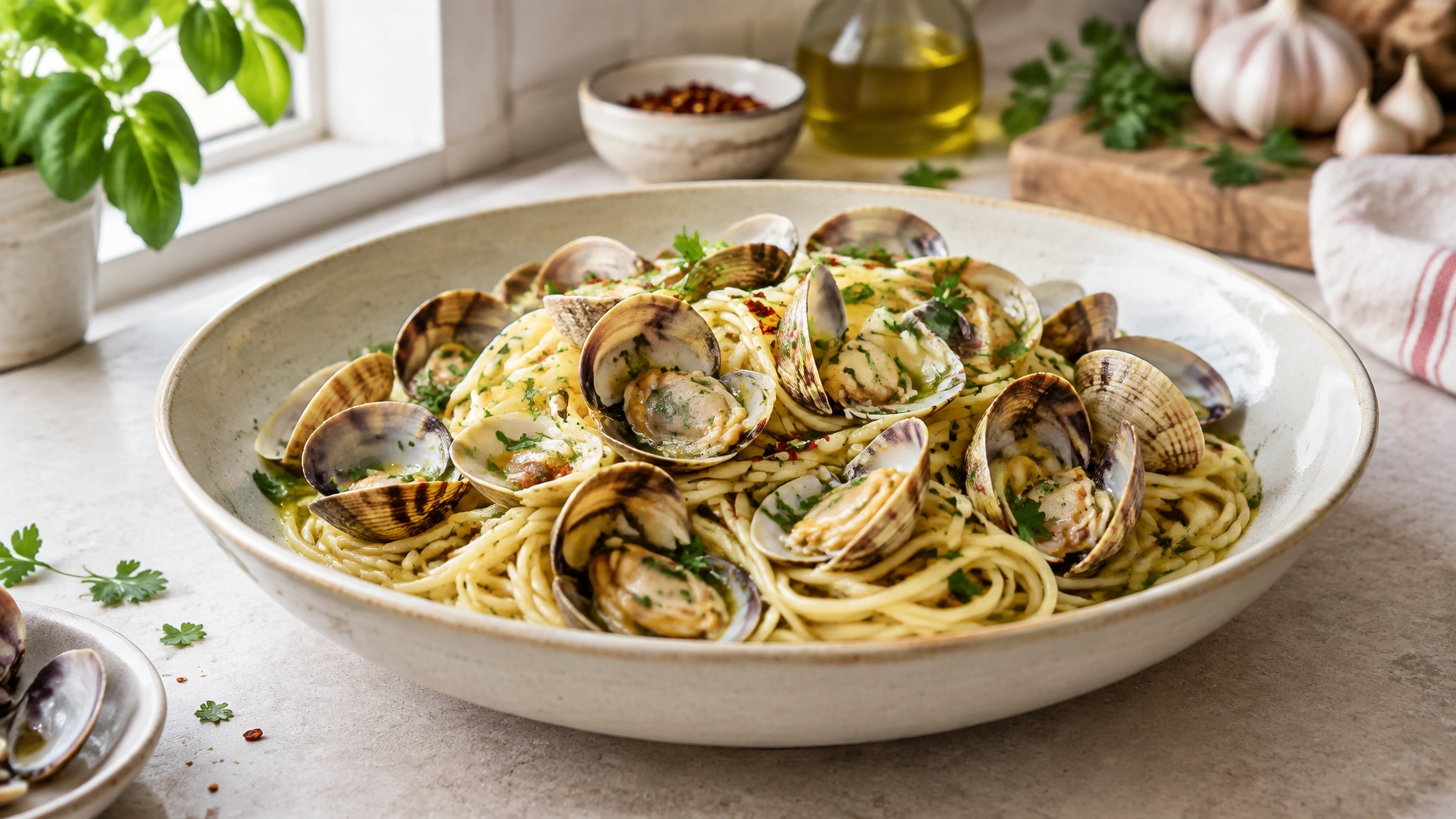
Spaghetti alle vongole is a classic Italian clam pasta made with spaghetti, olive oil, garlic, chilli, dry white wine and parsley. This recipe uses the white version, known as in bianco, with no tomato sauce.
The method is direct. Purge the clams, cook the spaghetti just below al dente, steam the clams in wine, then finish the pasta in the strained clam liquor. Pasta water supplies starch, which helps create a light, glossy emulsion.
Definition
vongole (noun, plural): clams used in Italian cookery.
in bianco (adjective phrase): prepared without tomato.
The result is a briny, aromatic pasta with a clean sauce that should coat the spaghetti rather than collect at the bottom of the bowl. The main risks are grit, overcooked clams and excess salt. Each is controlled by purging, straining and tasting before seasoning.
Preparation
Fill a large bowl with cold water and add enough salt to make it taste like seawater. Add the live clams and leave them for at least 30 minutes. Lift them from the bowl rather than pouring the water through a colander, then rinse them under cold running water.
If the bowl contains visible sand, repeat the process with fresh salted water. This is a functional step, not an optional presentation detail. Any sand left in the shells can enter the sauce.
Bring a large pot of water to the boil. Salt it generously, but remember that the clam liquor will also contain salt. Reserve at least 250 ml of pasta water before draining.
Tips
Purge thoroughly. Clams can contain sand. A seawater-strength soak followed by a final rinse reduces the risk. Do not use the purging water in the sauce.
Strain the clam liquor. Even well-purged clams can release small shell fragments. A fine sieve provides a cleaner finished dish.
Undercook the pasta first. The spaghetti needs time to absorb the clam liquor in the pan. Fully cooked pasta can become soft before the sauce emulsifies.
Add pasta water gradually. Too much liquid produces a thin sauce. Add a small splash, toss, then assess the consistency.
Control salt at the end. Clams and their liquor are naturally salty. Taste after the sauce has reduced before adding more salt.
Avoid overcooking the clams. Remove them as soon as they open. Return them to the pan only briefly at the end.
Use a wide pan. The pasta needs room to move. Tossing is necessary to combine the starch, olive oil and clam liquor.
Serve without delay. The sauce is at its best immediately after emulsification. Resting allows the pasta to absorb too much liquid.
Variations
Vongole rosso. Add the halved cherry tomatoes to the garlic and chilli oil after the wine has reduced. Cook for 3 to 4 minutes until softened, then add the clams. This creates a tomato-based version rather than the white in bianco style.
Linguine alle vongole. Replace the spaghetti with 400 g dried linguine. Linguine provides a slightly broader surface for the clam liquor and olive oil to coat.
Extra virgin olive oil finish. Add 1 to 2 tablespoons of extra virgin olive oil after removing the pan from the heat. Toss vigorously to increase gloss and soften the flavour of the chilli.
Clams in brine. Use drained clams in brine when live clams are unavailable. Do not steam them for several minutes. Prepare the garlic, chilli and wine base, add the drained clams near the end, then warm them briefly with the pasta. Use less salt.
FAQ
Can I use frozen clams?
Yes, if they are suitable for cooking and have been thawed according to the package instructions. Frozen clams may release less liquid than fresh clams, so use reserved pasta water to adjust the sauce.
Why is my clam pasta gritty?
The clams were probably not purged long enough, or the cooking liquor was not strained. Lift clams from the soaking water, repeat the purge if needed and filter the liquor through a fine sieve.
Can I make spaghetti alle vongole without wine?
Yes. Replace the wine with a small amount of water or unsalted fish stock. The flavour will be less acidic and less aromatic, but the clam liquor will still provide the main savoury character.
Should I remove the clams from their shells?
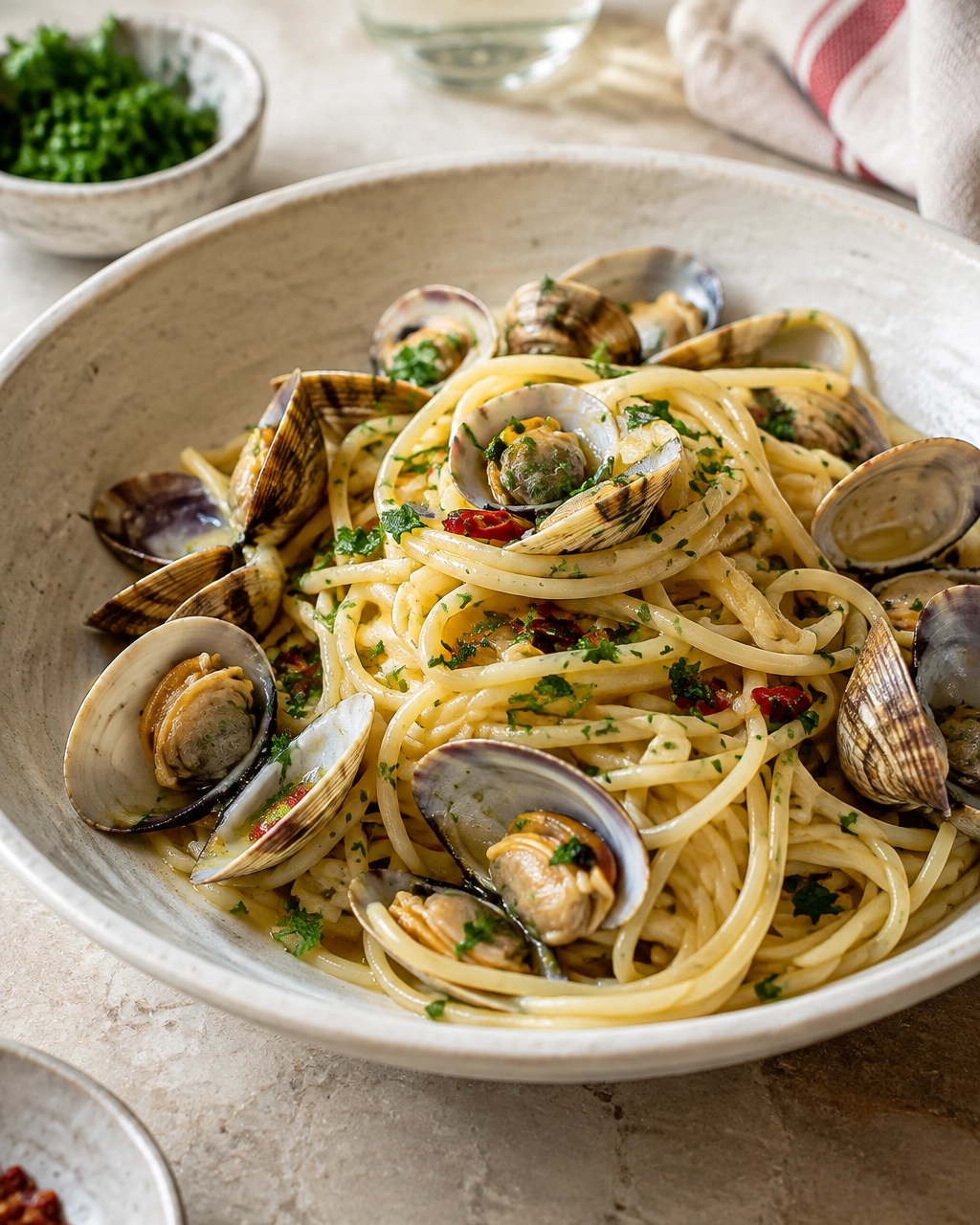
This is a serving preference. Keeping some in their shells provides a traditional appearance. Shelling most of the clams makes the pasta easier to eat and distributes the meat more evenly.
Can I prepare the sauce in advance?
The clam base can be prepared shortly before serving, but the pasta should be cooked and finished at the last moment. Reheating fully cooked spaghetti can make it soft, while reheating clams for too long can make them rubbery.