Recipe
Serves
4 1×
Serves 4Prep 10 minCook 10 minTotal 20 min
Ingredients
Method
- Prepare the chicken. If the chicken breasts are thick, slice each one horizontally to create thin cutlets. Place the cutlets between sheets of baking paper and pound them gently to an even thickness of approximately 1/4 inch. Season both sides with the salt and black pepper. Place the flour in a shallow dish and dredge each cutlet lightly. Shake off excess flour.
- Sear the cutlets. Heat a large skillet over medium-high heat. Add the olive oil and 1 tablespoon of the butter. When the butter foams, place the chicken in the skillet without overlapping the pieces. Cook for 2 to 3 minutes on each side, until lightly golden. Transfer the chicken to a clean plate.
- Build the sauce. Reduce the heat to medium. Add the minced garlic to the same skillet and cook for approximately 30 seconds. Pour in the chicken stock and lemon juice. Scrape the browned bits from the bottom of the skillet. Add the capers and simmer for 2 to 3 minutes, until the liquid has reduced slightly.
- Finish the chicken. Return the chicken and any collected juices to the skillet. Simmer gently for 2 minutes, turning the cutlets once, until the thickest part reaches 165°F or 74°C.
- Mount the sauce with butter. Remove the skillet from the heat. Add the remaining 2 tablespoons of butter and swirl the skillet until the butter melts into the sauce. Sprinkle with parsley and place the lemon slices over the chicken.
- Serve. Transfer the chicken to plates and spoon the lemon caper sauce over the top. Serve immediately with pasta, rice, mashed potatoes, or green vegetables.
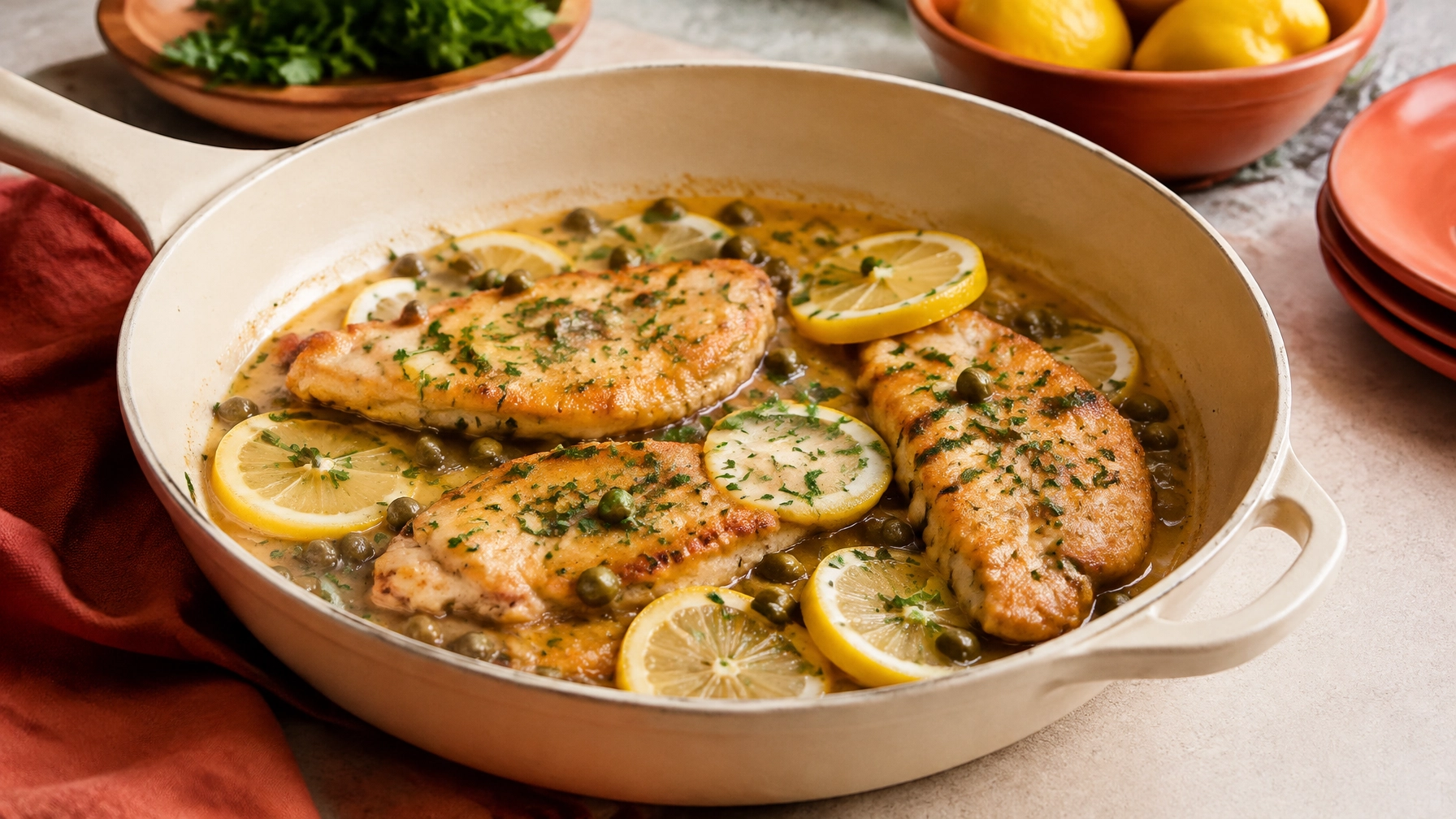
Chicken Piccata (Lemony 20-Minute Skillet)
Overview
Chicken piccata is a skillet dish made with thin chicken cutlets, a light flour coating, lemon juice, capers, chicken stock, and butter. The chicken cooks quickly, while the pan sauce forms from the browned residue left in the skillet.
This version is designed as a 20-minute dinner. It serves four people and uses one skillet for the chicken and sauce. The result is a bright, savoury main course with enough sauce for pasta, rice, potatoes, or steamed vegetables.
For food safety, cook chicken until the thickest part reaches 165°F or 74°C. The USDA poultry safety guidance provides further handling and temperature information.
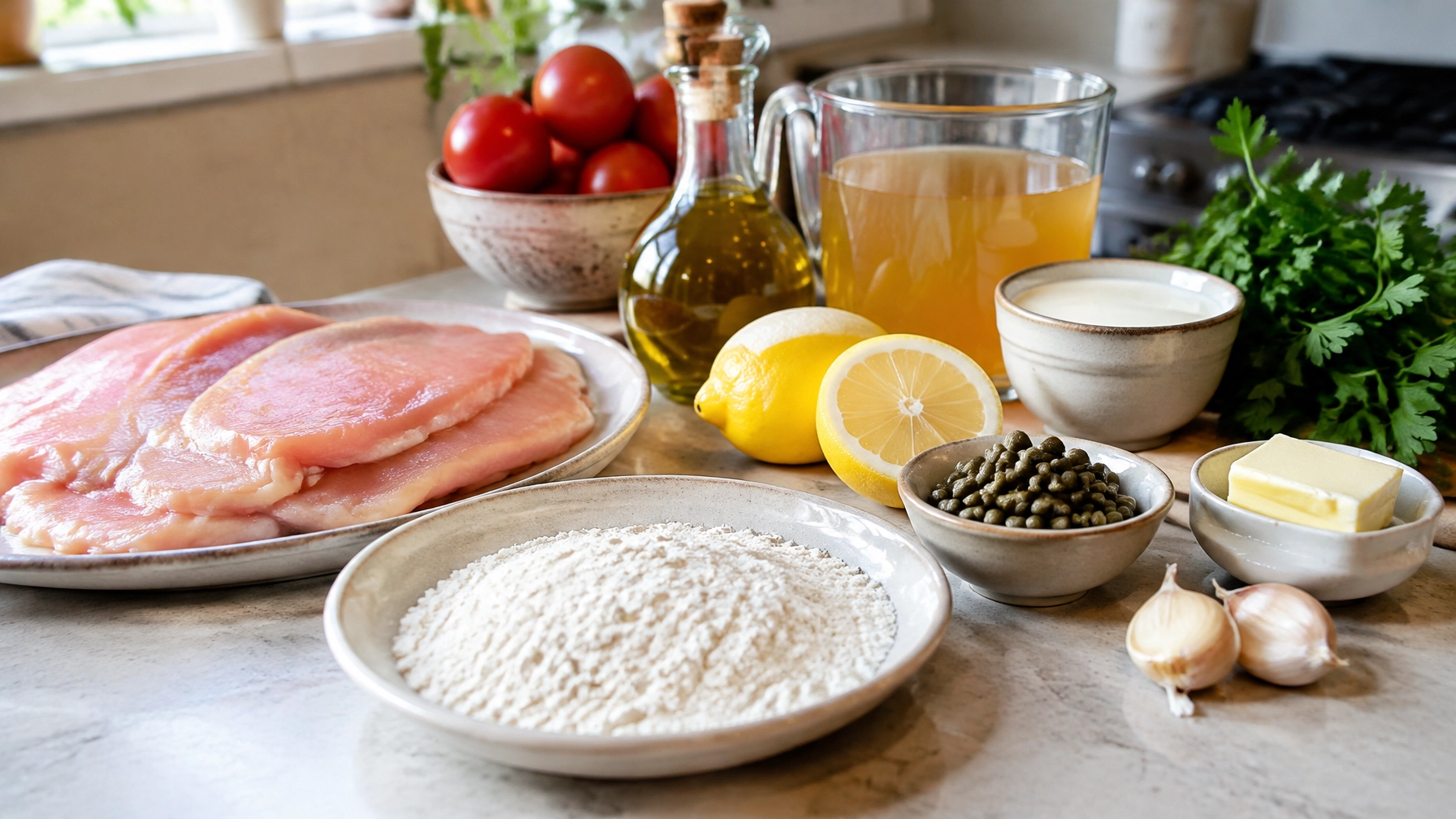
The principal requirement is thin chicken. Whole chicken breasts are too thick for a reliable 20-minute cooking time unless they are butterflied and gently pounded. Even cutlets brown more evenly and absorb the lemon caper sauce without becoming dry.
Recipe
Servings: 4
Prep time: 10 minutes
Cook time: 10 minutes
Total time: 20 minutes
Tips
Use thin cutlets
Uniform thickness is more important than exact shape. Thin cutlets cook quickly and reduce the risk of a browned exterior with an undercooked centre. If using pre-cut chicken escalopes, check their thickness before cooking.
Flour lightly
The flour should form a thin coating. Excess flour can make the sauce heavy or pasty. Shake each cutlet before it enters the skillet.
Keep the pan hot
The oil and butter should be hot enough for the chicken to sizzle immediately. A lukewarm skillet can cause the flour coating to absorb fat instead of browning.
Deglaze completely
Use a wooden spoon or silicone spatula to lift the browned residue from the skillet. Those browned pieces provide much of the savoury base for the sauce.
Add butter at the end
Finishing the sauce with butter creates a smoother texture. Add it off the heat or over very low heat. Vigorous boiling after the butter is added can cause the sauce to separate.
Use fresh lemon juice
Fresh lemon juice has a cleaner acidity than bottled juice. Add the juice before the final butter so the sauce has time to reduce and balance.
Check the temperature
Thin chicken can move from cooked to dry quickly. Use an instant-read thermometer in the thickest part of a cutlet rather than relying only on cooking time.
Variations
White wine chicken piccata
Replace 1/2 cup of the chicken stock with dry white wine. Simmer the wine for 1 to 2 minutes before adding the remaining stock, lemon juice, and capers. This creates a sharper, more aromatic sauce.
Creamy chicken piccata
After the stock has reduced, add 1/3 cup of heavy cream. Simmer gently until slightly thickened, then add the chicken and finish with butter. This is a richer variation and is less acidic than the standard version.
Parmesan chicken piccata
Add 2 tablespoons of finely grated Parmesan to the flour. Press the coating lightly onto the chicken before searing. Monitor the heat because cheese can brown faster than plain flour.
Chicken piccata with vegetables
Add trimmed asparagus, spinach, or green beans during the final stage. Firm vegetables should be blanched or steamed first. Tender greens can be stirred into the sauce after the chicken is returned to the skillet.
FAQ
What is chicken piccata?
Chicken piccata is a dish of thin chicken cutlets served with a lemon, caper, and butter sauce. The chicken is commonly coated lightly in flour and pan-seared before the sauce is made in the same skillet.
Can chicken piccata be made without capers?
Yes. Capers provide a salty, sharp flavour, but they can be omitted. Add a small amount of finely chopped green olive or an additional pinch of salt if a similar savoury note is required.
Can I use chicken thighs?
Yes. Boneless, skinless chicken thighs can be used, but they are generally thicker and require a longer cooking time. Flatten them to an even thickness and verify that they reach 165°F or 74°C before serving.
Why is my chicken piccata sauce bitter?
Excessive lemon juice, burnt garlic, or overheated butter can make the sauce bitter. Use fresh lemon juice, cook the garlic briefly, and remove the skillet from high heat before adding the final butter.
How should chicken piccata be stored?
Refrigerate leftovers in a sealed container within 2 hours of cooking. Use them within 3 to 4 days. Reheat gently in a skillet or microwave until the centre reaches 165°F or 74°C. The sauce may separate slightly during reheating.
What should I serve with chicken piccata?
Pasta, rice, mashed potatoes, couscous, roasted potatoes, steamed green beans, and sautéed spinach all work with the lemon caper sauce. Choose a plain side that can absorb the sauce without competing with it.