Recipe
Serves
2 1×
Serves 2Prep 10 minTotal 8H10 min
Ingredients
Method
- Add the Greek yoghurt, cocoa powder, maple syrup, vanilla extract and salt to a medium bowl. Stir until the cocoa is blended into the yoghurt.
- Pour in the milk and stir until the mixture is smooth.
- Add the rolled oats and chia seeds. Stir thoroughly, scraping the sides and base of the bowl so the ingredients are evenly combined.
- Divide the mixture between two clean, covered containers, or cover the bowl.
- Refrigerate for at least 8 hours, or overnight.
- Before serving, stir the oats. Add extra milk a little at a time if the mixture is too thick.
- Serve cold with toppings, if using.
Chocolate Overnight Oats (Make-Ahead Breakfast)
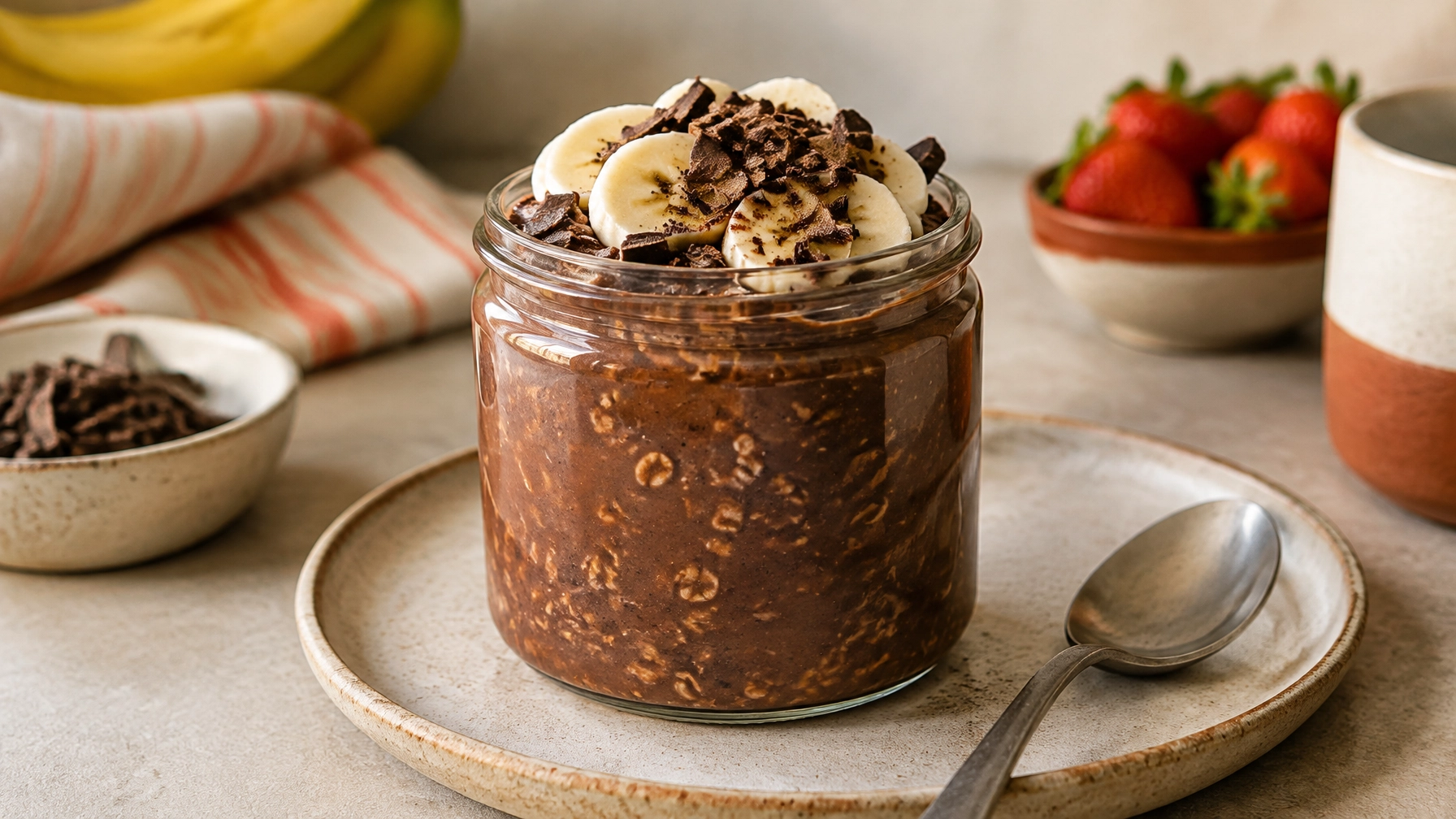
Chocolate overnight oats combine rolled oats, milk, yoghurt, cocoa and chia seeds in a chilled, ready-to-eat breakfast. Prepare two portions the evening before and serve cold with fruit or other toppings.
Overnight oats are mixed rather than cooked. The refrigerator softens the oats and thickens the mixture while it chills. Here, unsweetened cocoa provides the chocolate flavour, while yoghurt adds creaminess and chia seeds help set the texture. Maple syrup is optional, so the sweetness can be adjusted to taste.
Make the recipe in a covered bowl or in individual jars. Stir the mixture before chilling so the cocoa and chia seeds are evenly distributed, then stir once more before serving. If the oats are thicker than preferred, add a little milk.
Definition
Overnight oats (noun): rolled oats combined with liquid and other ingredients, then refrigerated until softened. The term describes a preparation method; the mixture is not cooked during chilling.
Preparation
Use old-fashioned rolled oats for a soft but defined texture. Quick oats soften more rapidly and may produce a less distinct texture. For a gluten-free breakfast, select oats labelled gluten-free.
Cocoa powder can clump when it is added directly to cold liquid. Mix it with the yoghurt and sweetener first, then add the milk and oats. Stir thoroughly around the bottom and sides of the bowl. This helps distribute the cocoa and prevents dry pockets in the finished oats.
Chia seeds absorb liquid as they rest. They make the mixture thicker, so the amount of milk matters. The recipe uses enough liquid for a spoonable consistency after chilling. Add a splash more milk at serving time if needed.
Storage
Cover the prepared oats and refrigerate them promptly. Do not leave the uncooked oat mixture at room temperature overnight. Keep prepared portions chilled and eat within two days. Use a clean container and spoon when preparing and serving.
For meal preparation, divide the mixture between two covered containers before refrigerating. Keep toppings such as sliced banana, nuts and berries separate until serving if a firmer texture is preferred.
Recipe
Servings: 2
Prep time: 10 minutes
Cook time: 0 minutes
Total time: 8 hours 10 minutes, including overnight chilling
Tips
Prevent cocoa lumps. Blend the cocoa with the yoghurt before adding the milk and oats. If a few small lumps remain, press them against the side of the bowl with the spoon.
Adjust sweetness. The stated amount of maple syrup gives a moderately sweet result. Start with less if preferred; add more after chilling if needed.
Check the texture. Chia seeds continue to absorb liquid while the oats rest. Stir before serving and adjust with milk rather than adding extra liquid before chilling.
Prepare portions individually. Divide the mixture between two jars before refrigerating. This makes the portions ready to serve and reduces the need to transfer the oats in the morning.
Add toppings at serving. Fresh fruit, nuts and yoghurt can be added just before eating. Keeping them separate preserves more texture during storage.
Variations
Banana chocolate. Stir half a mashed ripe banana into the mixture before chilling. Add banana slices on top when serving.
Berry chocolate. Serve with fresh or thawed berries. Fold them in immediately before eating to keep their colour and texture distinct.
Nut butter. Stir one tablespoon of smooth peanut or almond butter into the yoghurt and cocoa mixture. Add a little extra milk if the finished oats are too dense.
Dairy-free. Use an unsweetened plant-based milk and a plain dairy-free yoghurt. Check the package labels to confirm that both suit your dietary requirements.
More intense cocoa. Increase the cocoa powder by one teaspoon, then taste after chilling. A stronger cocoa flavour can make the oats taste less sweet, so adjust the maple syrup if required.
FAQ
Can chocolate overnight oats be eaten cold?
Yes. They are prepared by soaking the ingredients in the refrigerator and are served cold. Stir before eating and add milk if necessary.
How long do the oats need to chill?
Chill them for at least 8 hours for the texture in this recipe. They can be left in the refrigerator overnight.
Can I make the recipe without chia seeds?
Yes. Omit them, then check the mixture after chilling. It may be less thick; stir in a small amount of extra oats or reduce the milk slightly next time.
How long can chocolate overnight oats be stored?
Keep the covered containers refrigerated and use the oats within two days. Add fresh toppings shortly before serving.
Can I heat overnight oats?
They are designed to be eaten cold. If you prefer them warm, transfer a portion to a suitable bowl and heat it until warm, stirring as needed. Do not heat the storage container unless it is labelled as microwave-safe.
Can I use instant oats?
Yes, but the result may be softer. Old-fashioned rolled oats are used here because they retain more texture after chilling.