Recipe
Serves
9 1×
Serves 9Prep 35 minCook 22 minTotal 3H12 min
Ingredients
Method
- Mix the flour, caster sugar, yeast and salt. Add the egg and lukewarm milk, then mix until no dry flour remains.
- Knead until smoother. Add 50g softened butter gradually and continue kneading until the dough is elastic. Cover and leave for 90 minutes, until doubled.
- Grease and line a 23cm square tin. Mix the filling butter, brown sugar and cinnamon.
- Roll the dough to about 45cm by 30cm. Spread with filling, leaving one long edge clear. Roll up, seal the seam and cut into nine pieces.
- Arrange the pieces spiral-side up in the tin. Cover and leave to rise for 45 minutes. Heat the oven to 190°C fan or 210°C conventional.
- Bake for 22 minutes, until golden and baked through. Cool in the tin for 10 minutes. Mix the cream cheese, icing sugar, milk and vanilla, then spread over the warm buns.
Cinnamon Swirl Buns
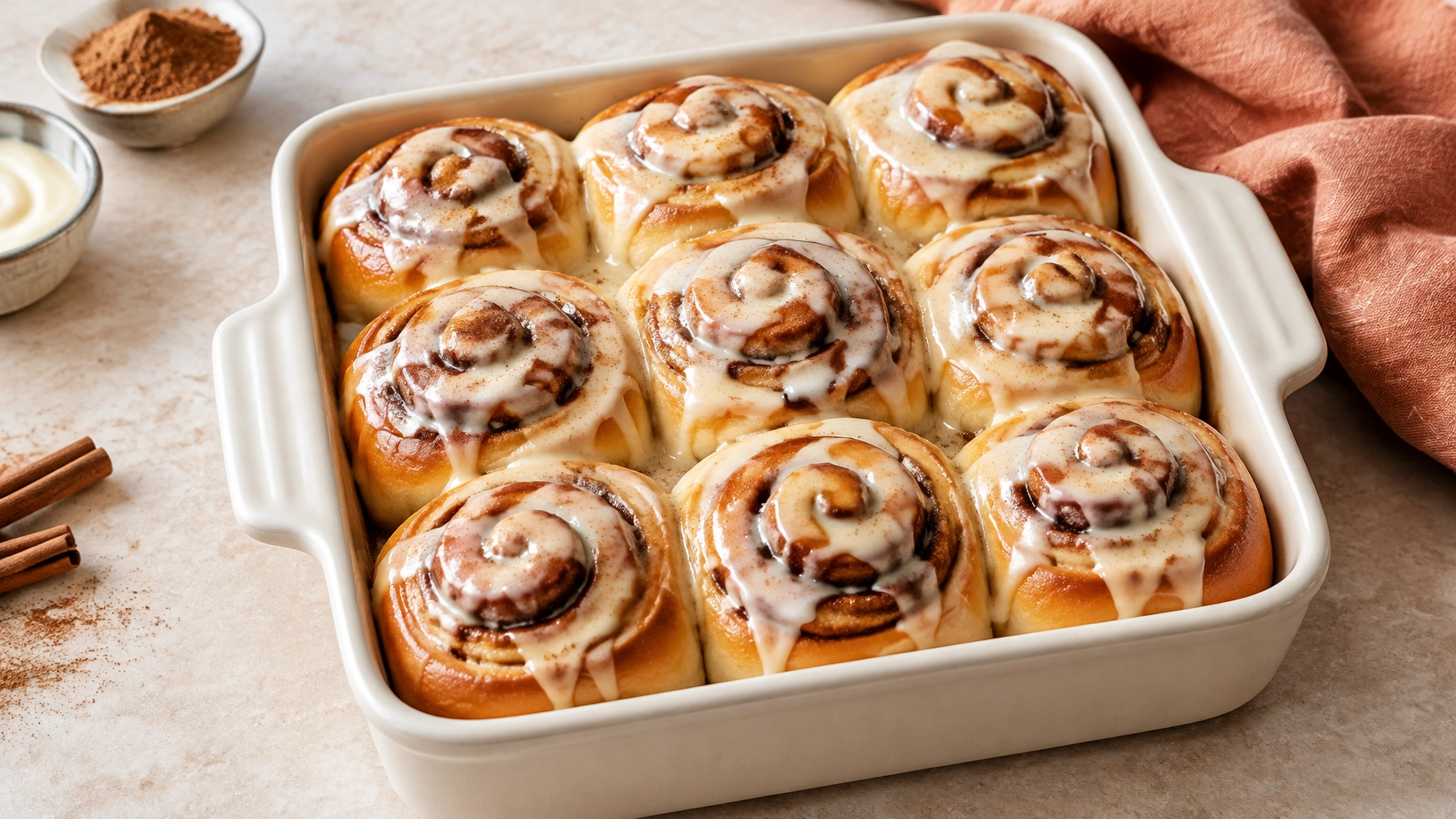
Cinnamon bun (noun): an enriched bread roll containing a cinnamon-sugar filling, baked until risen and browned, and finished with icing or glaze.
This recipe makes nine cinnamon buns in a 23cm square tin. The dough is soft and enriched with milk, egg and butter. Allow time for two rises: they help the buns develop a light, tender crumb. For the specified oven setting, use 190°C fan or 210°C conventional.
Result
The finished buns should be golden on top, soft inside and visibly spiralled with cinnamon sugar. A little filling may escape during baking and caramelise at the edges. That is expected. The centre buns may be paler than those at the edges because they are close together in the tin.
Cream cheese glaze adds a mild tang and a soft finish. Icing sugar mixed with milk makes a thinner glaze without cream cheese. Either should be added after baking. Applying it to buns straight from the oven can cause it to melt away.
Technique
Rolling the dough into an even rectangle helps produce buns of a similar size. If one side is noticeably thicker, the smaller buns may bake sooner and the larger ones may need longer. Keep the filling within the dough’s edges so it is less likely to squeeze out as the roll is shaped.
Use a sharp knife or unflavoured dental floss to cut the roll. With a knife, use a gentle sawing motion rather than pressing straight down. Pressing can flatten the spiral and push filling out. To cut with floss, slide it under the roll, cross the ends over the top and pull them in opposite directions.
The buns will expand during the second rise and in the oven. Leave a little space around each piece when arranging them in the tin. If the pieces are already touching after shaping, they may need slightly less time to rise; check for puffiness rather than waiting for a precise increase in size.
Changes
For a simple icing instead of cream cheese glaze, mix 100g icing sugar with 1 tablespoon milk. Add the milk gradually until the icing falls from a spoon in a thin ribbon. Drizzle it over the cooled or warm buns.
For a stronger cinnamon flavour, increase the ground cinnamon in the filling to 2½ teaspoons. Do not increase it substantially without changing the sugar balance: a very heavy layer of filling can leak out and burn at the sides of the tin.
The recipe is designed for a 23cm square tin. A different-sized tin changes how closely the buns fit together and may affect their baking time. Check that the centre buns are baked through before removing the tin from the oven.
Storage
Plain baked buns can be kept covered at room temperature for a short period. Once topped with cream cheese glaze, refrigerate them in a covered container. Bring them back towards room temperature before serving if a softer glaze and crumb are preferred.
For chilled food, follow the product’s storage instructions and keep the refrigerator at 5°C or below. The Food Standards Agency’s guidance on chilling food explains how prompt, correct chilling helps limit the growth of harmful bacteria.
Questions
Can the dough be prepared ahead?
Yes. After shaping, cover the tin and refrigerate the buns overnight. Before baking, let them stand at room temperature until puffy; the time required will depend on how cold they are and the room temperature. Bake once they have visibly risen.
Why are the buns dense?
Common causes include adding too much flour, insufficient kneading or not allowing enough time for the dough to rise. Enriched dough can feel sticky before the butter is fully incorporated. Knead until smooth and elastic, then give it time to expand.
Can the glaze be left off?
Yes. The buns can be served plain, or finished with the simple icing sugar glaze described above. Add either topping only after baking.
How do I know the buns are baked?
Look for a golden top and check a centre bun for a doughy interior. If the tops brown before the centres are baked, cover the tin loosely with foil and continue baking until the centre is set.
Recipe
Serves: 9
Prep time: 35 minutes
Rise time: 2 hours 15 minutes
Cook time: 22 minutes
Total time: 3 hours 12 minutes