Classic Minestrone Soup (Vegetable-Packed)
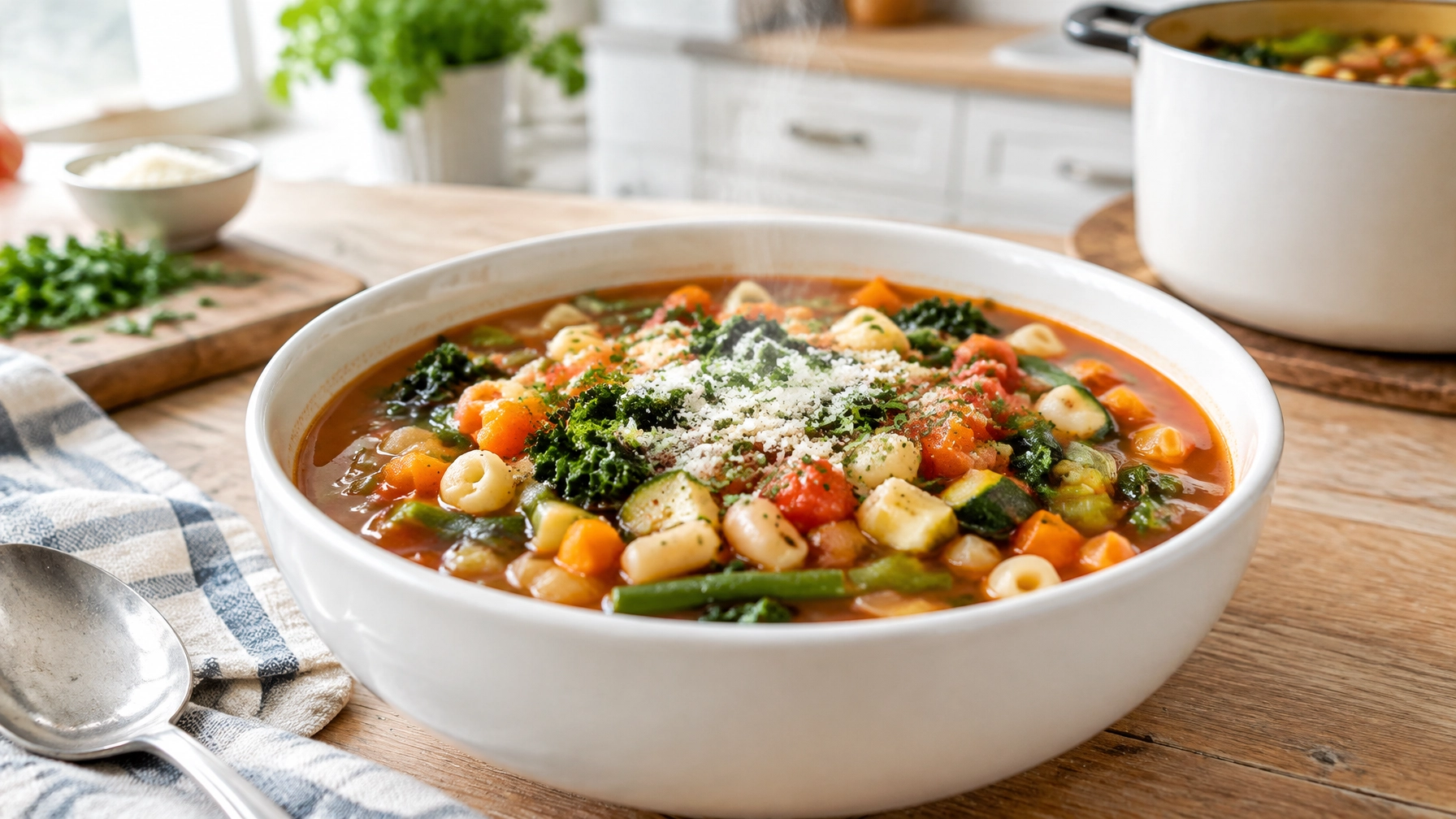
A standard minestrone is a vegetable-based Italian soup prepared with aromatic vegetables, tomatoes, beans, pasta and broth. The ingredient list is flexible. The required outcome is a substantial soup with varied textures, a balanced tomato broth and enough vegetables to function as a complete meal.
This vegetable-packed version is suitable for a daily batch. It produces six servings, uses ordinary ingredients and can be adjusted according to seasonal produce or available pantry items.
Definition
minestrone (noun): A thick Italian soup containing vegetables and commonly including beans, pasta, rice or other starches.
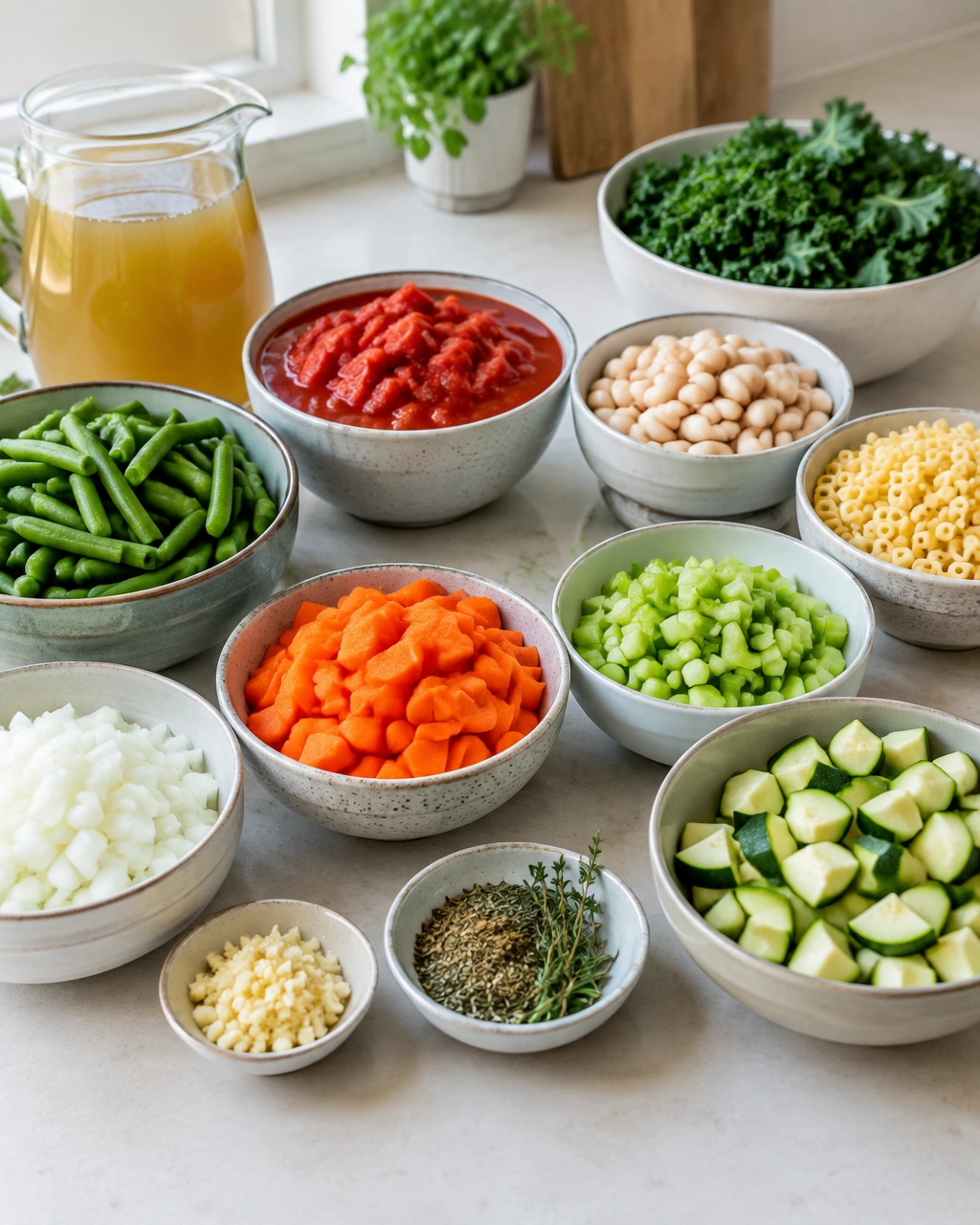
The recipe below uses onion, carrot and celery as the base. Courgette, green beans, potatoes, tomatoes, cannellini beans, small pasta and leafy greens are then added in stages according to their cooking times.
Recipe
Details
- Servings: 6
- Prep time: 20 minutes
- Cook time: 45 minutes
- Total time: 1 hour 5 minutes
- Category: Soup
- Cuisine: Italian-inspired
- Method: Stovetop
- Dietary profile: Vegetarian when made with vegetable broth and served without Parmesan
- Storage: Refrigerate for up to 4 days
Ingredients
Soup base
- 2 tablespoons olive oil
- 1 medium yellow onion, finely diced
- 2 medium carrots, diced
- 2 celery sticks, diced
- 4 garlic cloves, finely minced
- 2 tablespoons tomato purée or tomato paste
- 1 teaspoon dried oregano
- 1 teaspoon dried thyme
- 1 bay leaf
- ¼ teaspoon red pepper flakes, optional
Vegetables and liquid
- 1 medium potato, peeled and cut into 1 cm cubes
- 1 medium courgette, diced
- 150 g green beans, trimmed and cut into short pieces
- 1 x 400 g tin chopped tomatoes
- 1.5 litres vegetable broth
- 250 ml water, plus more if required
- 1 x 400 g tin cannellini beans, drained and rinsed
- 100 g small pasta, such as ditalini, macaroni or small shells
- 100 g kale or spinach, roughly chopped
To finish
- 1 teaspoon fine salt, or to taste
- ½ teaspoon black pepper
- 1 tablespoon lemon juice or red wine vinegar
- Grated Parmesan, optional
- Chopped fresh parsley, optional
Method
Prepare the base. Heat the olive oil in a large, heavy-bottomed saucepan or Dutch oven over medium heat. Add the onion, carrots, celery and a small pinch of salt. Cook for 8–10 minutes, stirring regularly, until the vegetables soften. Browning is not required.
Add the garlic and seasonings. Stir in the garlic, tomato purée, oregano, thyme, bay leaf and red pepper flakes, if used. Cook for 1–2 minutes. Do not allow the garlic to darken.
Add the firm vegetables. Add the potato, courgette and green beans. Stir until coated in the tomato and herb mixture.
Add the broth. Pour in the chopped tomatoes, vegetable broth and water. Stir, then bring the soup to a controlled boil.
Simmer. Reduce the heat to low. Partially cover the pan and simmer for 20–25 minutes, or until the potato and green beans are nearly tender.
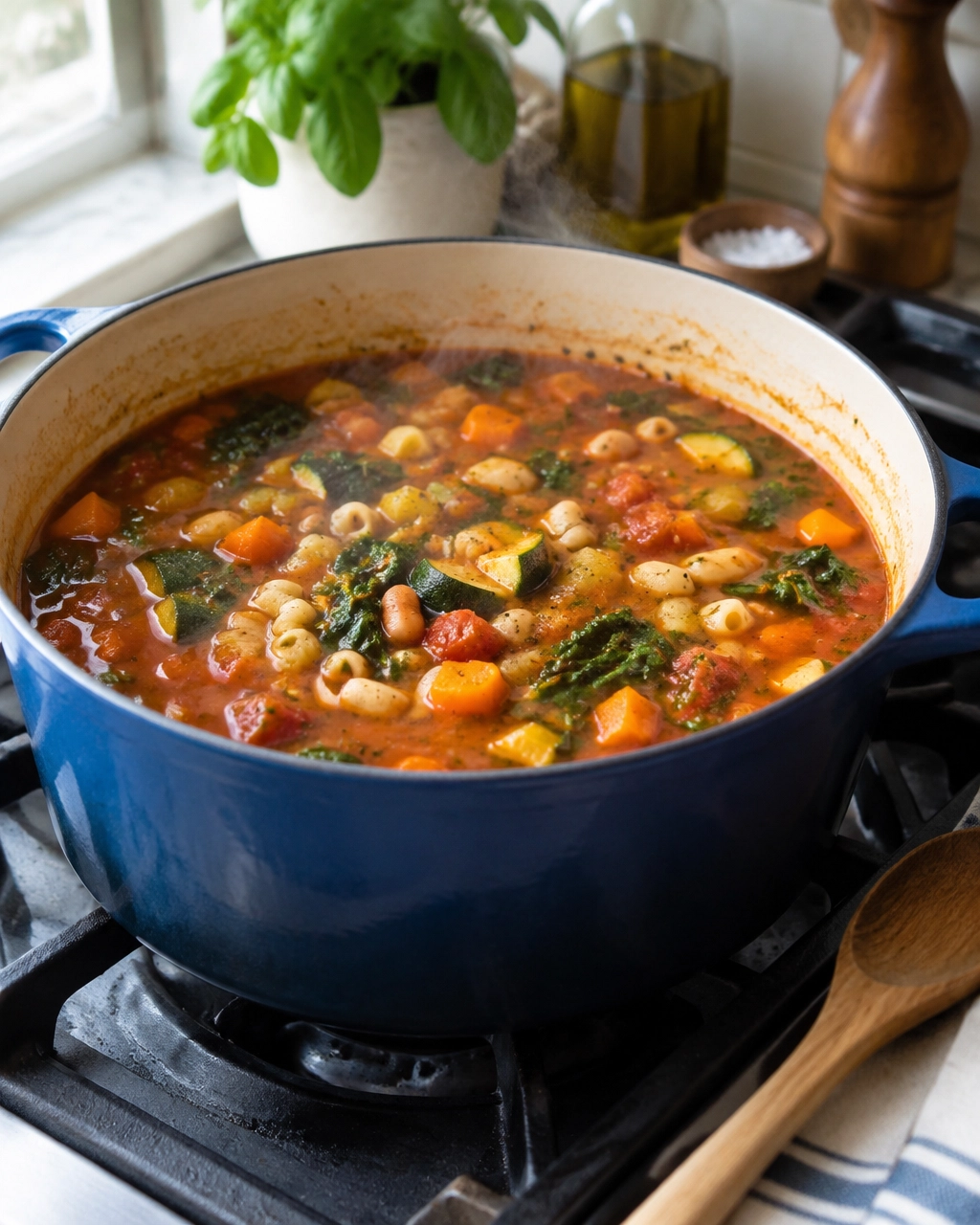
Add the beans and pasta. Stir in the cannellini beans and pasta. Continue simmering uncovered for the cooking time stated on the pasta packet, usually 8–12 minutes. Stir occasionally to prevent the pasta from settling on the base of the pan.
Add the greens. Stir in the kale or spinach. Cook for 2–4 minutes, until the greens are tender. If the soup has become too thick, add water or broth in small amounts.
Complete the seasoning. Remove the bay leaf. Stir in the lemon juice or vinegar. Taste and adjust the salt and black pepper. The acidity is optional but provides a clear contrast to the sweet vegetables and tomato broth.
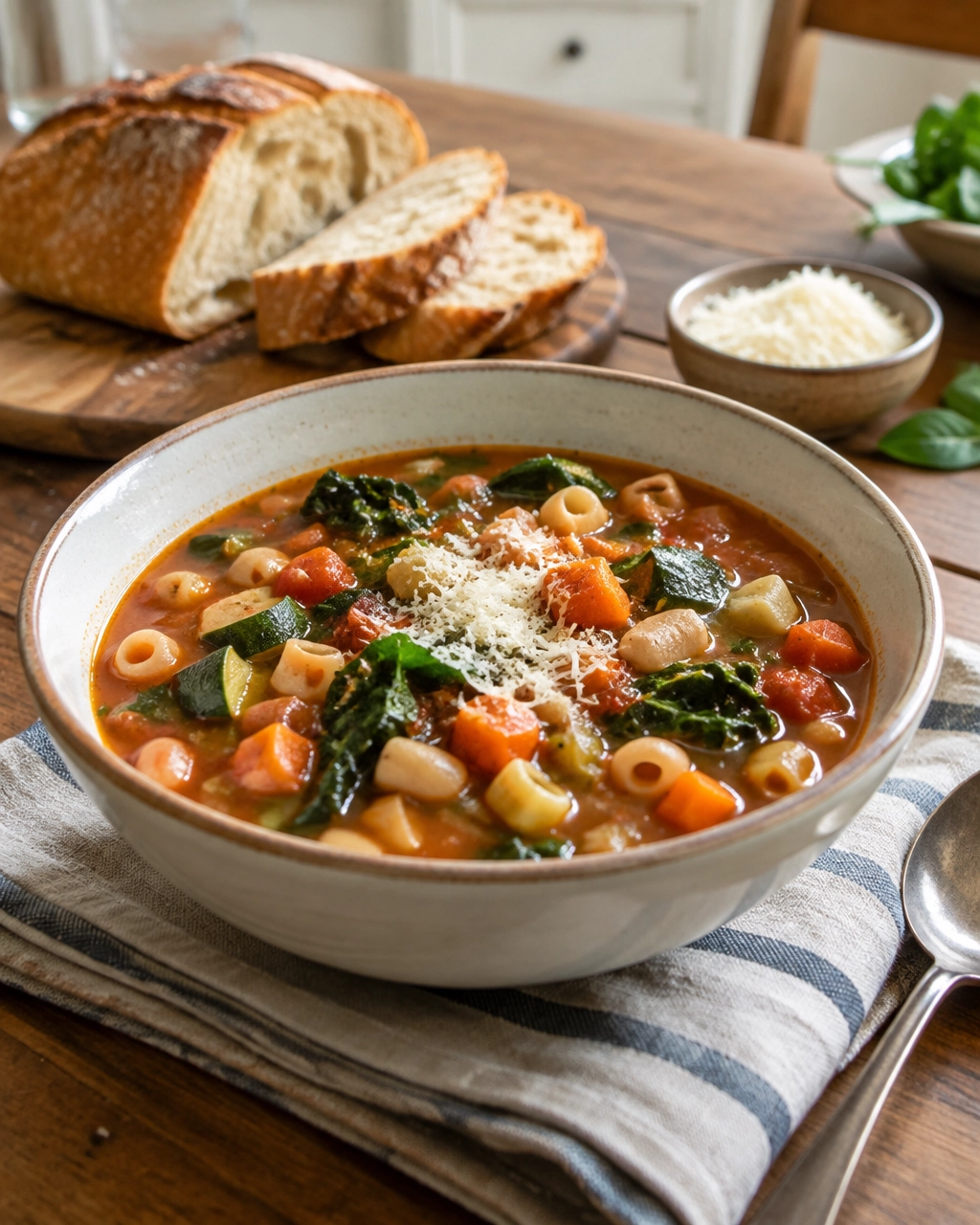
Serve. Ladle the soup into bowls. Add Parmesan and parsley if required. Serve immediately.
Compliance
- Wash vegetables before preparation.
- Use a clean knife and chopping board.
- Keep refrigerated ingredients cold until required.
- Do not leave cooked soup at room temperature for extended periods.
- Cool leftovers promptly in shallow containers before refrigeration.
- Reheat only the quantity required, until fully hot throughout.
- Check the broth, beans and Parmesan labels for allergen and dietary information.
- Parmesan is not suitable for a vegan version unless replaced with a certified vegan alternative.
Tips
Control the texture
Minestrone thickens as the pasta absorbs broth. For a soupier result, add 250–500 ml additional broth or water before serving. If preparing the soup in advance, cook the pasta separately and add it to each bowl. This prevents it from becoming excessively soft during storage.
Use a large pan
The vegetables should sit in a broad layer while the aromatics cook. Crowding can cause them to steam unevenly and may increase the cooking time.
Season in stages
Salt added at the beginning helps the vegetables soften. Final seasoning must take account of the salt level in the broth, tinned tomatoes and beans. Add the final amount only after all ingredients have cooked.
Preserve the vegetables
Do not overcook the greens. Spinach requires only a short wilt. Kale requires slightly longer. Add either ingredient at the end of cooking to retain a defined texture and colour.
Store correctly
Transfer cooled soup to airtight containers and refrigerate for up to 4 days. Reheat gently on the hob or in a microwave-safe container. Add broth or water as necessary.
For freezing, omit the pasta where possible. Freeze the cooled soup in labelled portions for up to 3 months. Add freshly cooked pasta after thawing and reheating.
Variations
Seasonal
Replace the courgette and green beans with pumpkin, butternut squash, cabbage, peas, sweetcorn or additional carrots. Add firm vegetables at the beginning of the simmer and tender vegetables later.
Bean-based
Use borlotti beans, Great Northern beans, kidney beans or a mixture. The beans can be lightly crushed against the side of the pan to produce a thicker broth.
Gluten-free
Use certified gluten-free small pasta. Alternatively, replace the pasta with rice, quinoa or extra beans. Confirm that the vegetable broth and other packaged ingredients are certified gluten-free if required.
Vegan
Use vegetable broth and omit Parmesan. Finish with chopped parsley, basil, nutritional yeast or a small amount of lemon juice.
Meat-containing
For a non-vegetarian version, cook diced pancetta before adding the onion. Reduce the olive oil if sufficient fat has rendered. Chicken broth may also be used, subject to dietary requirements.
Parmesan finish
Simmer a Parmesan rind in the broth for additional savoury depth. Remove it before serving. The rind must be discarded if a vegetarian recipe is required, unless the product is suitable for vegetarians.
Questions
Can minestrone soup be made ahead?
Yes. The soup can be prepared up to 4 days in advance and stored in the refrigerator. The pasta will continue absorbing liquid, so add broth when reheating.
Why is my minestrone too thick?
Pasta and beans absorb broth during cooking and storage. Stir in hot water or additional vegetable broth until the required consistency is reached. Adjust the seasoning afterwards.
Can I use frozen vegetables?
Yes. Frozen peas, green beans, spinach and mixed vegetables are suitable. Add them according to their size and stated cooking requirements. Frozen spinach should be thawed or added early enough to heat completely.
Should the pasta be cooked separately?
It is not required for immediate service. Cook it separately when the soup will be stored, frozen or reheated over several days. This maintains a firmer texture.
Can I make minestrone without tomatoes?
Yes. Replace the tinned tomatoes with additional broth and use a small amount of tomato purée if some acidity is preferred. The resulting soup will be lighter in colour and flavour.
What should be served with minestrone?
Serve with crusty bread, toasted sourdough or a simple green salad. Parmesan, fresh herbs and a small amount of olive oil may be added at the table.
Sources
This recipe follows the standard minestrone structure described by Cookie and Kate, BBC Food and Love & Lemons. Ingredient quantities and timings above are arranged as a six-serving daily batch.