Recipe
Prep 20 min
Ingredients
Method
- Heat the oven to 190°C, 170°C fan or Gas Mark 5. Line a baking tray with baking paper.
- Place the softened butter and caster sugar in a mixing bowl. Beat them together until smooth and creamy. A wooden spoon, hand mixer or stand mixer can be used.
- Add the plain flour gradually. Stir until the mixture forms a soft dough. Stop mixing as soon as no dry flour remains.
- Transfer the dough to a lightly floured work surface. Press or knead it briefly to bring it together. Do not knead it for longer than necessary.
- Roll the dough to approximately 1 centimetre thick. Cut out rounds, fingers or squares using a lightly floured cutter or knife.
- Arrange the biscuits on the prepared tray, leaving a small amount of space between each one. Prick the surface of each biscuit with a fork. Sprinkle with a little caster sugar if required.
- Place the tray in the fridge for 20 minutes. This firms the butter and reduces spreading during baking.
- Bake for 15 to 20 minutes, or until the edges are pale golden. The centres should remain light.
- Leave the biscuits on the tray for five minutes. Transfer them to a wire rack and allow them to cool completely before serving.
Classic Shortbread Cookies (3-Ingredient)
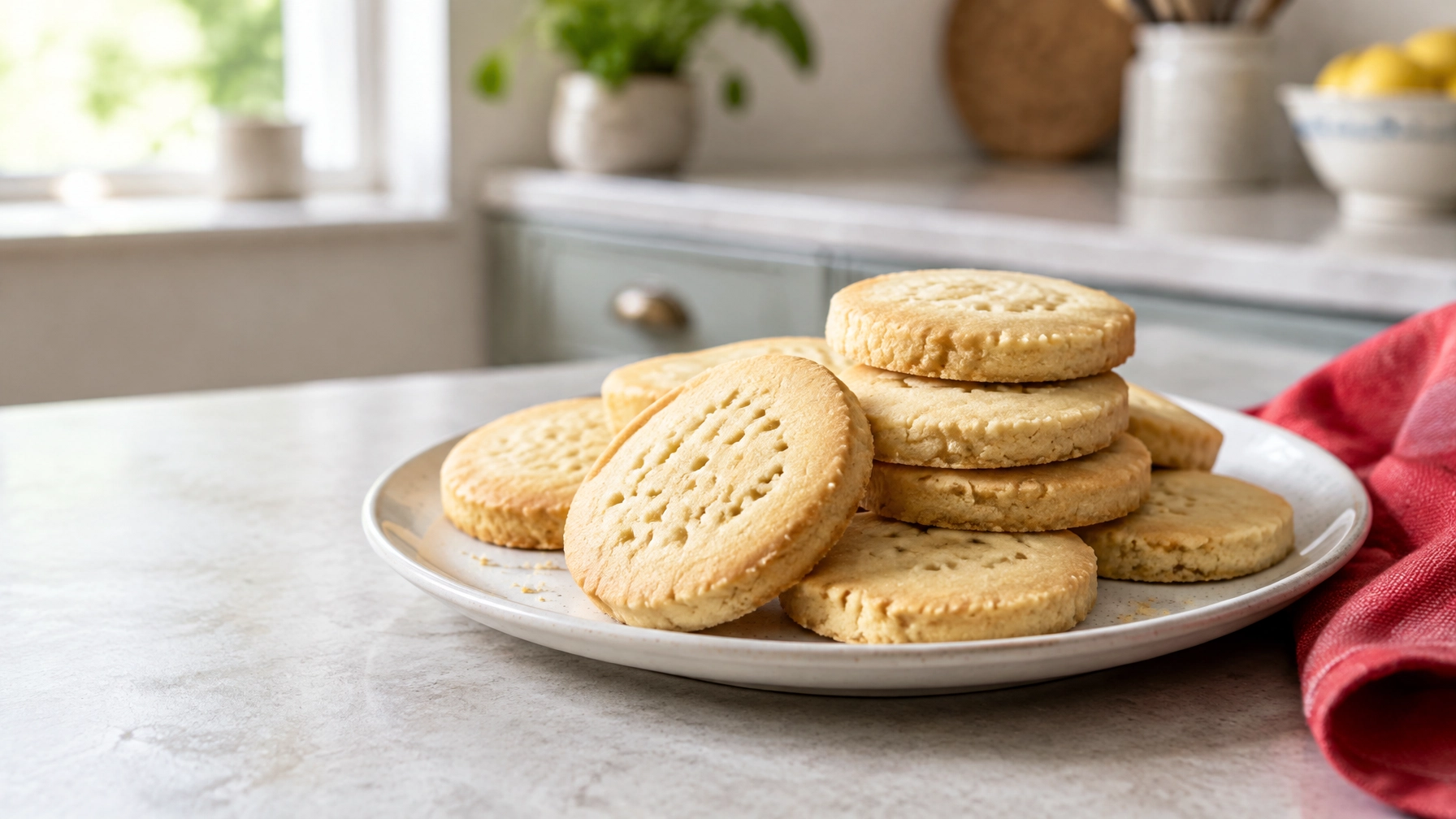
These classic shortbread cookies use three basic ingredients to produce a crisp, buttery biscuit with a tender crumb.
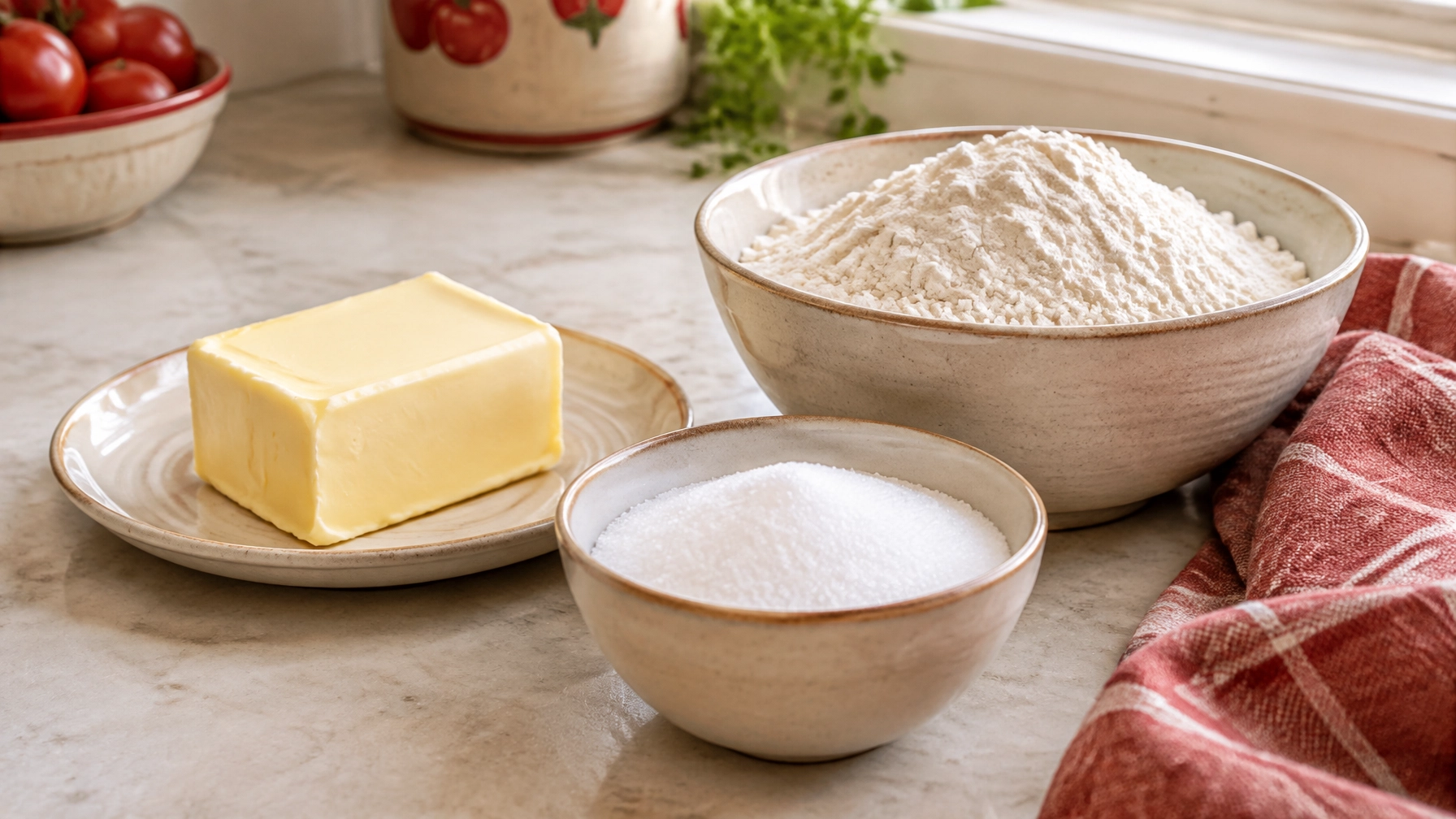
Shortbread is a controlled mixture of butter, sugar and flour. No raising agent is required. The texture depends on the ingredient ratio, the handling of the dough and the baking temperature.
This recipe makes simple shortbread cookies with lightly crisp edges and a soft, crumbly centre. The dough can be cut into rounds, fingers or small squares. It is suitable for everyday baking, afternoon tea or a simple homemade gift.
The method is straightforward, but several details affect the result. Butter should be softened rather than melted. The flour should be incorporated without excessive kneading. Chilling the shaped biscuits helps them retain their form in the oven.
What makes good shortbread cookies
Classic shortbread relies on a high proportion of butter. This gives the biscuits their characteristic richness and crumbly texture. Caster sugar dissolves more easily than larger granulated sugar crystals, while plain flour provides enough structure for the dough to hold its shape.
The dough should come together without becoming elastic. Overworking it can make the finished biscuits firm rather than tender. Mix only until the flour has been absorbed and the dough can be pressed into a smooth ball.
A thickness of about 1 centimetre provides a useful balance. Thinner biscuits bake quickly and become crisp throughout. Thicker biscuits remain more tender in the centre but require closer attention during baking.
Shortbread should remain pale with lightly golden edges. Dark browning can produce a bitter flavour and a harder texture. Remove the biscuits from the oven when the edges are coloured but the centres still look light.
Recipe
Servings
Makes 16 to 20 shortbread cookies.
Prep time
20 minutes, plus 20 minutes chilling time.
Cook time
15 to 20 minutes.
Total time
55 to 60 minutes.
Tips
Use softened butter
Softened butter should yield when pressed but should not look oily or liquid. Melted butter can cause the biscuits to spread and may alter the final texture.
Weigh the ingredients
Shortbread is sensitive to changes in the flour and butter balance. Weighing the ingredients gives a more consistent dough than using volume measurements.
Avoid excess flour
Use only a light dusting of flour when rolling the dough. Too much additional flour can make the biscuits dry and reduce their buttery texture.
Chill before baking
Chilling is not strictly essential, but it improves the shape and texture. It also makes the dough easier to handle, particularly in a warm kitchen.
Do not overbake
The biscuits should be pale with lightly coloured edges. They may feel soft when first removed from the oven. They will firm as they cool.
Cool before storing
Warm shortbread is fragile. Allow it to cool fully before placing it in a storage container. This prevents trapped steam from softening the biscuits.
Variations
Vanilla shortbread
Add 1 teaspoon of vanilla extract to the butter and sugar mixture. The additional ingredient creates a mild vanilla flavour while keeping the original method unchanged.
Lemon shortbread
Add the finely grated zest of one unwaxed lemon. Avoid adding lemon juice, as excess liquid can change the structure of the dough.
Chocolate-dipped shortbread
Bake and cool the biscuits fully. Dip one end into melted dark chocolate, then place them on baking paper until the chocolate has set.
Finger shortbread
Shape the dough into a rectangle and cut it into evenly sized fingers. Prick each piece with a fork before chilling and baking.
Orange shortbread
Replace the lemon zest with finely grated orange zest. The citrus aroma works well with the rich butter flavour.
Jam-filled shortbread
Bake small round biscuits and allow them to cool. Spread a small amount of thick jam between two biscuits. Use a limited amount of filling to prevent the cookies from becoming difficult to handle.
Storage
Store the cooled shortbread cookies in an airtight tin at room temperature. They should remain suitable for approximately one week when protected from moisture.
The baked biscuits can also be frozen. Place them in a sealed freezer-safe container with baking paper between the layers. Defrost them at room temperature and allow them to come to room temperature before serving.
Unbaked dough can be wrapped and refrigerated for up to two days. It can also be frozen for up to one month. Defrost it in the refrigerator, then allow it to soften slightly before rolling.
FAQ
Why are my shortbread cookies spreading?
The butter may have been too warm, or the shaped biscuits may not have been chilled before baking. Measure the flour accurately and chill the tray for 20 minutes before placing it in the oven.
Why are my shortbread cookies hard?
Overmixing, adding too much flour or baking for too long can produce hard biscuits. Mix only until the dough forms and remove the cookies when the edges are lightly golden.
Can I use salted butter?
Yes. Salted butter can be used, although the flavour may vary between brands. Do not add extra salt unless the recipe has been adjusted specifically for it.
Can I use icing sugar instead of caster sugar?
Yes, but the texture will change slightly. Icing sugar produces a finer, more delicate crumb. Use the same weight and mix it thoroughly with the softened butter.
Why do I need to prick shortbread?
Fork marks allow a small amount of steam to escape during baking. They also create the traditional appearance associated with shortbread fingers and rounds.
Can I make the dough in advance?
Yes. Wrap the dough tightly and refrigerate it for up to two days. Let it soften enough to roll without cracking, then cut, chill and bake as directed.
How do I know when shortbread is ready?
The edges should be lightly golden while the centres remain pale. The biscuits will still feel delicate when removed from the oven but will firm as they cool.