Classic Tiramisu (No-Bake Italian Dessert)
JUMP TO RECIPE: Recipe
Definition
tiramisu (noun): An Italian chilled dessert consisting of coffee-soaked ladyfingers layered with mascarpone cream and finished with unsweetened cocoa powder.
This classic tiramisu is a no-bake dessert prepared in a rectangular dish and refrigerated until firm. The recipe uses strong coffee, mascarpone, pasteurized egg yolks, whipped cream, Italian ladyfingers, and cocoa powder. Alcohol is optional.
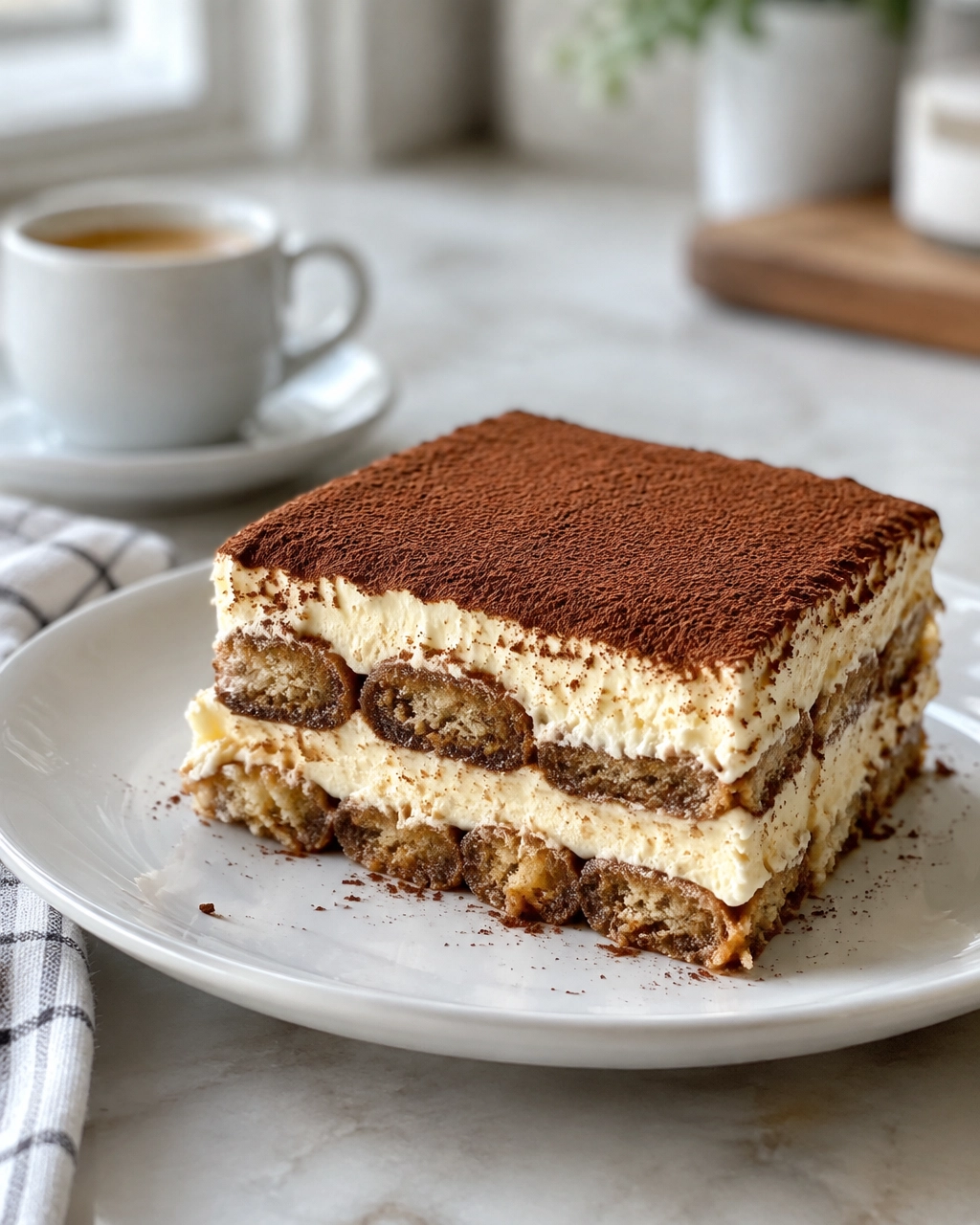
The result should be soft but sliceable. The ladyfingers must absorb coffee without becoming saturated. The mascarpone layer must remain light and stable. Refrigeration is required before serving.
Overview
Classic tiramisu requires no oven. Preparation consists of brewing coffee, mixing the mascarpone cream, briefly dipping the ladyfingers, assembling two layers, and chilling.
Use hard Italian savoiardi rather than soft sponge fingers. Savoiardi hold their structure while absorbing the coffee mixture. Dip each biscuit for approximately one second per side. Extended soaking produces a wet base and makes the dessert difficult to portion.
For food safety, use pasteurized egg yolks. Alternatively, use the egg-free variation listed below. Keep the finished tiramisu refrigerated and serve cold.
This method follows the standard layered structure used in traditional tiramisu recipes, including the approaches described by Julia’s Album and The Kitchn.
Recipe
Yield
- Servings: 10
- Prep time: 30 minutes
- Cook time: 0 minutes
- Chill time: 4 hours
- Total time: 4 hours 30 minutes
Equipment
- 9 x 13-inch baking dish
- Mixing bowls
- Electric mixer or balloon whisk
- Shallow dish for coffee
- Fine-mesh sieve
- Spatula
- Refrigerator
Ingredients
Coffee soak
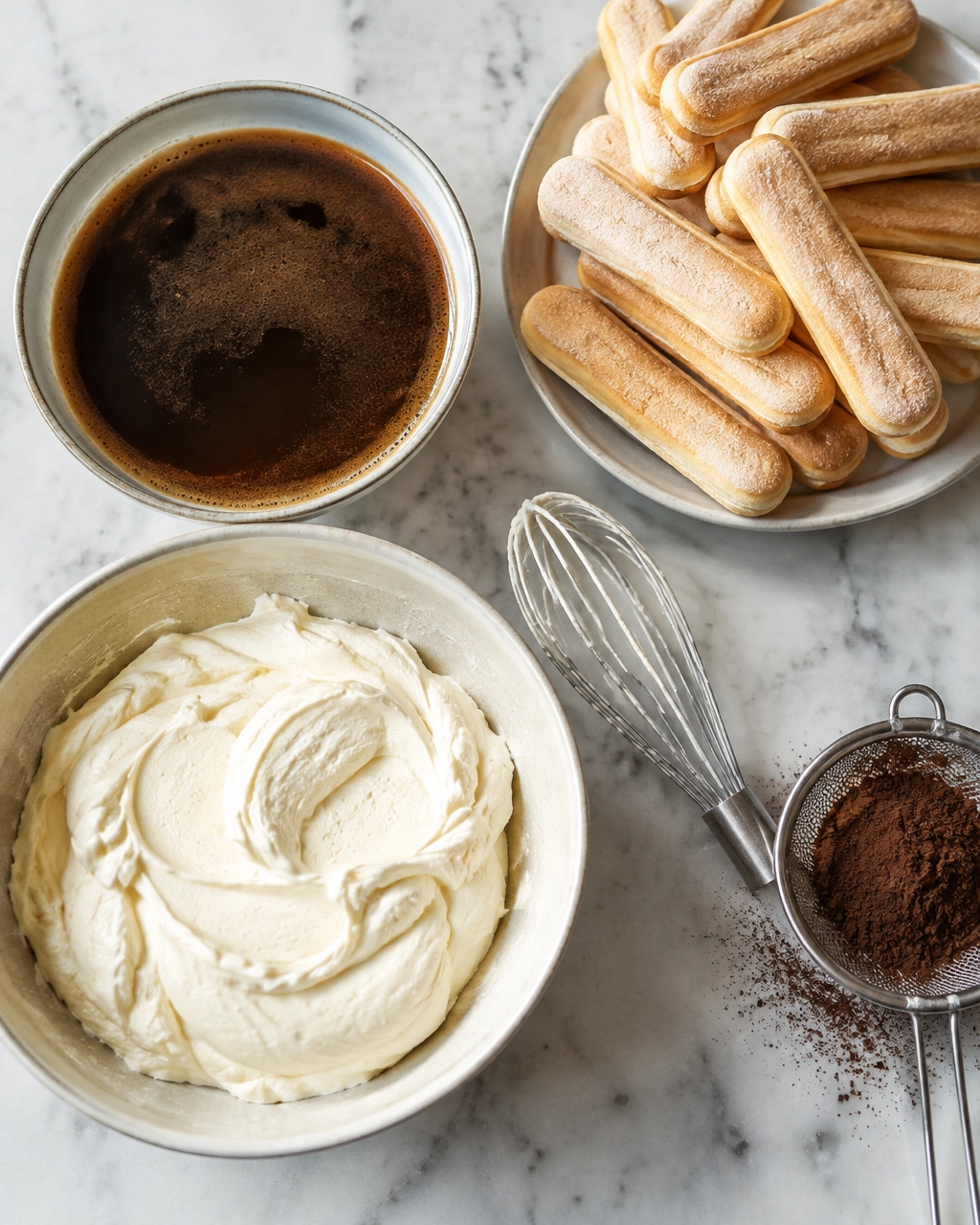
- 1½ cups strong espresso or brewed coffee, cooled
- 2 tablespoons Marsala, dark rum, brandy, or coffee liqueur, optional
- 1 tablespoon granulated sugar, optional
Mascarpone cream
- 5 large pasteurized egg yolks
- ½ cup granulated sugar
- 16 ounces mascarpone cheese, chilled
- 1¾ cups heavy cream, chilled
- 1 teaspoon vanilla extract, optional
- Pinch of fine salt, optional
Assembly
- 28 to 36 Italian savoiardi ladyfingers
- Unsweetened cocoa powder, for dusting
Method
Prepare the coffee. Brew the espresso or strong coffee. Stir in the sugar and optional alcohol while the coffee is warm. Cool completely to room temperature. Warm coffee will soften the ladyfingers too quickly.
Whisk the yolks and sugar. Place the pasteurized egg yolks and sugar in a large bowl. Whisk for 2 to 3 minutes, until the mixture is pale, thick, and slightly increased in volume.
Add the mascarpone. Add the chilled mascarpone. Mix on low speed or whisk by hand until smooth. Do not overmix. Excessive mixing can make the mascarpone loose or grainy.
Whip the cream. In a separate cold bowl, whip the heavy cream to medium peaks. The cream should hold its shape but remain smooth. Stop before it becomes stiff or grainy.
Combine the cream layers. Fold the whipped cream into the mascarpone mixture in two or three additions. Add the vanilla and salt, if using. Fold gently until no visible streaks remain.
Dip the ladyfingers. Pour the cooled coffee into a shallow dish. Dip each ladyfinger briefly on both sides. Remove it immediately. The exterior should be moist while the center retains some structure.
Build the first layer. Arrange the dipped ladyfingers in a single layer in the baking dish. Break biscuits as necessary to fill gaps.
Add the first cream layer. Spread half of the mascarpone cream evenly over the ladyfingers.
Repeat the layers. Add a second layer of briefly dipped ladyfingers. Spread the remaining mascarpone cream over the top and smooth the surface.
Chill. Cover the dish and refrigerate for at least 4 hours. Overnight refrigeration produces a firmer texture and more developed coffee flavor.
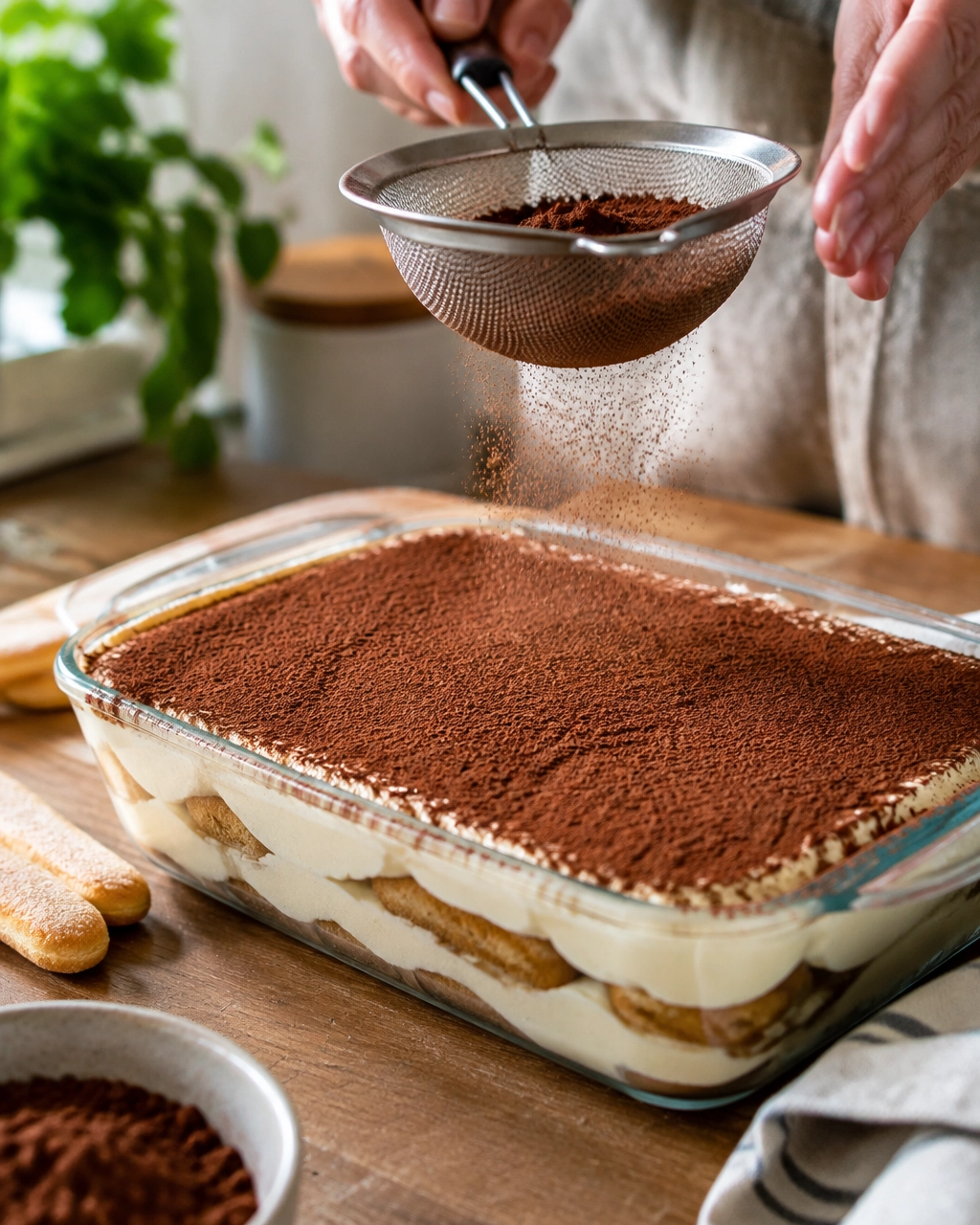
Finish. Just before serving, sift unsweetened cocoa powder over the surface. Cut into portions and serve cold.
Control
The following controls determine the final texture.
- Coffee temperature: Cool the coffee before dipping. Hot coffee can melt or loosen the cream layer.
- Dipping time: Use a fast in-and-out motion. Do not leave the ladyfingers in the coffee.
- Mascarpone temperature: Keep the mascarpone chilled until use.
- Mixing: Blend the mascarpone only until smooth. Fold in the whipped cream rather than beating it into the mixture.
- Chilling: Allow the full minimum chilling period. A shorter period may produce unstable portions.
- Cocoa: Apply cocoa immediately before serving. It remains drier and more defined on the surface.
Variations
Alcohol-free
Remove the Marsala, rum, brandy, or coffee liqueur. Use the cooled coffee without substitution. The dessert will retain its principal coffee and cocoa profile.
Egg-free
Omit the egg yolks. Beat the mascarpone with the sugar and vanilla until smooth. Fold in the whipped cream as directed. This version is simple, stable, and suitable for people avoiding eggs.
Decaffeinated
Use decaffeinated espresso or coffee. This is suitable when caffeine intake must be limited. The coffee should remain strong and fully cooled before use.
Chocolate
Add a thin layer of finely grated dark chocolate between the mascarpone layers. Do not add too much, as large quantities can interfere with clean slicing.
Individual portions
Assemble the tiramisu in six to ten glasses or small dishes. Break the ladyfingers to fit. Reduce the chilling period to approximately 3 hours, although overnight chilling remains preferable.
Storage
Cover the tiramisu and refrigerate it continuously. Consume within 2 to 3 days for best quality. Do not leave it at room temperature for extended periods.
Do not freeze the cocoa topping if a clean finish is required. If freezing is necessary, cover the assembled tiramisu before adding cocoa. Thaw it overnight in the refrigerator and dust with cocoa immediately before serving.
If using non-pasteurized eggs, additional food-safety risk applies. Pasteurized egg yolks are the default requirement for this recipe. Individuals who are pregnant, immunocompromised, elderly, or serving young children should use the egg-free version or a fully cooked egg preparation.
FAQ
Can tiramisu be made without an oven?
Yes. Classic tiramisu is assembled without baking. The coffee, mascarpone cream, ladyfingers, and cocoa are layered and refrigerated.
How long should tiramisu chill?
Chill it for at least 4 hours. Overnight refrigeration is preferred because it allows the ladyfingers to soften evenly and the mascarpone cream to set.
Why is my tiramisu watery?
Common causes include overmixing the mascarpone, under-whipping the cream, dipping the ladyfingers for too long, or serving the dessert before it has fully chilled. Use chilled ingredients and brief coffee dips.
Can I use regular cookies instead of ladyfingers?
Hard Italian savoiardi are recommended because they absorb coffee while retaining enough structure. Soft sponge fingers or other cookies may become saturated and produce a loose base.
Can I make tiramisu without alcohol?
Yes. Alcohol is optional. Omit it and use the coffee mixture as prepared. No additional liquid is required.
Can I use instant coffee?
Yes. Dissolve a strong quantity of instant coffee in hot water, then cool it completely. The coffee should be concentrated enough to remain noticeable after dilution by the mascarpone and cream.
Should cocoa be added before refrigeration?
It may be added before refrigeration, but the surface can become damp or darken unevenly. For a cleaner finish, dust with cocoa immediately before serving.
Is classic tiramisu made with raw eggs?
Many traditional versions use raw egg yolks. This recipe specifies pasteurized egg yolks to reduce food-safety risk. An egg-free variation is also provided.
Service
Serve the tiramisu directly from the refrigerator. Use a sharp knife to portion the dish, wiping the blade between cuts if clean edges are required. Add cocoa after slicing if individual portions need a more defined finish.
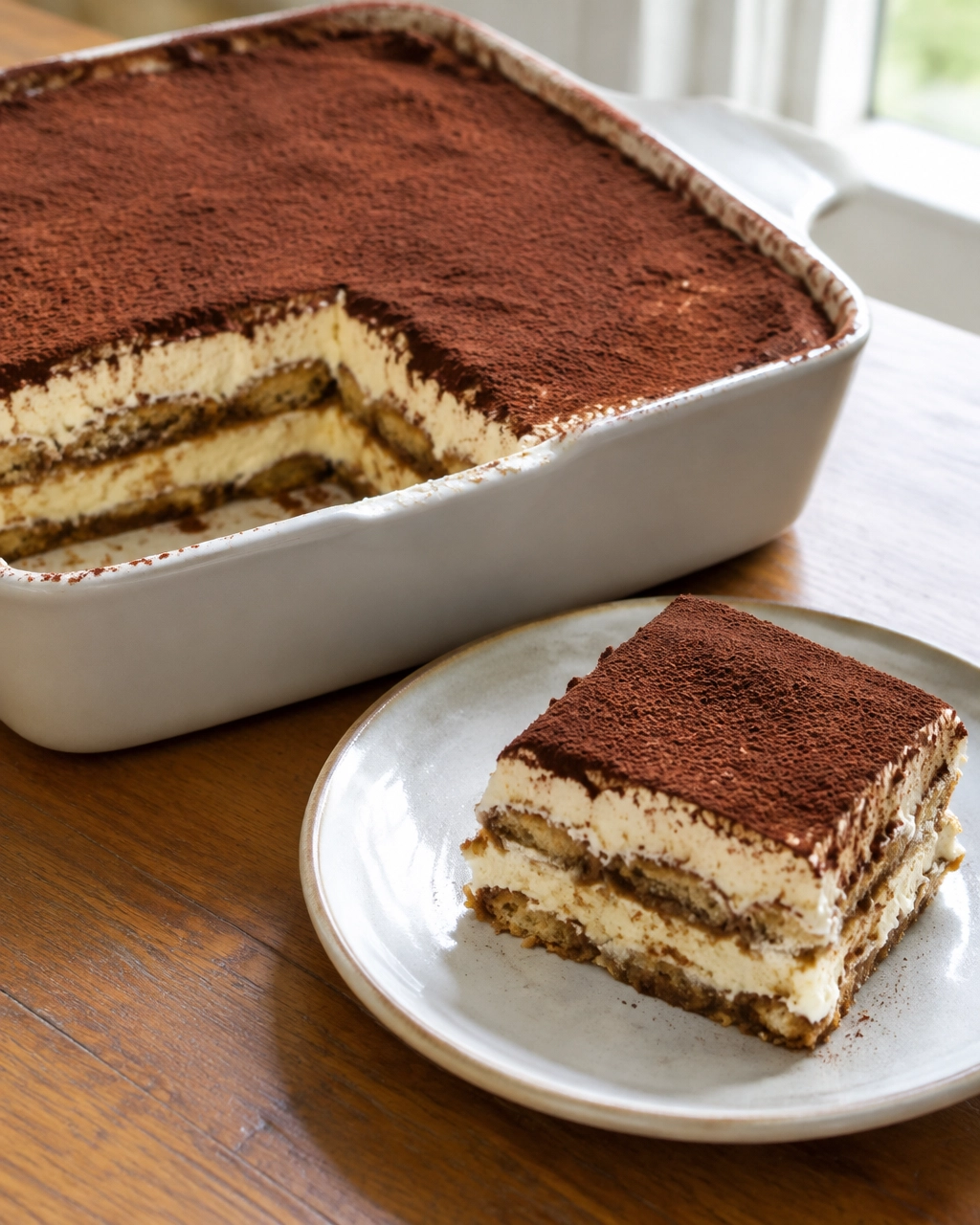
The completed dessert should have a cold, creamy texture, distinct coffee flavor, moderate sweetness, and visible layers of mascarpone, ladyfingers, and cocoa.