Recipe
Serves
2 1×
Serves 2 main-coursePrep 5 minCook 10 minTotal 15 min
Ingredients
Method
- Bring a large saucepan of salted water to the boil. Add the pasta and cook according to the packet instructions until al dente. This usually takes 8 to 10 minutes.
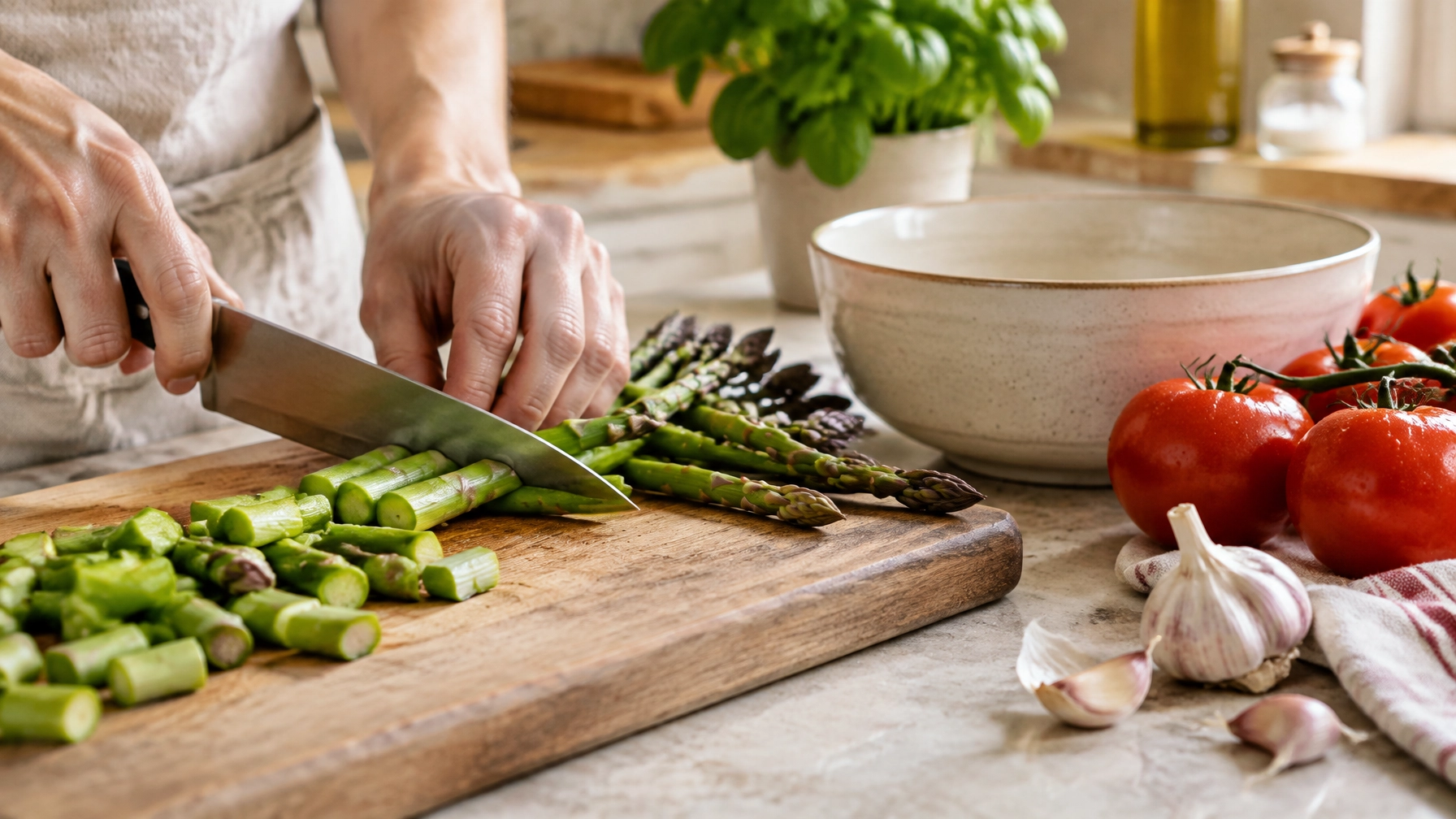
- While the pasta cooks, trim the asparagus. Discard the woody ends and cut the remaining spears into pieces approximately 2 cm long.
- Heat the olive oil in a large frying pan over medium heat. Add the sliced onion and cook for 2 minutes, stirring regularly, until it begins to soften.
- Add the asparagus and cook for 3 to 5 minutes. Stir occasionally. The asparagus should become bright green and tender while retaining a slight bite.
- Add the garlic, frozen sweetcorn and frozen spinach. Cook for 2 to 3 minutes, stirring until the spinach has broken down and the garlic is fragrant.
- Stir in the diced tomatoes. Cook for 1 to 2 minutes, allowing the tomatoes to soften slightly while retaining some structure.
- Before draining the pasta, remove at least 125 ml of the cooking water. Drain the pasta thoroughly.
- Reduce the frying pan heat to low. Add the cream cheese and 2 tablespoons of reserved pasta water. Stir until the cream cheese has melted into the vegetables.
- Add the grated cheddar, lemon zest, salt and black pepper. Stir until the cheddar has melted. Add another tablespoon of pasta water if the sauce appears too thick.
- Add the drained pasta to the frying pan. Toss for 1 to 2 minutes until the pasta is evenly coated. Add the remaining pasta water in small amounts if required.
- Divide the asparagus pasta between two bowls. Finish with the chopped parsley and serve immediately.
Creamy Asparagus Pasta (15-Minute Spring)
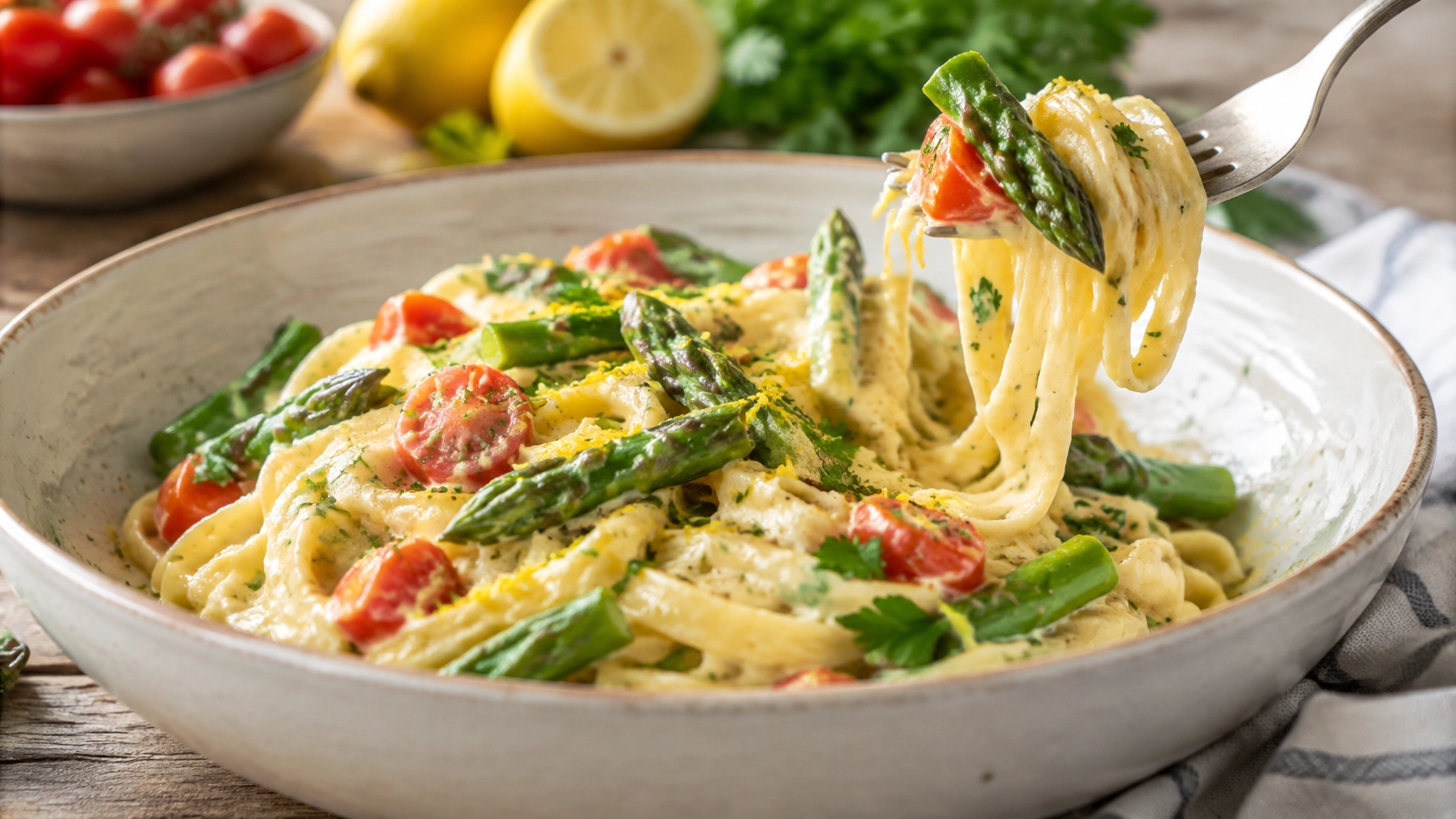
This creamy asparagus pasta is a 15-minute spring meal made with tender vegetables, short pasta and a smooth cheese sauce.
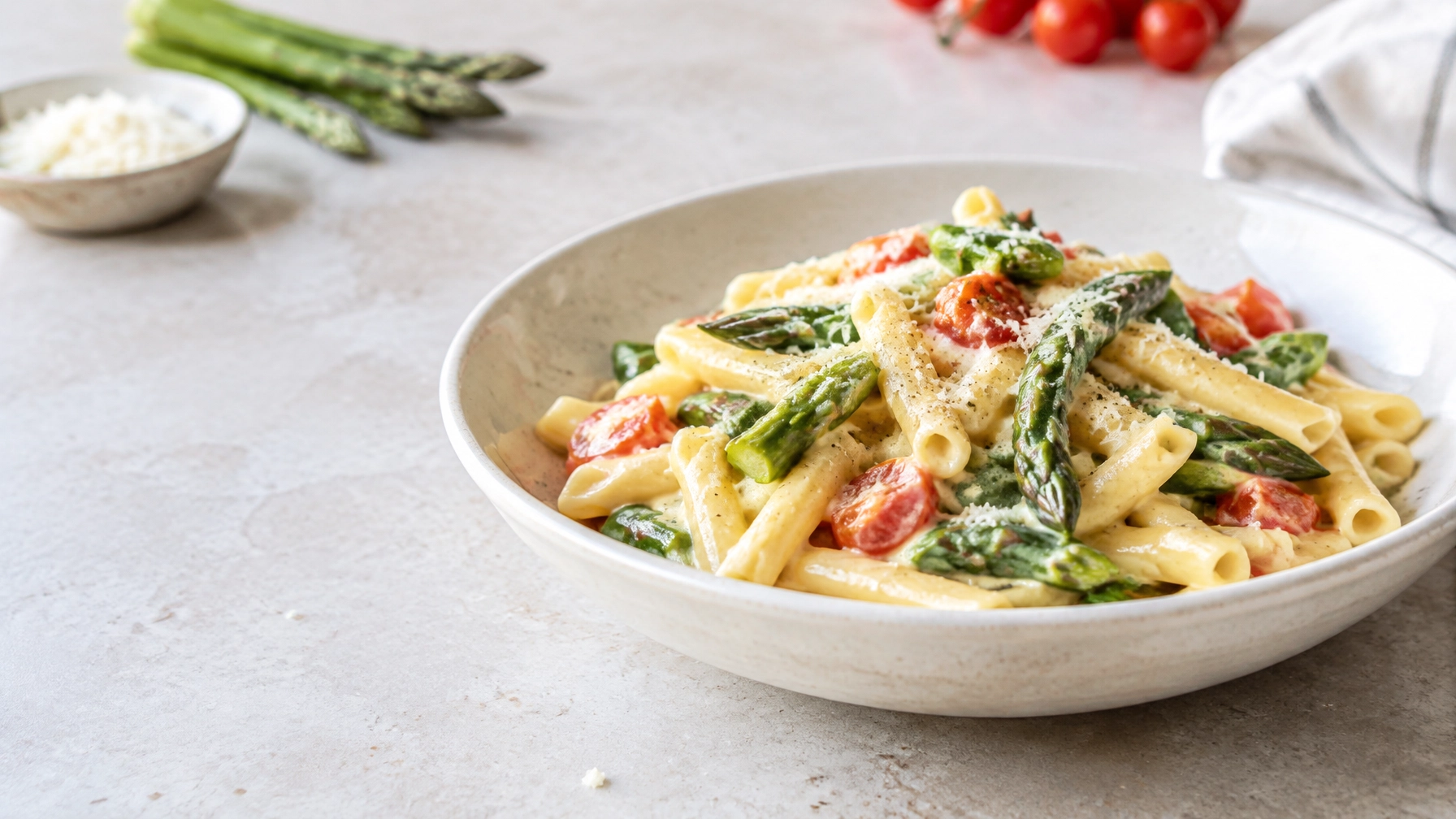
Spring cooking does not require a long preparation period. This asparagus pasta uses one pan for the sauce and one saucepan for the pasta. The two components are cooked at the same time, reducing the total preparation period.
The sauce is made with garlic and herb cream cheese, grated cheddar and reserved pasta water. This produces a smooth coating without requiring a separate white sauce. Asparagus remains slightly firm, while tomatoes provide acidity and colour.
The recipe serves two people as a main course. It can be increased for a larger household, provided the cooking pan is large enough to allow the pasta and sauce to combine evenly.
Preparation
Use short pasta such as fusilli, penne, shells or rigatoni. Short shapes hold the creamy sauce and distribute the asparagus throughout each serving.
Trim the woody ends from the asparagus before cutting the spears into pieces. Thin spears usually require three to four minutes in the frying pan. Thick spears may require five to six minutes. The required result is tender asparagus with enough firmness to retain its shape.
Reserve pasta water before draining. The water contains starch released from the pasta. A small amount helps the cream cheese and cheddar form a smoother sauce.
Frozen spinach and sweetcorn are optional but useful additions. They can be added directly to the pan without thawing. The tomatoes should be diced relatively small so that they soften quickly without releasing excessive water.
Recipe
Servings
2 main-course servings
Prep time
5 minutes
Cook time
10 minutes
Total time
15 minutes
Tips
- Salt the pasta water before it reaches the boil. This seasons the pasta internally.
- Do not overcook the asparagus. It should remain green and slightly firm.
- Cut thick asparagus pieces smaller than thin pieces so they cook at a similar rate.
- Reserve more pasta water than the recipe requires. The sauce can thicken quickly as it cools.
- Add the cheddar over low heat. Excessive heat can cause the cheese to separate.
- Serve immediately for the smoothest sauce.
- If the pasta is being prepared in advance, keep it slightly undercooked and loosen it with a tablespoon of water when reheating.
- Use a wide frying pan. It provides enough space to coat the pasta without crushing the asparagus.
Variations
Lemon asparagus pasta
Increase the lemon zest to the zest of one whole lemon. Add 1 teaspoon of lemon juice to the sauce after the cheese has melted. Add the juice gradually to prevent the sauce becoming too sharp.
Asparagus pasta with peas
Replace the frozen sweetcorn with 100 g frozen peas. Add the peas with the asparagus so they heat through while the pasta cooks.
Vegetarian asparagus pasta
The ingredients are vegetarian if the cream cheese and cheddar used are suitable for a vegetarian diet. Check the product label where this requirement applies.
Chicken asparagus pasta
Add 150 g cooked chicken, cut into bite-sized pieces, with the cream cheese. Heat thoroughly before serving. The chicken must be fully cooked before it is added.
Spicy asparagus pasta
Add 1/4 teaspoon dried chilli flakes with the garlic. Increase the quantity only after checking the heat level of the chilli used.
Lighter asparagus pasta
Use reduced-fat cream cheese and replace half of the cheddar with finely grated hard cheese. The sauce will be less rich but will still coat the pasta when enough pasta water is added.
Storage and reheating
Transfer leftovers to a covered container and refrigerate within two hours of cooking. Use within two days.
Reheat in a frying pan over low heat with 1 to 2 tablespoons of water. Stir regularly until the pasta is hot throughout. Avoid high heat, as it may cause the cheese sauce to separate.
Freezing is not recommended. The cream-based sauce can become grainy after thawing, and the asparagus may lose its firm texture.
FAQ
Can I use frozen asparagus?
Yes. Frozen asparagus can be used, although it is usually softer than fresh asparagus. Add it directly to the frying pan and cook until hot throughout. Reduce the additional pasta water if the frozen asparagus releases moisture.
Which pasta shape is best?
Fusilli, penne, shells and rigatoni are suitable. Their ridges, curves or hollow centres hold the creamy sauce. Long pasta can also be used, but it may require more space in the frying pan when the ingredients are combined.
Can I make asparagus pasta without cream cheese?
Yes. Replace the cream cheese with 100 ml double cream. Add the cream after the vegetables have cooked, then stir in the cheddar over low heat. Use reserved pasta water to adjust the consistency.
Why is my sauce too thick?
The pasta may have absorbed more liquid than expected, or the sauce may have been heated for too long. Add reserved pasta water one tablespoon at a time and stir over low heat until the sauce loosens.
Why has my cheese sauce become grainy?
The pan may have been too hot when the cheese was added. Remove the pan from direct heat, add a small splash of pasta water and stir steadily. For future batches, melt the cheese over low heat.
Can I prepare this recipe in one pan?
Yes, but the texture will differ. Add the pasta and enough water or stock to a large deep frying pan, then add the vegetables during the final minutes. This method requires closer monitoring because the liquid level changes rapidly.
Can I add other vegetables?
Yes. Peas, spinach, sweetcorn, courgette and finely sliced peppers are suitable. Use vegetables that cook quickly so the asparagus does not become overdone while they soften.