Recipe
Prep 10 minCook 15 minTotal 25 min
Ingredients
Method
- Fill a large saucepan with water and bring it to a rolling boil. Add the salt, then cook the pasta according to the packet instructions. Aim for al dente pasta and remove it from the heat one to two minutes before the recommended time if the packet gives a broad cooking range.
- Before draining the pasta, reserve 200ml of the cooking water. Drain the pasta without rinsing it. The starch on the surface helps the sauce cling to the pasta.
- While the pasta cooks, melt the butter in a large frying pan over medium heat. Add the sliced onion and cook for five to seven minutes. Stir regularly until the onion is soft and lightly golden.
- Add the garlic and cook for one minute. Do not let it become dark brown, as this can make the finished sauce taste bitter.
- Transfer the softened onion and garlic to a blender. Add the drained roasted peppers and 50ml of the reserved pasta water. Blend for one to two minutes, or until the mixture is completely smooth.
- Pour the blended pepper mixture back into the frying pan. Place the pan over low to medium heat and stir in the double cream. Add the smoked paprika and chilli flakes, if using.
- Bring the sauce to a gentle simmer. Do not boil it vigorously. Stir in the grated cheese until melted, then season with black pepper. Add the lemon juice if you want a sharper finish.
- Add the drained pasta to the sauce. Toss with tongs for two to three minutes, adding reserved pasta water a little at a time until the sauce is smooth and glossy. The pasta should be coated rather than sitting in a thin pool of sauce.
- Taste the pasta and adjust the seasoning. Serve immediately with chopped parsley or basil and a little extra grated hard cheese.
Roasted Red Pepper Pasta (Creamy 25-Minute)
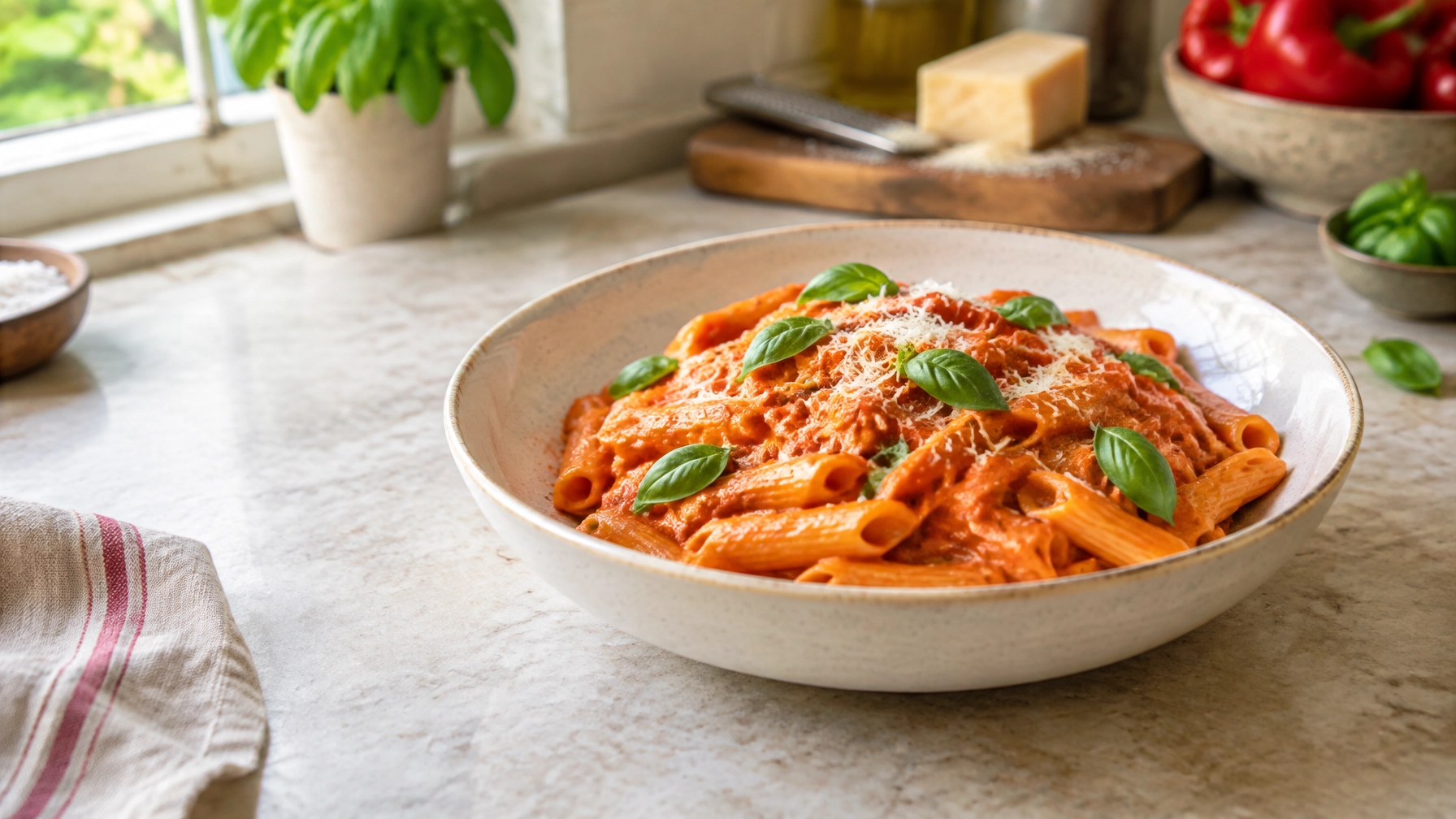
A creamy roasted red pepper pasta ready in 25 minutes with jarred peppers, garlic, double cream and grated hard cheese.
This roasted red pepper pasta is designed for a fast evening meal. Jarred roasted peppers provide sweetness and colour without the extra time needed to roast fresh peppers. The sauce is blended until smooth, then finished with cream, cheese and pasta water for a glossy texture.
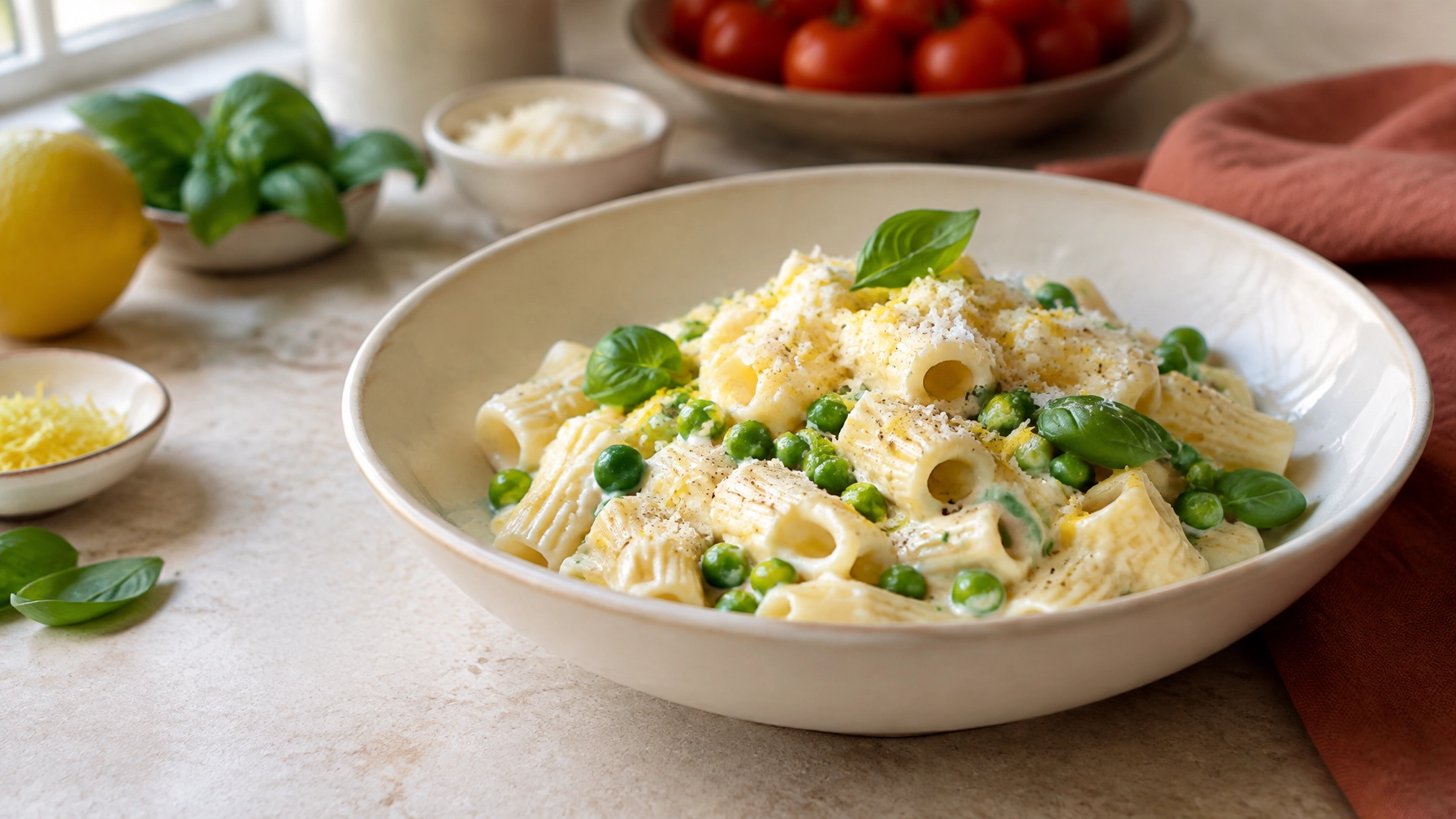
The recipe serves three moderate portions or two generous portions. Penne, fusilli and rigatoni all work well because their ridges hold the sauce.
Preparation
Drain the roasted peppers thoroughly. Squeeze out excess brine, but do not rinse them. The remaining pepper flavour helps season the sauce.
Finely slice the onion and chop the garlic. Grate the cheese before starting to cook. Once the pasta is in the pan, the recipe moves quickly, so preparing these ingredients first makes the process easier.
Tips
Use jarred peppers for speed. Fresh peppers can be roasted at home, but peeling and cooling them adds considerable preparation time. Jarred peppers make the 25-minute cooking time realistic.
Do not rinse the pasta. Rinsing removes surface starch. That starch helps emulsify the sauce and gives it a more cohesive texture.
Reserve more pasta water than you expect to need. The sauce thickens as it cools and as the pasta absorbs moisture. A small splash of pasta water can restore the correct consistency.
Keep the cream at a gentle heat. A hard boil can cause dairy sauces to split. Low to medium heat is sufficient once the cream has been added.
Check the pepper seasoning. Some jarred peppers are stored in heavily salted brine. Taste the sauce before adding more salt.
Use a wide pan. A broad frying pan gives the pasta enough room to move through the sauce. This makes it easier to coat each piece evenly.
Serve immediately. Cream-based pasta sauces become thicker as they stand. If serving later, reserve extra pasta water for loosening the sauce.
Variations
Make it vegetarian. Use a vegetarian hard cheese. Not every hard Italian-style cheese is suitable for a vegetarian diet, so check the product label.
Make it vegan. Replace the butter with olive oil. Use a plant-based cooking cream and a suitable plant-based hard cheese alternative.
Add greens. Stir in two large handfuls of baby spinach during the final two minutes. The residual heat will wilt the leaves into the sauce.
Add protein. Fold through cooked chicken, prawns or white beans. Add cooked ingredients during the final stage so they warm through without drying out.
Add vegetables. Courgette, mushrooms or tenderstem broccoli can be cooked separately and stirred through before serving.
Increase the heat. Add extra chilli flakes, a pinch of cayenne pepper or a finely chopped fresh chilli with the garlic.
Use fresh peppers. For a deeper roasted flavour, roast halved red peppers until their skins blister and darken. Cover them briefly, peel away the skins, then use the flesh in the sauce. This version will take longer than 25 minutes.
Make it tomato-rich. Add one tablespoon of tomato purée to the onion and garlic before blending. Cook it for one minute to remove its raw taste.
Storage
Cool leftovers promptly and store them in a covered container in the refrigerator. Eat within two days.
Reheat the pasta gently in a frying pan over low heat. Add a splash of water, milk or cream and stir until the sauce loosens. Avoid high heat, which can make the cream split and cause the pasta to dry out.
Freezing is not recommended for the finished dish because the cream sauce may change texture. The blended pepper base can be frozen separately for up to three months. Defrost it in the refrigerator, reheat gently and add the cream and cheese before serving.
FAQ
Can I use fresh red peppers?
Yes. Fresh peppers give the sauce a stronger roasted flavour, but they need to be roasted, cooled and peeled first. This increases the total preparation time. Jarred peppers are the most practical option for a 25-minute meal.
Can I make roasted red pepper pasta without a blender?
Yes. Chop the peppers as finely as possible and cook them with the onion and garlic until very soft. The sauce will have more texture, but it will still be effective. A stick blender can also be used directly in the pan once the ingredients have cooled slightly.
Why is my sauce too thick?
The pasta may have absorbed more liquid than expected. Stir in reserved pasta water one tablespoon at a time until the sauce becomes smooth and coats the pasta evenly.
Why has my cream sauce split?
The pan may have been too hot or the sauce may have boiled after the cream was added. Remove it from the heat and stir in a small splash of warm pasta water. Return it to low heat only if necessary.
Can I use single cream?
Yes, but the sauce will be lighter and less rich. Keep the heat low because single cream can still split if it is boiled forcefully.
What pasta shape is best?
Penne, fusilli and rigatoni are suitable because their ridges and curves hold the blended sauce. Spaghetti also works, although it may require more tossing to coat evenly.
Can I prepare the sauce in advance?
Yes. Blend the pepper sauce and refrigerate it in a covered container for up to two days. Reheat it gently, stir in the cream and cheese, then combine it with freshly cooked pasta.