Recipe
Serves
4 1×
Serves 4 bowlsPrep 15 minCook 30 minTotal 45 min
Ingredients
Method
- Prepare the base. Heat the olive oil in a large saucepan or Dutch oven over medium heat. Add the diced onion and cook for 5–7 minutes, stirring regularly, until softened.
- Add the aromatics. Stir in the garlic and ginger. Cook for 30–60 seconds, until fragrant. If using turmeric or red pepper flakes, add them now and stir for a further 30 seconds.
- Add the carrots. Add the sliced carrots, salt and black pepper. Stir until the carrots are evenly coated with the oil and aromatics.
- Simmer. Pour in the vegetable broth. Bring the liquid to a boil, then reduce the heat to low. Cover partially and simmer for 18–25 minutes, or until the carrots are completely tender when pierced with a fork.
- Blend. Remove the saucepan from the heat and allow the soup to cool slightly. Add the coconut milk. Blend with an immersion blender until smooth. Alternatively, blend in batches using a heat-safe countertop blender. Do not fill a sealed blender more than recommended by its manufacturer.
- Adjust the consistency. Return the soup to low heat. Add extra vegetable broth or water, a small amount at a time, until the desired consistency is reached.
- Finish. Stir in the lemon juice. Taste and adjust the salt, pepper and lemon juice as required. Reheat gently, but do not boil the soup after adding the coconut milk.
- Serve. Ladle into bowls and add the selected toppings. Serve immediately with bread if required.
Creamy Carrot Ginger Soup (Healthy Bowl)
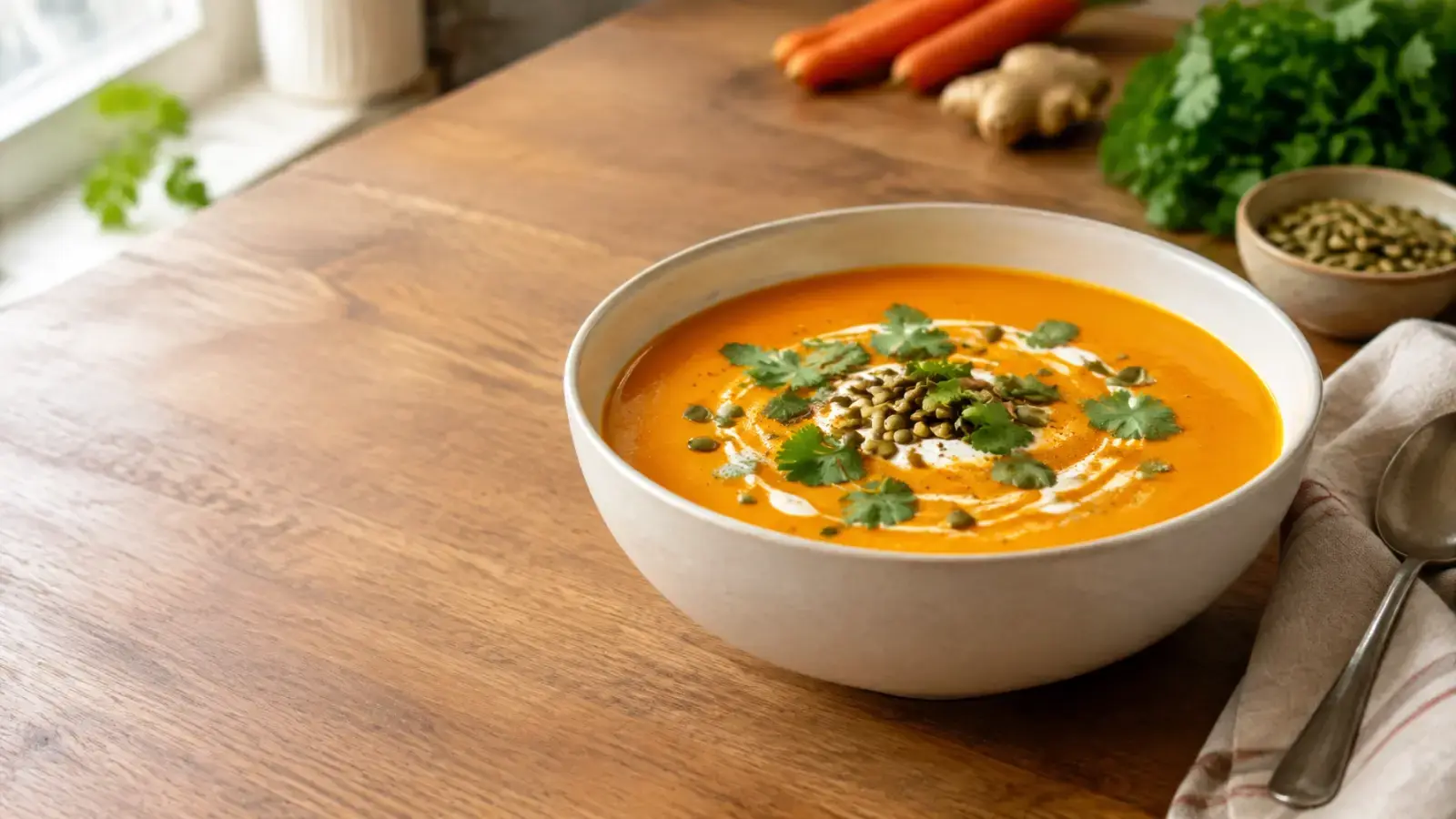
A smooth, warming carrot ginger soup made with fresh carrots, ginger, garlic, vegetable broth and coconut milk. This healthy bowl is naturally vegetarian, easy to prepare and suitable for lunch, dinner or batch cooking.
Overview
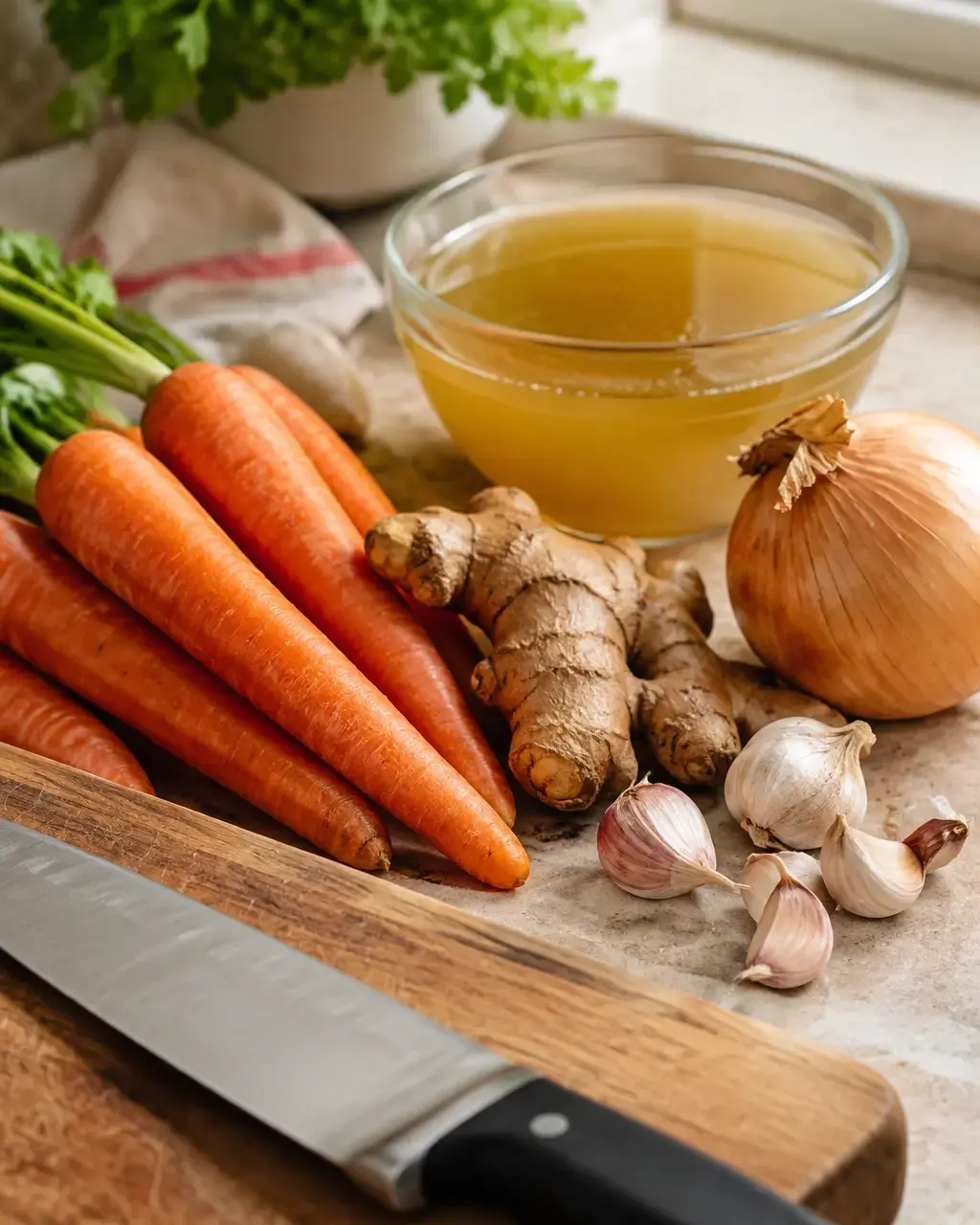
Carrot ginger soup relies on a short ingredient list and a simple cooking process. Onions, garlic and ginger provide the base. Carrots provide natural sweetness and colour. Vegetable broth creates the liquid structure, while coconut milk gives the soup a smooth finish without requiring dairy cream.
The recipe is suitable for vegetarian and vegan diets when the vegetable broth is vegan-certified. It can be made ahead and stored in the refrigerator for up to four days. The soup also freezes well when cooled and packed in airtight containers.
Fresh ginger is preferable to dried ginger for this recipe. It provides a sharper, cleaner flavour that balances the sweetness of the carrots. Lemon juice is added at the end to provide acidity and prevent the finished soup from tasting flat.
For additional recipe reference, compare the preparation methods at Minimalist Baker and The Modern Proper.
Recipe
Creamy Carrot Ginger Soup
Servings: 4 bowls
Prep time: 15 minutes
Cook time: 30 minutes
Total time: 45 minutes
Category: Soup
Cuisine: Vegetarian
Method: Stovetop and blended
Notes
The carrots must be tender before blending. Undercooked carrots can produce a grainy texture and place unnecessary strain on an immersion blender.
The amount of broth determines the final consistency. Use 3 cups for a thick soup suitable for serving in bowls. Add more broth if a thinner, pourable soup is preferred.
Coconut milk can vary considerably between brands. Full-fat coconut milk provides a richer texture, while light coconut milk produces a lighter result. Shake the can before opening to distribute the liquid and coconut solids.
For a smoother finish, blend for an additional 1–2 minutes and pass the soup through a fine-mesh sieve. This is optional and not required for a satisfactory result.
Storage
Cool the soup promptly and refrigerate it in a sealed container for up to four days. Reheat it in a saucepan over low to medium heat, stirring regularly.
To freeze, cool the soup completely and portion it into freezer-safe containers. Leave space for expansion. Freeze for up to three months. Defrost overnight in the refrigerator and reheat gently. The coconut milk may separate slightly after freezing; whisking during reheating should restore most of the texture.
Approximate nutrition
Per serving, using light coconut milk and no optional toppings:
- Calories: Approximately 230–260
- Protein: Approximately 4–5 grams
- Fat: Approximately 12–15 grams
- Carbohydrates: Approximately 30–35 grams
- Fibre: Approximately 6–8 grams
These figures are estimates. The final values will vary according to the specific broth, coconut milk and quantity of oil used.
Variations
Add chickpeas
Add 1 cup of cooked chickpeas during the final 10 minutes of simmering. Blend them into the soup for additional protein and fibre. The soup may require extra broth to maintain a smooth consistency.
Roast the carrots
For a deeper, sweeter flavour, roast the carrots and onion at 200°C, or 400°F, until tender and lightly browned. Transfer them to a saucepan with the broth, ginger, garlic and coconut milk, then blend as directed.
Use dairy
Replace the coconut milk with 150–200 ml of single cream or whole milk. Do not boil the soup after adding dairy. This variation is vegetarian but is not dairy-free or vegan.
Increase the heat
Add a finely sliced red chilli with the onion, or increase the quantity of red pepper flakes. Chilli should be added gradually because its intensity can increase as the soup cooks.
Add warm spices
Add ½ teaspoon of ground cumin, coriander or garam masala with the ginger and garlic. These spices change the flavour profile without altering the basic cooking method.
FAQ
Can I make carrot ginger soup without coconut milk?
Yes. Replace the coconut milk with additional vegetable broth for a lighter, dairy-free soup. You can also use plain yoghurt, cream or milk, but add dairy after blending and avoid boiling.
How do I make the soup thicker?
Simmer the soup uncovered for several minutes after blending, or use less broth at the beginning. Adding cooked chickpeas or a small peeled potato during the simmering stage will also increase thickness.
How do I make the soup less sweet?
Add lemon juice gradually until the flavour is balanced. Additional black pepper, red pepper flakes, cumin or a small amount of vegetable broth can also reduce the perception of sweetness.
Can I use frozen carrots?
Yes. Frozen carrots can be added directly to the saucepan. Cooking time may vary, so simmer until they are completely tender before blending.
Is carrot ginger soup vegan?
The recipe is vegan if olive oil, coconut milk and vegetable broth are used. Check the label of the vegetable broth, as some commercial products may contain animal-derived ingredients.
Can I prepare the soup in advance?
Yes. Prepare it up to four days in advance and store it in the refrigerator. Reheat gently and adjust the consistency with broth or water before serving.


